HOW TO BEST PLAN A LUXURY 14 DAY TUNISIA ITINERARY
Last Updated on 12th February 2026 by Bejal
Tunisia is a destination that quietly exceeds expectations. It’s layered deeply, is soulful, and endlessly rewarding especially, if you’re willing to slow down and take it all in. In this carefully curated luxury 14 day Tunisia itinerary, we have included stops in ancient cities, sleeping beneath desert stars, and immersing ourselves in traditions that have shaped this country for thousands of years. This journey combines luxury with responsibility, pairing boutique guest house stays as well as refined experiences with lesser visited destinations, local guides, and unhurried exploration. From Roman amphitheatres and holy cities to Saharan dunes and island calm, this 14 day Tunisia itinerary highlights a meaningful travel style through our personal experiences.
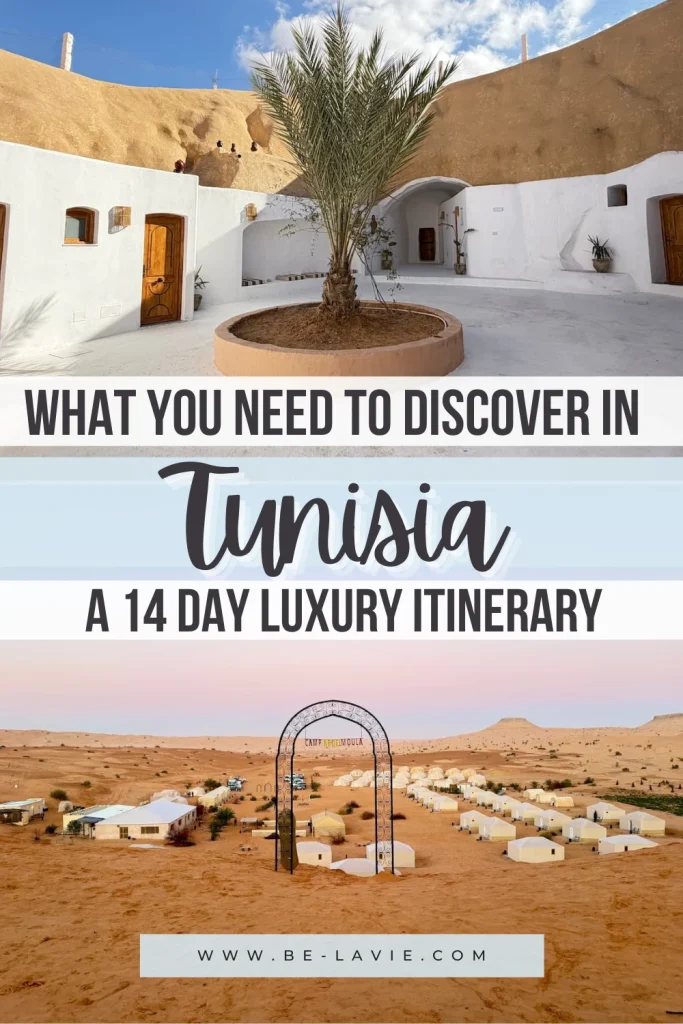
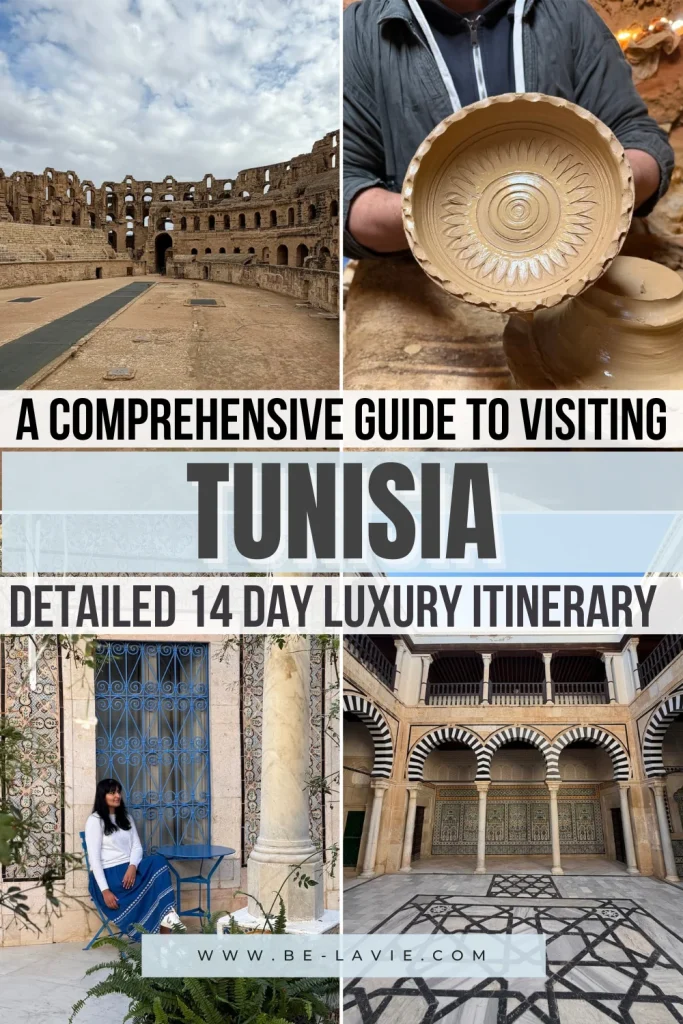
Pin & Save
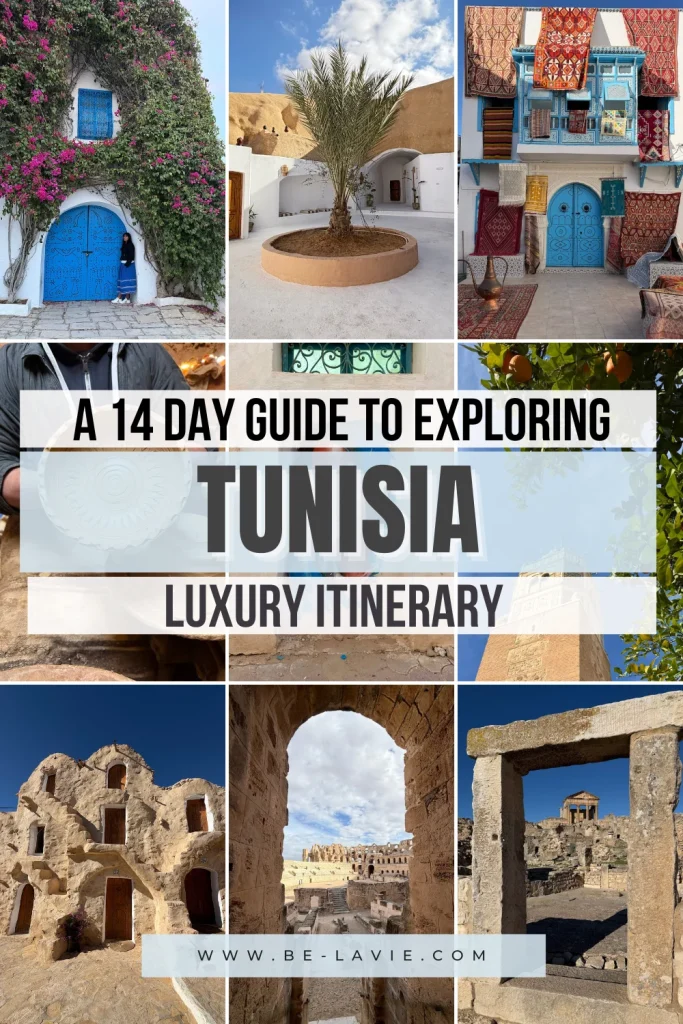
Short of time? No problem, just pin & save to Pinterest and read at your leisure.
Where is Tunisia Located?
Tunisia is located in North Africa and lies on the Mediterranean Sea, giving it around 1300 kilometres of Northern coastline. Tunisia borders two countries, Algeria to the West and Libya to the South East. Much of the South of the country is covered by the Sahara Desert with Tunisia sitting at a crossroads between Africa, Europe and the Middle East, which all play a part in influencing the culture, history and cuisine.
Why Visit Tunisia?
Before the 2015 Terrorist beach attacks in Sousse, Tunisia was very much seen as a package holiday destination, where many, especially Brit’s, would spend most of their holiday at the beach resorts without stepping out of their hotel complex! Recently though, the tourism board has raised the exposure and worked on promoting the country including it’s history, UNESCO sites, Star wars filming locations as well as souks, liberal culture and so much more.
- History & Culture – the country has so many well preserved Roman ruins that are UNESCO World Heritage sites, which give an insight into Roman civilisations. Places like El Jem Aphitheatre, Dougga and Cartharge are fine examples. Many of the cities have vibrant medinas, a little like a myriad of alleyways where local artefacts and foods are sold. When it comes to cities there is such diversity ranging from religious holy places like Kairouan, the blue and white washed village of Sidi Bou Said and sandy palm lined beaches, we’re thinking Djerba Island and Hammmet. The culture in Tunisia is varied from the original Amazigh inhabitants, Arabic influence as well as Mediterranean draws with cuisine, architecture and deep rooted traditions.
- Beautiful Landscapes – we noticed almost immediately during our trip that the countries landscapes are also diverse with golden sandy beaches in Djerba and Hammamet, rippled sand dunes or the Sahara Desert perfect for Star Wars and the English Patient filming locations together with national salt lakes, palm grove oasis and national parks that are perfect for bird watching.
- Travel Experiences – Tunisia truly does offer great value for money when it comes to accommodation, food and reasonable flight times from the UK and Europe. The locals are friendly and extremely hospitable and kind. When it comes to cuisine, it’s fresh, seasonal and delicious. Think couscous, Bric, patisseries, Ojja and mint tea. Head to the Medinas for spices like Harissa, hand woven carpets and again so much more.
Best Time to Travel to Tunisia
Tunisia’s varied topography includes, beaches, mountains and the desert, meaning that the climate can be different in the North, middle and South of Tunisia. The Mediterranean coast often means pretty hot summers and warmer winters with a little rain in the Autumn and Spring. There can also be snowfall seen in the Northern mountain areas.
Central Tunisia has less rainfall but quite extreme temperature fluctuations during the summer and winter months.
The South of Tunisia is governed by a desert climate so think very hot summers, cold nights and little rain. The best time to visit Tunisia for a comfortable experience; to follow this 14 day Tunisia itinerary are, March through to June and September through to October. Between these months you can expect a fewer visitors, warm days and cooler nights. The desert is perfect to experience in this climate.
With all this said, we decided to visit the North, central and South of Tunisia from the third week of December to the first week in January. Apparently it was an exception this year, and we had no rain, beautiful blue skies with daily temperatures ranging between 18°C-22°C. it was pretty quiet, a few places did have a lot of visitors from the neighbouring countries of Algeria and Libya and we assumed not as much as you’d expect in peak season.Shoulder season is perfect for avoiding the crowds, school holidays and the extreme temperatures of the summer! When we travelled in December,
How to Get to Tunisia
Many travellers fly the capital city’s inot Tunis Carthage International Airport. This airport serves as the gateway into the country and from here many internal flights can be taken to different locations such as Djerba, Enfida and others. We flew return with Air France to Tunis Carthage airport but it is possible to get flights direct with Easyjet from Birmingham, Bristol and Gatwick to Enfidha airport, which is located between Hammamet and Sousse.
Although Tunisia has borders with Algeria and Libya, we would suggest the air route for ease and less hassle. There is a border crossing at Tabarka, but we are unsure if non Algerians can travel across via any other points in the country. Libya is a little more complicated as it’s only passports holders of the country that can drive over the border. We learnt that Libya is not issuing tourist visas at the present time so we recommend visiting Tunisia directly.
How to Get Around Tunisia
We tailor made a Tunisia itinerary with an on ground agent in Tunisia and opted for a driver and guide that accompanied us almost daily throughout our trip. But apart from some really remote locations, we think it’s possible to do the trip independently if that’s what you prefer.
- Cars – If you are familiar with driving on the right hand side, like much of Europe (we drive on the left in England), then hiring a rental car is such a great option and gives flexibility especially when wanting to make extra stops roadside when you see anything interesting. We would recommend a 4WD if you’ll be doing a North to South trip that involves different terrains.
- Taxis – these can be rather expensive and sometimes haggling is required, even prior to the journey can mean the drivers can change their minds and charge more! We had this happen in Hammamet with a yellow metered taxi, which are the recommended ones to use. We would suggest maybe giving taxi’s a miss for longer journeys!
- Trains – Although we didnt use the train, we heard that the train service is pretty good but depending upon where you’re going, however some locations may just have the one train and can take hours to get to. There are many train lines from Tunis as well as the larger cities in Tunisia. To learn more about the trains, timetables and destinations refer to the Tunisian official Railway Network, Sncft.
- Louage – These are almost like a mini van that are a little like a larger version of a taxi and can help with reaching a destination, if the train station is some distance away from a monument or accommodation. These work out relatively good value and we saw many locals travelling by these between cities, especially in the South of Tunisia.
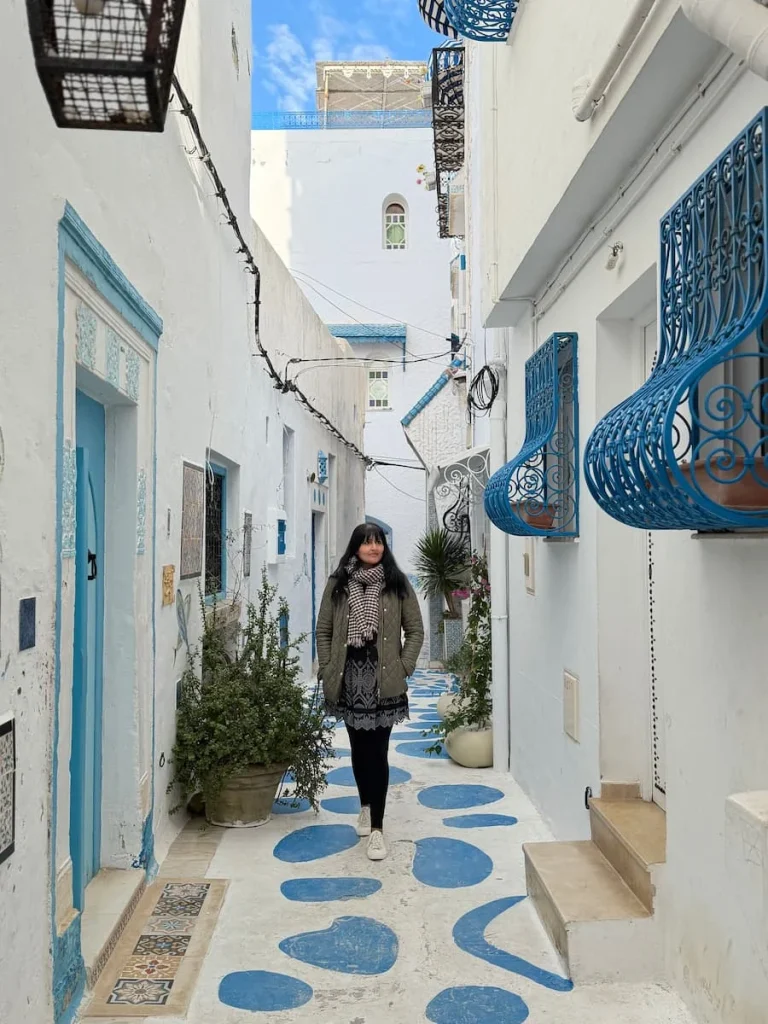
Organised Tours & Pre-Planned Itineraries.
If you plan on staying in a single or maybe two destinations and want to take half or full day tours with local guides to visit other cities in Tunisia then have a look at Get Your Guide who we always recommend and use for our own travel planning.
We worked with Corinthian Travel, based in London to plan and tailor our itinerary with an on ground team in Tunisia. Their expertise including helping to nail down an itinerary that suited our interests as well as selecting locally owned boutique hotels and luxury guesthouses. We also had a driver and guide throughout our trip.
Is 14 Days Enough to Spend in Tunisia?
Yes, we think this is a great amount of time to get to see the North, central and Southern Tunisia and will give visitors a real taste of the country. We’re recommend an average of spending around two nights at each destination.
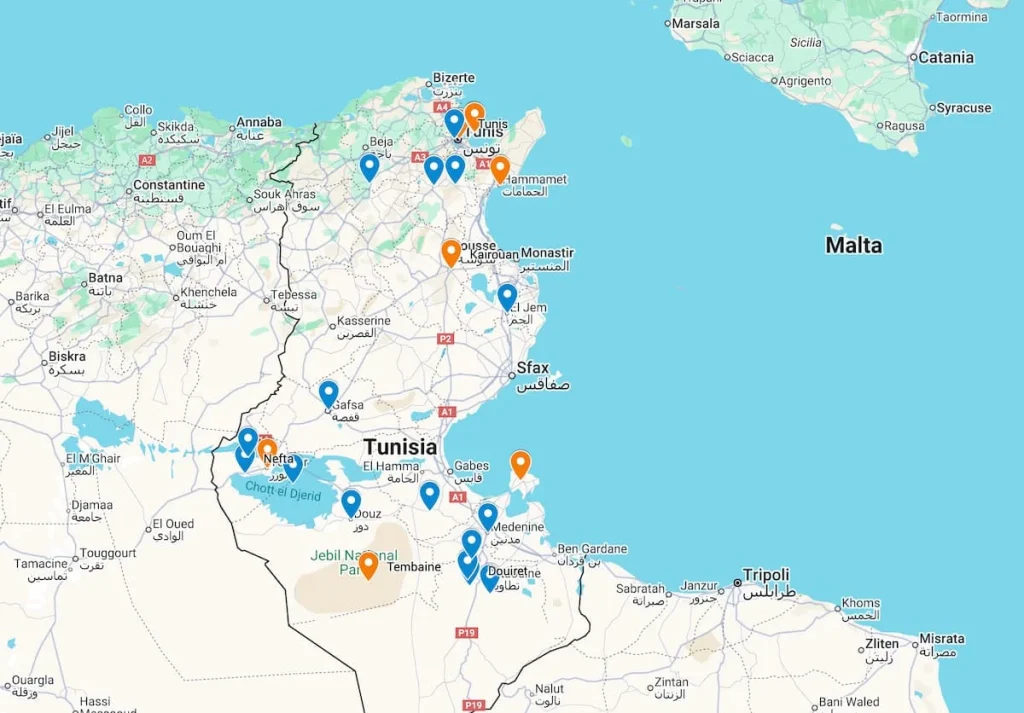
Map of Where to Visit in Tunisia For 2 Weeks
This map includes the destinations we visited for our 14 day itinerary. Click on the map to be directed to Google Maps which features all the destinations included in this itinerary.
A Luxury 14 Day Tunisia Itinerary
Days 1 & 2 Tunis & Carthage
On your arrival into Tunis, depending upon time, we’d suggest either relaxing at your hotel ready for the next day or you can hit the ground running, a little like us.
Tunis Medina
This is one of the best ways to discover Tunis’ lively UNESCO World Heritage listed medina consisting of a labyrinth of alleyways. There are all kinds of goods sold here, the medina has the traditional horse shoe shape and is split into areas such as gold and silver outlets, carpets, perfumes, household goods, leather and more. Prepare to haggle and never pay the first price you’re offered! You can totally visit this independently or as an organised tour. The medina’s most notable monument has to be the Zitouna Mosque, which is not open to non Muslims. It has beautiful Arabic architecture with a square minaret and reused Byzantine columns. On your way out of the lanes, note the traditional bathing Hammams, the boys Madressa school and traditional houses.
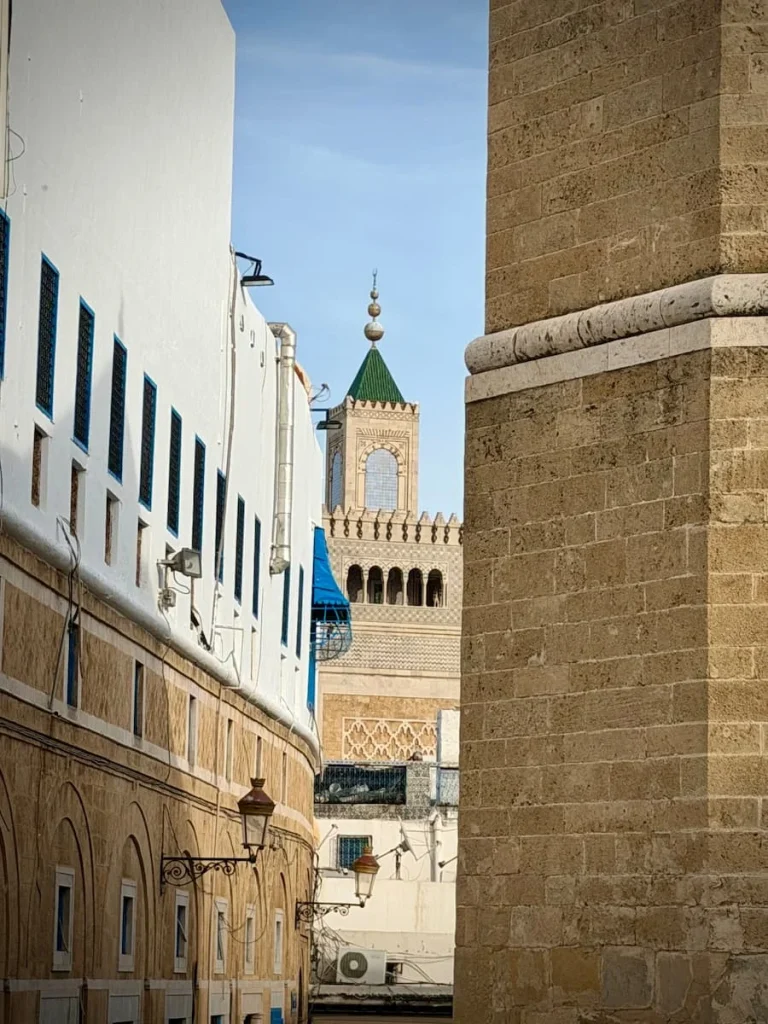
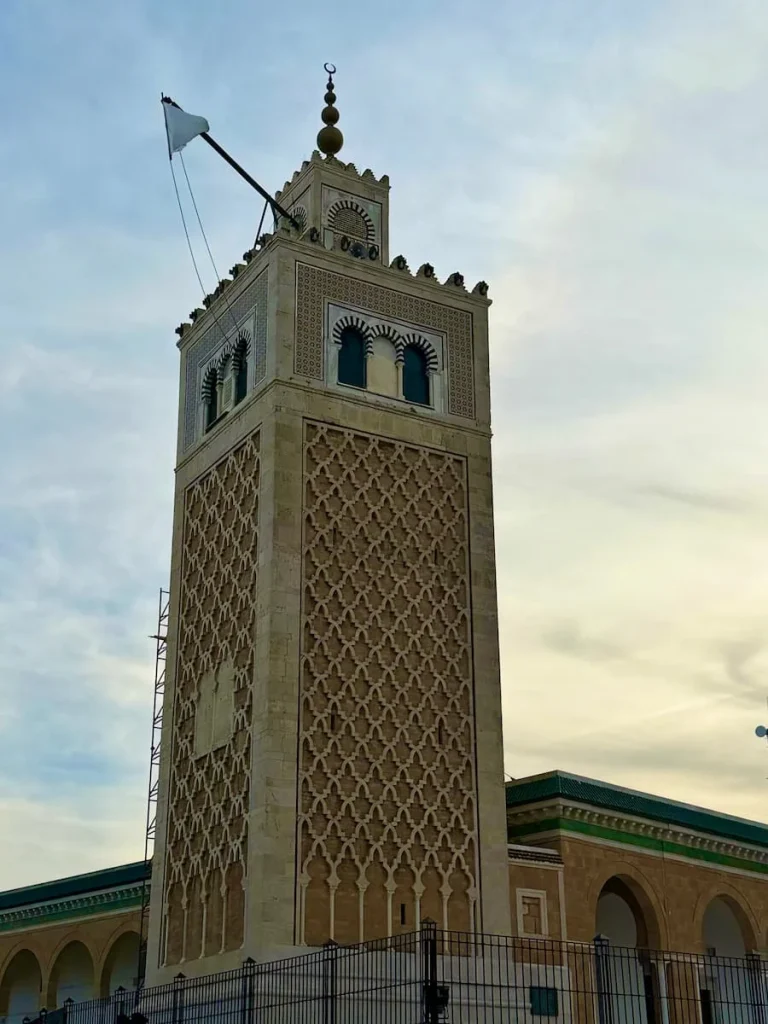
MINURETS OF TUNIS MEDINA
Carthage
Located only 15 Km from Tunis, these UNESCO World Heritage listed Punic ruins of ancient Carthage are simply breathtaking. This was once a prominent trading base with a population of over half a million and the home of a great empire, as well as Carthaginian General Hannibel Barca. Hannibel tried his hardest to fight the Romans but lost two centuries BC. Almost half a century later, ‘Delenda est Carthage’ the elder Cato told the Roman Senate, Carthage must be destroyed, and so it was.
After the third Punic War against Rome, the city burned for 17 days and from these ashes rose a new Roman city built to replace the previous city and this time it was only second to Rome in its brilliance. It was named capital of the Roman Province, Africa.
Unfortunately, this in turn was ruined by vandals and Arab invaders and what is left today has been dispersed around this upmarket suburb of Tunis.
Carthage is made up of a number of sites that we visited over half a day:
- The Punic Tophet – an ancient burial site.
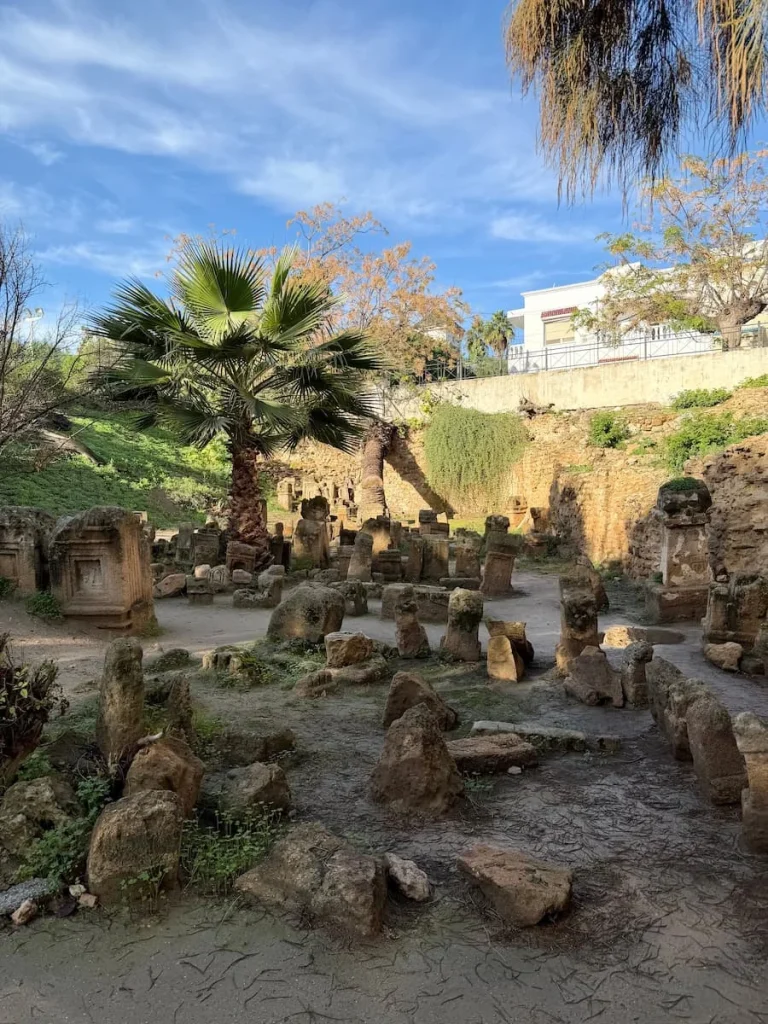
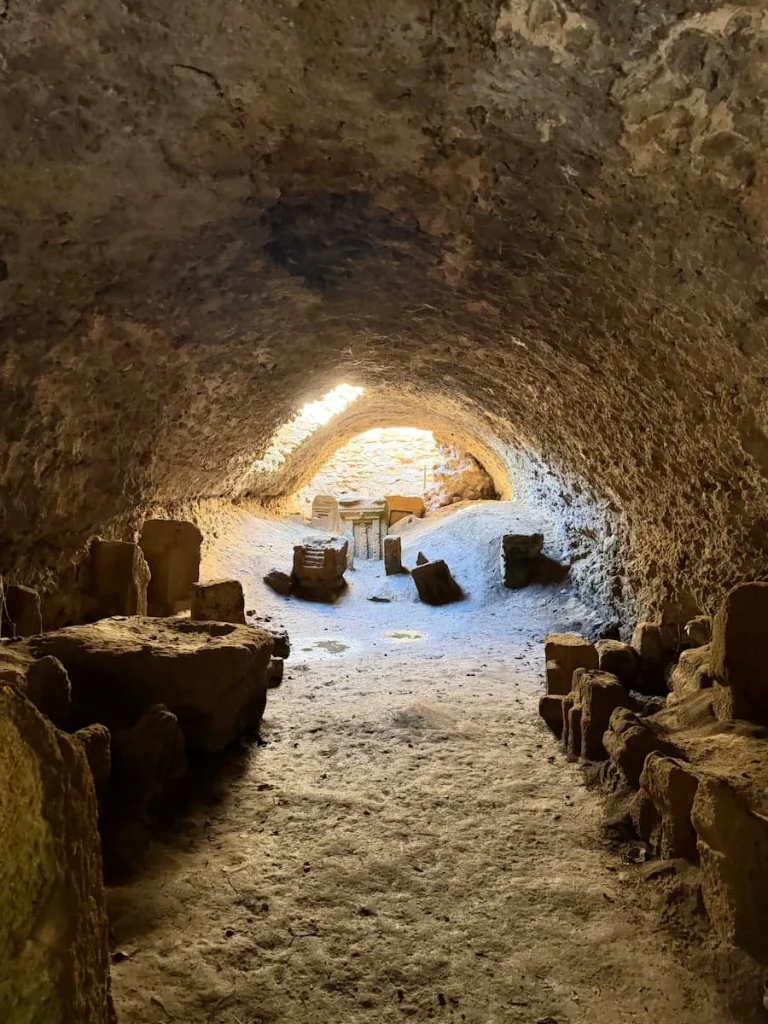
PUNIC TOPHET ANCIENT BURIEL SITE
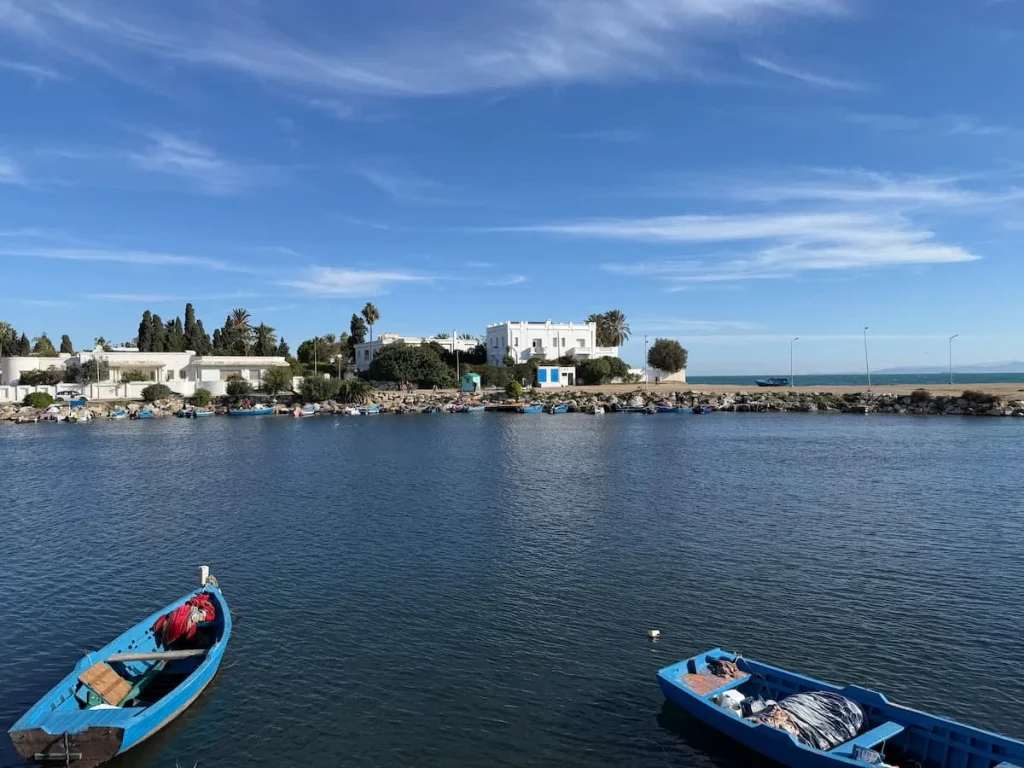
- Punic Ports of Carthage – are not very well preserved but there are reconstructions to help get a feel for the area.
- The Park of the Antoninian Baths – pretty impressive site worth walking around to see the state of the former thermal baths.
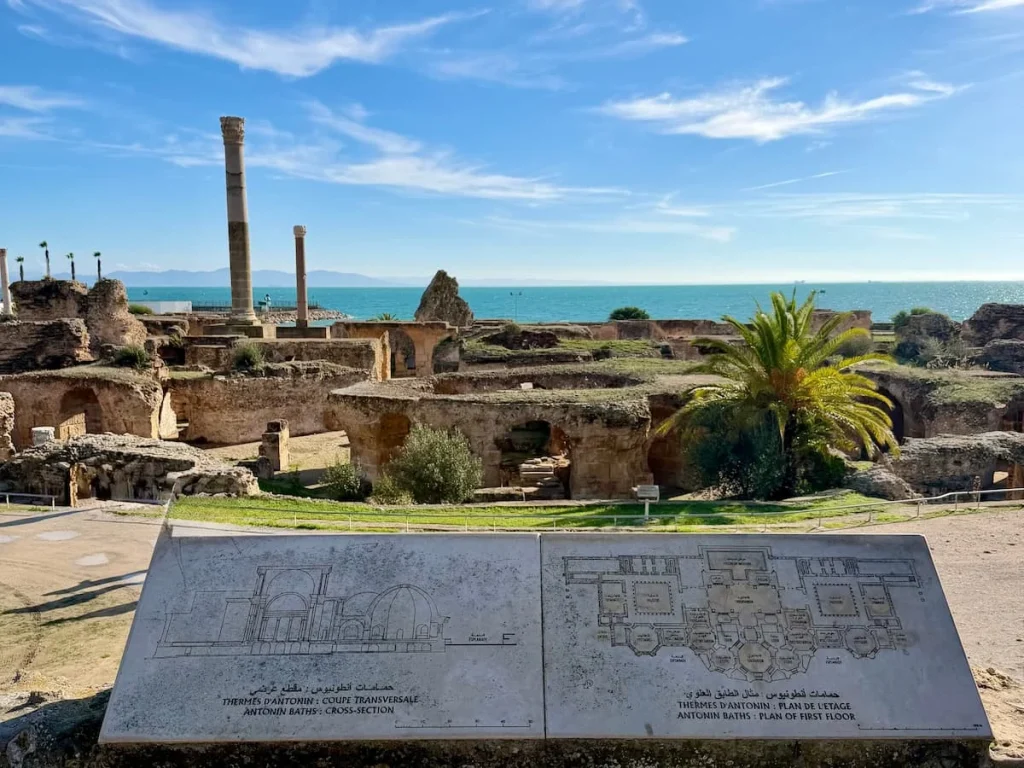
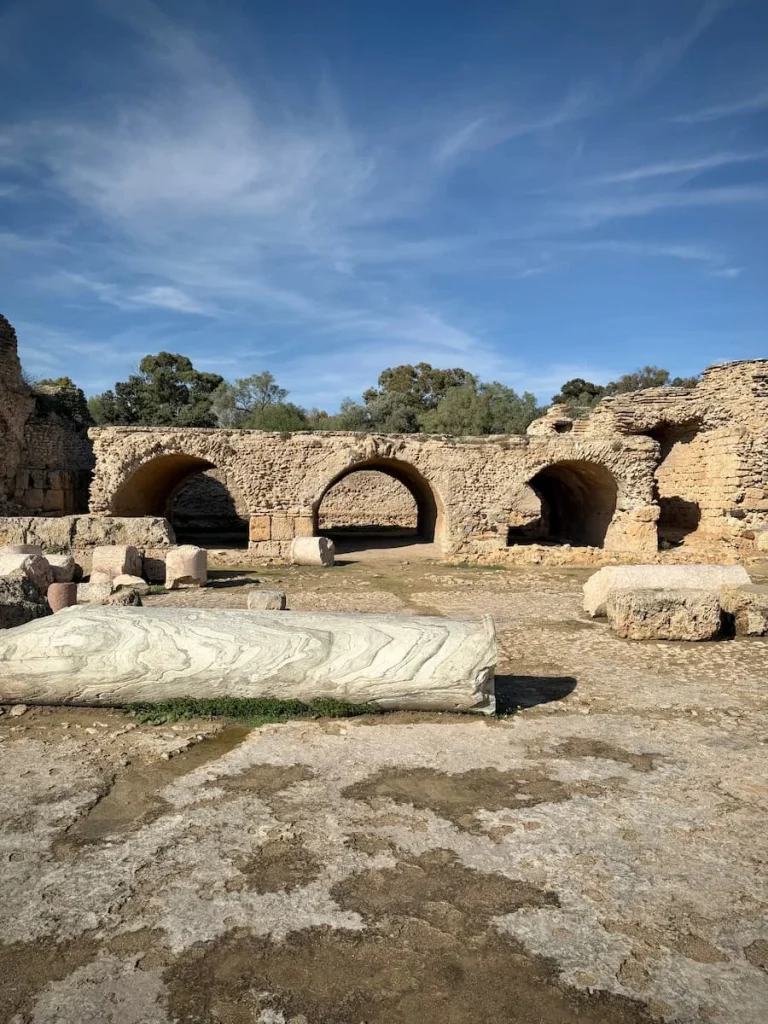
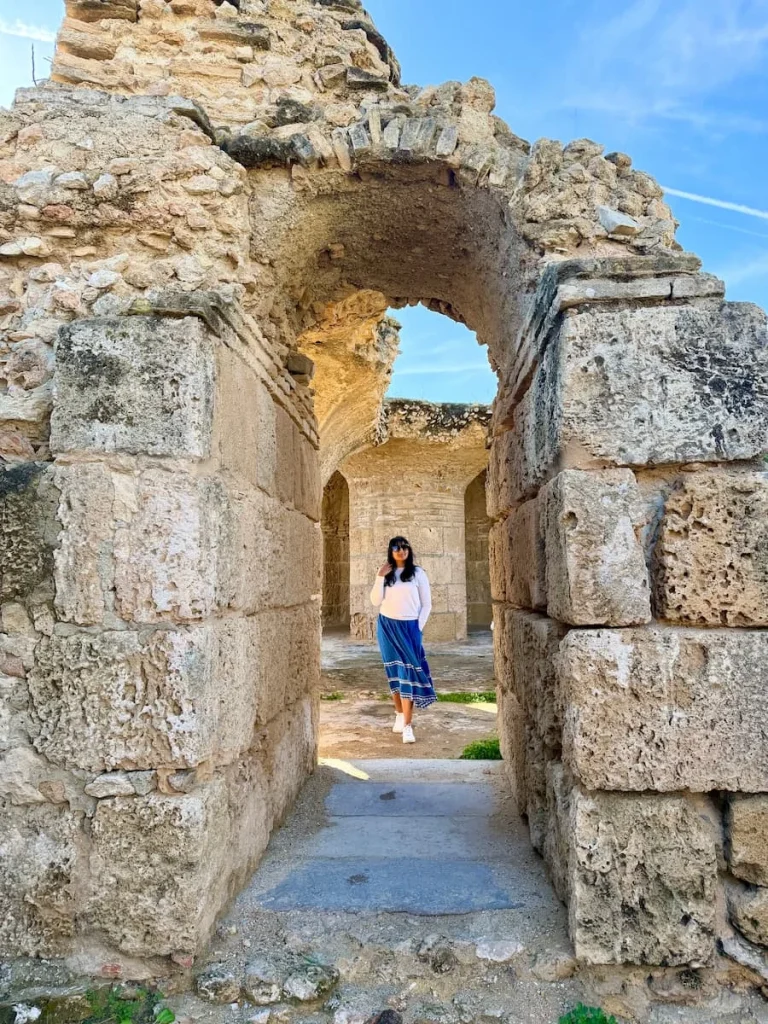
ANATONINIAN BATHS PARK
- Amphitheatre – which is pretty impressive.
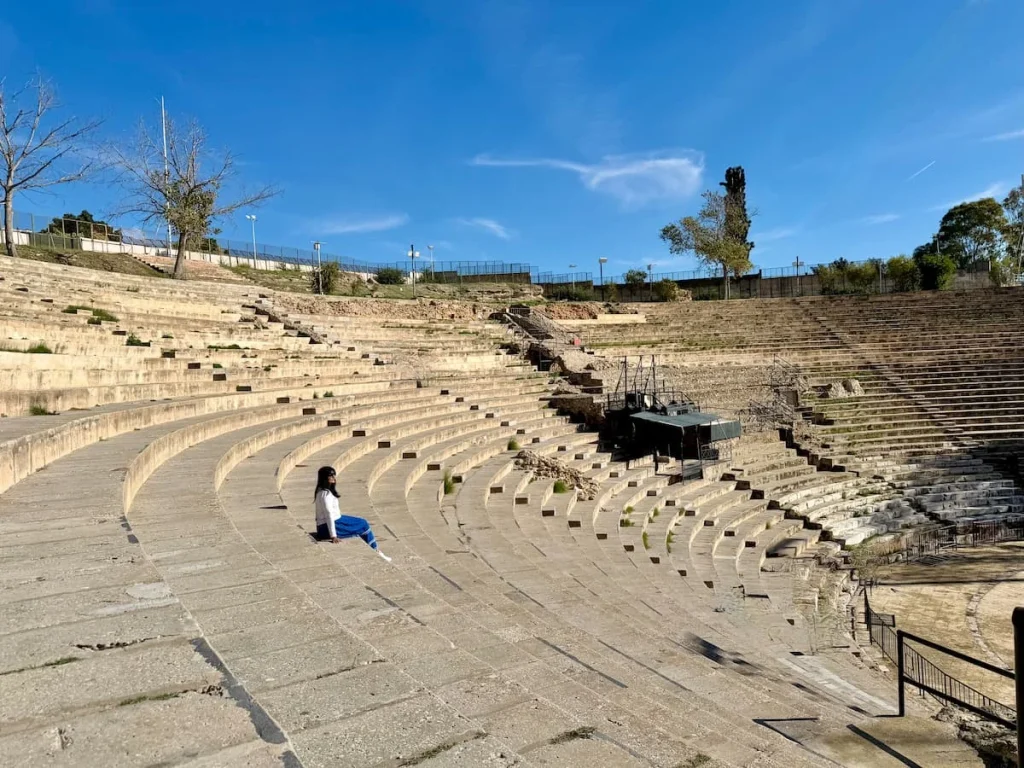
- Water Cisterns – located across the street from the amphitheatre.
- Byrsa Hill – a walled citadel above the Phoenician harbour in ancient Carthage with fantastic views over the city.
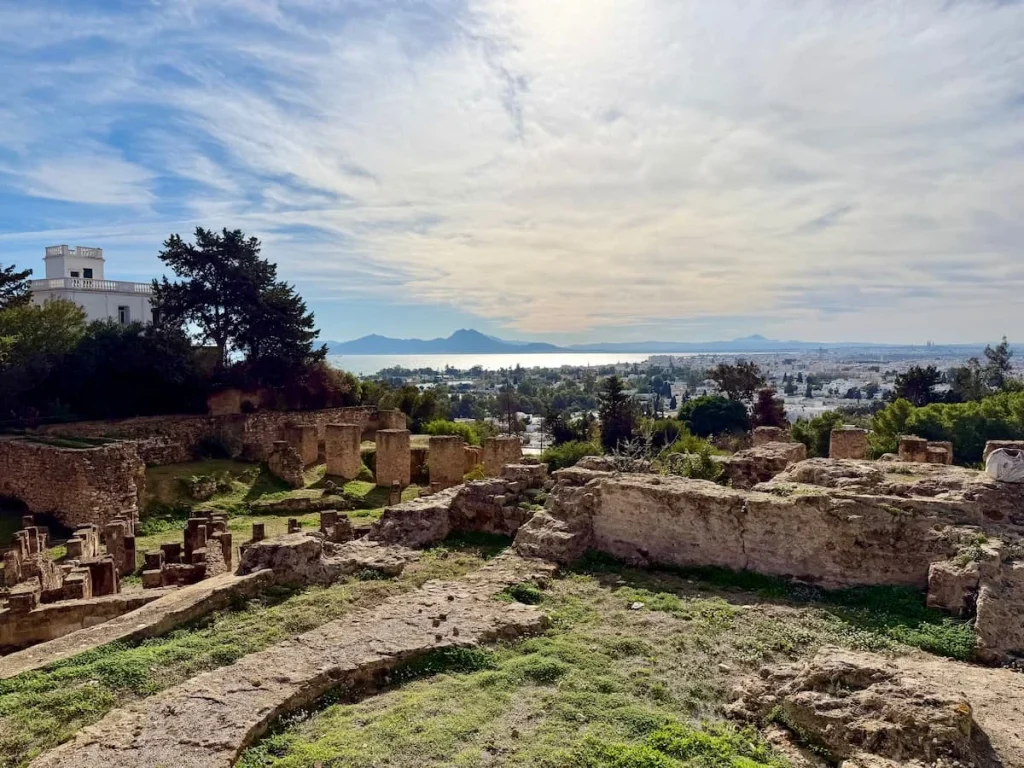
Bardo Museum
Just outside of Tunis is the largest and most important museum of Tunisia, The Bardo Museum. It houses a magnificent and rich collection of ancient artefacts spanning various civilisations. The museum itself is housed in a big 19th century palace and is noted for its classical sculptors and world class collection of incredible Roman mosaics collected and painstakingly relayed here from across the country.
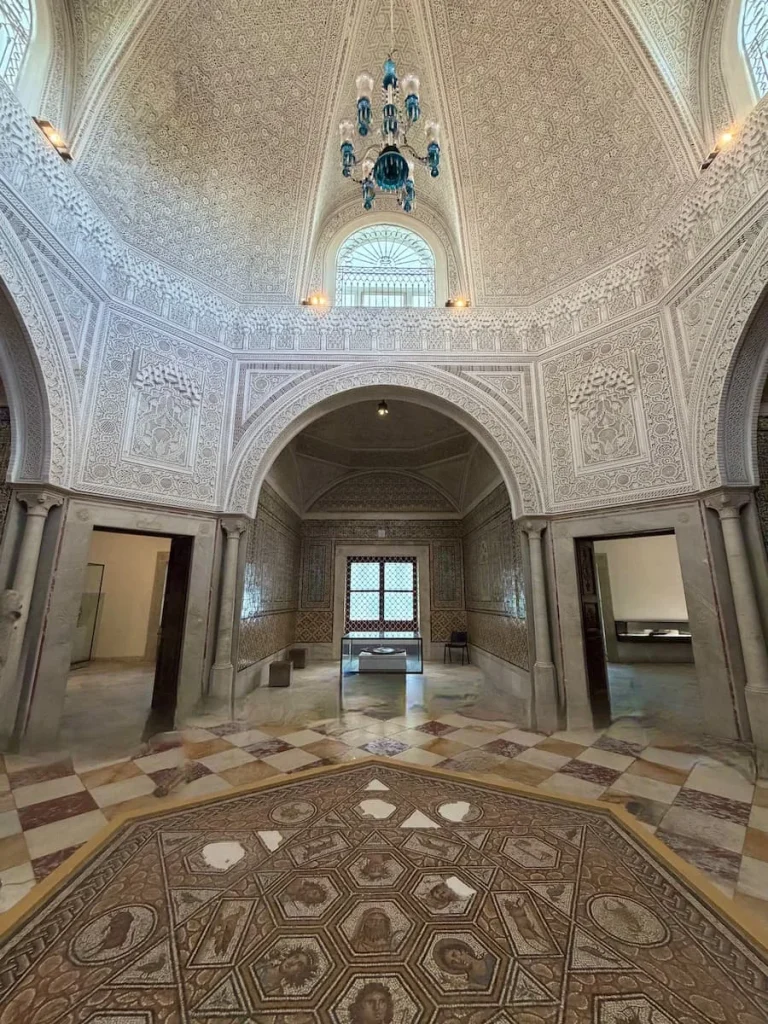
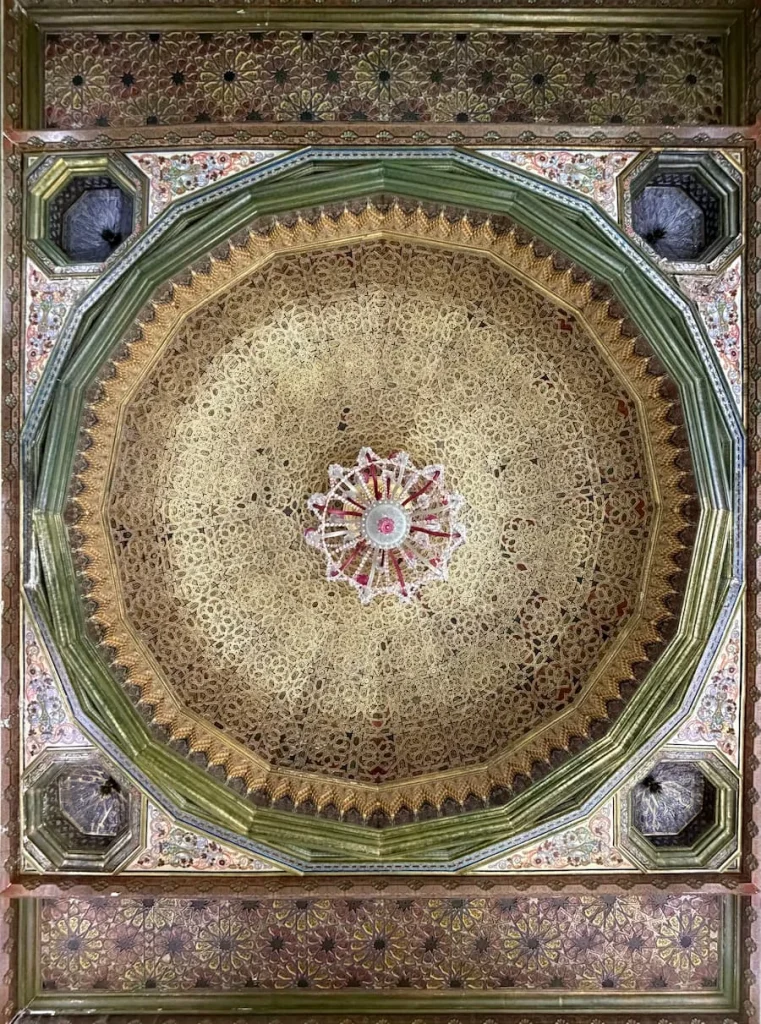
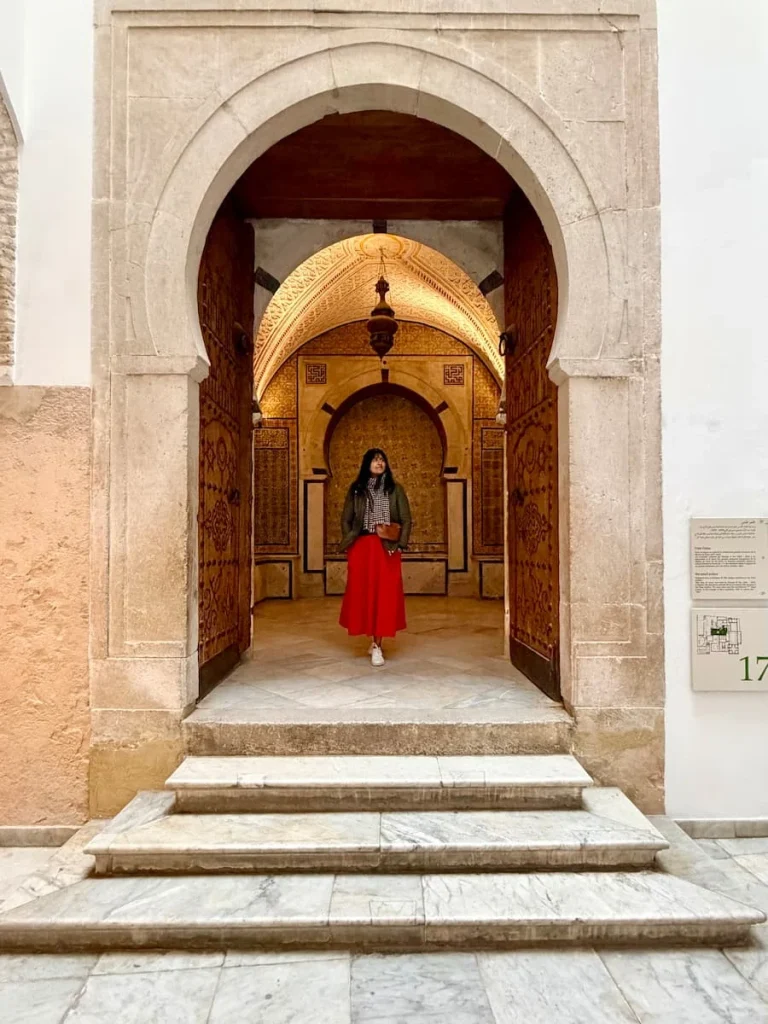
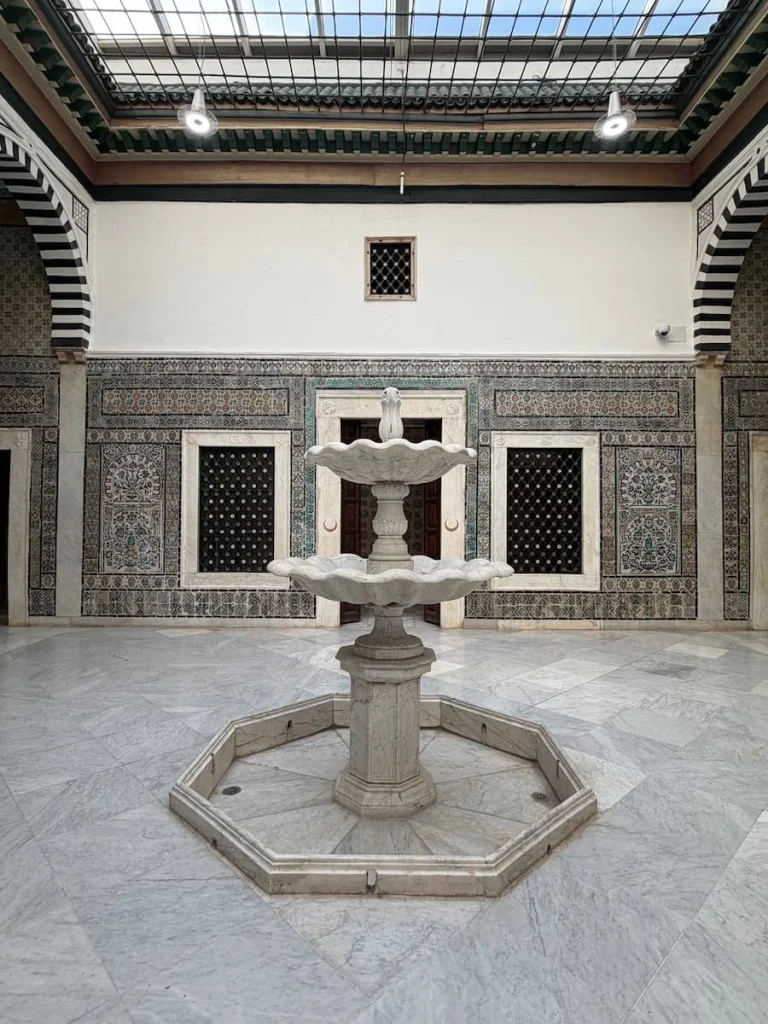
BARDO MUSEUM
Where to Eat in and Around Tunis
Buried deep inside Tunis Medina, we’d recommend:
Fondouk El Attarine is a historic house, a beautiful traditional Tunisian restaurant with artisan shops surrounding an open courtyard where diners can enjoy some of the most delicious food we tried in Tunisia.
If you’re vegetarian then the cheese bric, a local cheese stuffed pastry, couscous with harissa vegetables and the pistachio chocolate mouse are really good. Also end with a traditional mint tea.
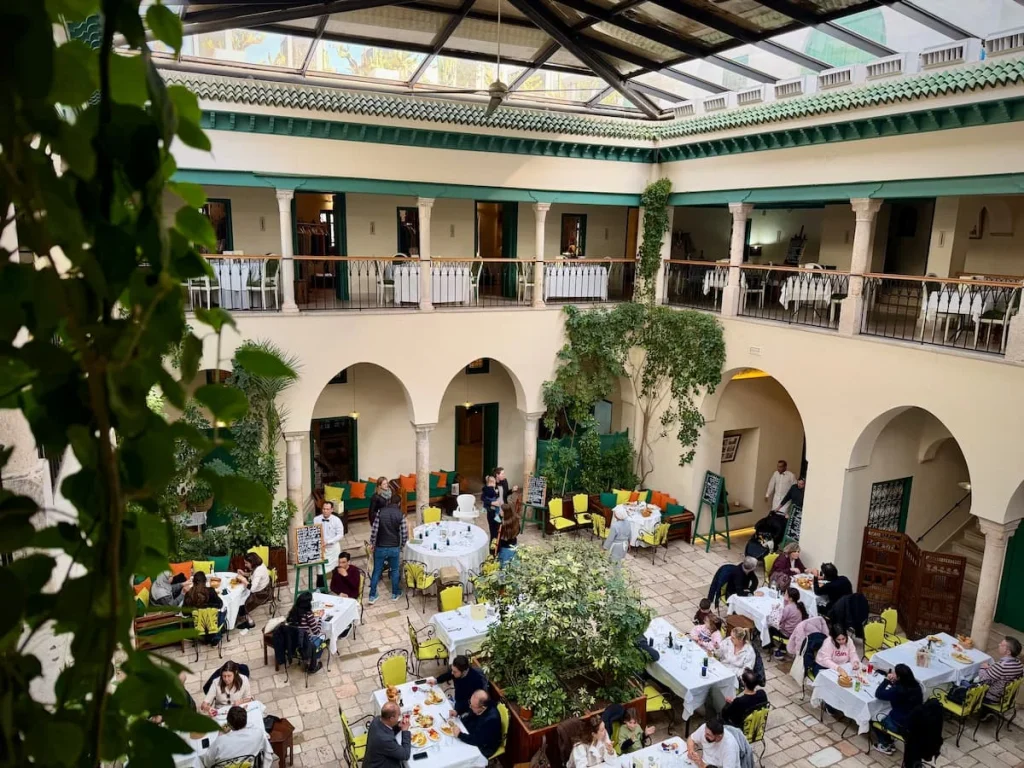
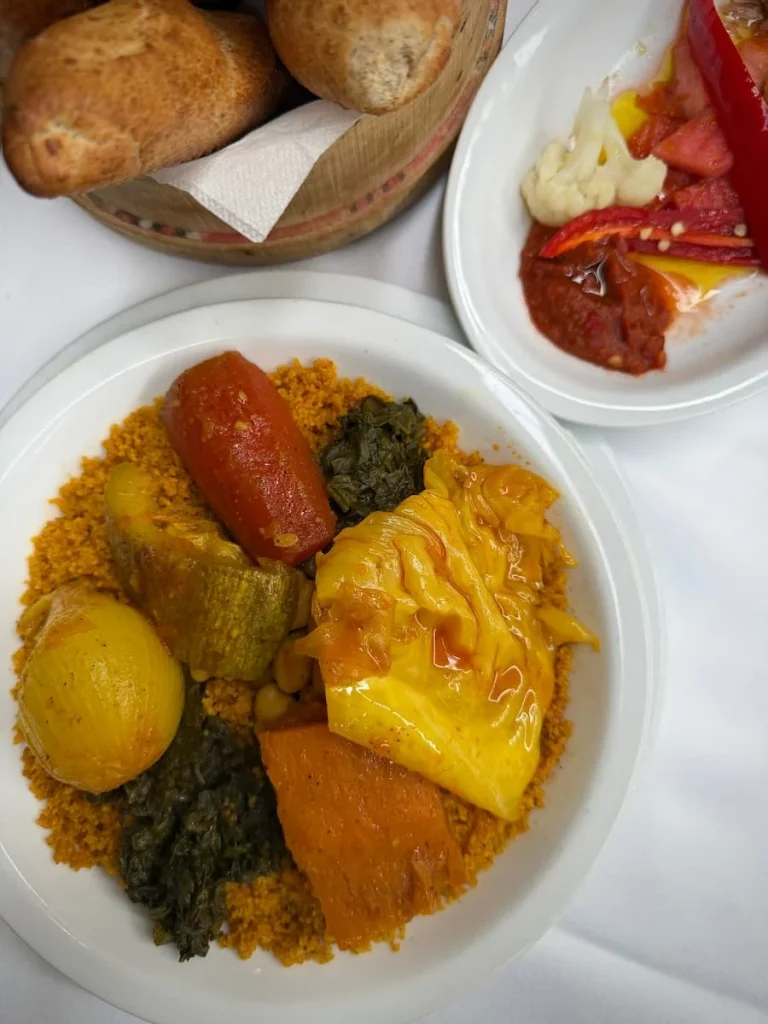
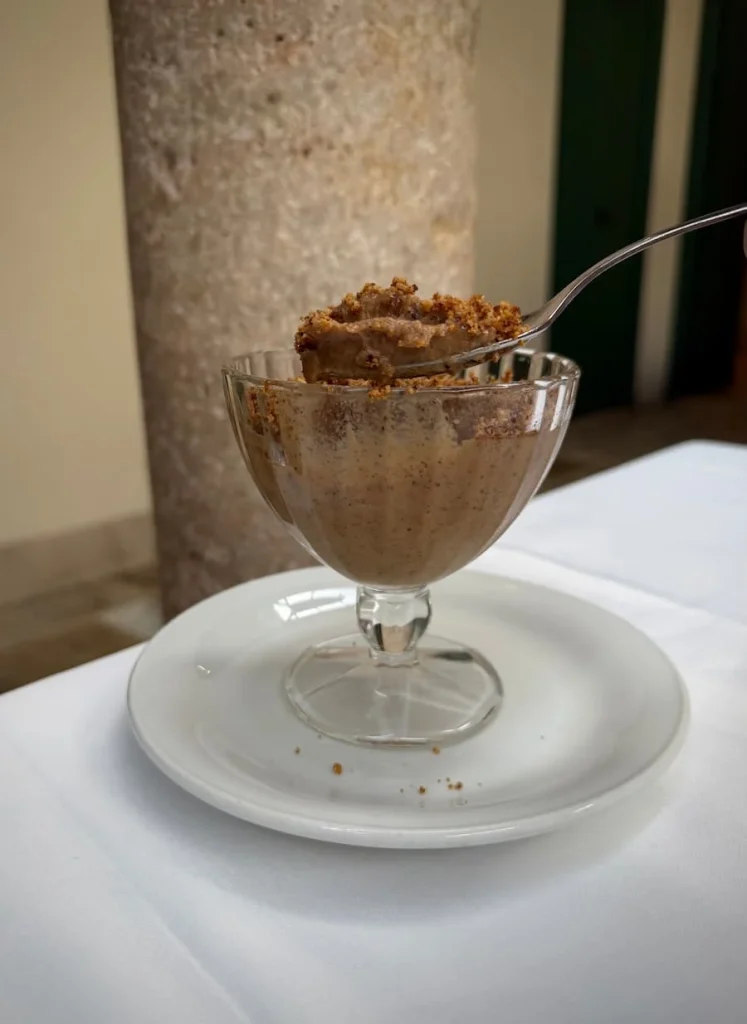
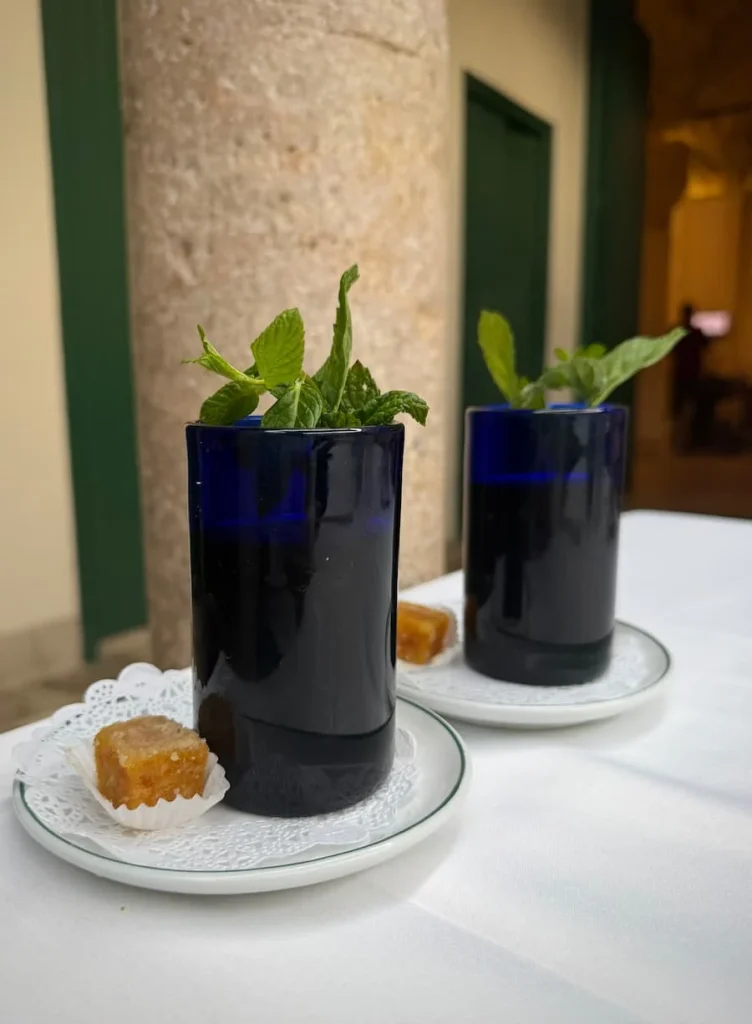
FONDOUK EL ATTARINE
Where to Stay in Tunis
With only 16 suites, Dar el Jed Hotel & Spa boutique hotel is located right in the heart of Tunis Medina but feels an absolute world away with its tranquil interiors, courtyard and fountain. There’s a traditional Hamman onsite and views from the rooftop over the medina and parts of Tunis.
Transport & Tours Options
It’s possible to take an organised day tour that can include return transport to and from your accommodation or book a taxi for the day on a pre-arranged rate through your hotel.
Days 3 & 4: Sidi Bou Said, Testour & Dougga (Thugga)
Sitting in a prime location on the side of a Mediterranean hill, around a 20-25 minutes drive from Tunis, is the absolute picture perfect blue and white washed village known as Sidi Bou Said. It benefits from the most stunning views out to the Mediterranean Sea.
Explore Sidi Bou Said
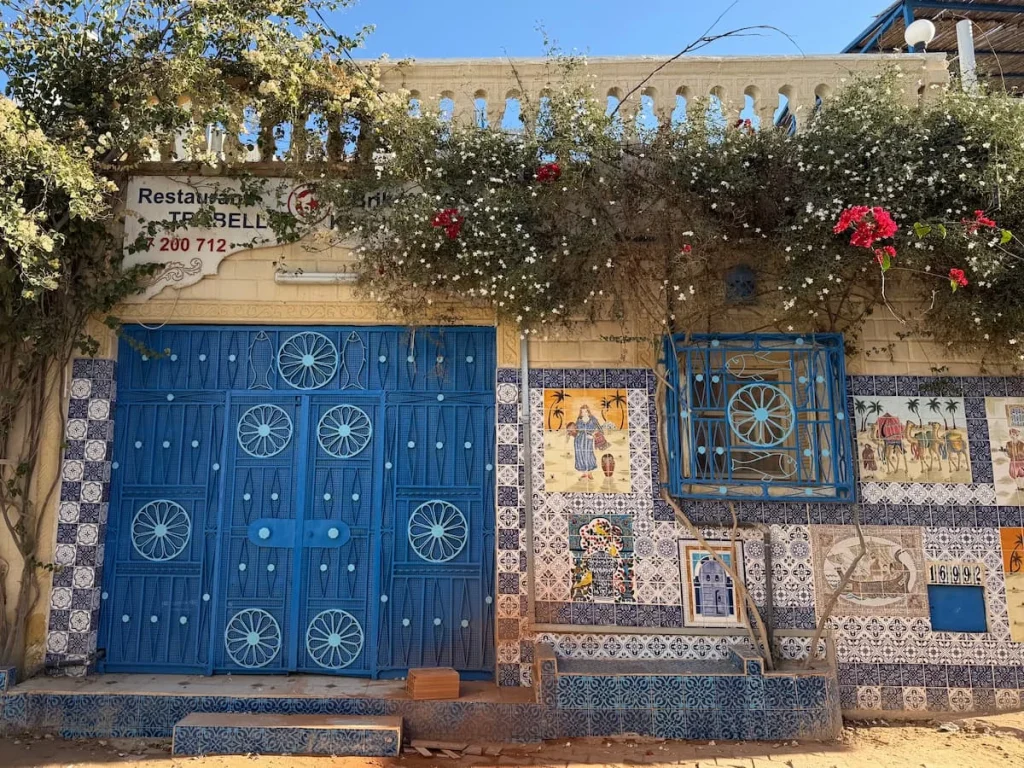
Spend a full day exploring the blue and white washed village of Sido Bou Said, perched high above cliffs overlooking the Mediterranean sea and Carthage. A UNESCO World Heritage listed site, and hailed as one of Tunisia’s most beautiful villages. Walk around the main shopping street, the small alleyways that go up and down via differing inclines, look out to the sea at the Marina, marvel the traditional blue and green painted doors studded with black nails in patterns. Look up and spot the curving mashrabia grills, overflowing jasmine and the largest variety of bougainvillea you’ve ever seen. At the top of the village, see the lighthouse and cemetery from this vista you can get a great sunset where the sky turns beautiful shades of candy floss colours.
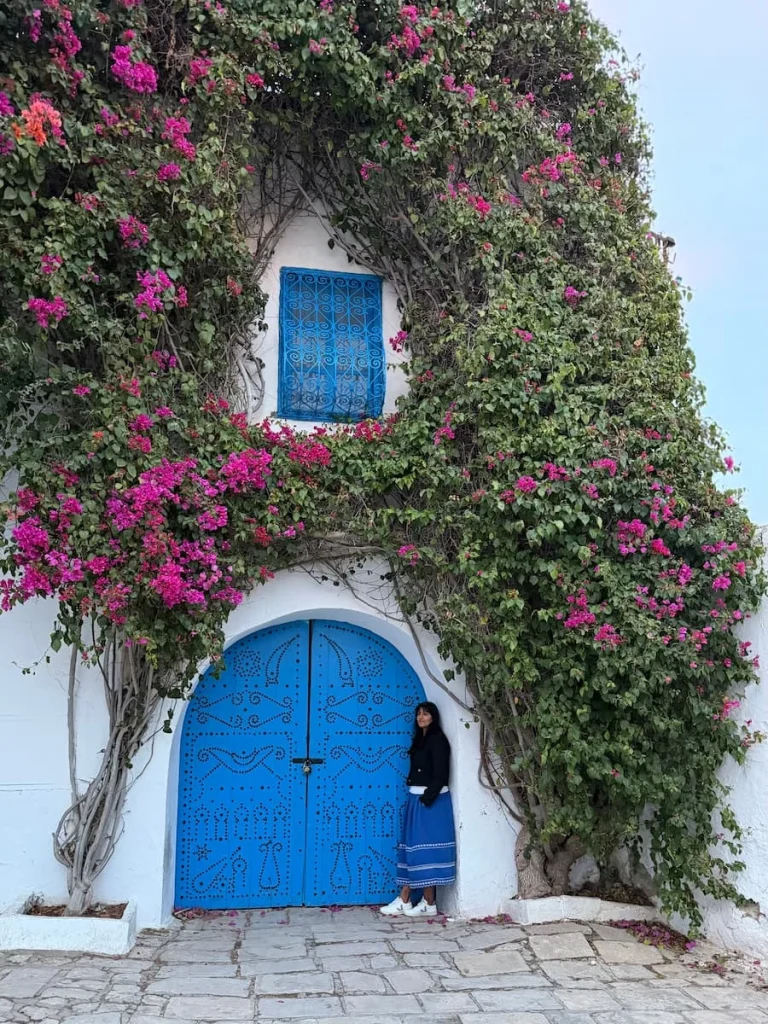
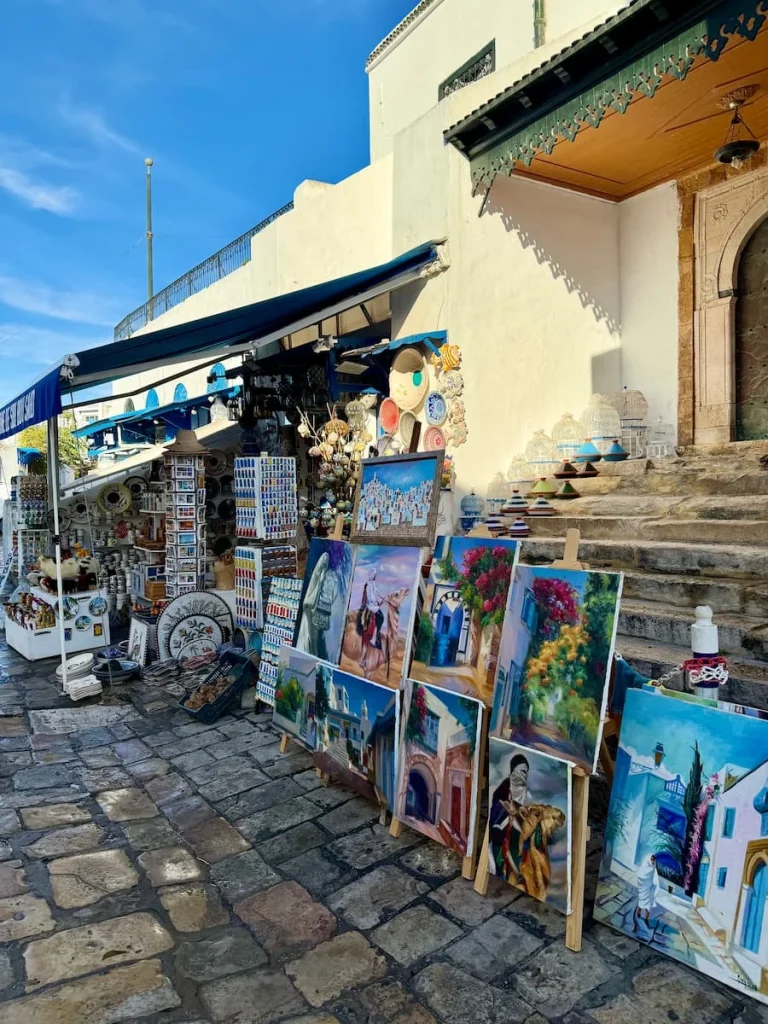
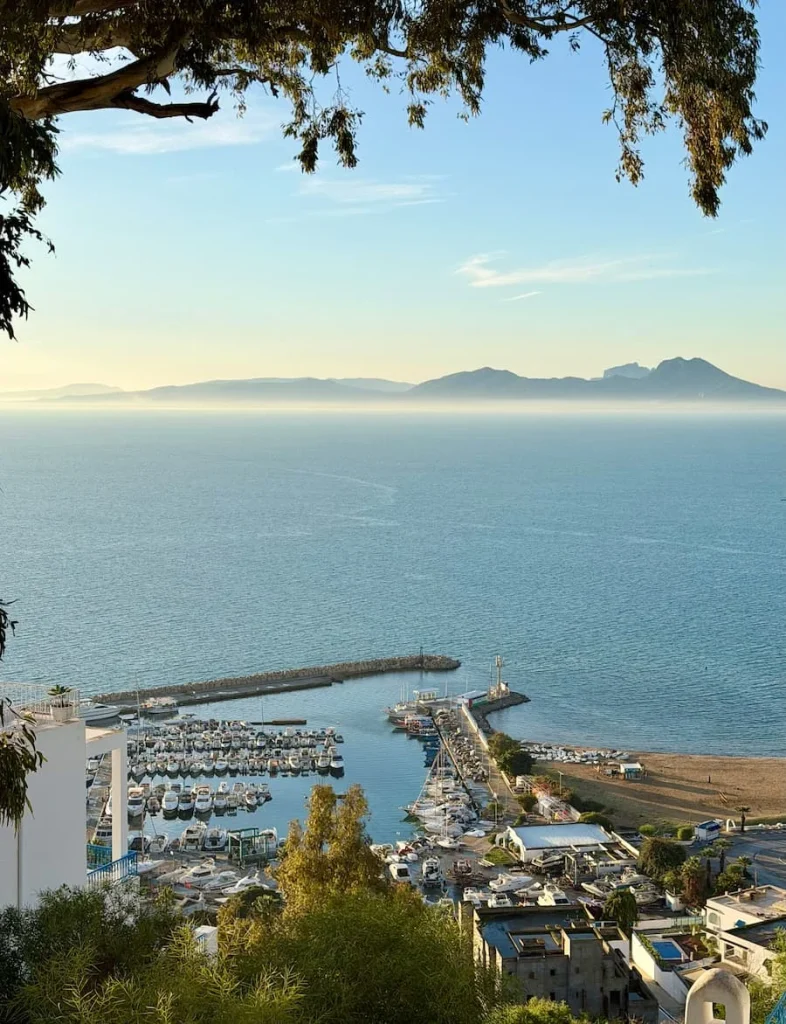
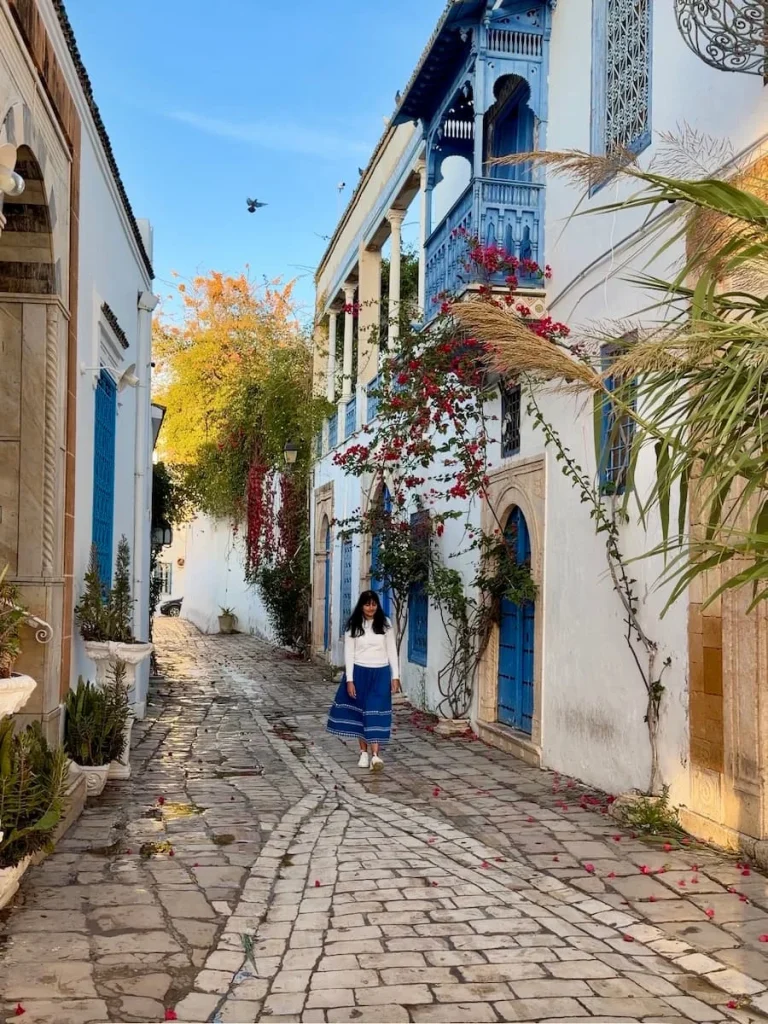
SIDI BOU SAID
We recommend heading to the local shops, cafes, rooftops, slowing down the pace a little and taking in the local galleries and artisan shops selling pottery and watercolours. Oh and do not miss trying a Bamboulini which is a big large ring donut that Sidi Bou Said is famous for! There’s literally only one place where you can get them too and its’ a bit of a constitution, having been operating since 1932. Our one day guide to Sidi Bou Said has all the deets on the best things to do, see, where to stay and most importantly eat!
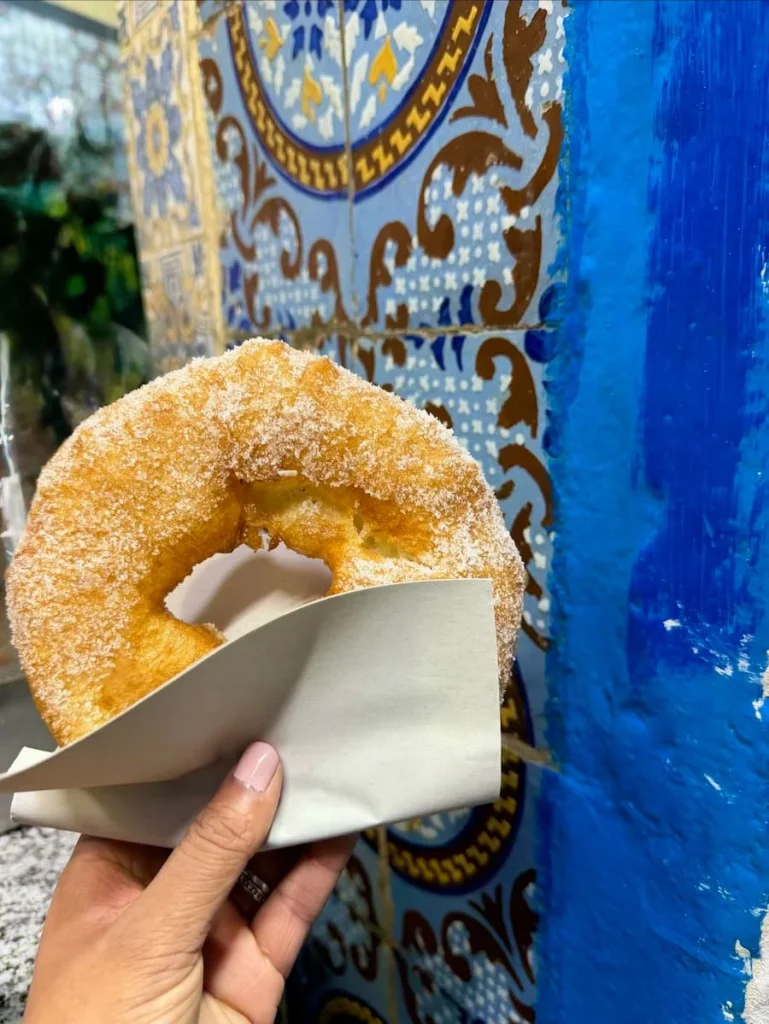
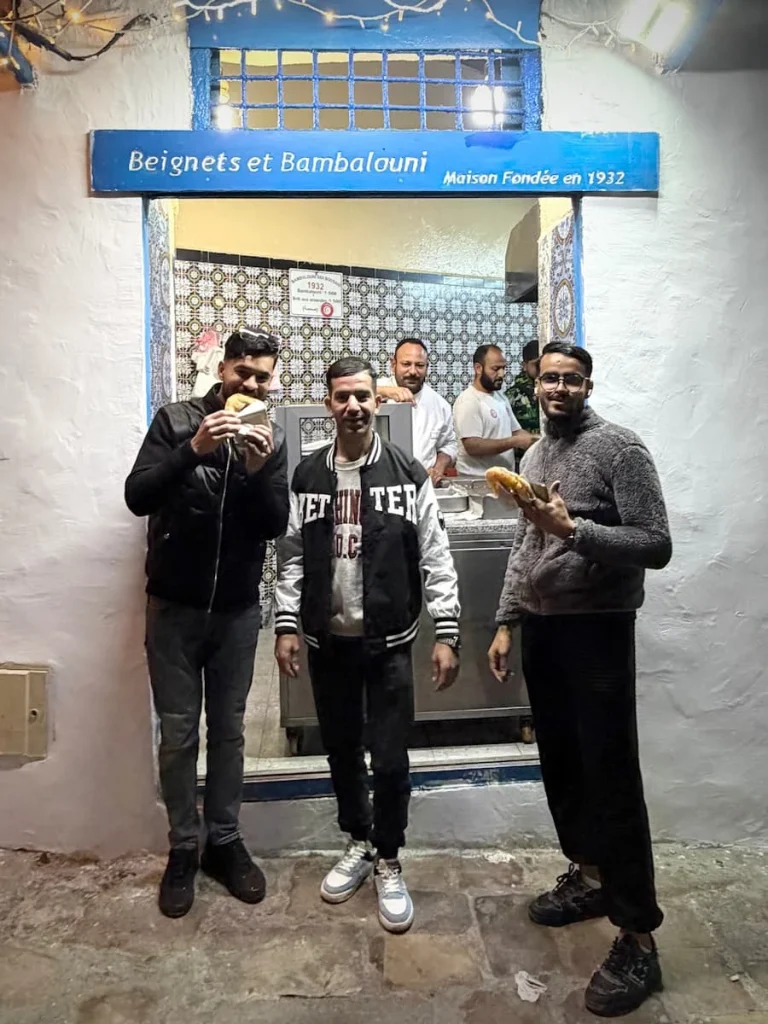
BAMBALOUNI HOLE IN THE WALL, SIDO BOU SIAD
Dougga (Ancient Thugga)
About a 90 minute drive from Sidi Blu Said, Dougga is a must visit archaeological site, located in North Eastern Tunisia along the Mejerde River Valley. Dougga is a UNESCO World listed site that has to be the most impressive Roman site in Tunisia of the ancient cities known as Numidia.
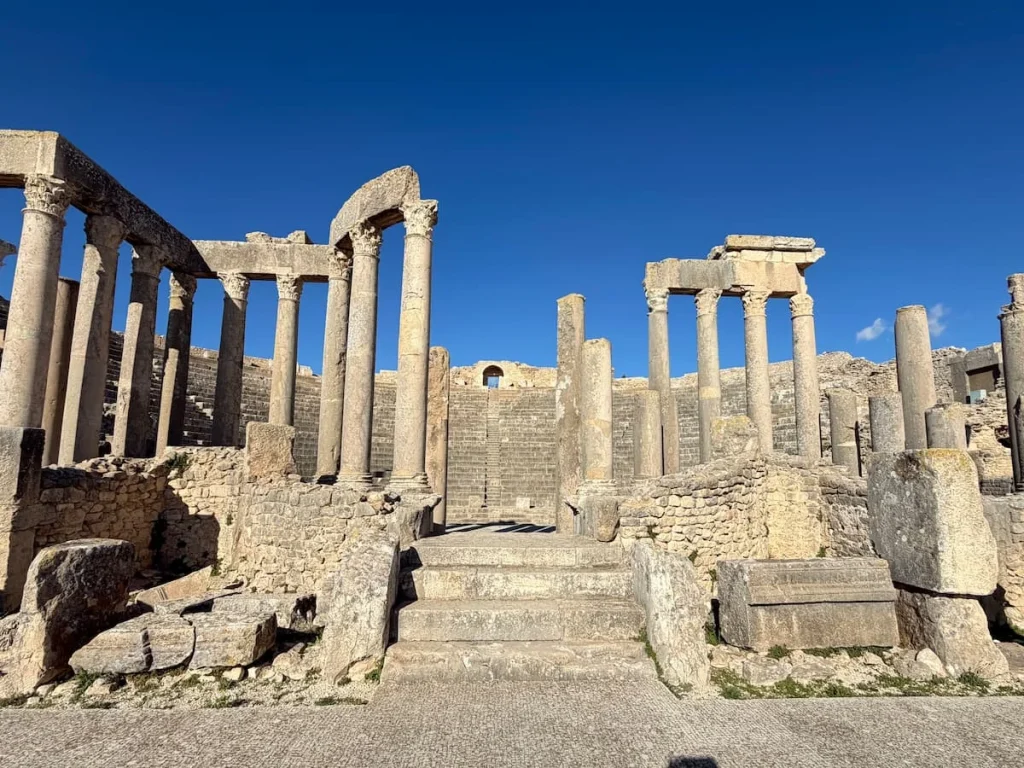
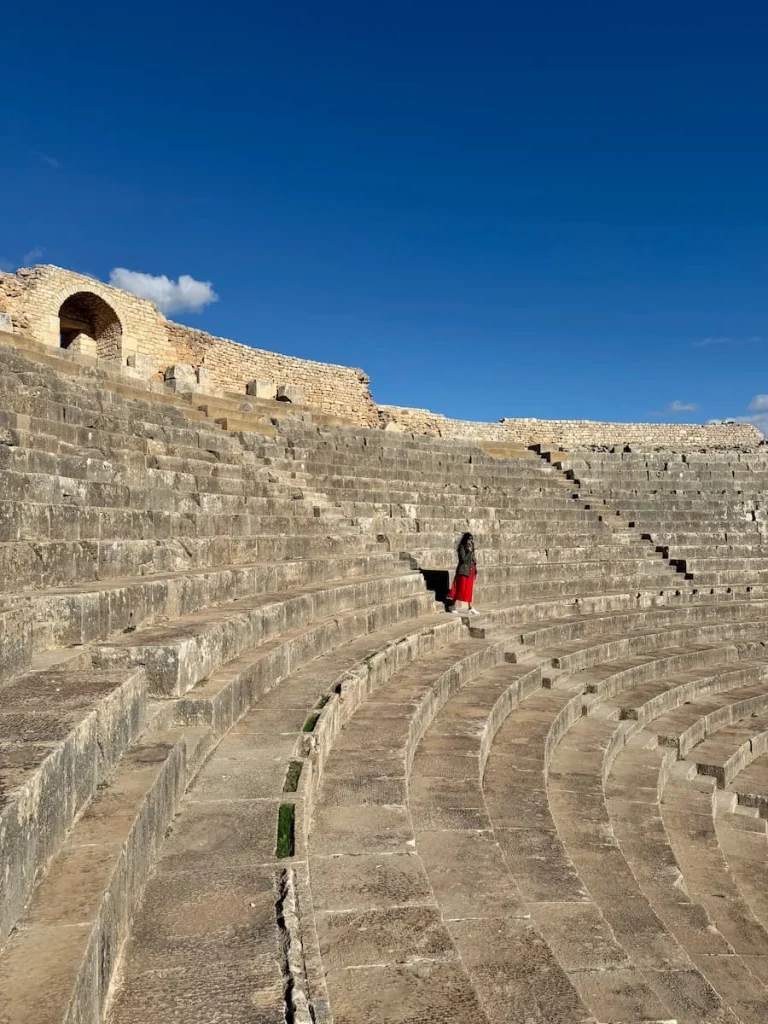
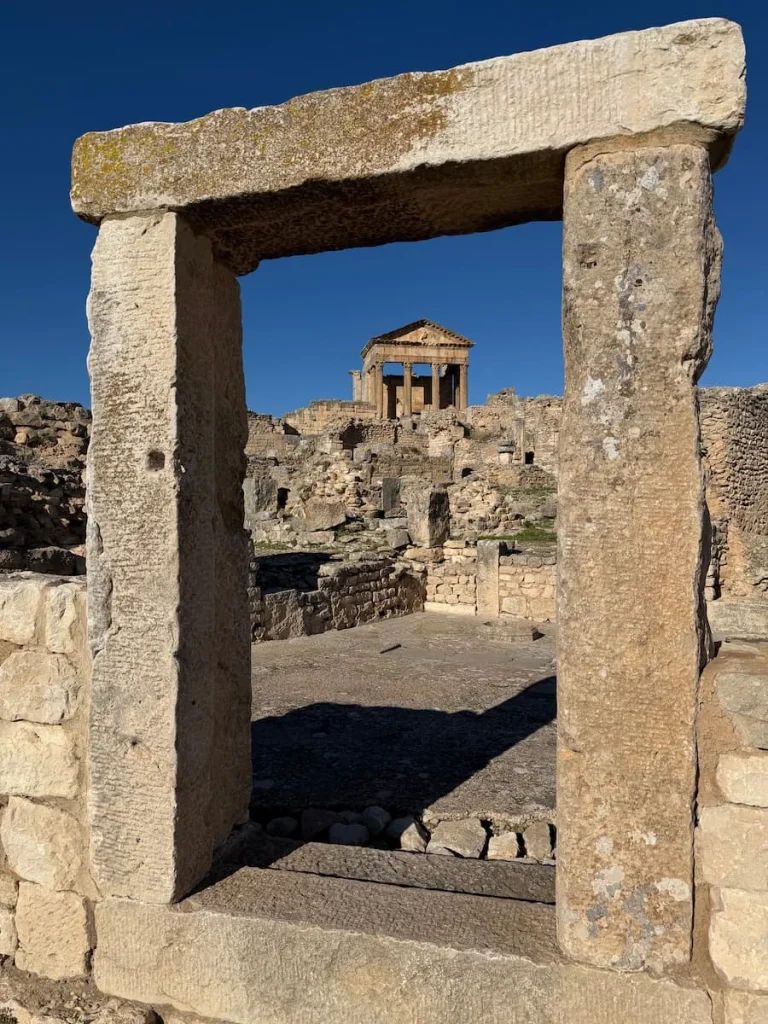
DOUGGA
The location is rural, with Dougga being the seat of a Numidan principality until annexed by Rome after the battle of Thapsus in AD 46. Highlights of the site includes a once theatre dating back to 168 AD, which had capacity of 3,500 seated, a extremely well preserved Capitole Tempe, a honey coloured temple dedicated to Juno Caelistis and an 18 metre needle like mausoleum, with a small pyramid donning a lion figure on it.
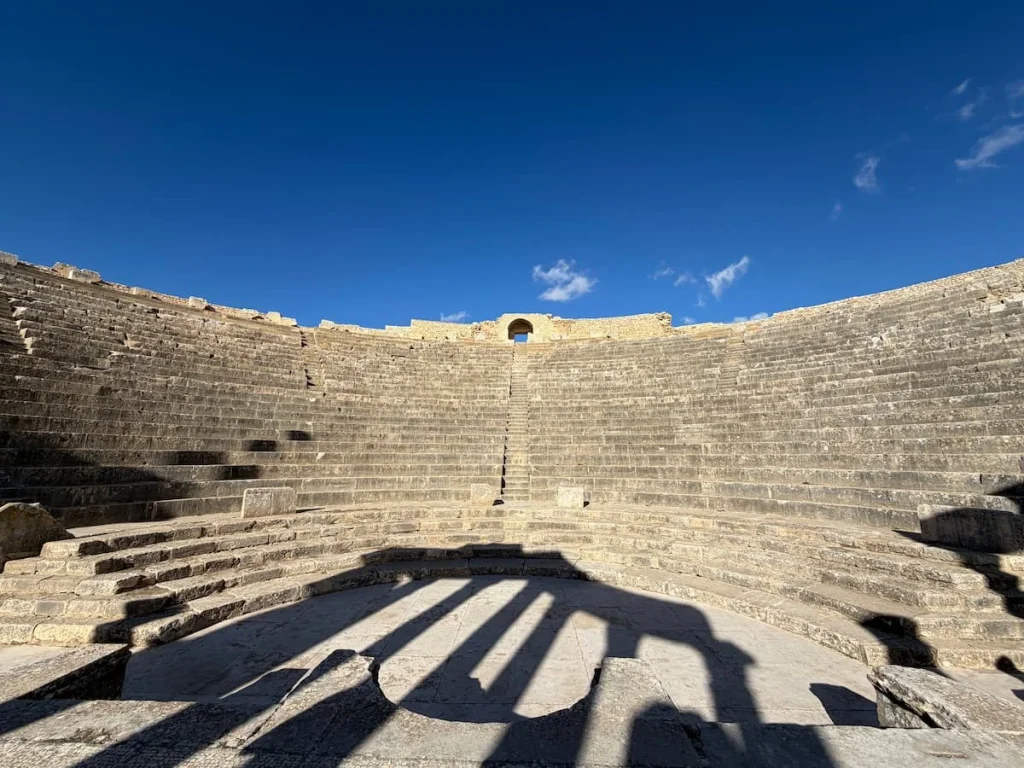
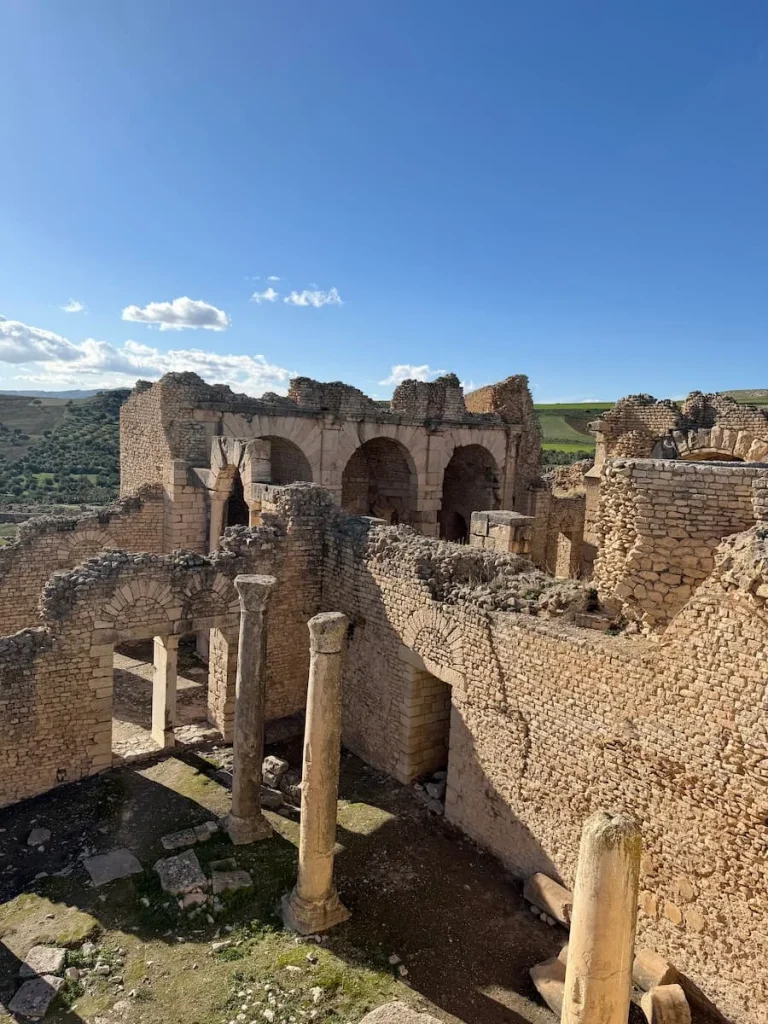
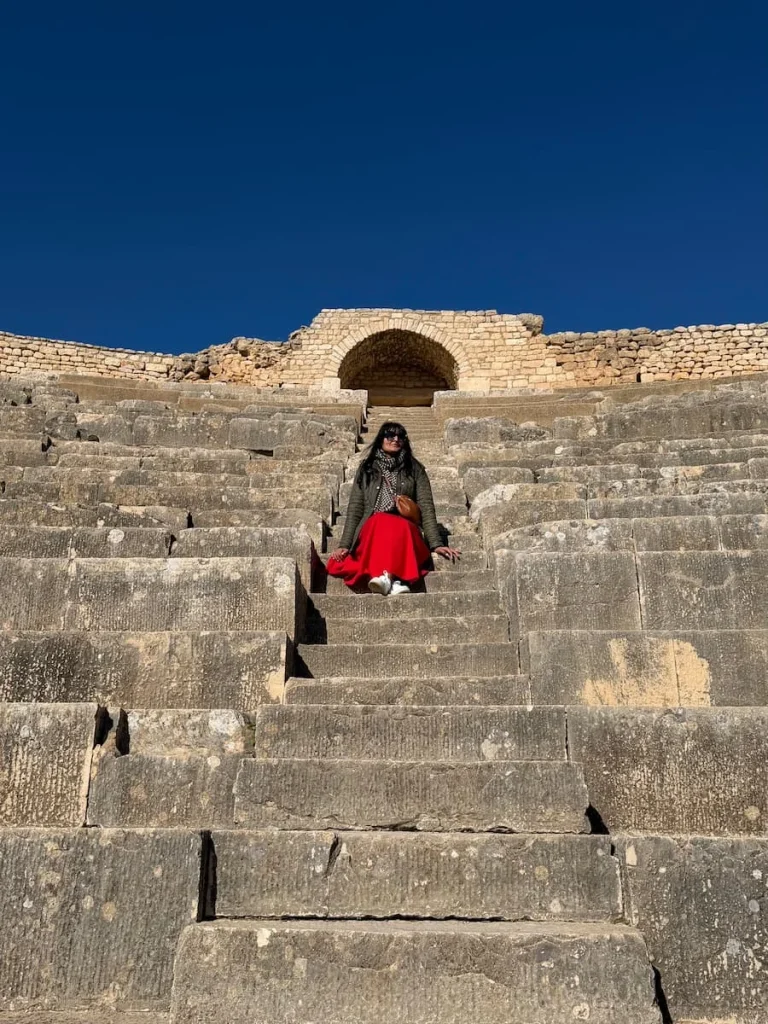
DOUGGA
Testour
En route to Dougga, break the journey up by stopping off at Testour, which is a small Andalucian heritage town that’s known for its pomegranate festival. Note the Southern Spanish style of houses as well as the unfinished Jewish homes and detailed Minuret.
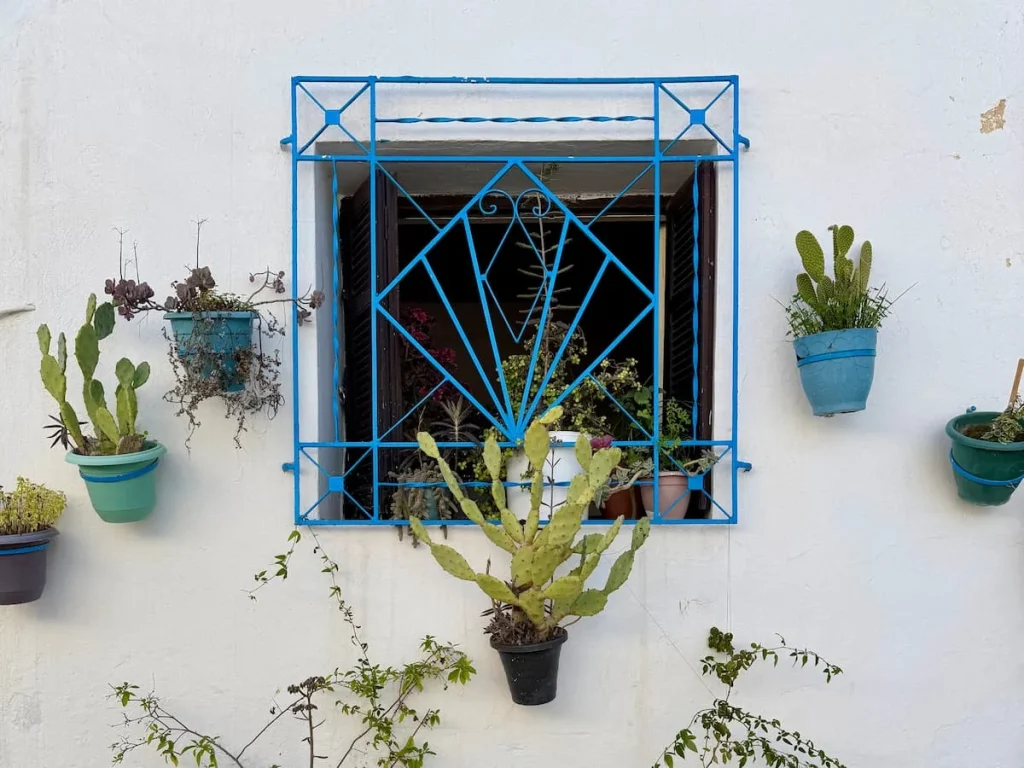
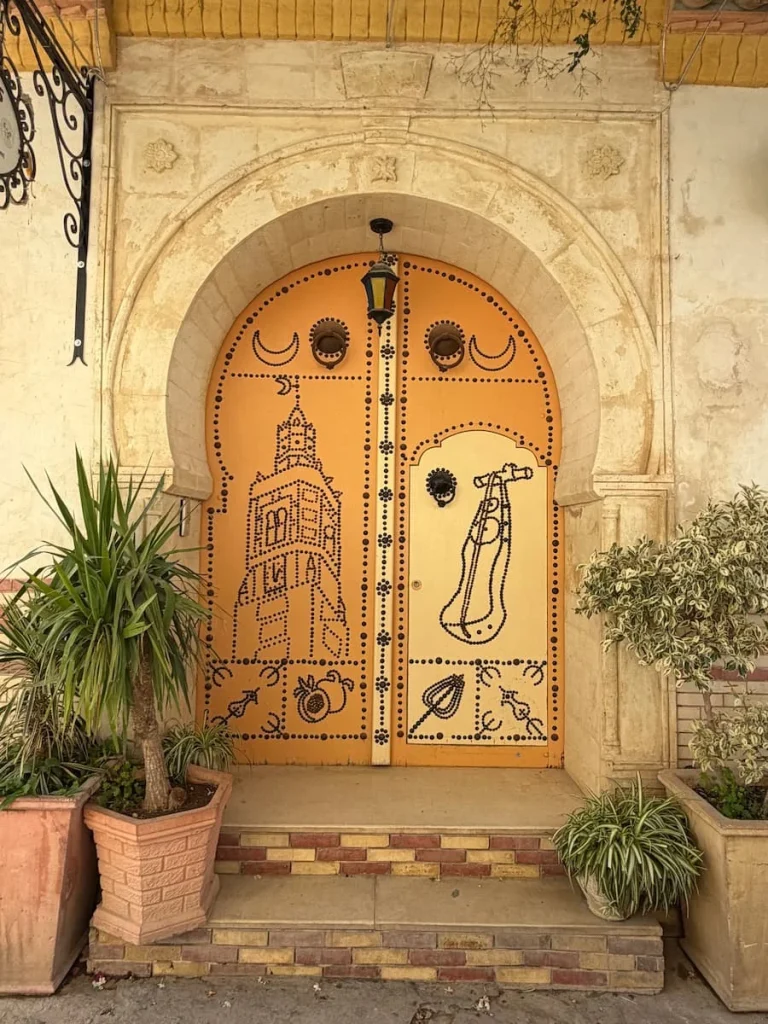
TESTOUR
Be-lavie Tip: Testour is a bit of a foodie hub with lots of fresh produce available. They do some great cows milk cheese which has been infused with rosemary as well as pomegranate which tends to be available from September through to November.
Tunsian Olive Oil Production
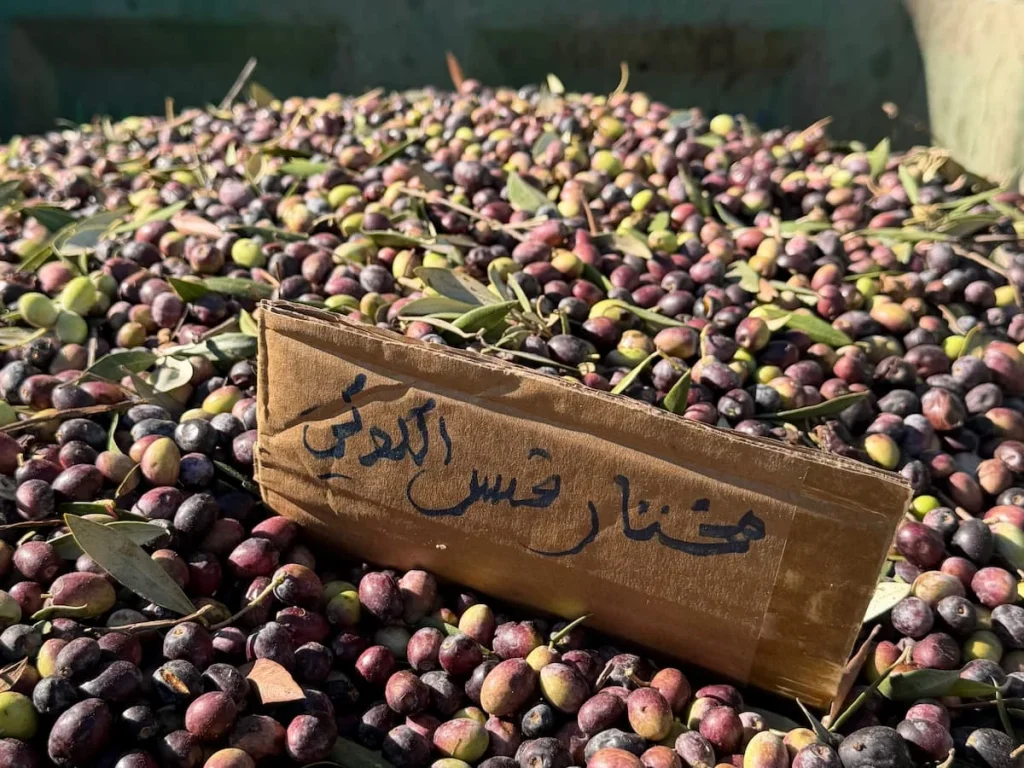
Close to Dougga, the landscape is dominated by Olive groves with a few distilleries en route. These are not usually open to the public but if like us you are travelling with a guide then you may be able to visit. These are very local and only Arabic is spoken but watching the whole process is rather fascinating from picking, to making the oil. We even managed to try some of the oil with bread at the end. Tunisia makes 340 million litres of olive oil per year and is the second largest producer after Spain.
Where to Eat in Sidi Bou Said
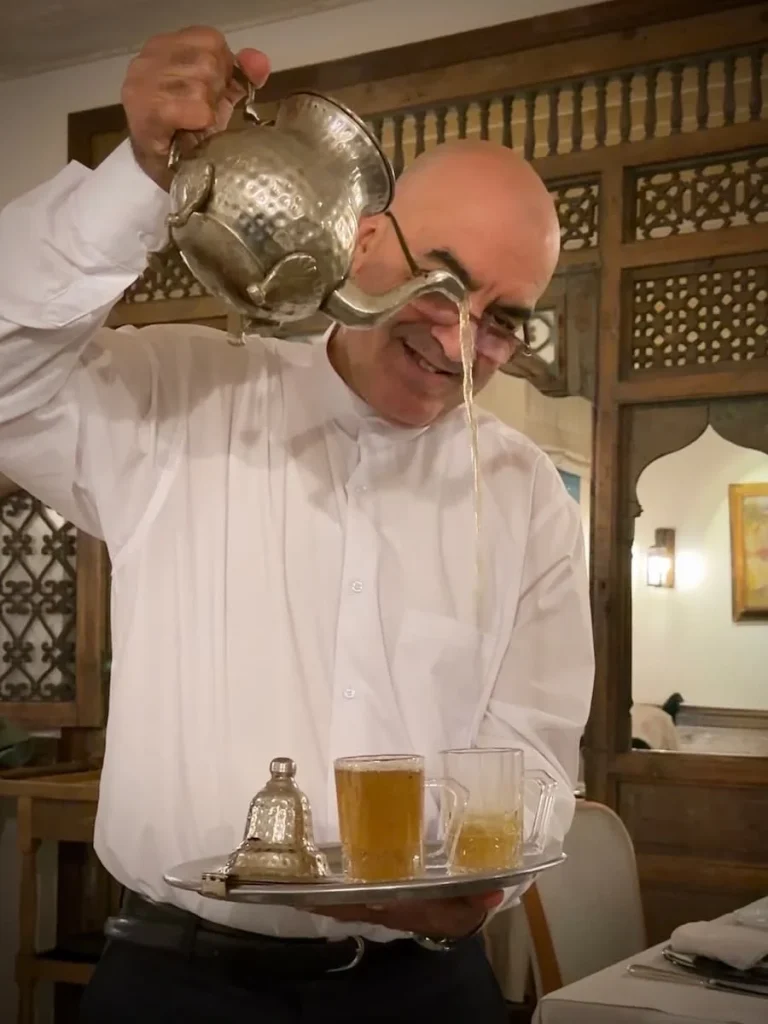
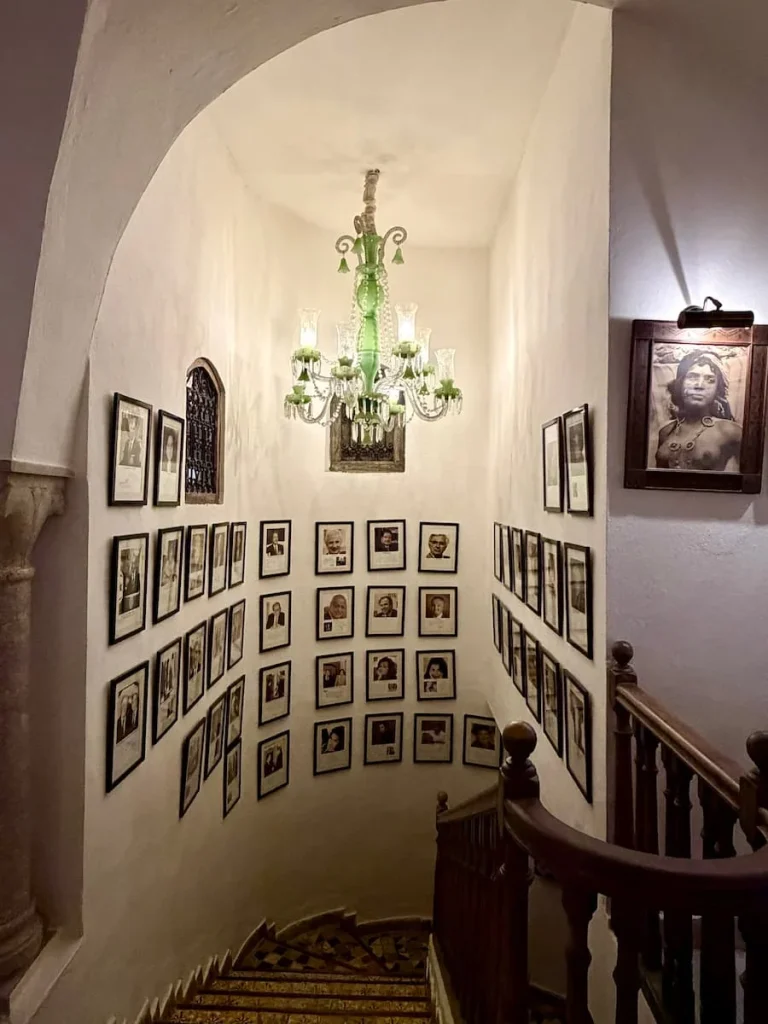
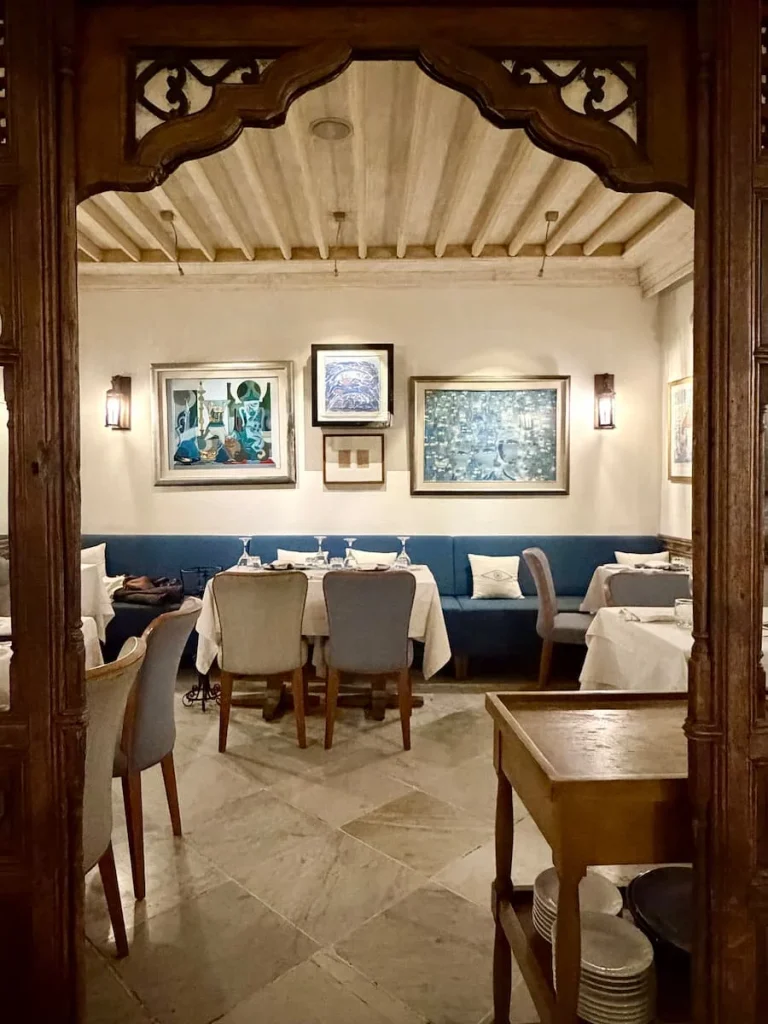
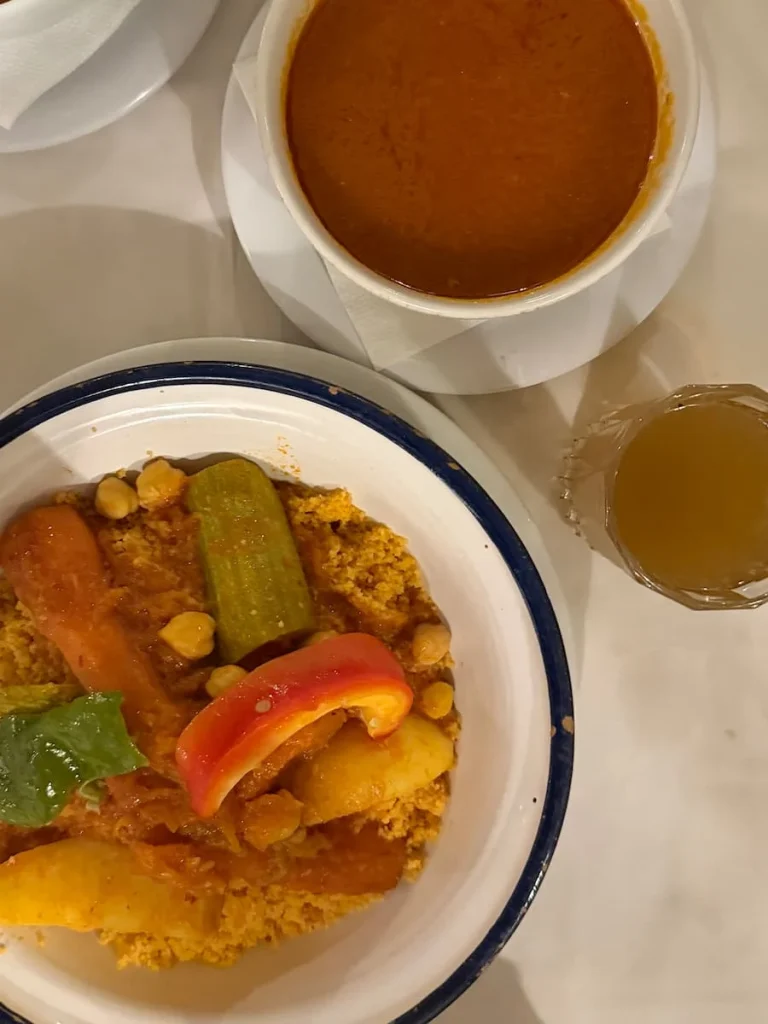
- Au Bon Vieux Temps – with great views out to the sea, this restaurant is situated right at the top of the village and serves a great range of French and Tunisian dishes. We had the couscous with vegetables and a lovely thick spicy tomato gravy. They do an impressive mint tea pouring too! The interiors of the restaurant are beautiful with a courtyard, it’s also hosted many influential people over the years.
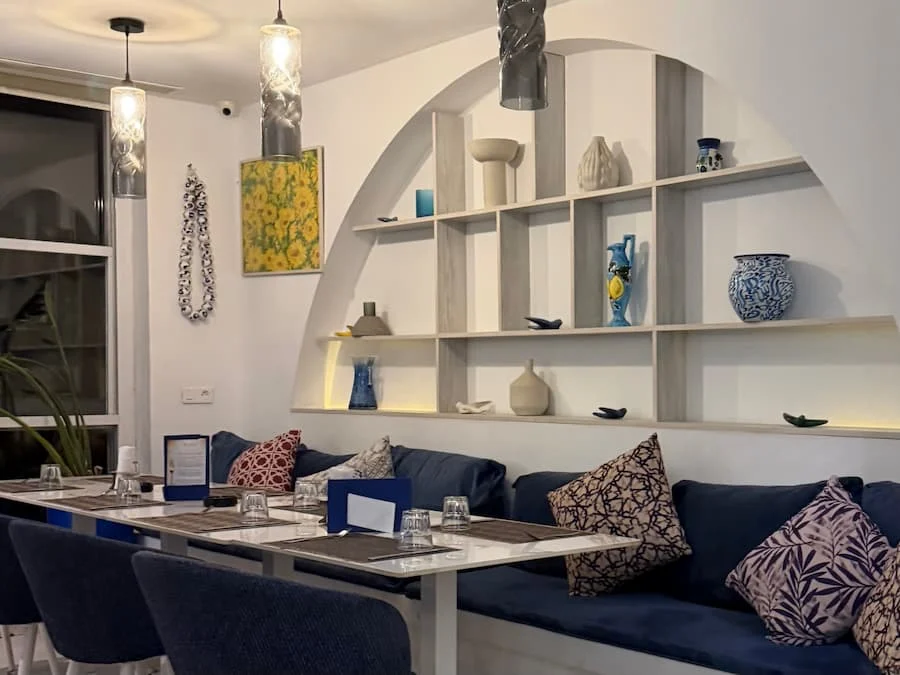
- Blu Blu – a rooftop restaurant serving a few traditional Tunisian dishes as well as Mediterranean offerings. We opted for the Tunisian Pizza, which are great if you’re not too hungry, and have a more crispy base than the Italian version.
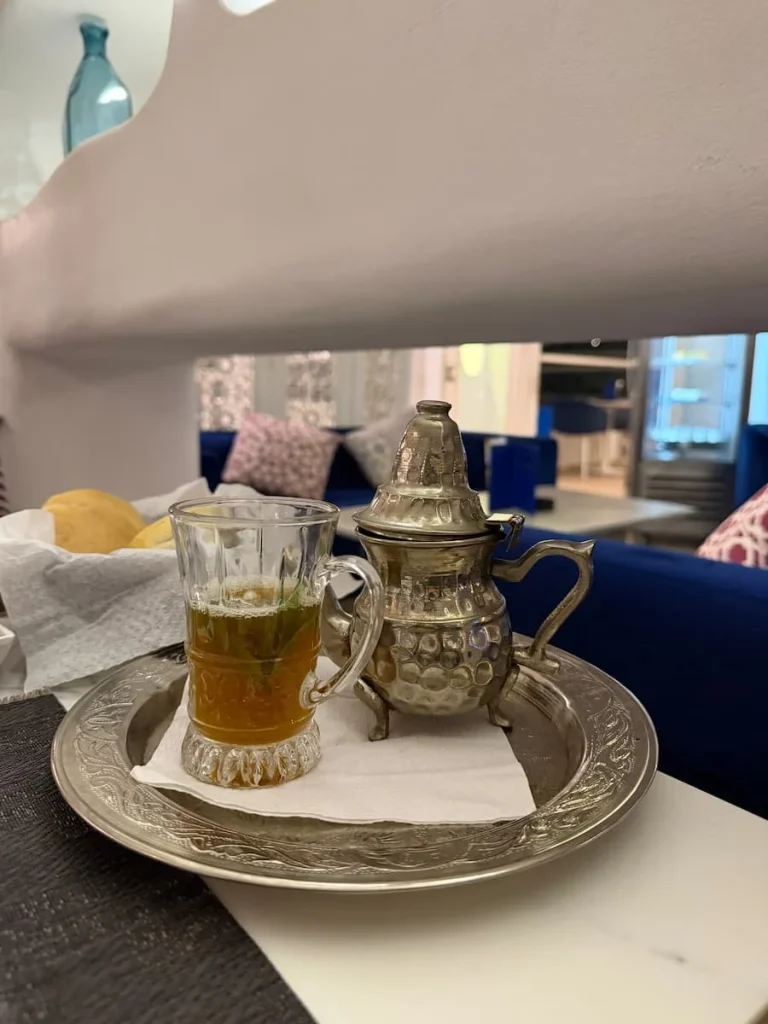
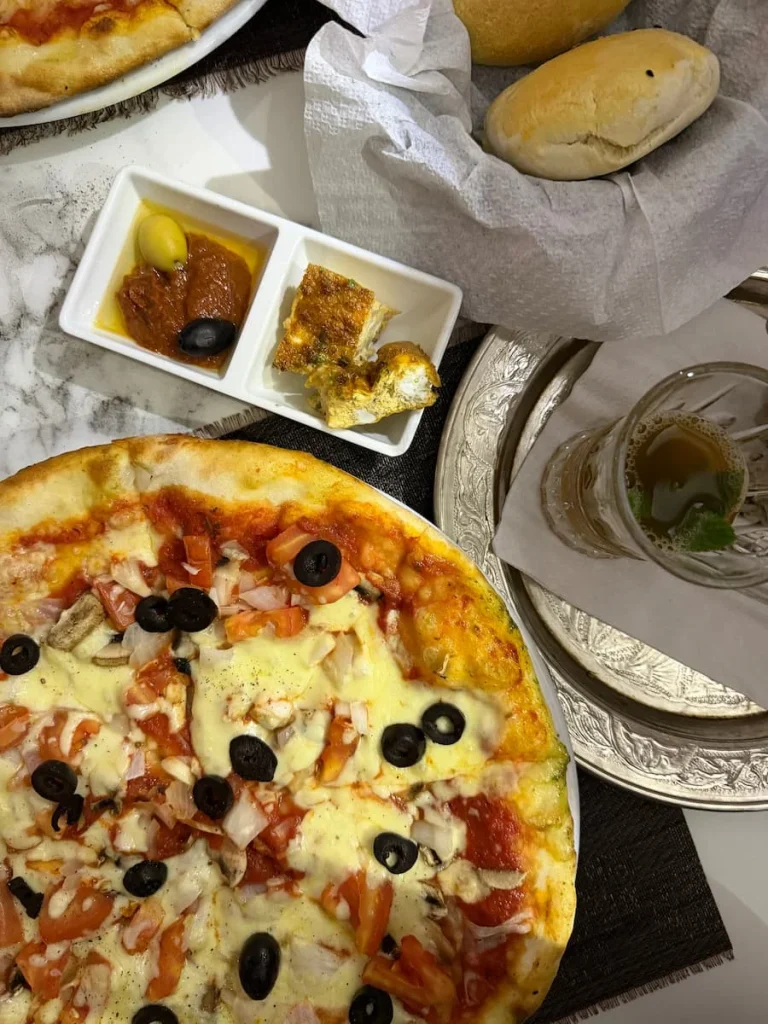
- Bambalounis – You have to try Sidi Bou Said’s speciality doughnut and although the place doesn’t have a name, you’ll easily find it as having the longest queue in the village! You can’t really miss it!
Where to Stay
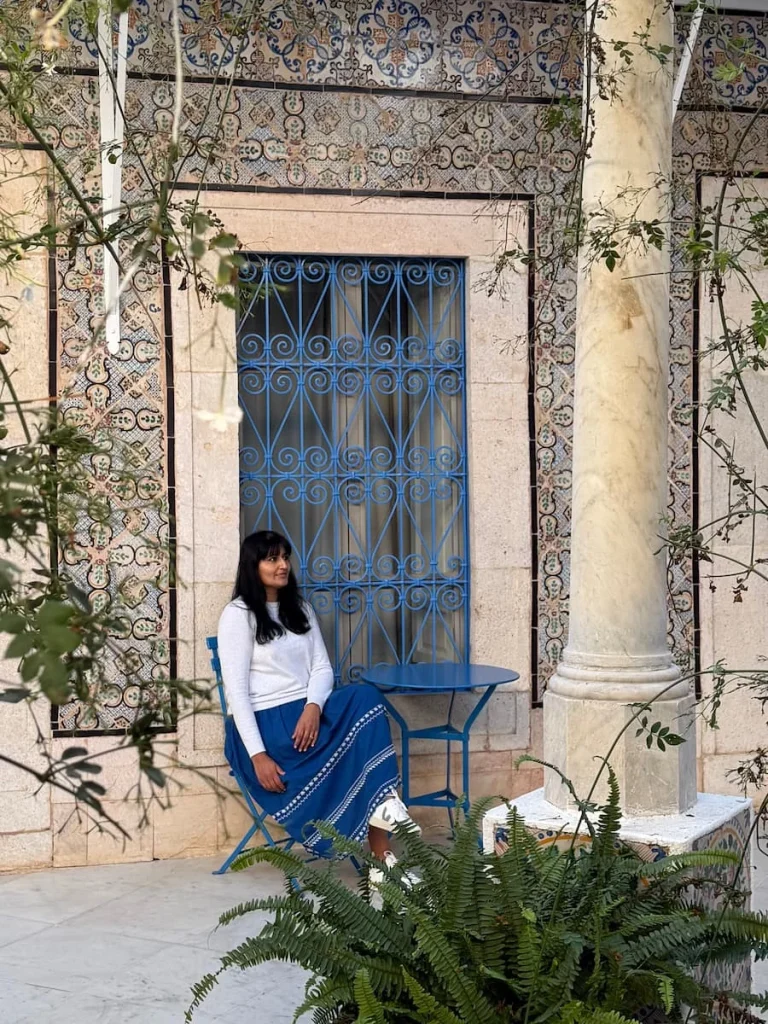
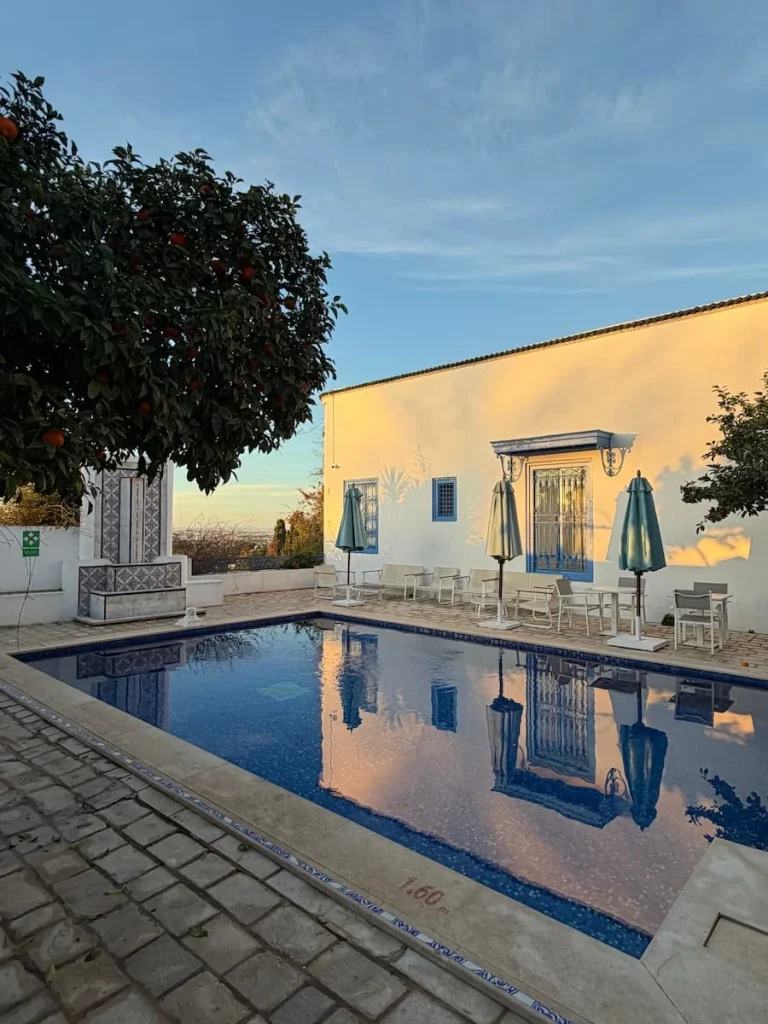
We stayed at the nineteenth century residence, Dar Said Hotel with 24 en-suite rooms decorated with antique chandeliers, stucco work, Turkish style bathrooms plus inner open courtyards that provide an authentic Tunisian house experience. There is also an onsite Hammam service, an outdoor pool and stunning bourgainvillea filled gardens.
Transport & Tours
Sidi Bou Said is easily reached from Tunis by taxi, louage or private car. We would suggest visiting Dougga via an organised tour so you can get the best out of the site accompanied by a knowledgeable guide. A great guide really can bring Dougga alive!
Day 5: Thuburbo Maius, Zaghouan & Kairouan
The final destination of Day 5 is Kairouan but en route, spend some time in two locations that visitors tend to miss off the list.
Thuburbo Maius
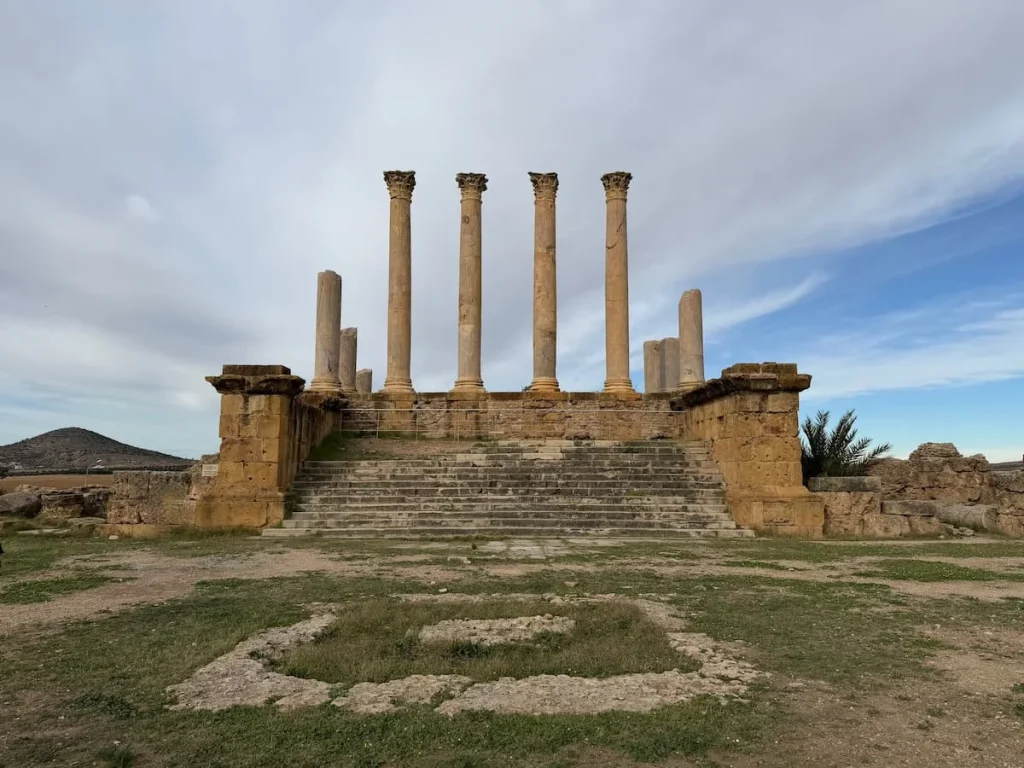
Usually visited by locals during their holidays, Thuburbo Maius is an abandoned city that was once a market centre in the Roman period and is a fine example of a typical North Africa settlement. The principle monuments we walked around include, the Temple of Jupiter & Mercury, dating back to the 2nd century AD, when the town inherited the title of Colony. In our opinion, although it does have a fascinating history, it isn’t as impressive as Carthage but great for another perspective of less preserved cities.
Zaghouan
Located under the peak of one of Tunisia’s spellbinding mountains, Zaghouan was where a long Roman aqueduct of 132 Km in length started. It has been hailed a feat of Roman engineering and took Zaghouan’s fresh mountain waters to Carthage. When we arrived in the middle of the day, there were only a handful of people, mainly locals, made for a really pleasant leisurely visit. We walked right up to the ‘Water Temple’, or Nymhaeum, built in the 2nd century AD and had a chance to walk above the complex for a birds eye view.
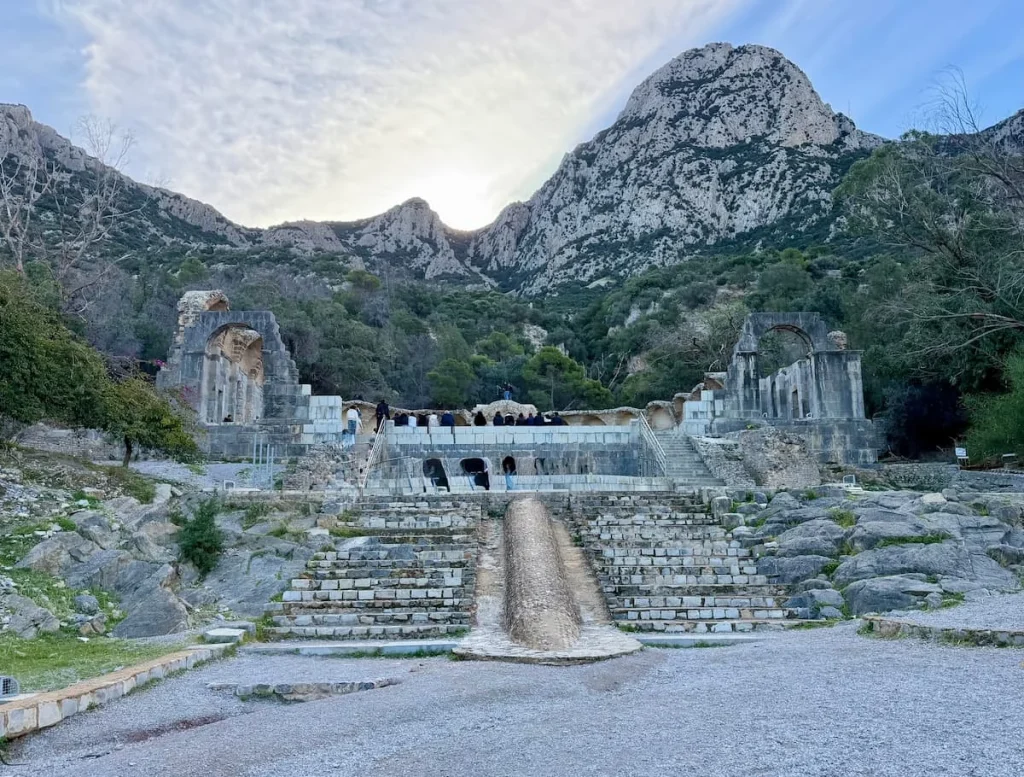
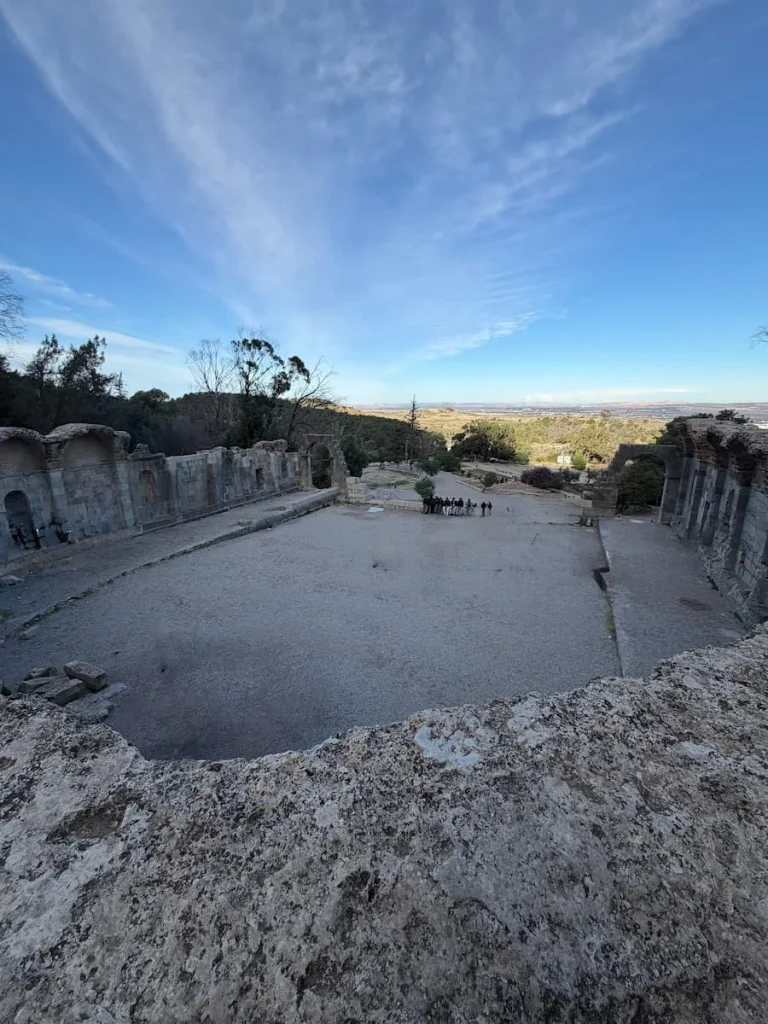
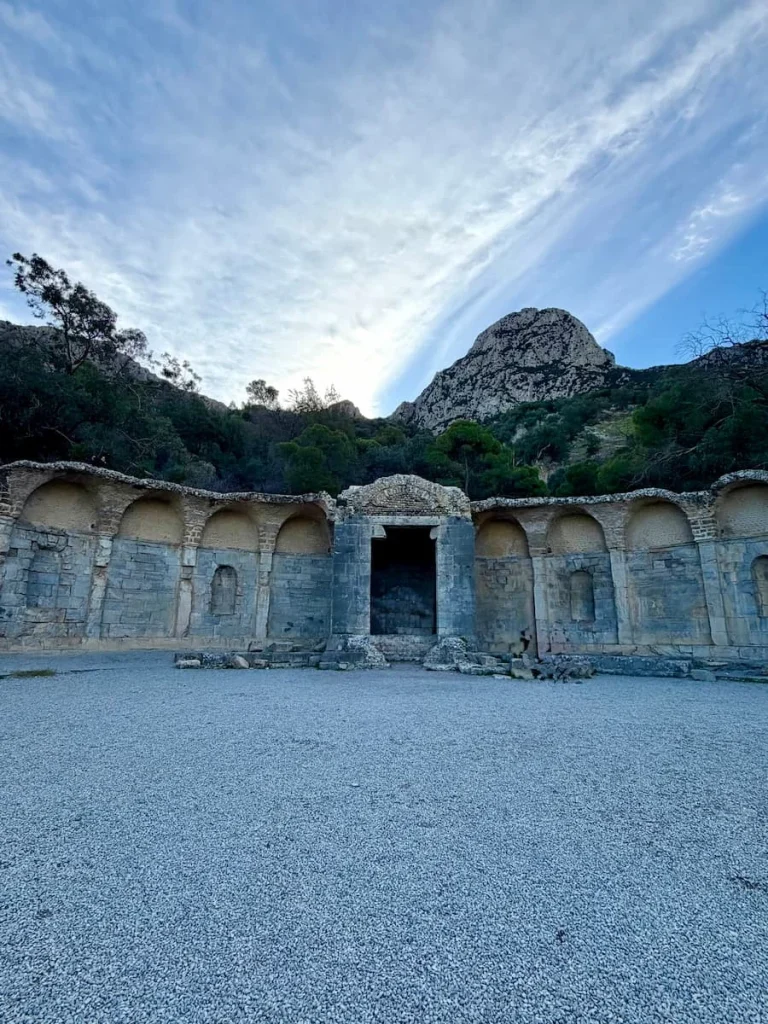
ZAGHOUAN
Kairouan
Kairouan is perfect place for an overnight one day visit as is Tunisia’s spiritual city that also happens to be a World Heritage Site! It’s highly respected by Muslims as being the fourth most important city for Islam after Mecca, Medina and Jerusalem.
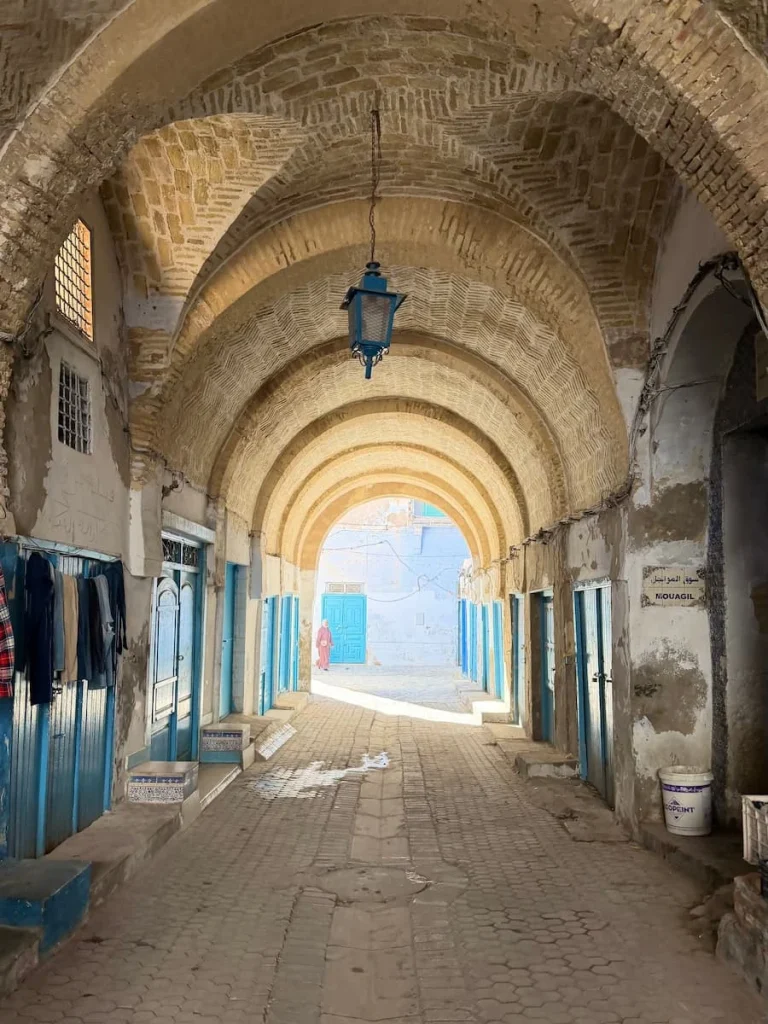
The city dates back to 670 AD and was the capital of the Aghlabid empire in the 9th Century. One of the best things to do in Kairouan is to visit the medina and souqs via the main entrance of the Citadel. We enjoyed walking through the archways that led out onto squares populated by fruit sellers. It’s a really great place to see the locals shopping and hanging out. We also headed to the elaborate Mausoleum of Sidi Abid Al-Ghariyani, built in the 8th century in the middle of the medina.
Spot the Mosque of the Three Doors which is elaborately decorated. Take note of the artisan craftsmen and women in the souq weaving shawls and carpets.
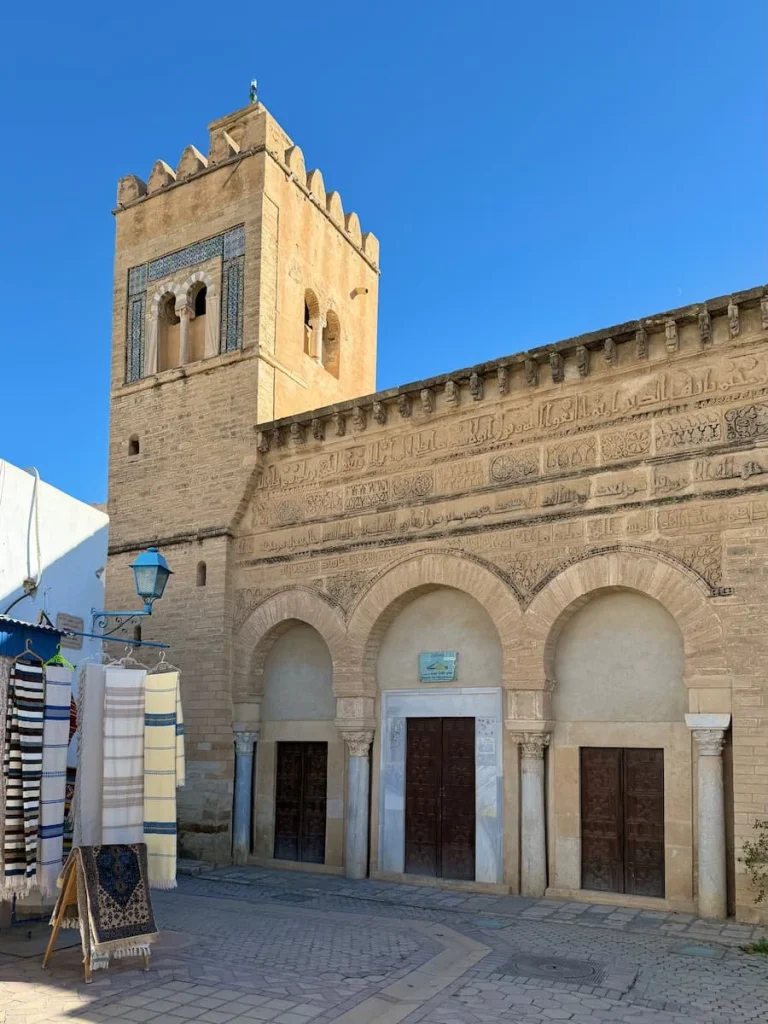
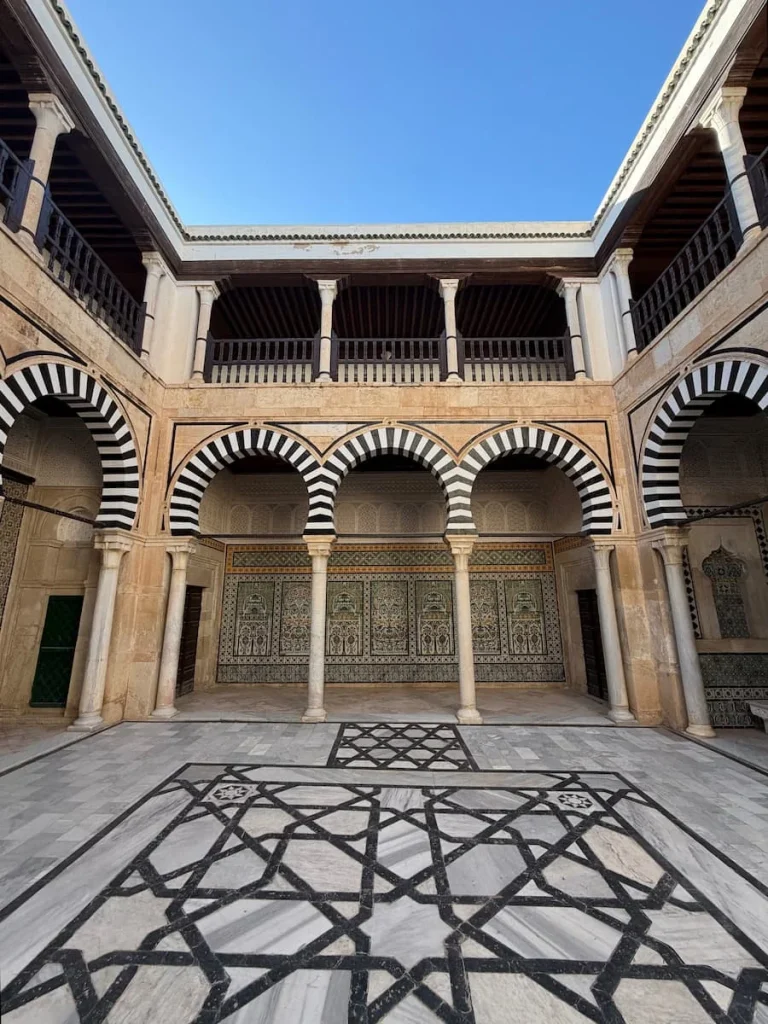
MOSQUE OF THREE DOORS & MAUSOLEUM OF SIDI ABID AL-GHARIYANI
Our guide took us to the Bir Barouta, where there is a decorated camel drawing water from a well which was thought to have been dug by Okba Ibn in 670 AD and is connected with the well of Zam Zam in Mecca. We found this to be very touristy and not ethical with the camel handler making the camel walk around the area to draw water.
Be-lavie Tip: We don’t condone unethical wildlife experience like this and explained this to our driver. We therefore don’t advise that you go to Bir Barouta as if there’s no demand they won’t carry on with this activity. We think it is possible to explain the workings of the well without the camel.
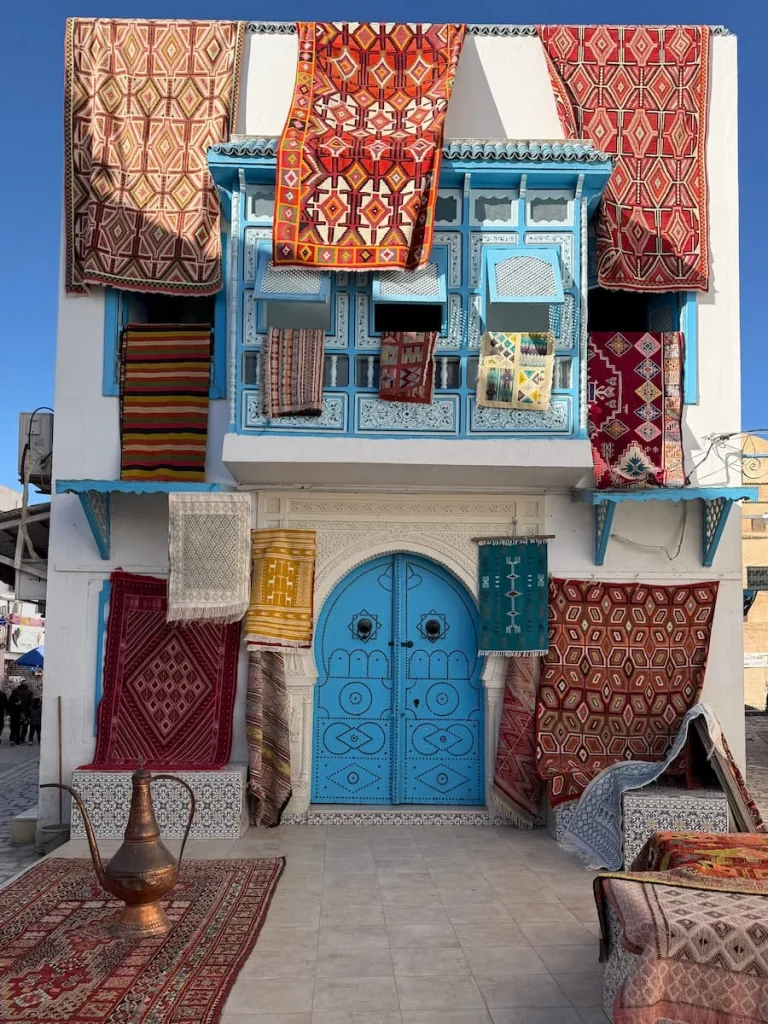
Be-lavie Tip: The law in Tunisia enforces that visitors should only purchase carpets and rugs from approved weaving stores so this is where travelling with a guide comes in useful. They will know where to go, where quality is high and prices are moderated by the government. It’s good to shop around even at these shops to ensure you’re getting a fair price. The rugs are all hand woven and are packed and compressed for you when purchasing.
Mosque of Okba is one of the largest and oldest mosques in Tunisia with a fortress walled exterior and huge square towering minaret. The interior has a central courtyard surrounded by 611 reused Byzantine and Roman columns.
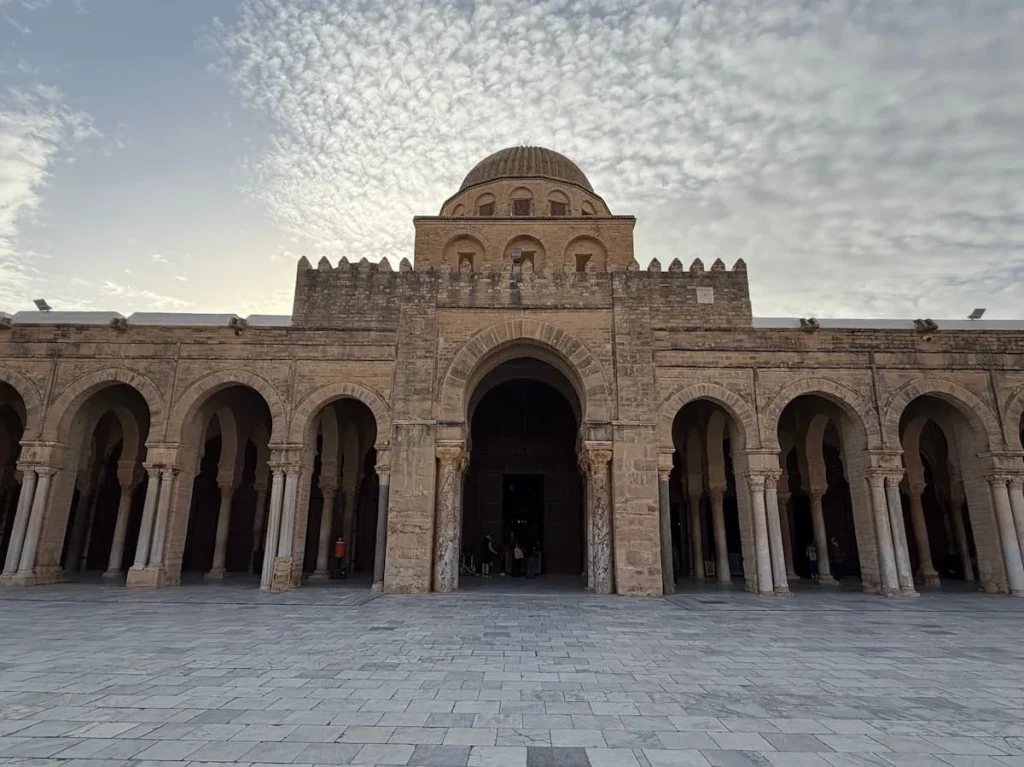
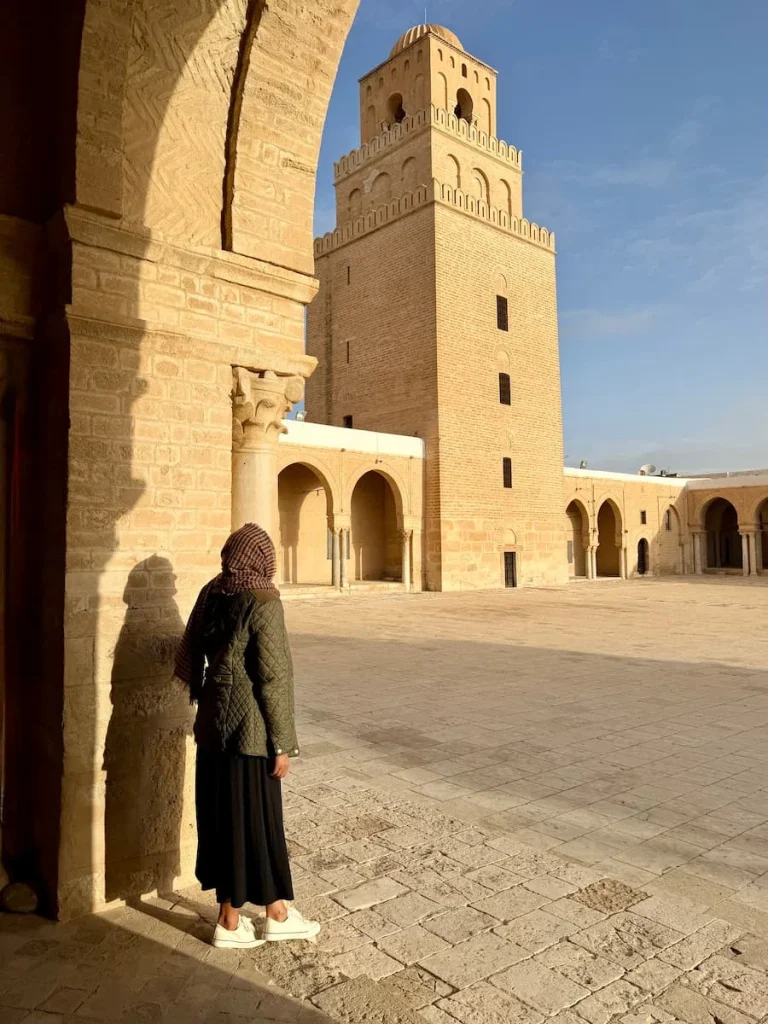
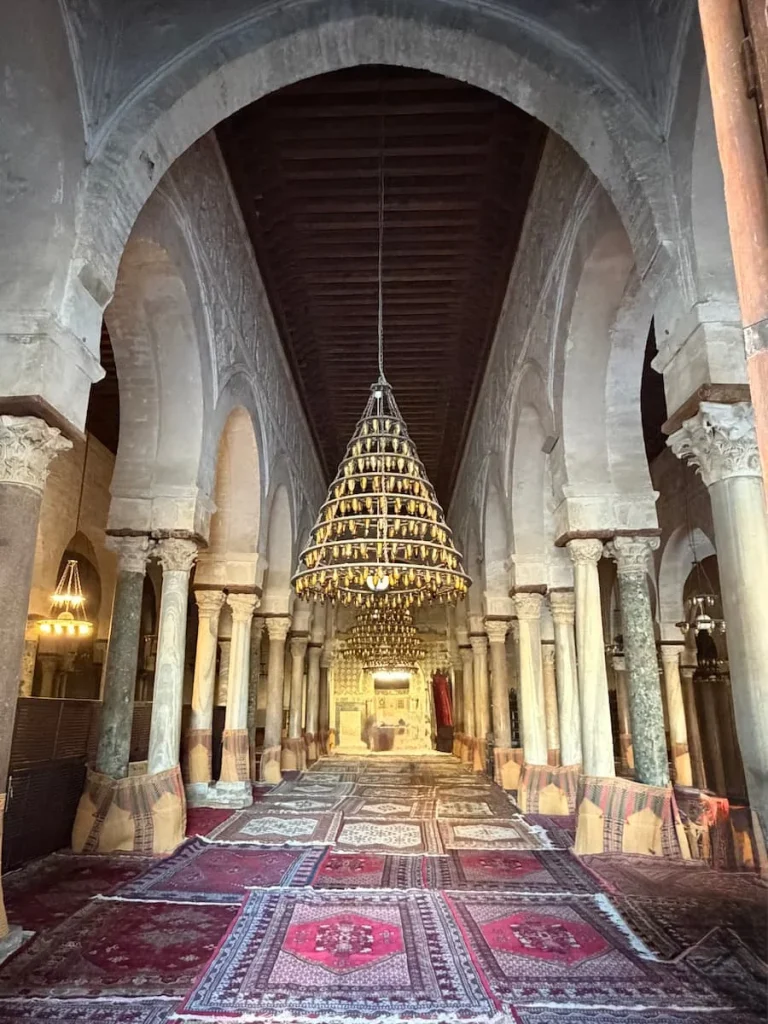
Be-lavie Tip: Non Muslims can visit the courtyard but respectful clothing must be worn, no sleeveless tops or legs above the knees showing, and they cannot enter the prayer hall but can have a quick peek inside from the entrance.
Where to Eat in Kairouan
One of our favourite restaurants here, is El Brija housed in a fort-style building with the restaurant being on the open and closed rooftop areas. It has great views and serves delicious Tunisian food. They also accommodate vegetarians and can make a variety of mediterranean dishes too. We enjoyed their special couscous dishes which were a little spicy but very good and lots of mint tea of course!
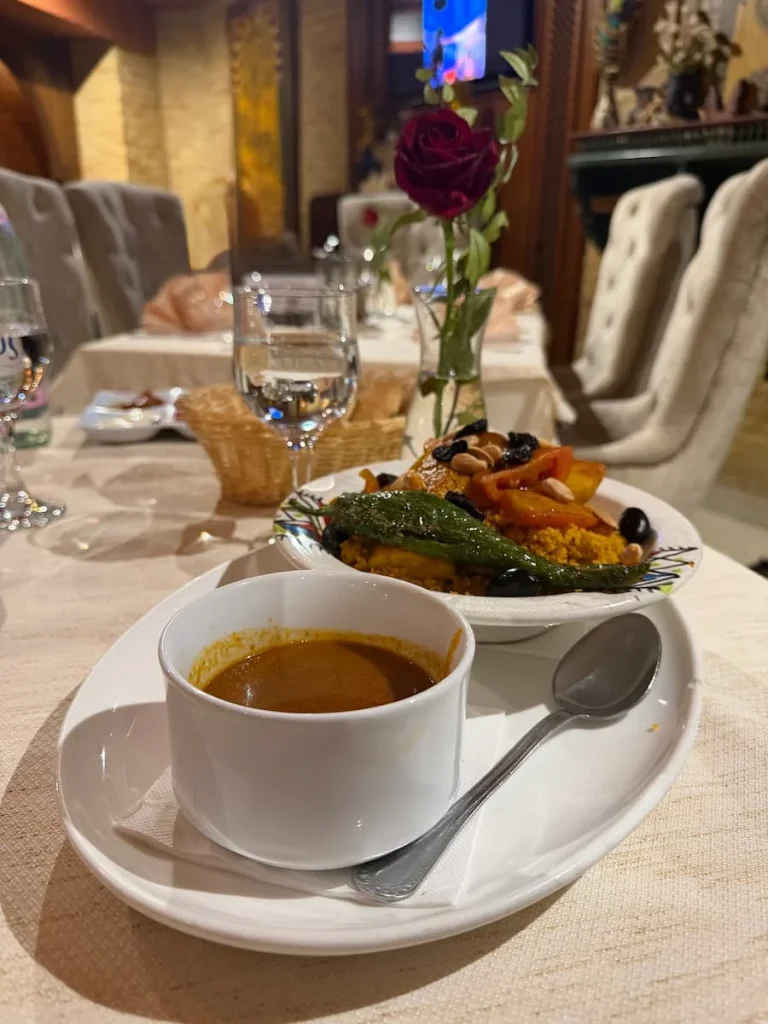
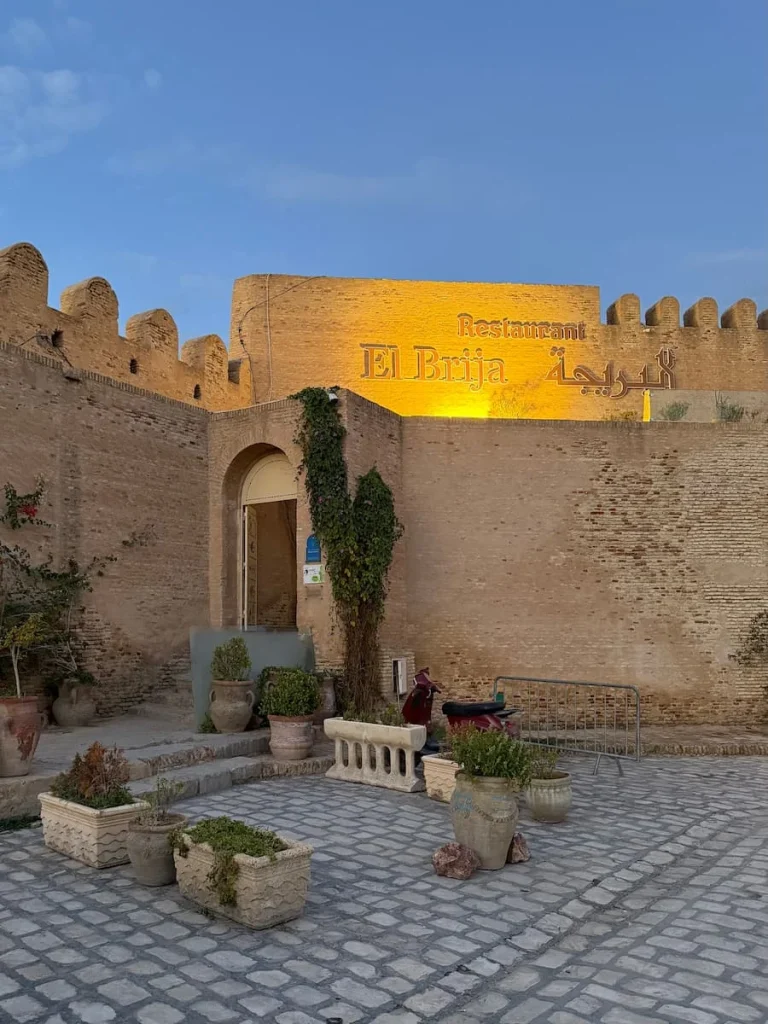
EL BRIJA
Where to Stay in Kairouan
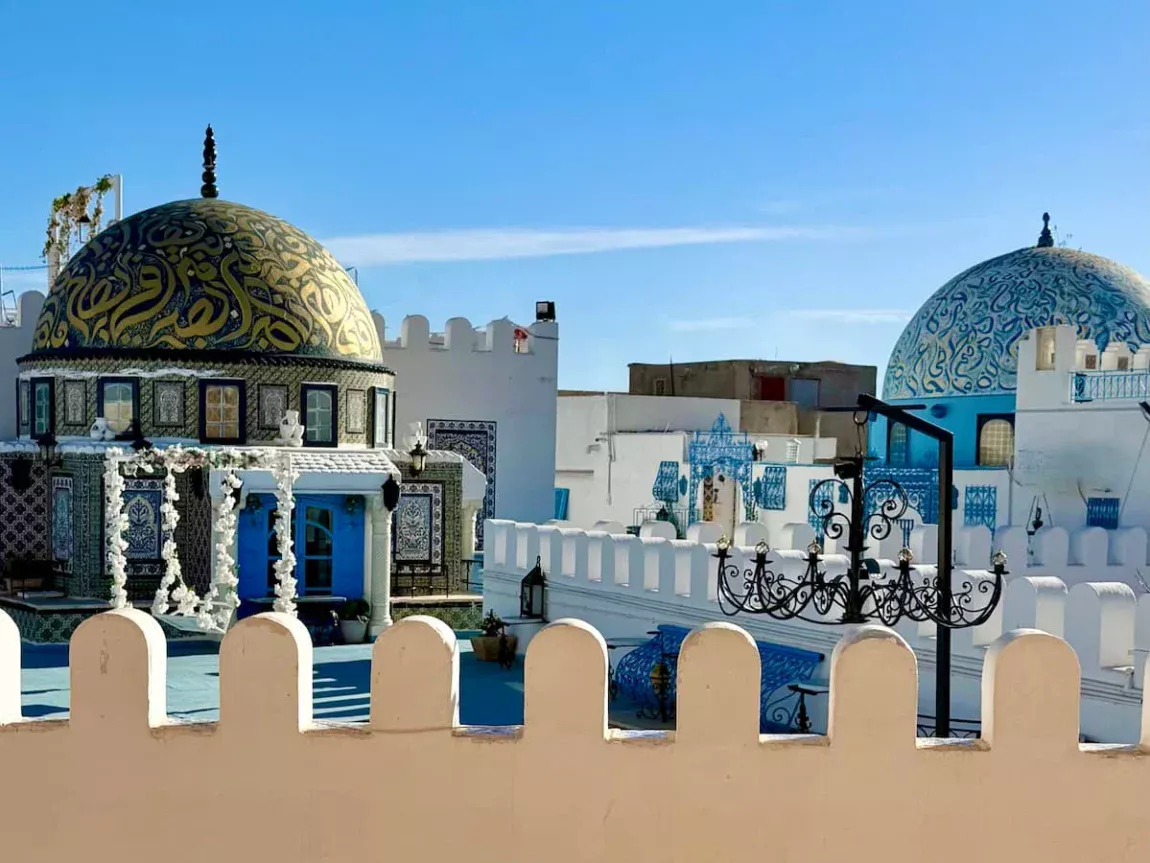
Dar Alouini is a family owned upscale boutique guesthouse just minutes from Kairouan’s UNESCO World heritage listed medina. The property has nine luxuriously completed suites featuring Tunisian Tile work, inlaid traditional furniture as well as French and Arabic architectural styles. All rooms lead off a courtyard with access to an indoor swimming pool. Head to the rooftop, for a gorgeous sunset, with the cities domes as a backdrop.
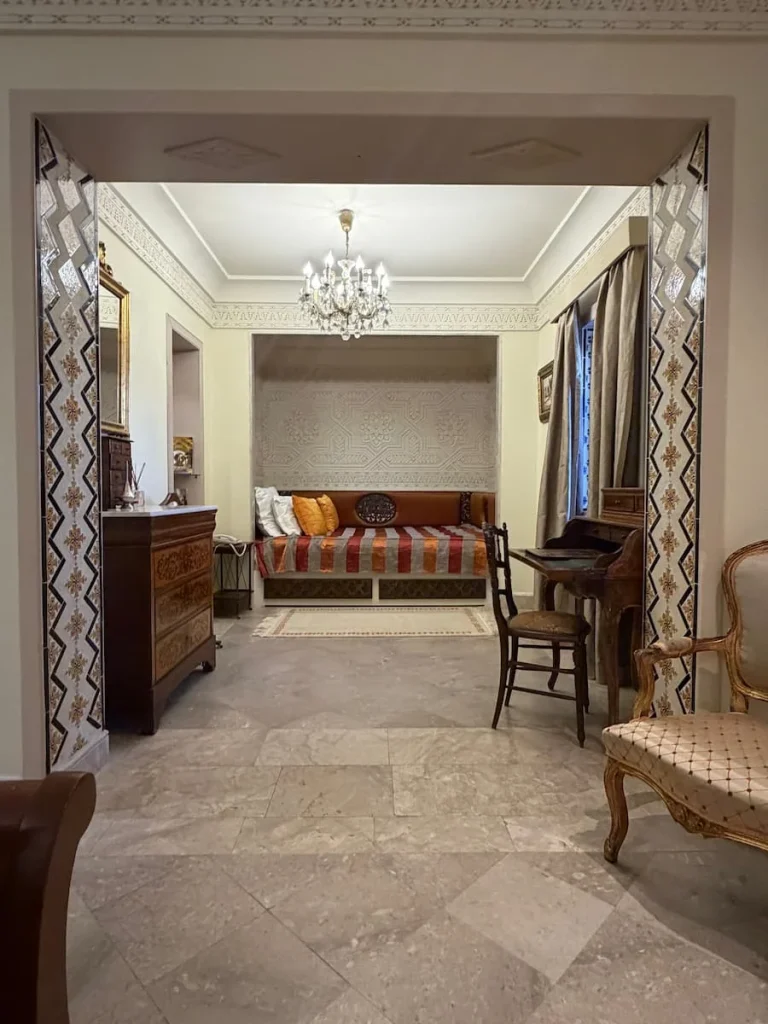
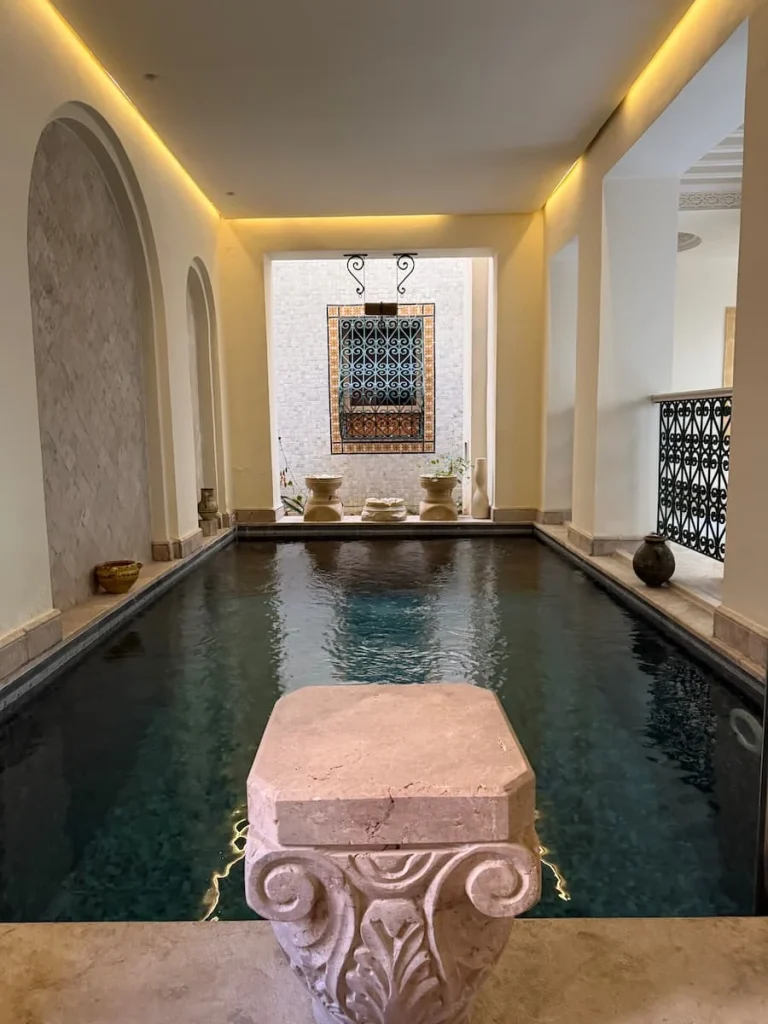
DAR ALOUINI
Transport & Tours
It’s totally possible to book a day trip to Kairouan but we think it was a better idea to stay over and experience the holy city’s character and charm. The train from Tunis to Kairouan runs every hour and it takes around 2.5 hours each way. For unique things to do in Kairouan in one day check out our short guide.
Day 6 & 7 El Djem, Gafsa & Tozeur
Today, make your way South via the city of El Djem, Gafsa and finally onto Tozeur, where two nights is a great length of time to experience the desert and Oasis.
El Djem
We drove with our guide and driver from Kairouan for an hour to El Djem, ancient Thysdrus, to see the magnificent El Djem Amphitheatre.
El Djem Amphitheatre
It’s not surprising that the El Djem Amphitheatre is a UNESCO World Heritage site. The city’s modern name actually means, ‘the place where the lions hide’ in Arabic. Walking around the amphitheater is absolutely mind blowing, there were no crowds during our visit and it’s in a better state of preservation than the Colosseum in Rome. It could once seat around 30,000 spectators. The large outer walls are three stories high with subterranean chambers and dungeons, which is where wild animals and criminals, gladiators stayed before being delivered into the arena.
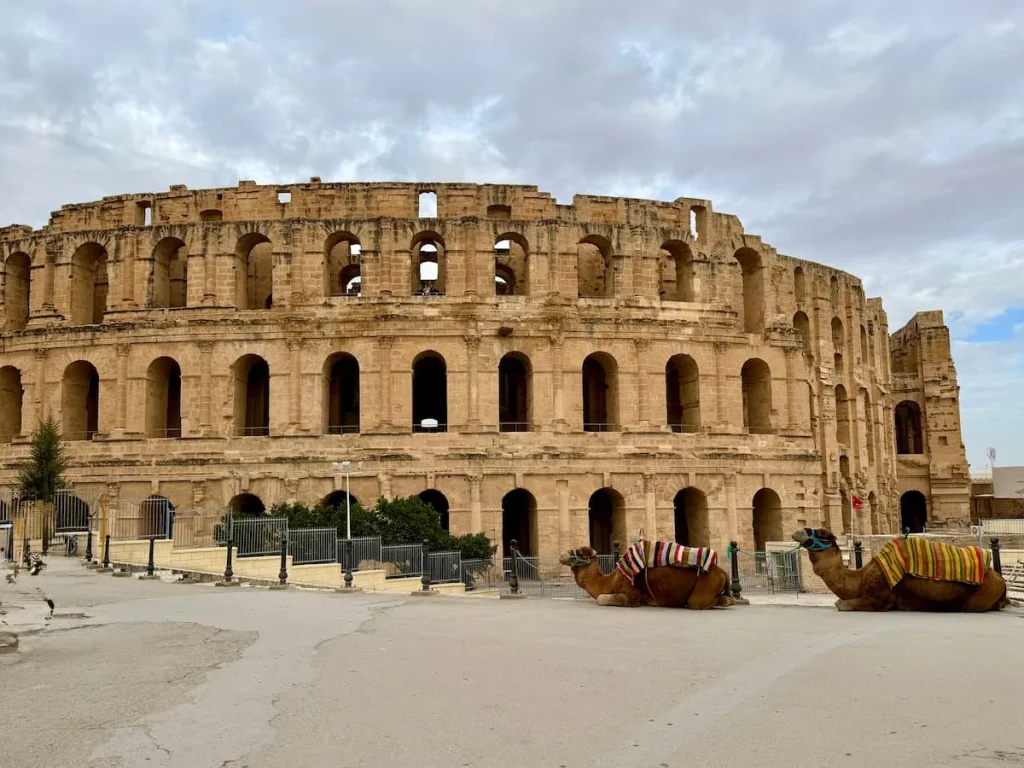
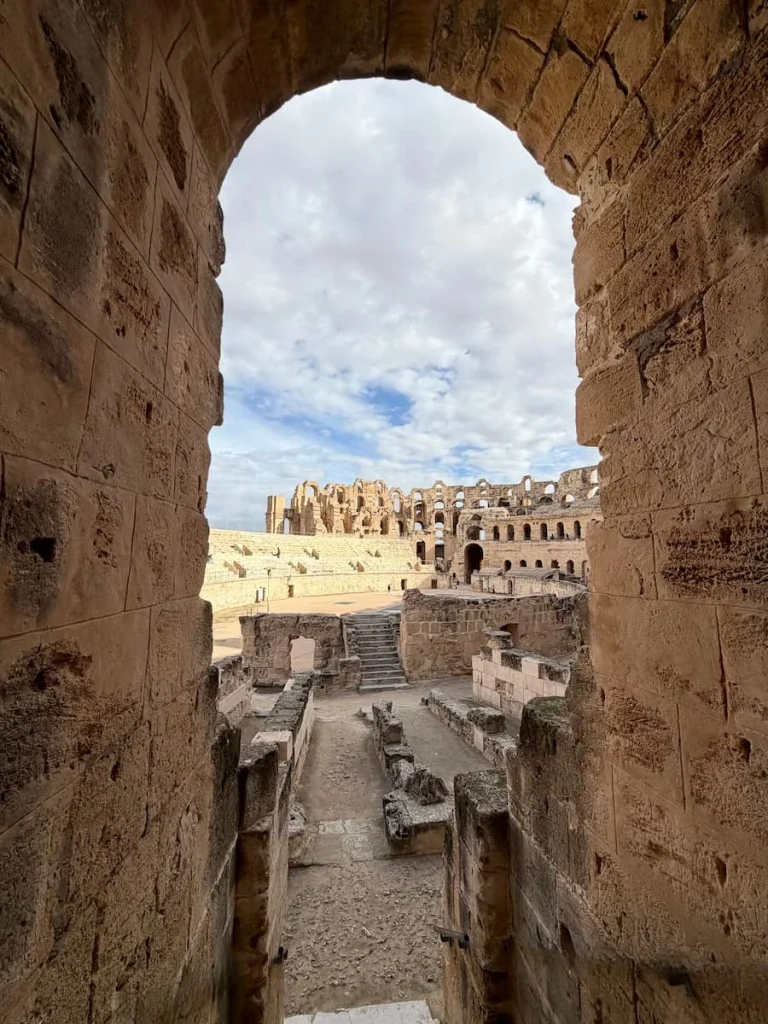
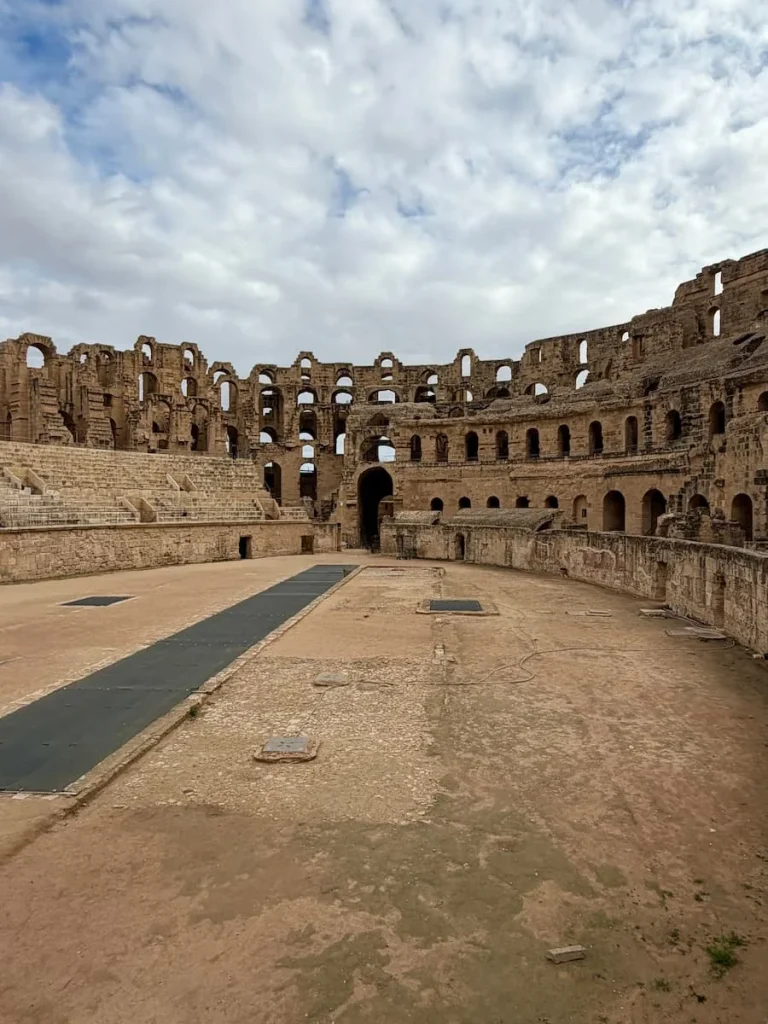
EL DJEM AMPHITHEATRE
El Djem Archaeological Museum
The ticket to the Amphitheatre includes access to the El Djem Archaeological Museum, which is worth the time if you can spare it. The museum, is built on the site of a former Roman villa and the mosaic collection is thought to be only second to the ones at the Bardo Museum in Tunis. The detailed mosaics were all found in the surrounding region and depict scenes of Roman Gods. Some are from the Amphitheatre a short walk away.
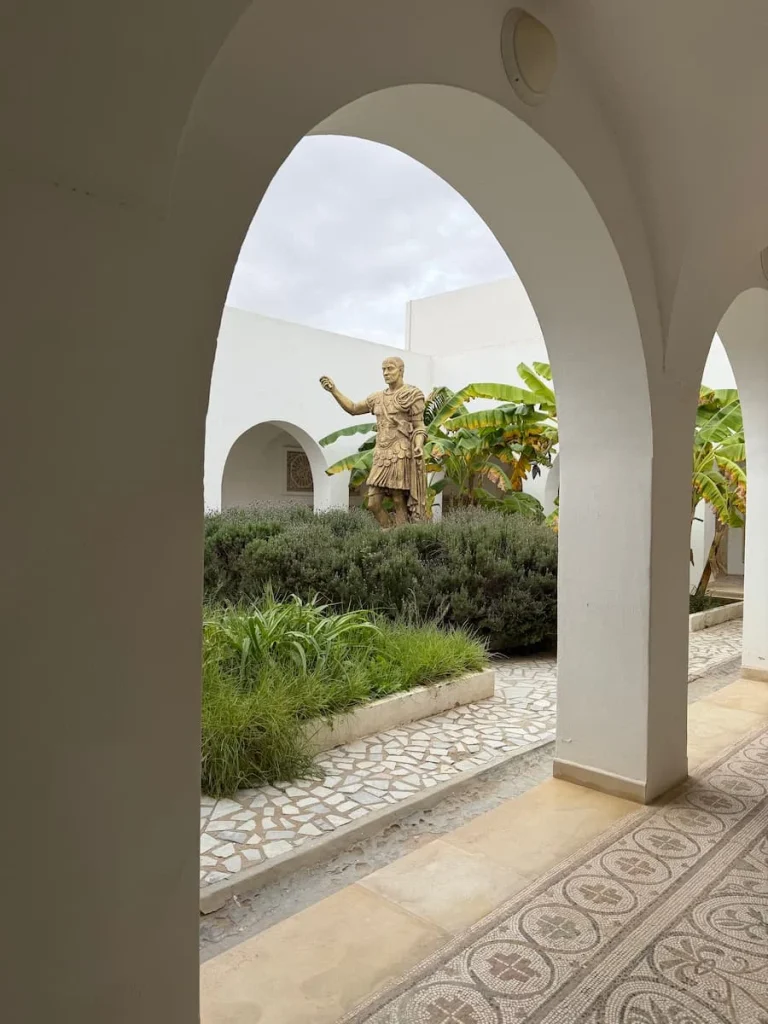
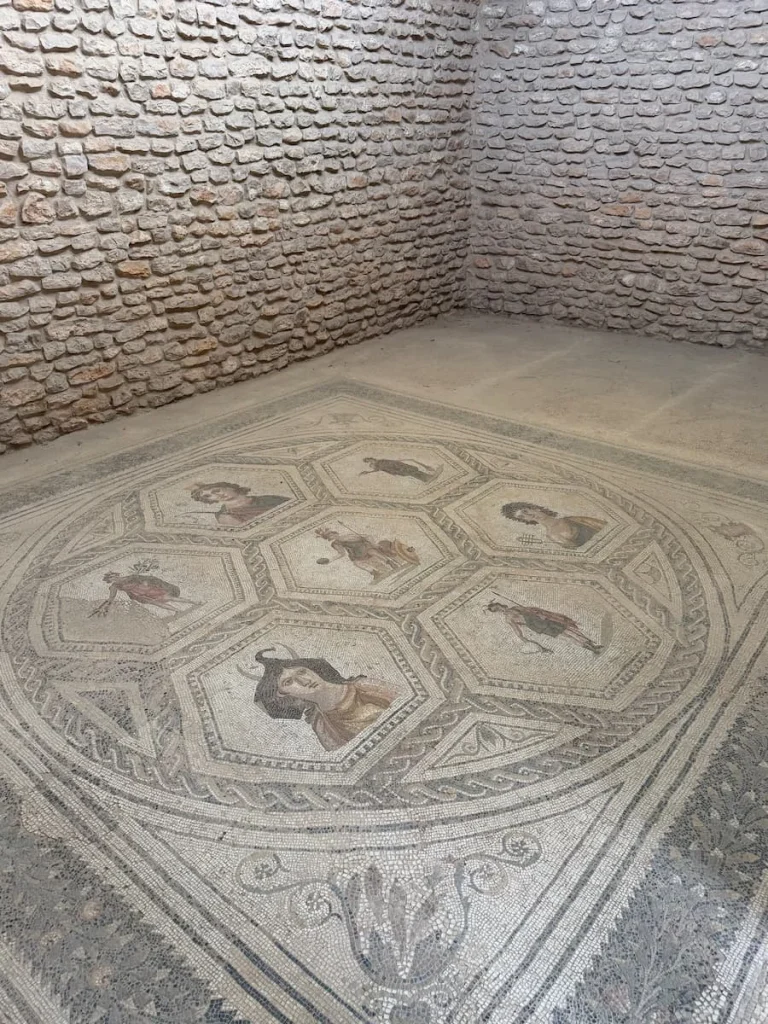
EL DJEM ARCHAEOLOGICAL MUSEUM
Gafsa
Known as Capsa by the Romans and destroyed in 107 BC by them, Gafa became an important Roman city which can be seen in its beauty and large Roman Baths. These are definitely worth a view as there are three inter-connected basins with one covered by stone arches.
The water bubbles to the surface of the baths at around 30°C with many local women use it for laundry, with the local boys use it as a swimming pool.
Unfortunately we didn’t have much time here as we were en route to Tozeur, so ensure you factor in more time if you want to stop for longer.
Tozeur
The town is located on the edge of the Sahara Desert and was once said to be the greatest gateway to Sub-Saharan Africa. When the Arabs ruled here, Tozeur became very rich with the trans Saharan caravan trade in slaves, ivory, gold and dates. This can be reflected in the buildings of the old town, built using yellow hued bricks laid in a geometric design.
We explored Tozeurs Medina, known as the Ouled Hadef Quarter, where whilst our visit in mid December, there were plenty of traders selling dates from the surrounding region provided by the many oasis of palms in the town. The Medina is vibrant and full of activity.
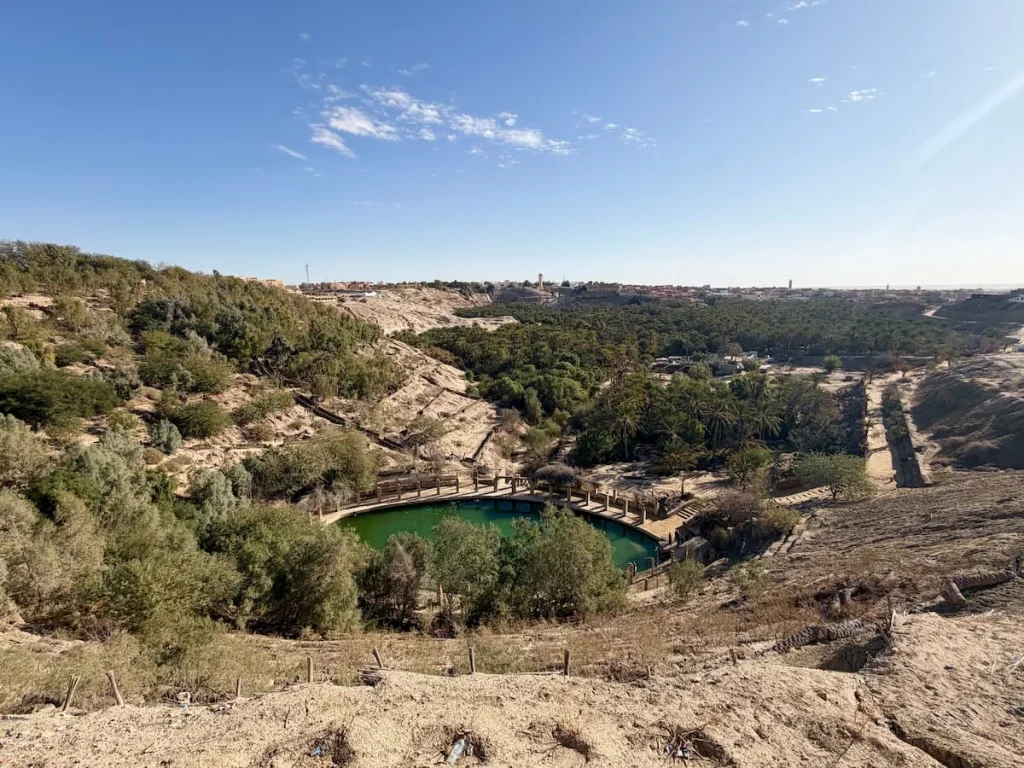
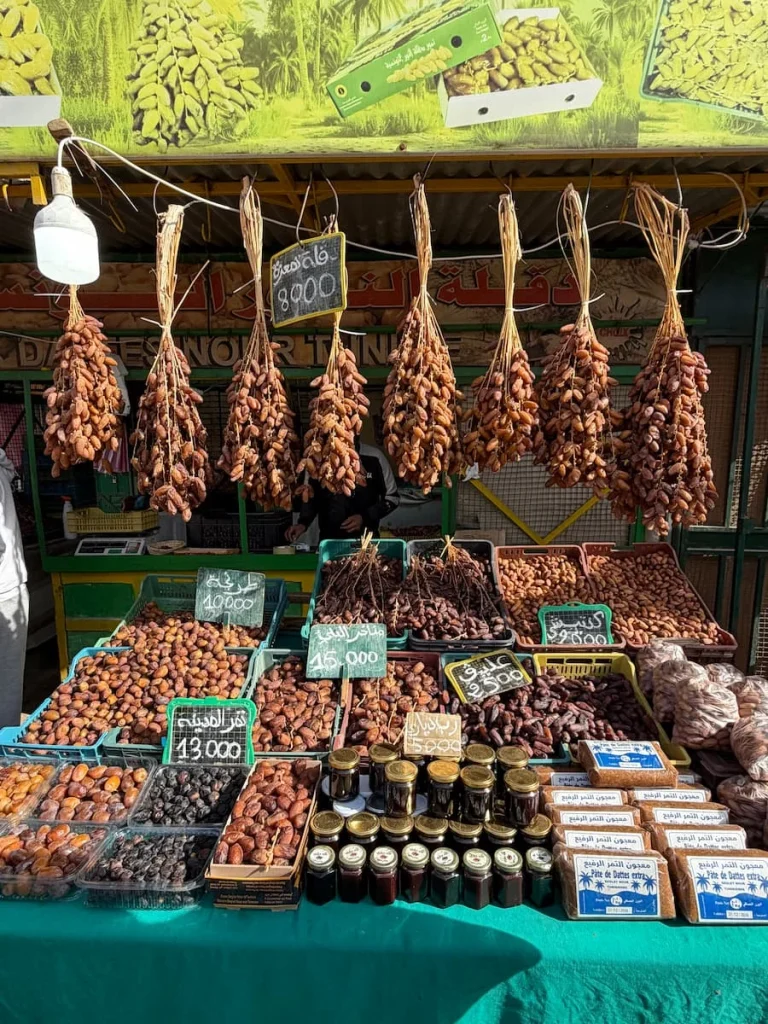
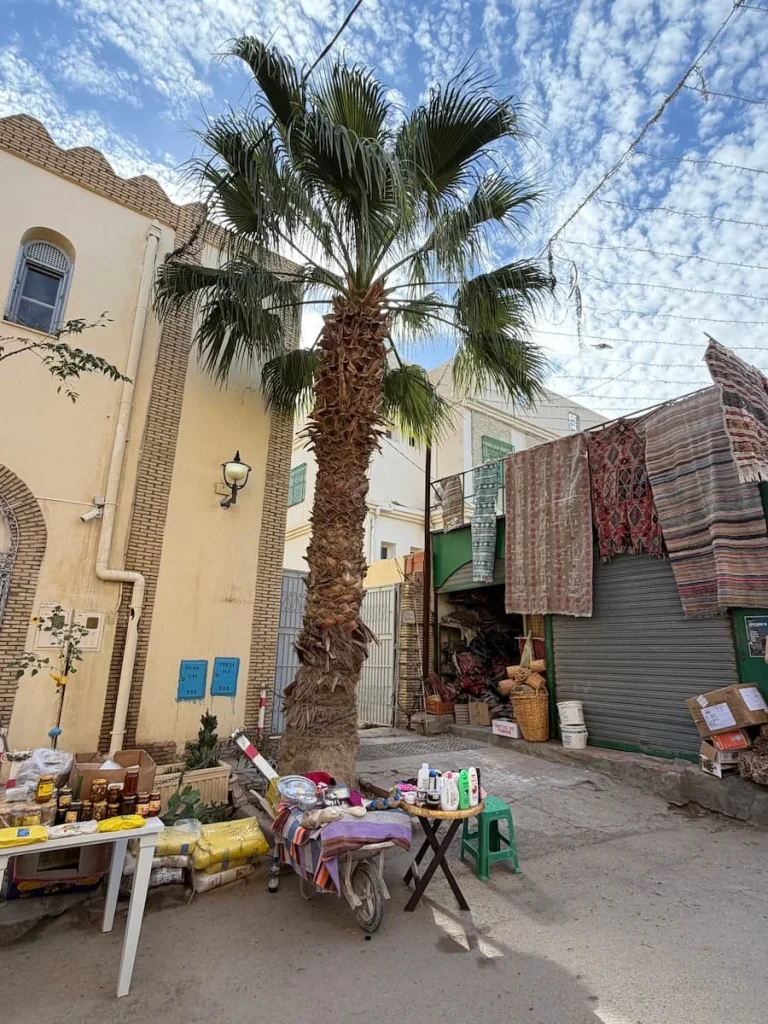
TOZEUR MEDINA 7 OASES
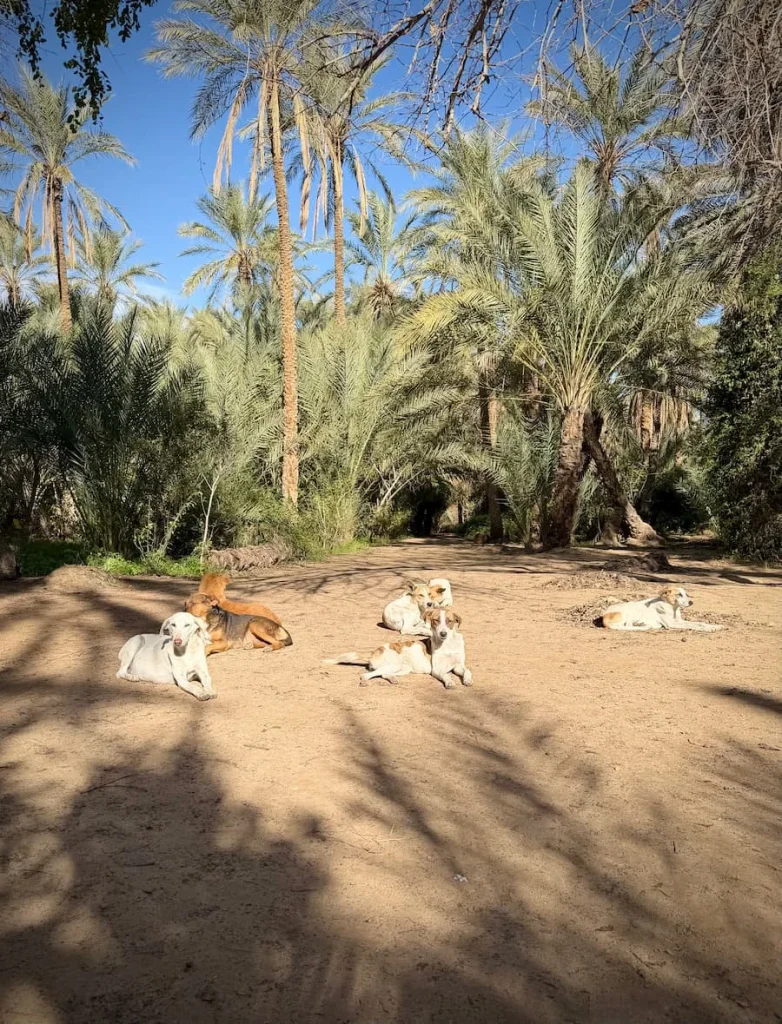
Tozeur has a palmerie with the largest oases in Tunisia containing around 200,000 date palms which produce the very valued Delgat Nour variety of dates. You can walk through the oases and see the pretty garden of Eden Pam comped, where its possible to learn about the history and of date cultivation; and the medieval mathematician, Ibn Shabbat who invented a clever system for the division of water in the oasis.
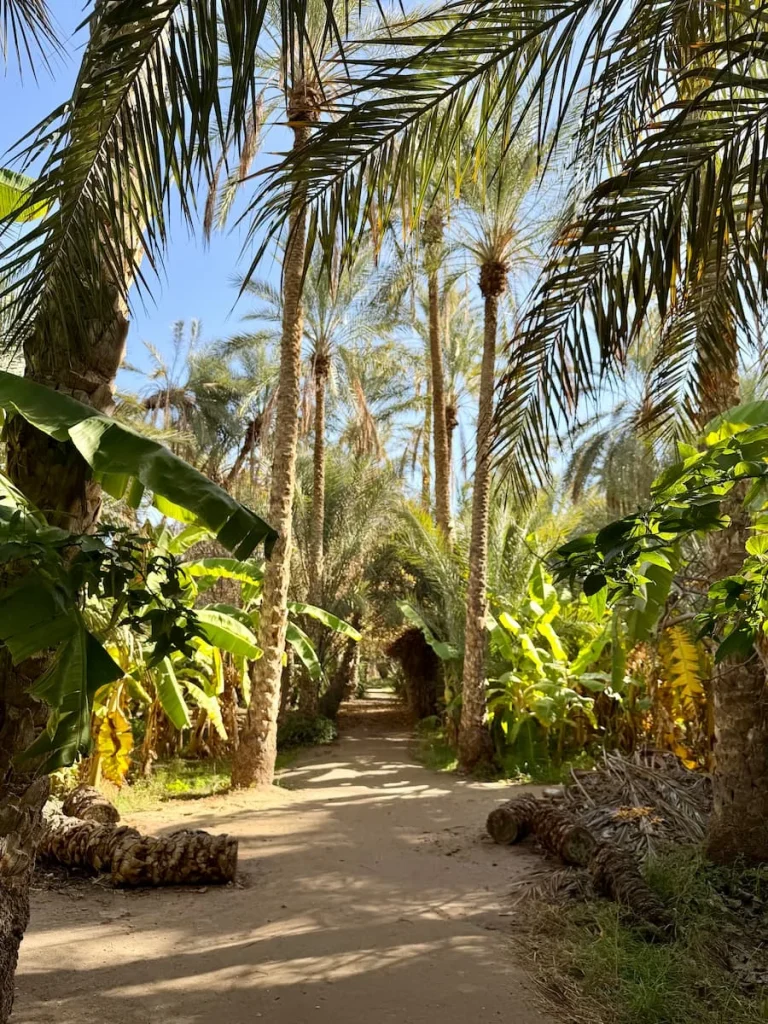
TOZEUR OASES
Be-lavie Tip: There are many horse and cart stands around the Oasis Palmerie complex, we didn’t feel comfortable taking a ride on here as it seemed unethical and very touristy. It seemed like a conveyer belt of rides. If it doesn’t feel right, go with your first instinct.
Nefta
Standing at the site of Roman Nefta is a 30 metre deep palm filled depression with natural springs called Corbeille, which means ‘basket’. This is the town’s natural landmark but it also has 24 mosques and tombs of around 100 marabouts, making it the second most important religious centre in Tunisia. The Great Mosque of Sidi Salem in Nefta dates back to the 15th century.
Ong Jemel & Mos Espa
This was our first taste of the Tunisian desert.
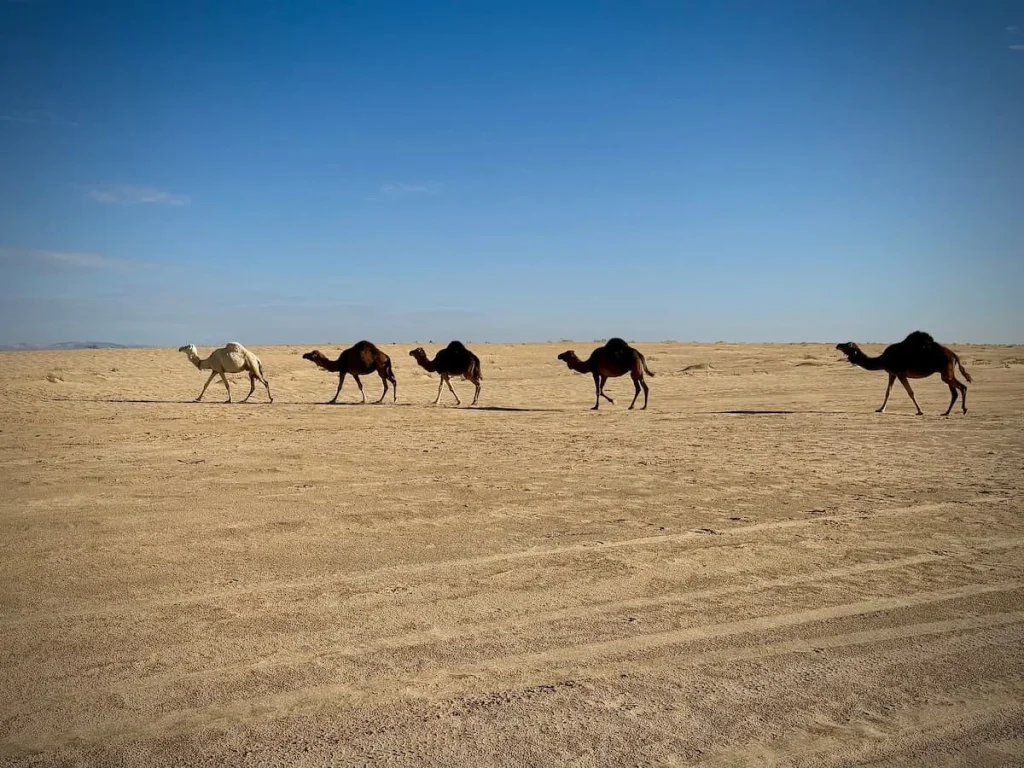
We took a morning drive from Tozeur out to Ong Jemel in the Sahara Desert which is said to resemble a camel. On the journey we saw boulders, that are remains of fossilised dunes.
Star Wars fans, like us, will love that passing through this area, is the film set for the Star Wars prequel, The Phantom Menace. Mos Espa is the settlement in the episode, where influence is drawn from the Amazigh settlement in Matmata and Tatouine regions in Southern Tunisia. The site has many stalls set up for visitors so it is quite hard to visualise scenes here, but it is possible to take a walk around and take in the vast desert surrounding the small site.
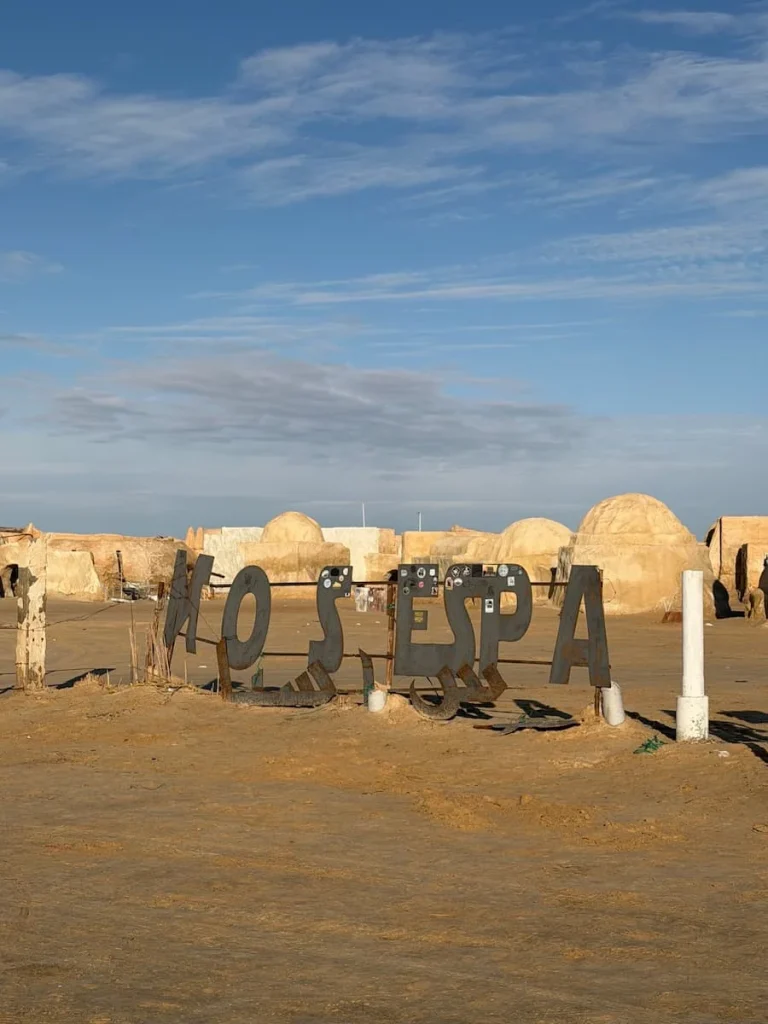
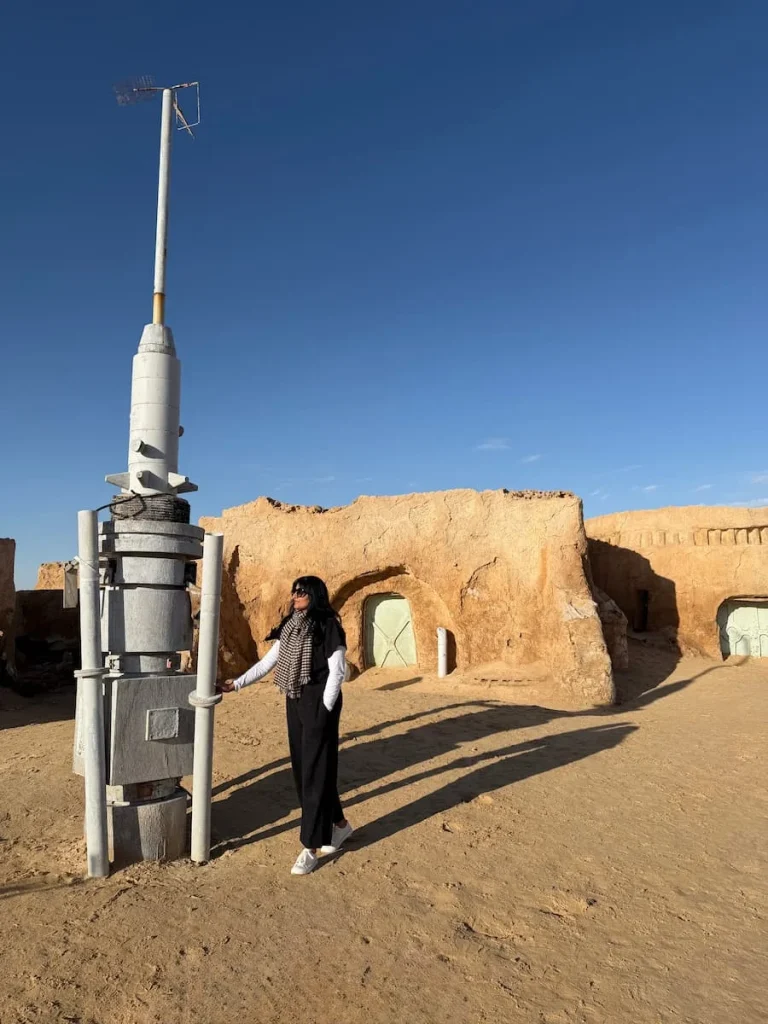
MOS ESPA
Where to Eat in Tozeur
- Dar Yomma, is a wonderful small guesthouse in the centre of Tozeur which has a restaurant that specialises in traditional Tunisian food. Here we sat in the outdoor courtyard sipping on lemon juice whilst the cook prepared our feat of a traditional salad from Tozeur, couscous and date ice cream to finish.
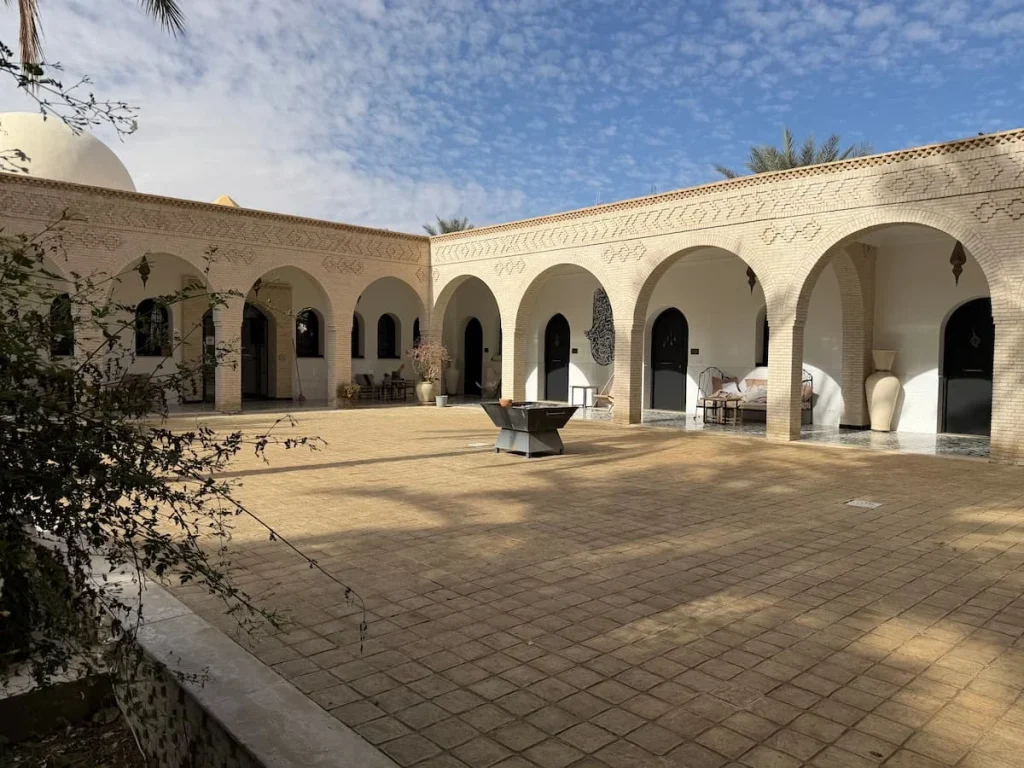
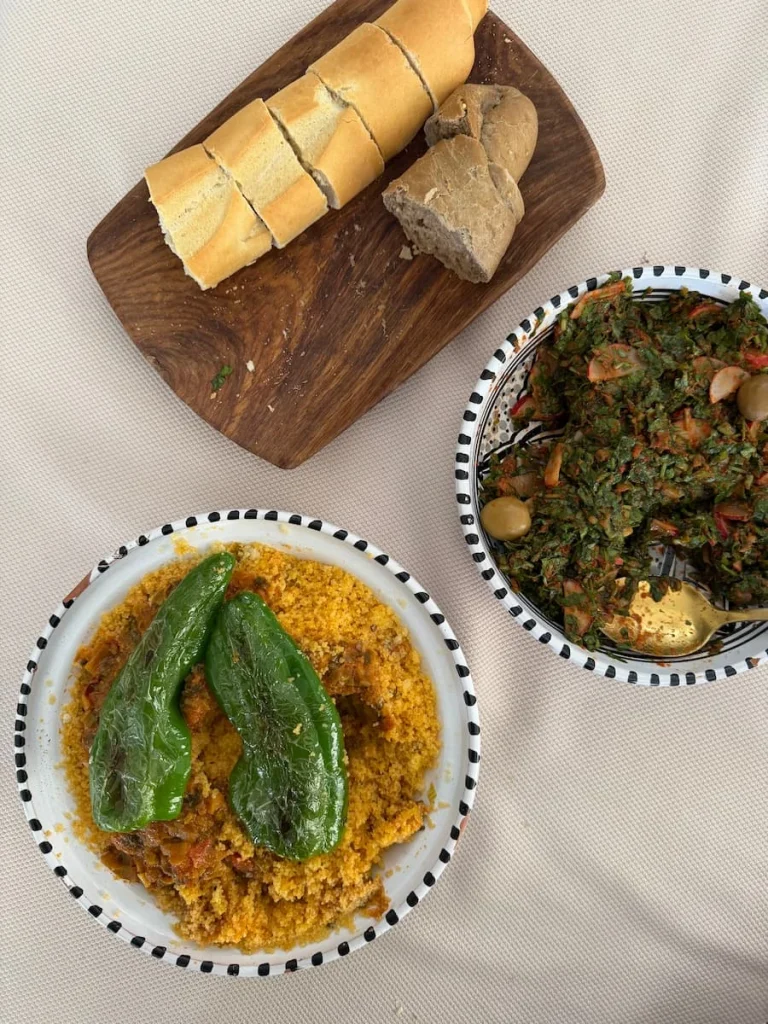
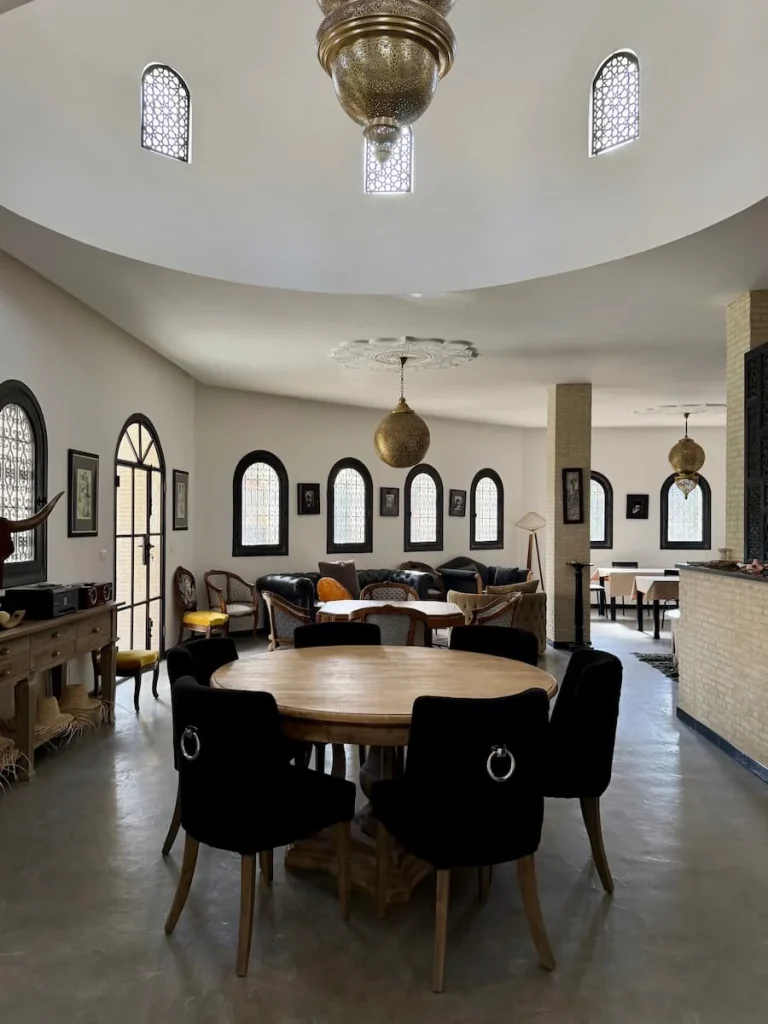
DAR YOMMA
- The Mekong at The Mora Sahara Hotel where we stayed is a great Asian restaurant that makes a variety of far Eastern dishes. We enjoyed their Thai style salads, fried rice and Thai inspired cheesecake.
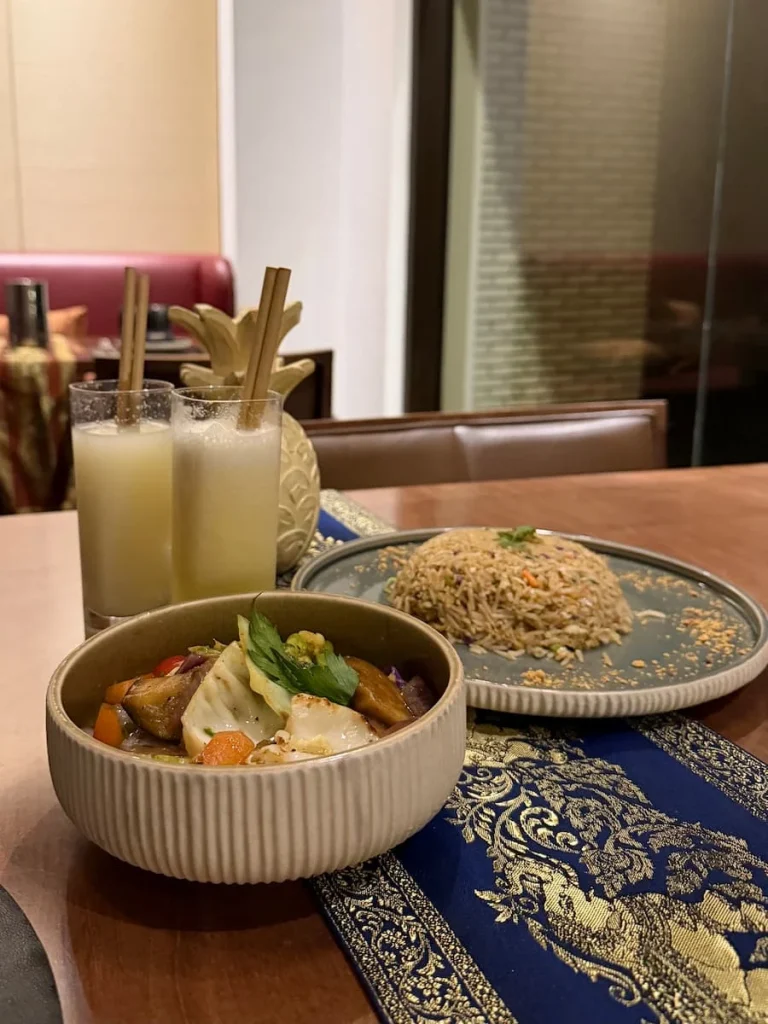
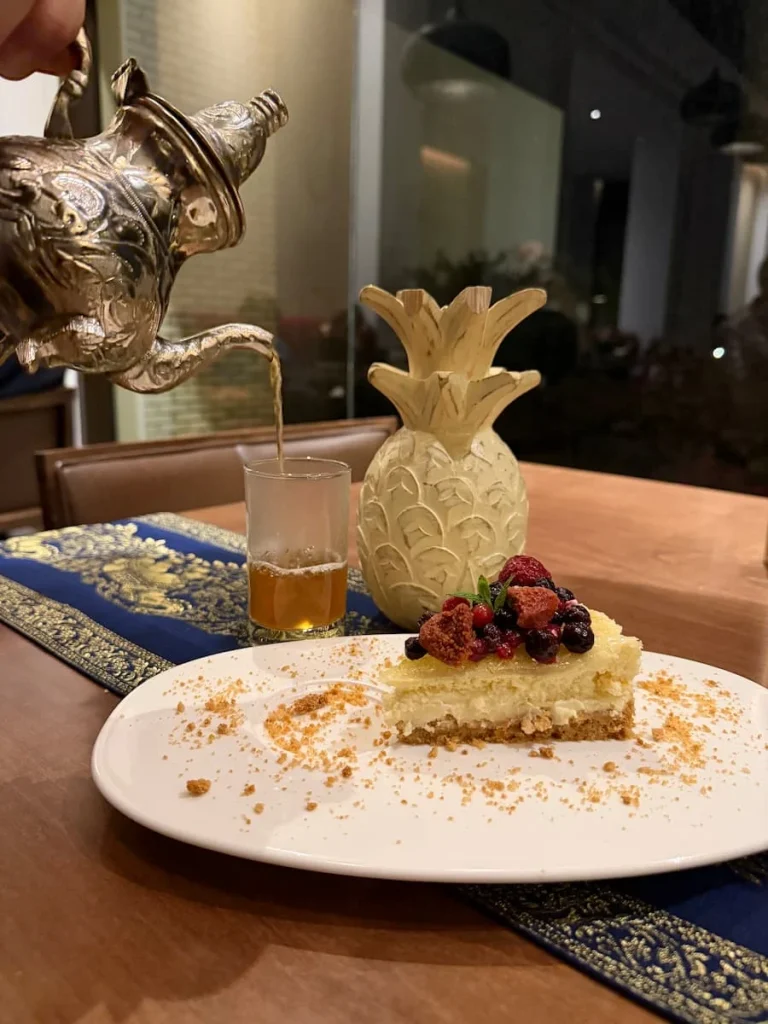
ASIAN RESTAURANT AT THE MORA SAHARA, TOZEUR
Where to Stay in Tozeur
The Luxurious Mora Sahara Tozeur is a luxury villa adult only resort located in the middle of an Oasis in the desert. It has an isolated location and is very private with exquisite hospitality. We stayed in a sunrise villa which had front row seats to watch the sun rising every morning from bed. The villas are large with a lounge area, double bathroom with indoor and outdoor showers, a large bedroom space, a front and back seating area with fire pits. The property has two restaurants, a gym and an abundance of onsite activities. Truly a once in a lifetime hotel experience.
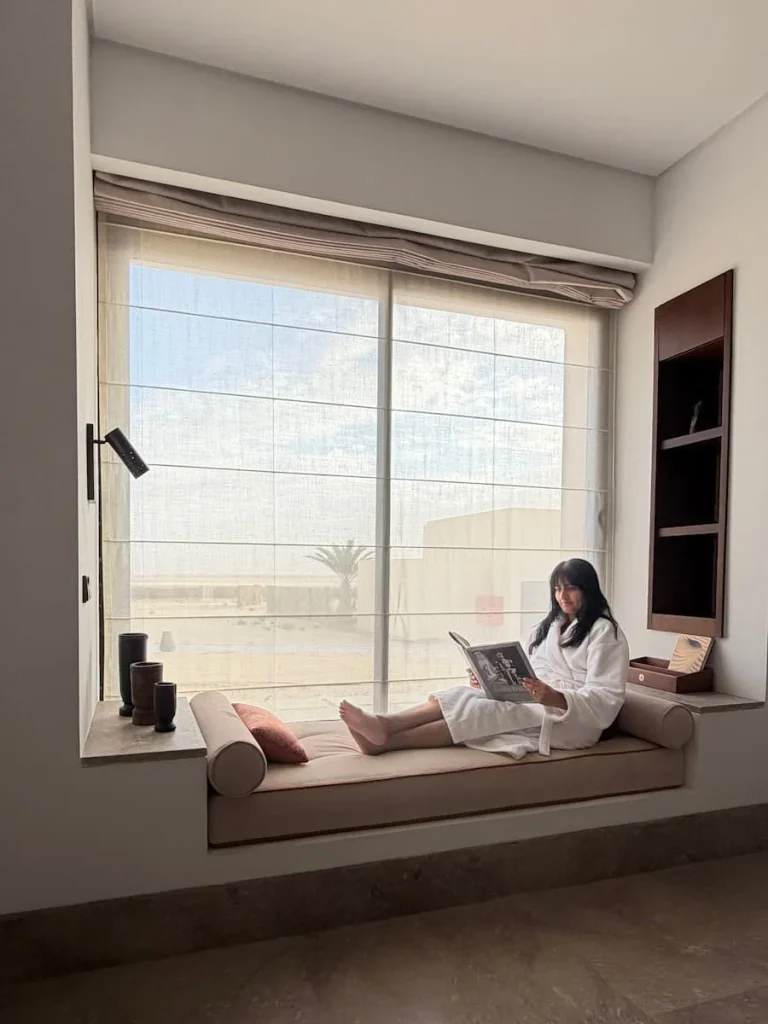
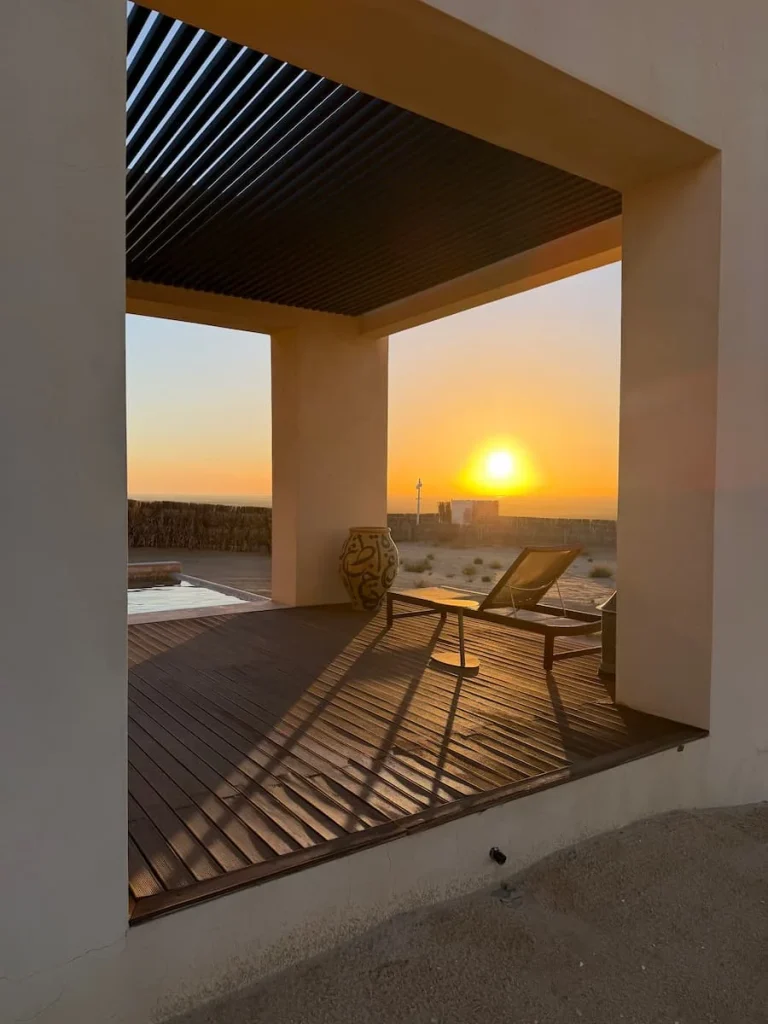
VILLA AT THE MORA SAHARA, TOZEUR
Transport & Tours
It is possible to get a day tour to see many of the sights of Tozeur with hotel pick-up otherwise we’d recommend a bespoke planned day with a guide and driver.
Day 8 Chott el Djerid, Douz Tembaine & Sahara Camp
We were keen to go deeper into the Sahara Desert by spending a night out there at a camp in Tembaine, so started the day driving from Tozeur, passing by and stopping at Chott el Djerid.
On the way to the Salt Lakes, we stopped by the Star Wars Canyon or Sidi Bouhlel Canyon (Maguer Gorge), famed for its stunning desert landscape and used in A New Hope (in the Jwala /Tusker Raider scenes) and The Phantom Menace (Podrace sequence) as the Jundland wastes on Tatooine.
We also took a little break at El Hamma Water Cooker where many local enjoy thermal baths, although its actually an ancient eco-friendly cooling system using natural geothermal water for an oasis. It’s pretty low investment in comparison to modern day desalination plants.
Chott el Djerid
Hailed as Africa’s largest salt lake, Chott el Djerid, translates to ‘Lagoon of the Land of Palms’. At certain times it can appear white, green and purple however it was very much white or blue when we stopped by.
The stop off point has many stalls selling rock salt products like soaps should you wish to take some back home, but it’s a fascinating stretch to see the lakes.
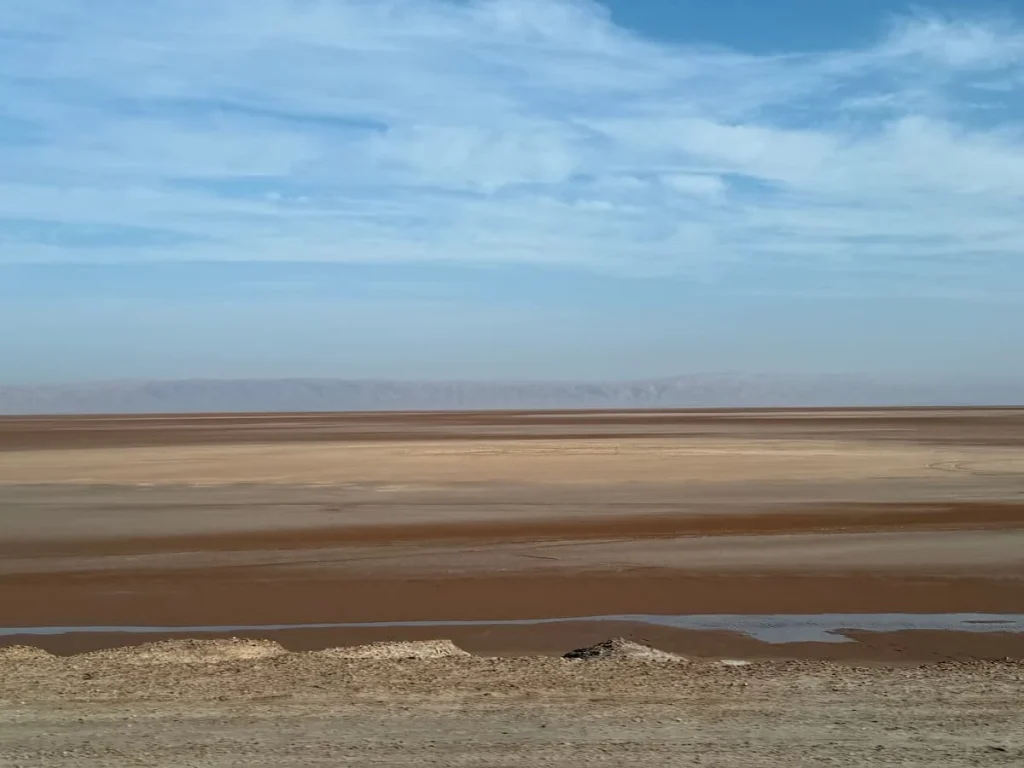
CHOTT EL DJERID
Douz
Douz is a major centre which has established itself almost like the hub for desert tourism. It’s therefore known as the ‘Gateway to the Sahara’. Douz has been called ‘the ultimate palm oasis’ and its no wonder why as it has over 500,000 palm trees and is a large producer of the Delgat Bour dates.
Each year Douz hosts the International Festival of the Sahara and at the end of December we popped by to see some of the traditional music, dancing but we must say were glad we didn’t witness the camel racing, which is a big thing at this festival.
Be-lavie Tip: Many movies have been filmed in the backdrop of Douz’s sand dune filled oasis including The English Patient.
Once in Douz, we were picked up by a 4WD from Camp Abdelmoulla and driven 2.5 hours deep into Temabiane’s Sahara Desert. It’s a very scenic route as we entered the ‘real desert’ and we felt the remoteness and large golden dunes towering 60 metres. Once you pass Cafe Tembaine it all starts to get very remote, which is why the camps send out their own drivers for pick-ups as they’re really good at manoeuvring the desert.
Be-lavie Tip: the 4WD trip is quite bumpy so if you are prone to sickness, we’d suggest taking some meds. We heard stories of some travellers not being able to make the camp due to the ride out there.
Camp Ambdelmoulla: A night in the Desert
Arrival at Camp Abdelmoula was just before sunset and we were shown to out tent, which was in fact, quite luxurious with a bed, plenty of blankets, hanging hooks as well as an ensuite, many tents have to share the showers and toilets in the communal ablution blocks. The tents are basic but ours did have electricity, some don’t.
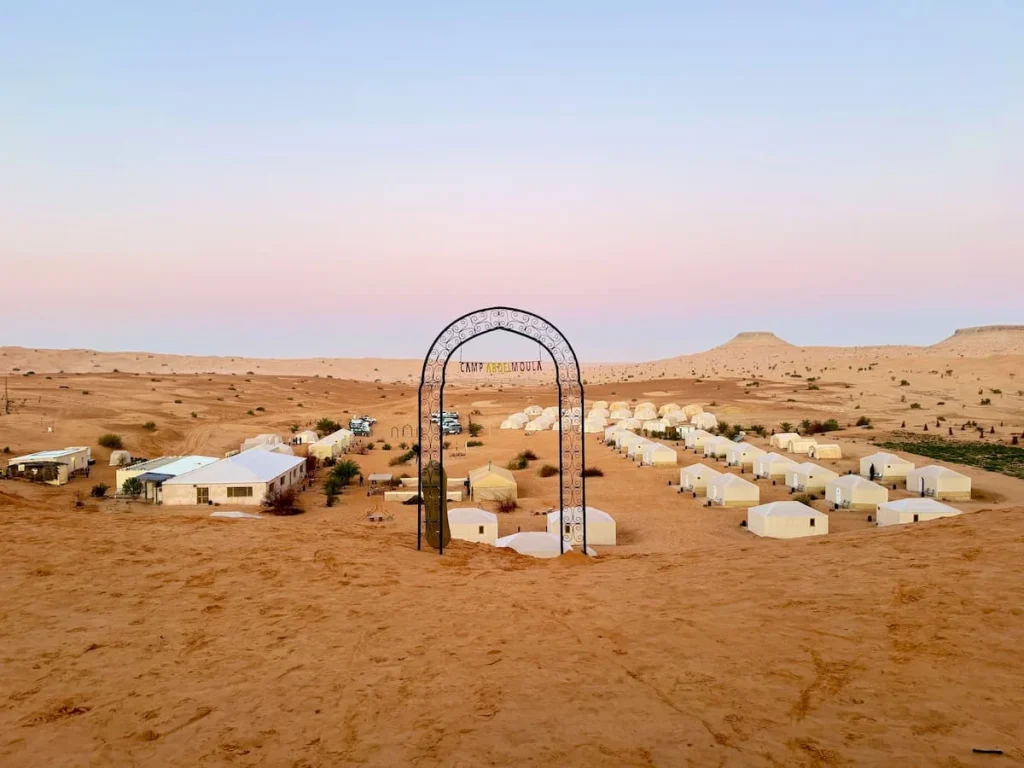
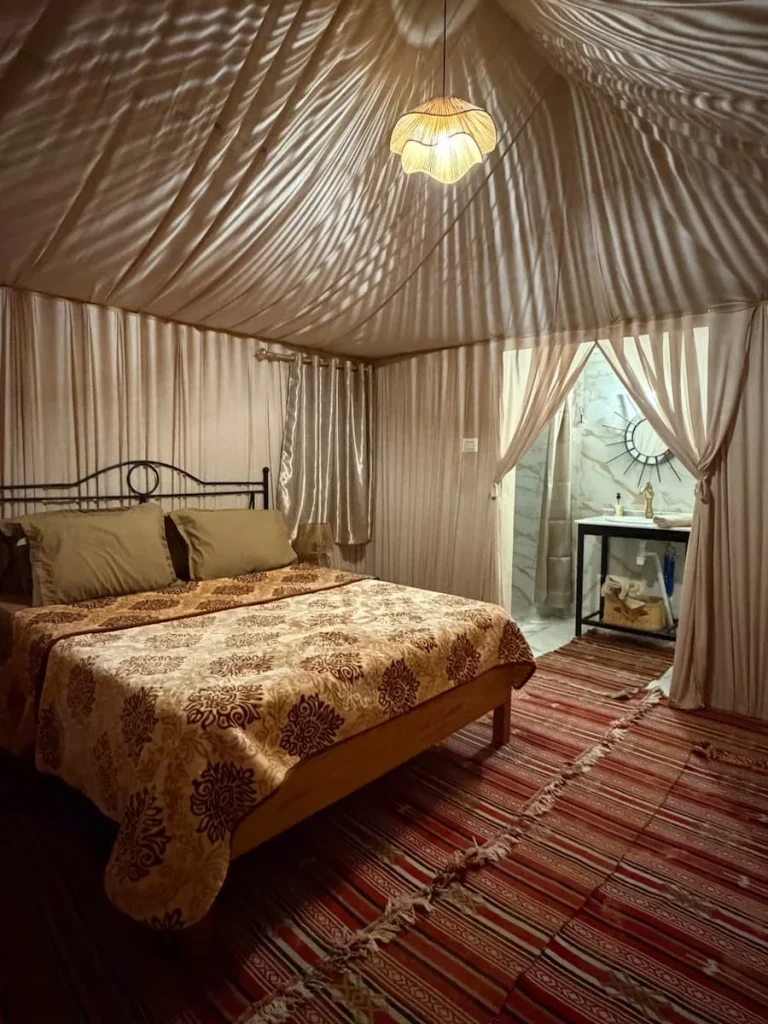
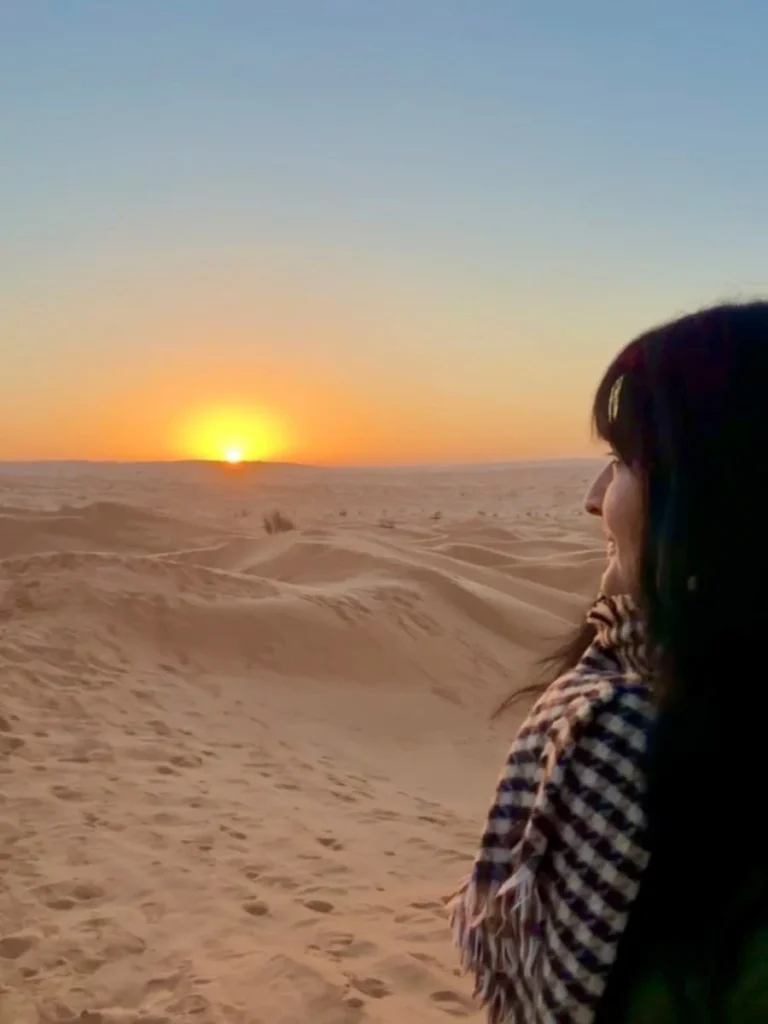
CAMP ABDELMOULA, TEMBAINE
We climbed up the sandy hill with Mount Tembaine in the background and watched the sunset over the camp. Following sunset we joined other guests around the fire for some music and to watch traditional Amazigh bread being made in the sand fire pit. Dinner is served in the dining tent and is a traditional three course meal after which we did a spot of star gazing and headed to bed early.
The next morning, we got up early to watch the sunrise over the desert, we were the only ones up and it was completely peaceful surrounded by golden dunes. Following breakfast, we headed back to Douz in the 4WD and continued to the Berver village of Tamezret and the area of Matmata.
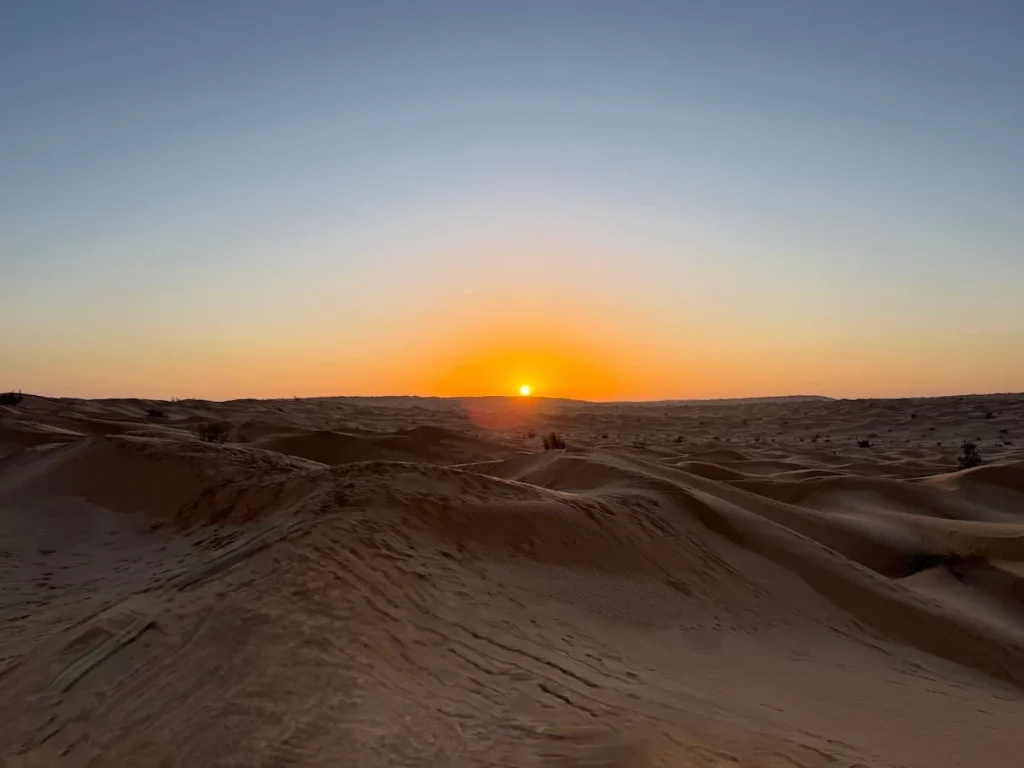
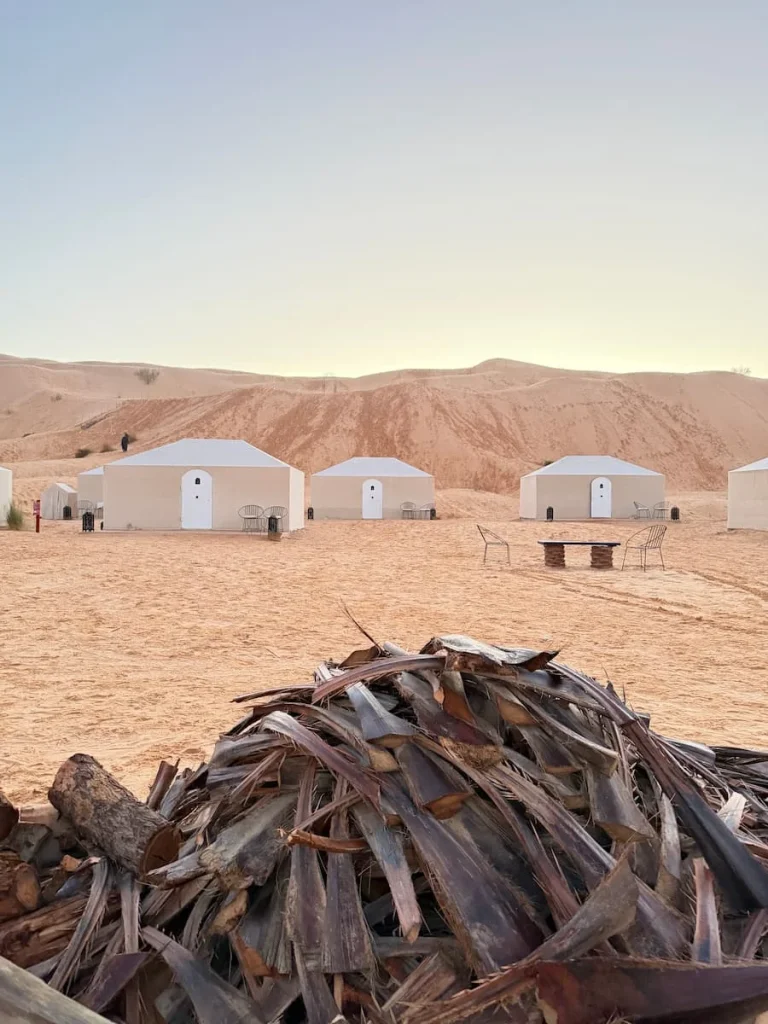
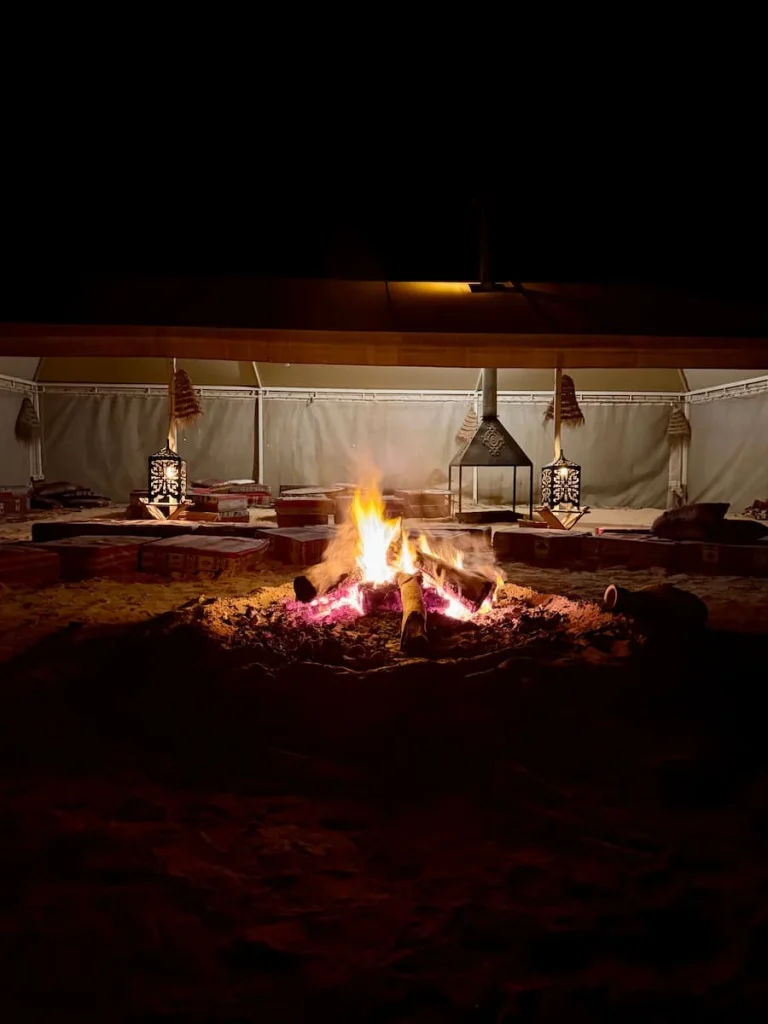
CAMP ABDELMOULA, TEMBAINE
Tours & Transport
With a base in Douz it is possible to take a day tour of the city as well as being transferred to the 4WD pick-up location for Camp Abdelmoula.
Day 9: Matmata & Tamezret
We spent a couple of hours exploring the landscape as well as the Star Wars Hotel, aka Sidi Driss which was where the crew stayed during the filming period. Particularly poignant if you’re a Star Wars fan. Sidi Driss has become one of the most famous filming destinations of Star Wars and is a Amazigh built structure of traditional adobe caverns. It was the interior of Luke Skywalker’s home in the original movie also referred to as the Lars Homestead.
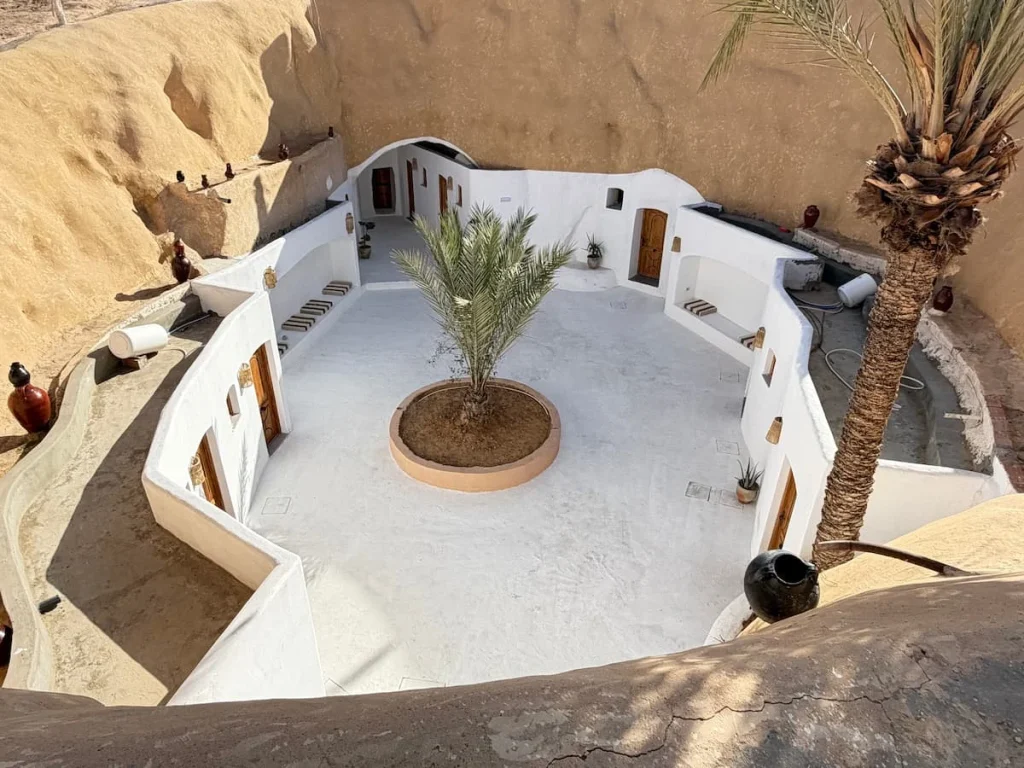
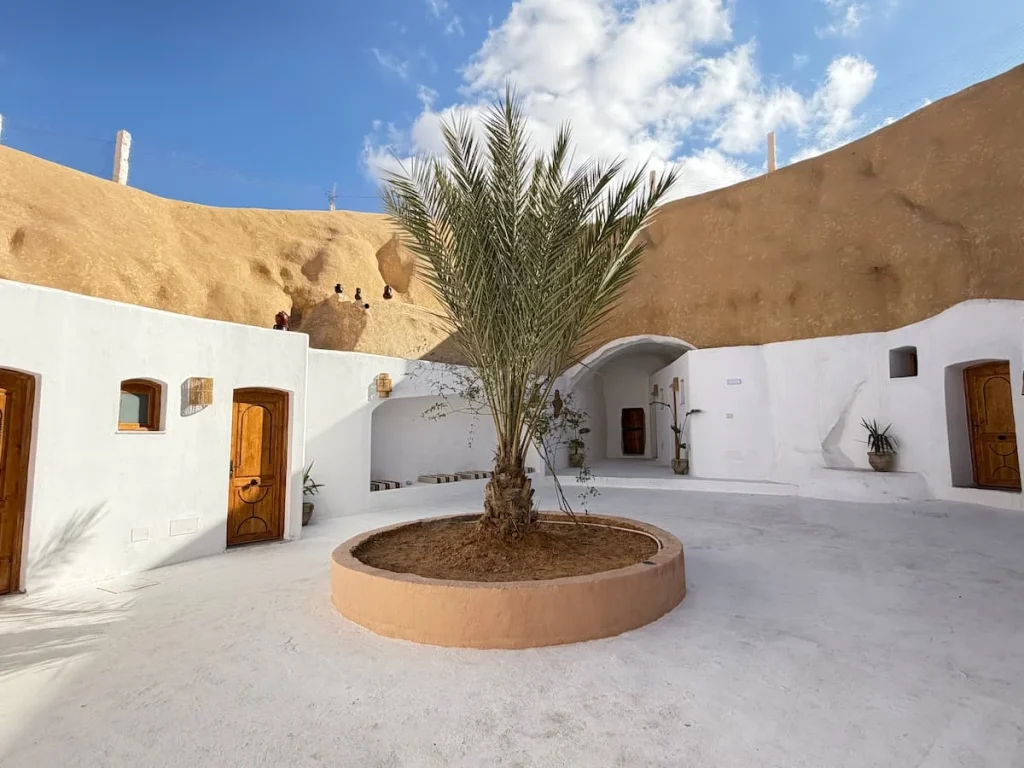
HOTEL DRISS WHERE THE CREW OF STAR WARS STAYED DURING FILMING
There are also a number of traditional Troglodyte houses in the area which can be visited, some of which are owned by local families who have now turned them into museums. We went to one which didn’t seem to have visitors and was in a really great state where we got to learn all about the family, have some bread and mint tea with them and even tried on some of the traditional outfits.
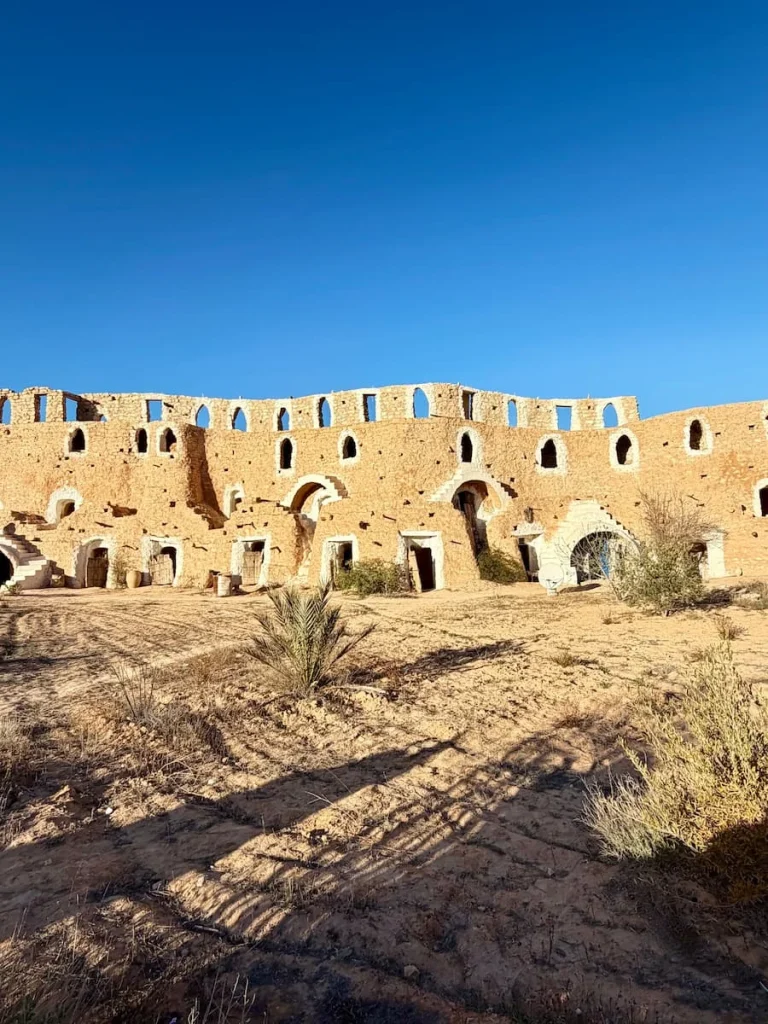
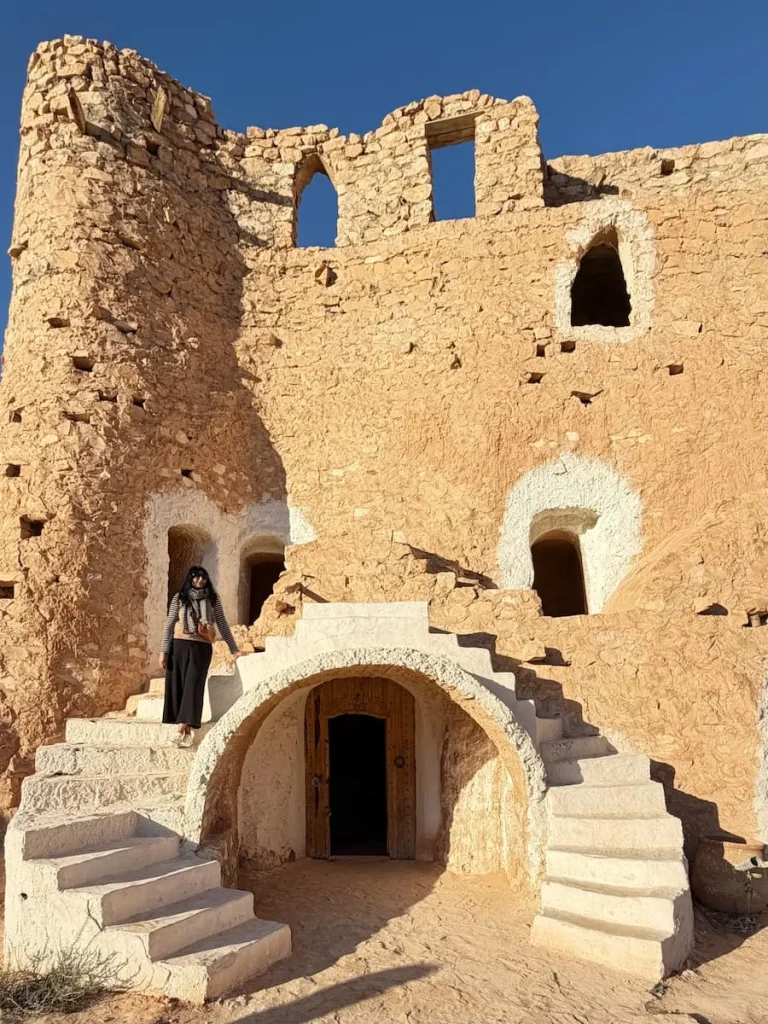
MATMATA TROGLODYTE HOUSES
Troglodyte houses are located mainly in Southern Tunisia with their architecture dating back centuries. Some are still inhabited by locals today. They feature unique underground structures which are carved into the earth that have not only weathered the test of time but have also become a symbol of the regions history and cultural heritage
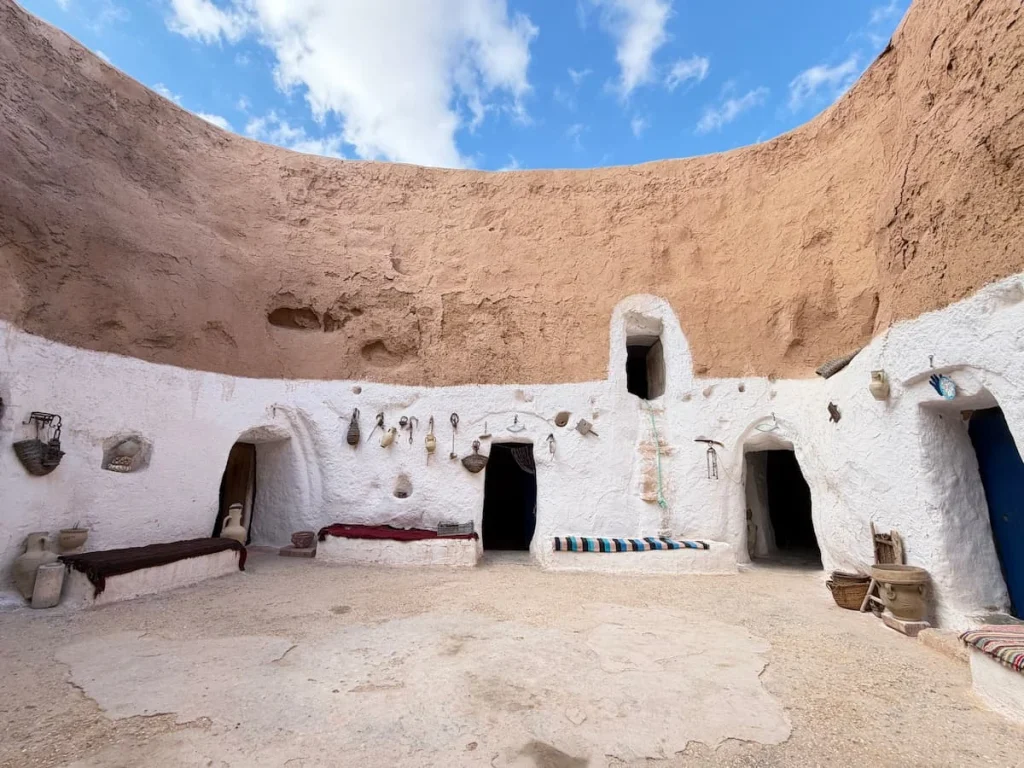
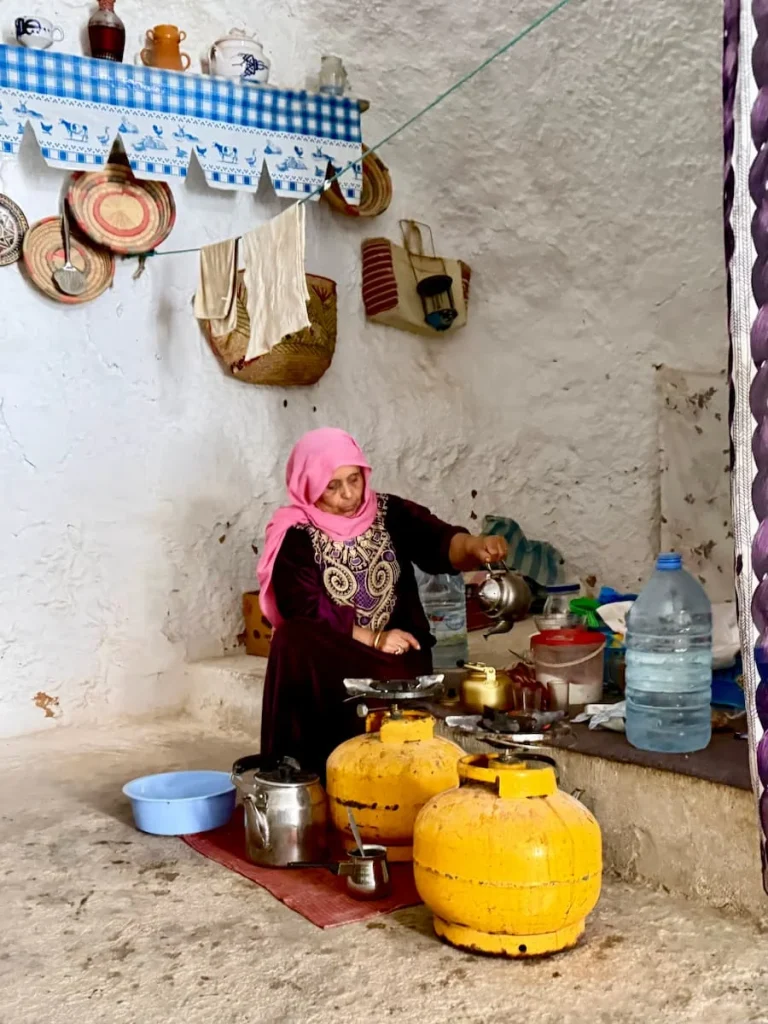
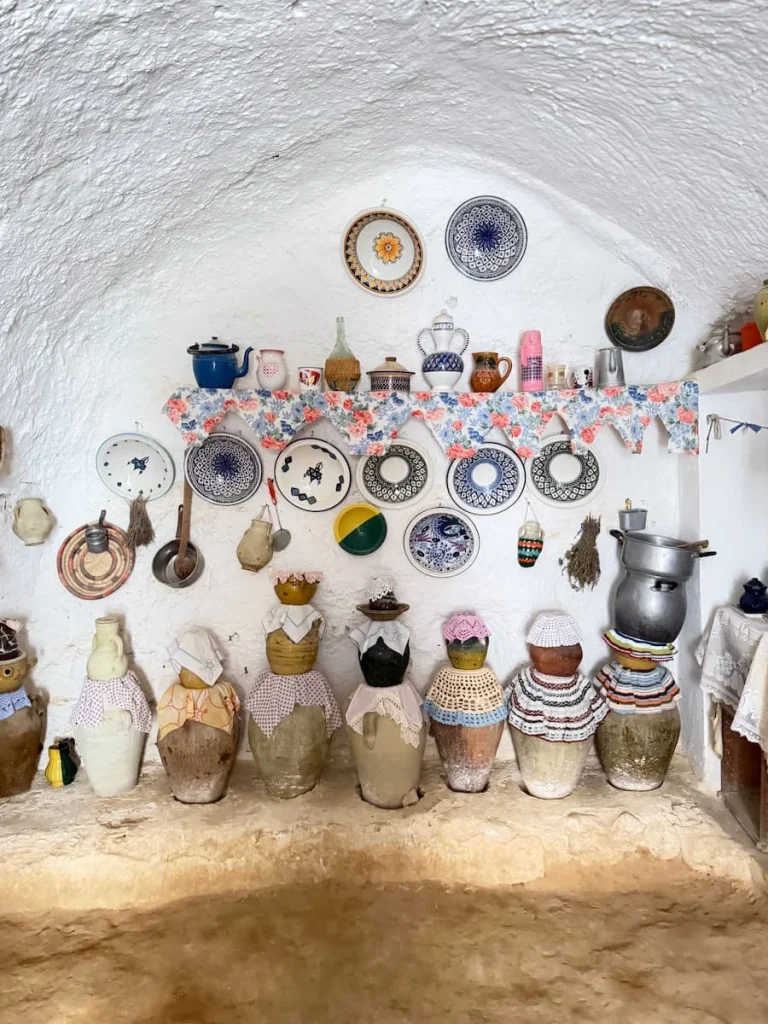
FAMILY TROGLODYTE HOUSE (NOW MUSEUM) IN MATMATA
Some houses are more dilapidated so it’s nice to see comparisons of the more authentic as well as newer ones which have been made more attractive and safer to visit.
Tamazret
Tamezret is a traditional Amazigh village where Tamazight (AMazigh language) is still spoken and sits on a ridge so it can be seen for miles around. There is a cafe and a mosque at the crown of the village with panoramic views of the surrounding countryside. There is also a small museum in the village which focuses on the town’s heritage.
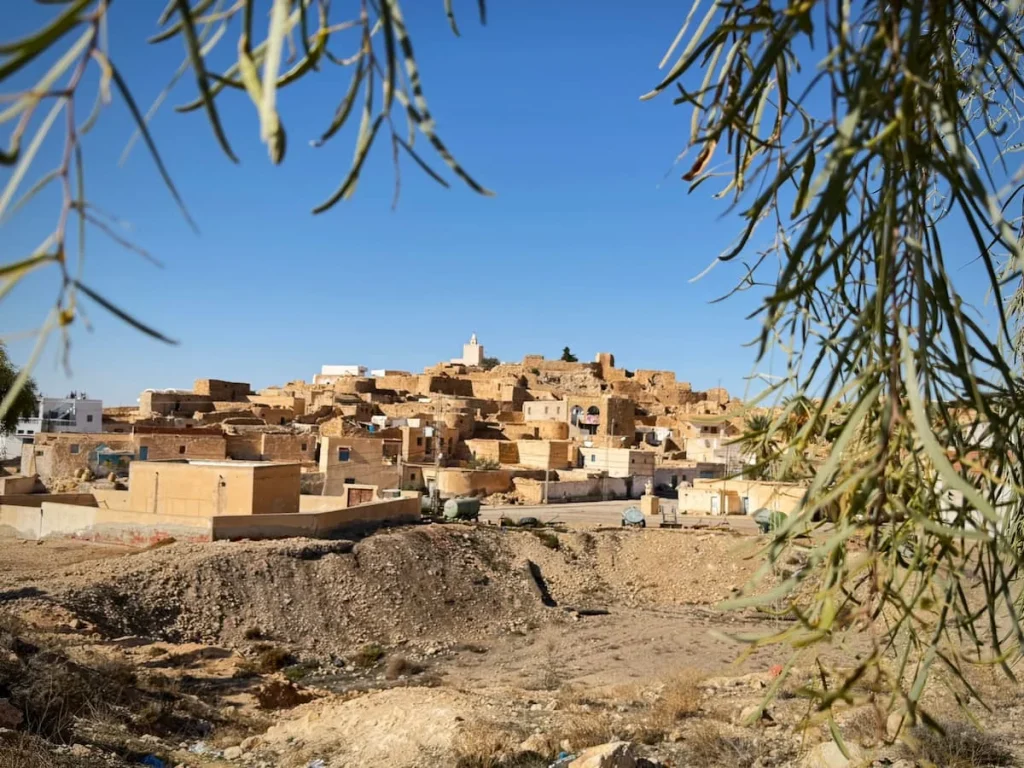
** Amazigh refers to the ‘free people’ of north Africa – the natives of the land. The term ‘Berber’ was given to these people during Greek and Roman times, derived from Barbaros, meaning, ‘outsider’ or ‘uncivilised’ Amazigh in the native local is a beautiful way of interpreting that they were once nomadic or ‘free-people’ as the are today.
Where to Eat & Stay in Tamezret
There are no restaurants in and around Tamazret, hence we chose to spend a night at L’Auberge de Tamezret, a three bedroom guesthouse run by husband and wife, Patrick & Sabine in the charming hilltop village. The three rooms are individually designed with rooms designed into the cave like structure.
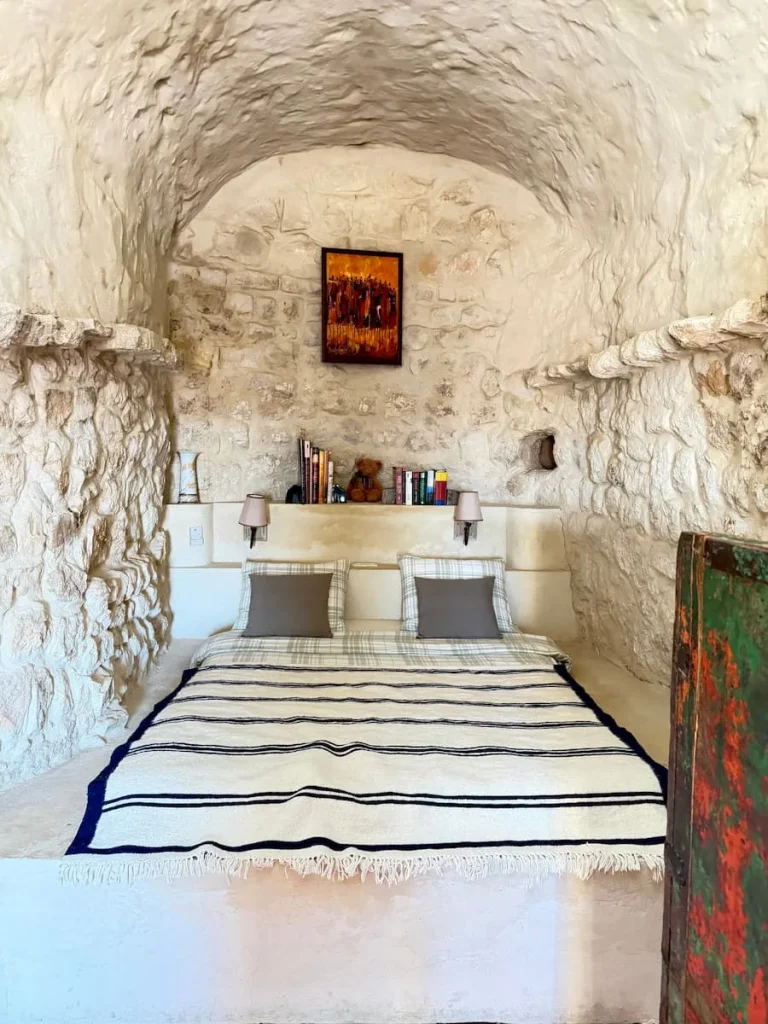
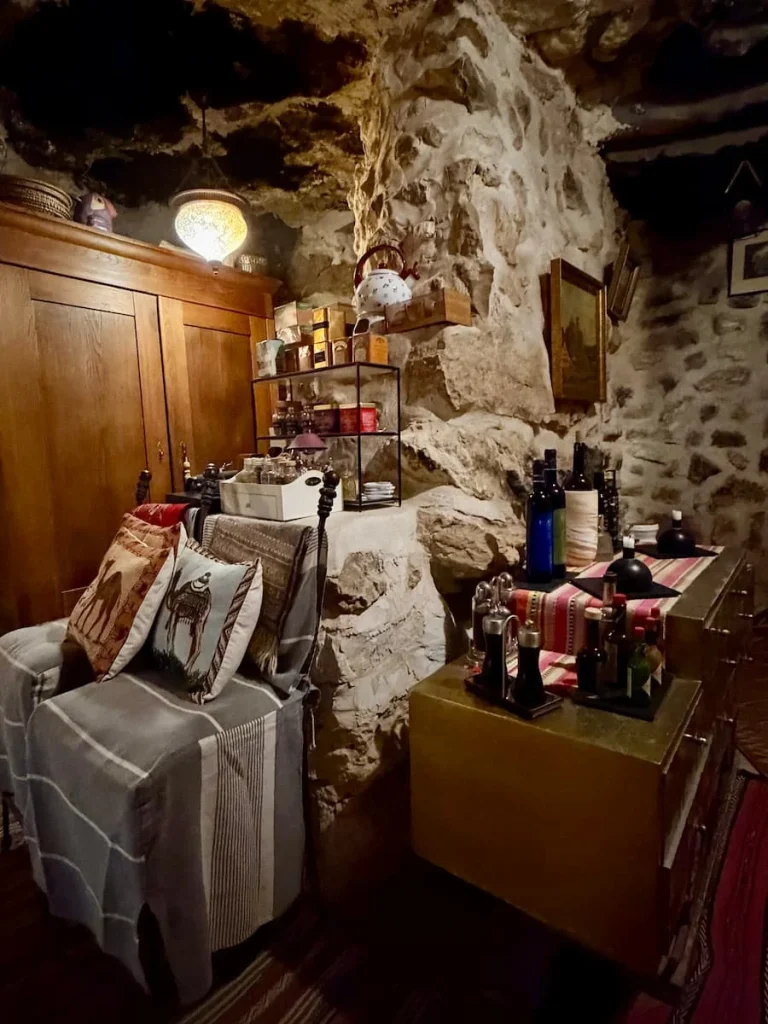
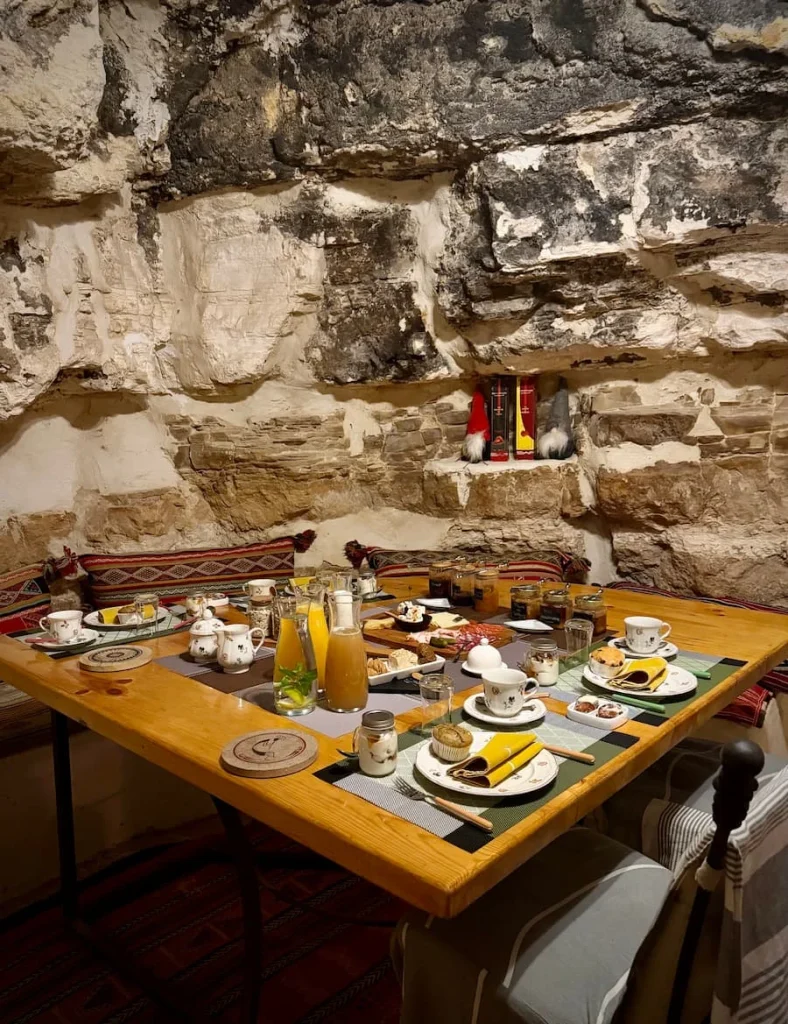
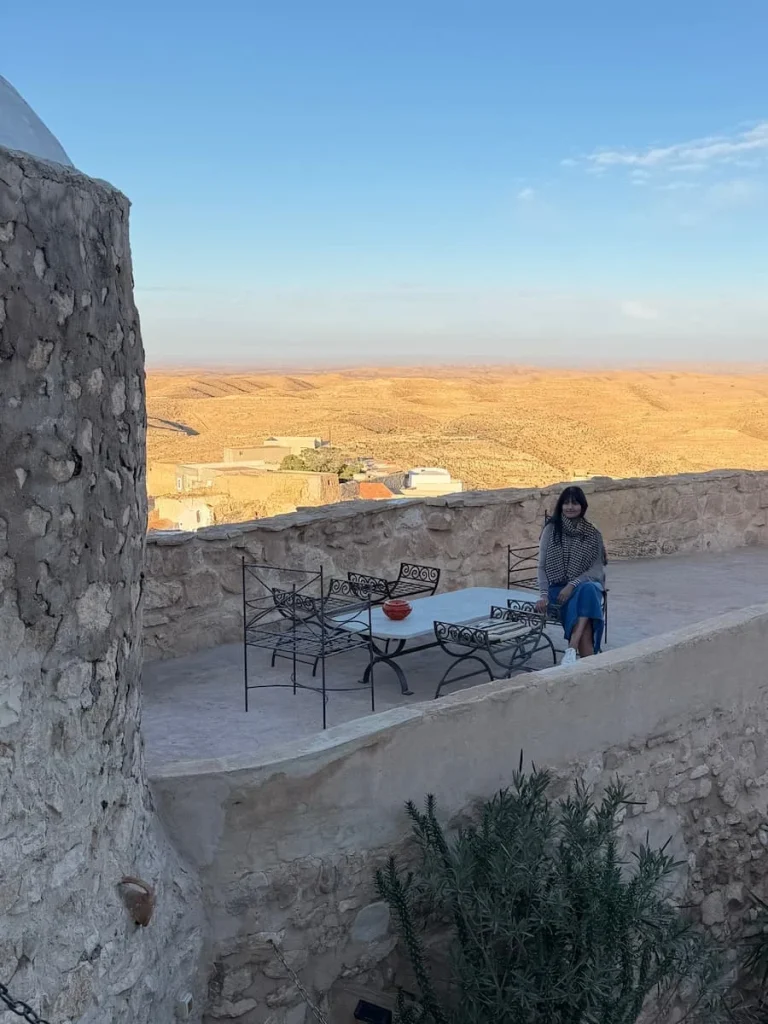
L’AUBERGE DE TAMEZRET GUESTHOUSE
The hosts provide a three course fine dining meal every night to guests prepared from seasonal ingredients with Tunisian and international influences. Meals are served on a communal table in the wine cellar, which really is impressive and stocks a great variety of Tunisian wines. A beautifully laid breakfast is served in the morning and is a leisurely and delicious affair.
Tours & Transport
Due to Tamezret’s remote location we would recommend a pre-organised driver.
Day 10-12 Douiret, Chenini, Guermassa, Ksar Hadada, Ksar Ouled Soltane, Medenine. Djerba
The next two nights were spent on the island of Djerba which is quite a distance to drive but the journey was broken up by visits to fortified villages (Ksours) and Granaries (Ksars).
Douiret
We saw this picturesque village of Douiret from afar but it was possible to see the Ksar and ghorfas located at the top of a line of cliffs below which there is a rock with many cave dwellings that it’s often compared to an ant heap! When viewed from some distance the whitewashed mosque can be seen due to its distinctive squat minaret
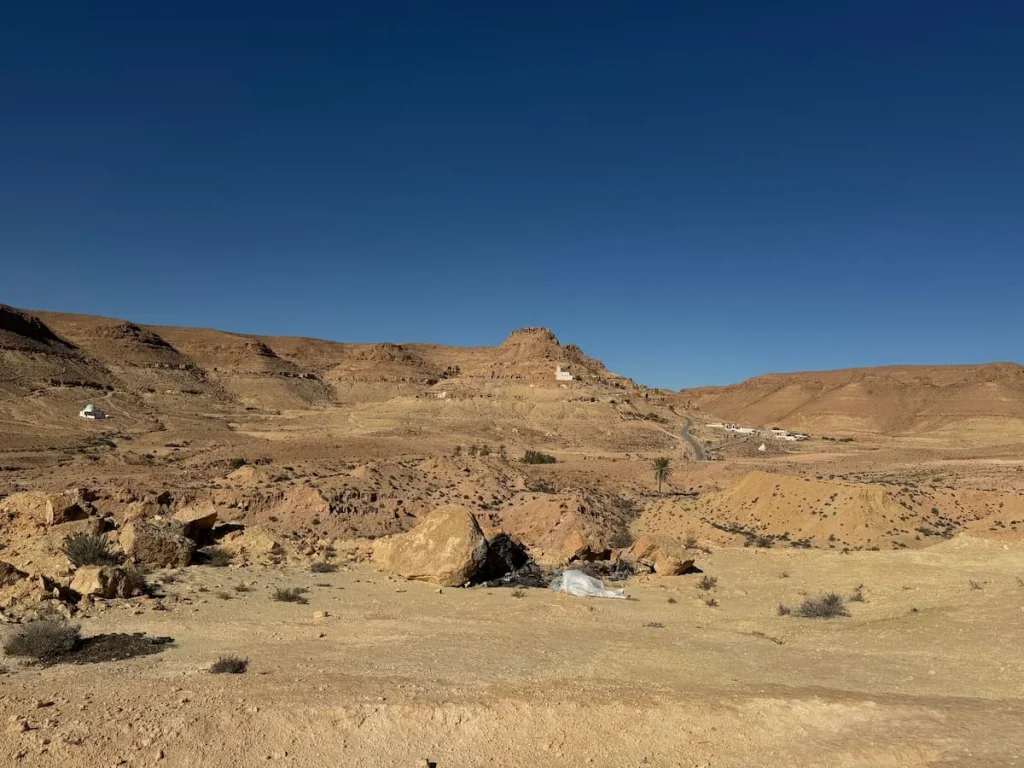
Chenini
The abandoned Amazigh village of Chenini appears as if its been built into the curvature of a cliff. We visited the white washed mosque at the top and then came down for a closer look at the houses that have been carved into the rock and have a walled courtyard, called a hosh which was traditionally used for storage and stable animals like donkeys and goats.
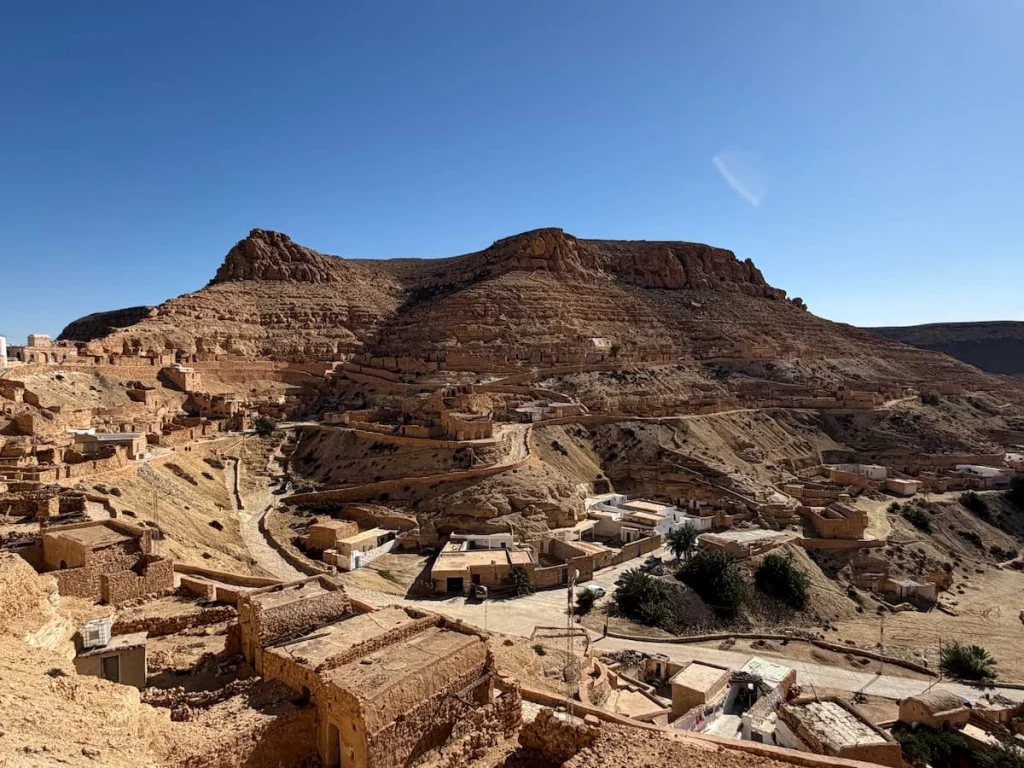
Guermassa & Ksar Hadada
Guermassa is a completely original village that has been abandoned and is worth a quick stop. We really enjoyed heading to Ksar Hadada which has extensive fortification and ghorfas. It has undergone some restoration work which can give visitors some idea of what it once looked like. There’s no denying that the village rose to fame when it was featured in the Star Wars movie Episode 1-The Phantom Menace to represent the slave quarters of Mos Espa. Some of the rooms have now been turned into a hotel and they also have an onsite gift shop and a beautiful restaurant.
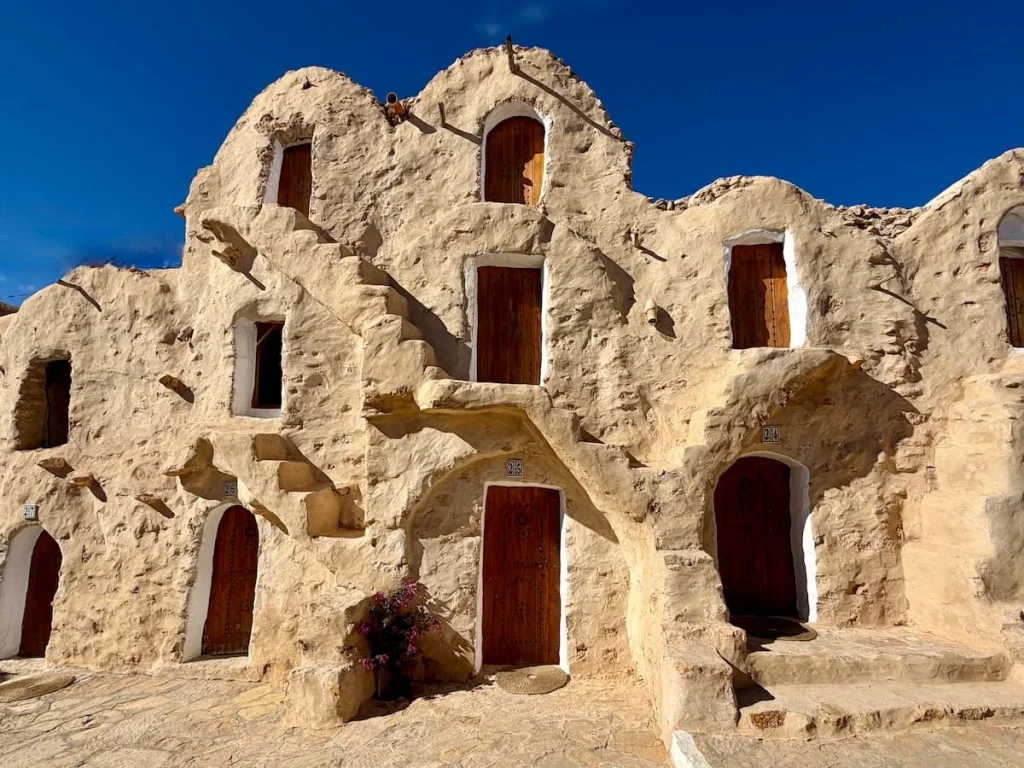
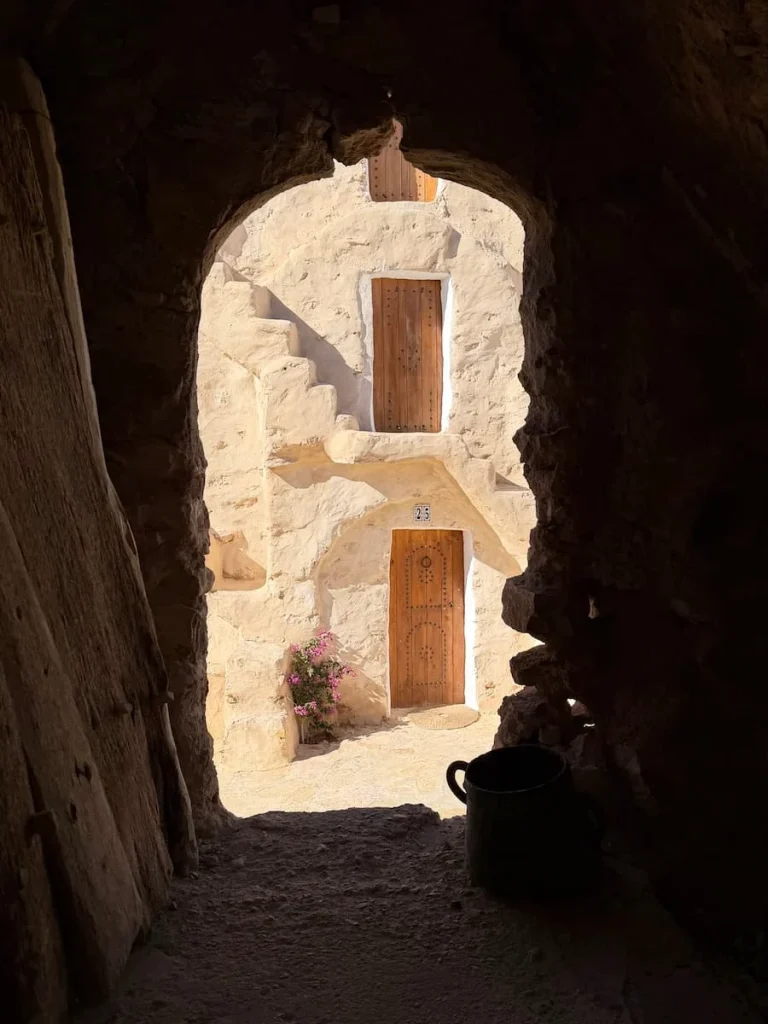
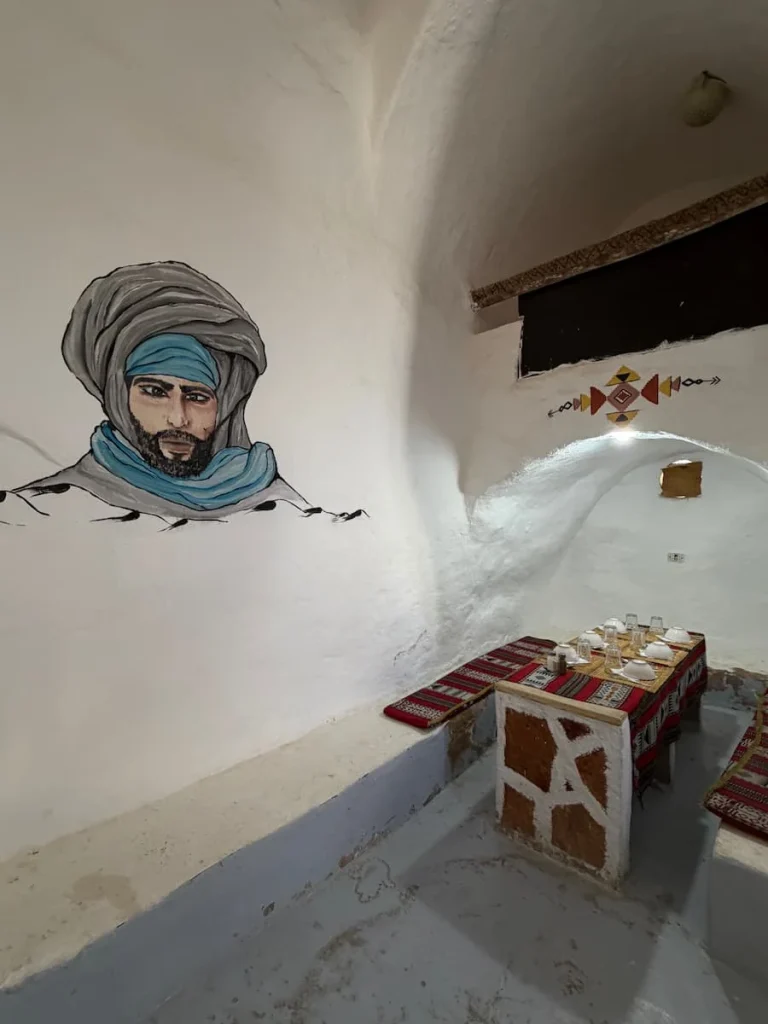
KSAR HADADA
Ksar Ouled Soltane
Ksar Ouled Soltane is probably some of the best examples of Amazigh ghorfas you’ll find in Southern Tunisia, these tall honeycomb like cells were built of clay and rubble and connected on top of each other to create an interesting facade which originally went up to six stories. The ghorfas were storehouses for grain, fodder and provisions when many of the villagers were nomadic and supplied their produce to bakers and patissiers. A custodian would defend their contents but late they became inhabited for defence reasons.
Medenine
A bit of a cross roads town, Medenine was once one of the most important trading centres in Southern Tunisia attracting merchants from all over the Sahara. The Ksar housed the central granaries of the many nomadic Amazigh tribes of the region. If you’re travelling this route to Djerva island like us then we’d definitely recommend making a short stop off.
Djerba
We arrived into Djerba for a 2 night stay, late afternoon and made a stop off at Guellala & Sidi Yati. Guellala is a pottery village and area that has plenty of rich deposits of clay around 25 metres underground. There were rows of potters with clay plates, cups, trays, pots and so many more things in varying colours and also in the traditional blue and white colours of design of Djerba island. We watched a family of potters at Ben Mimoune Potteries, demonstrating the old fashioned way of making ashtrays, really fascinating and you can even have a go yourself! We passed on that!!
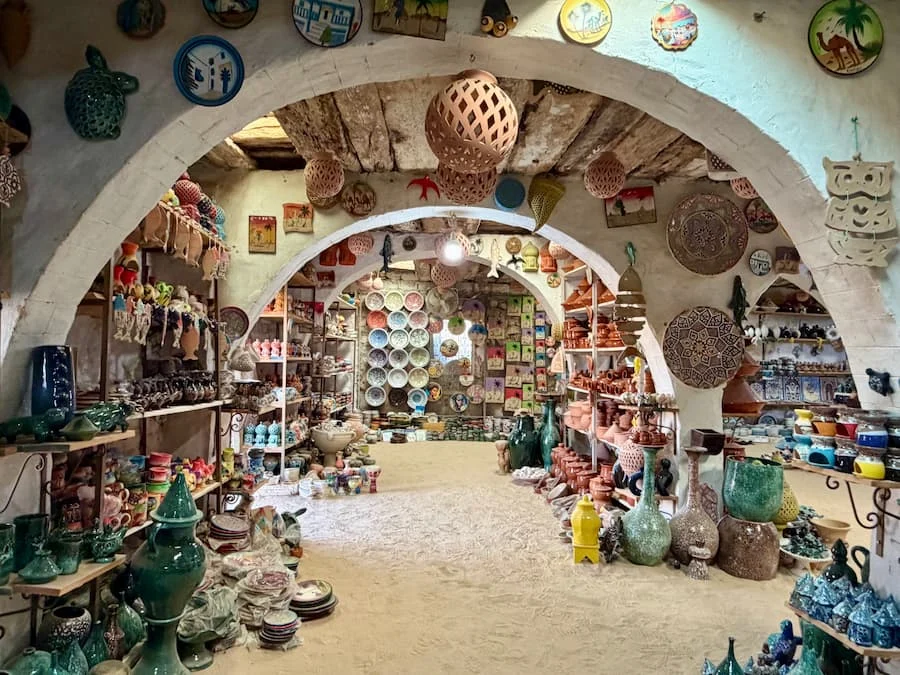
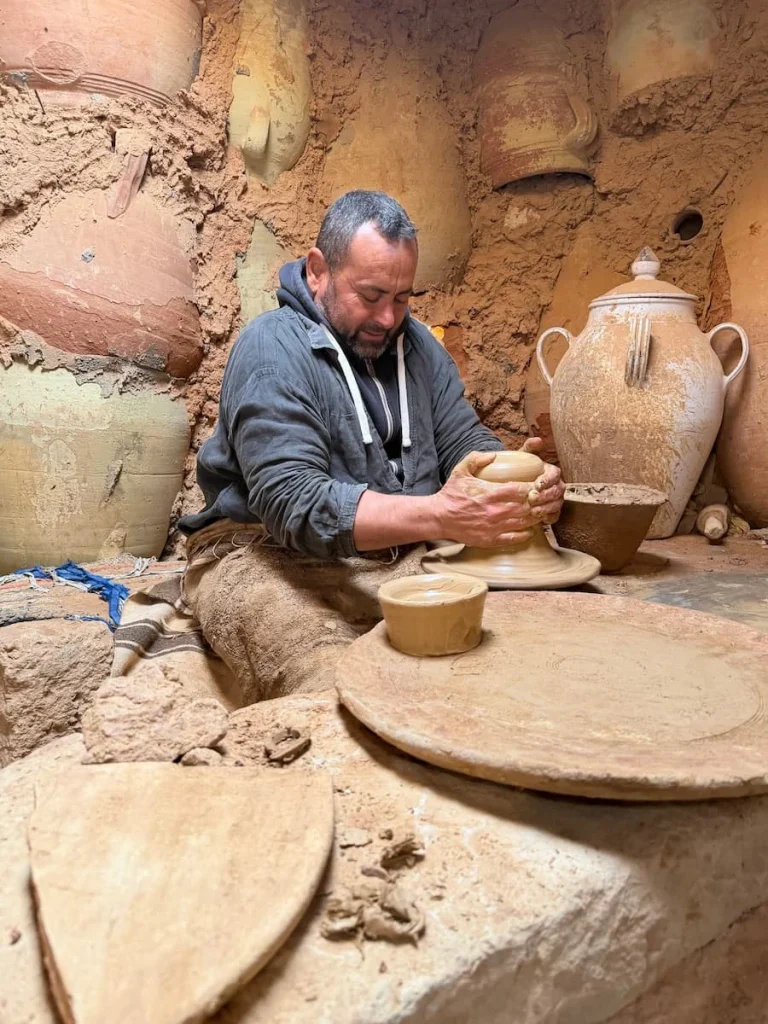
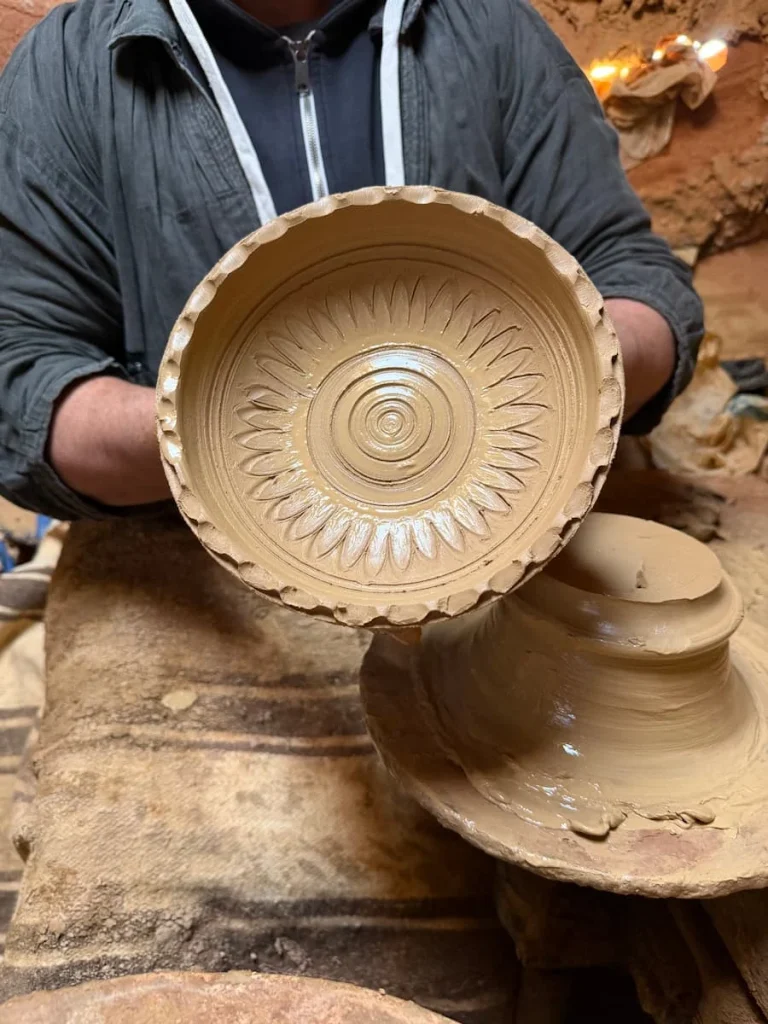
BEN MIMOUNE POTTERIES
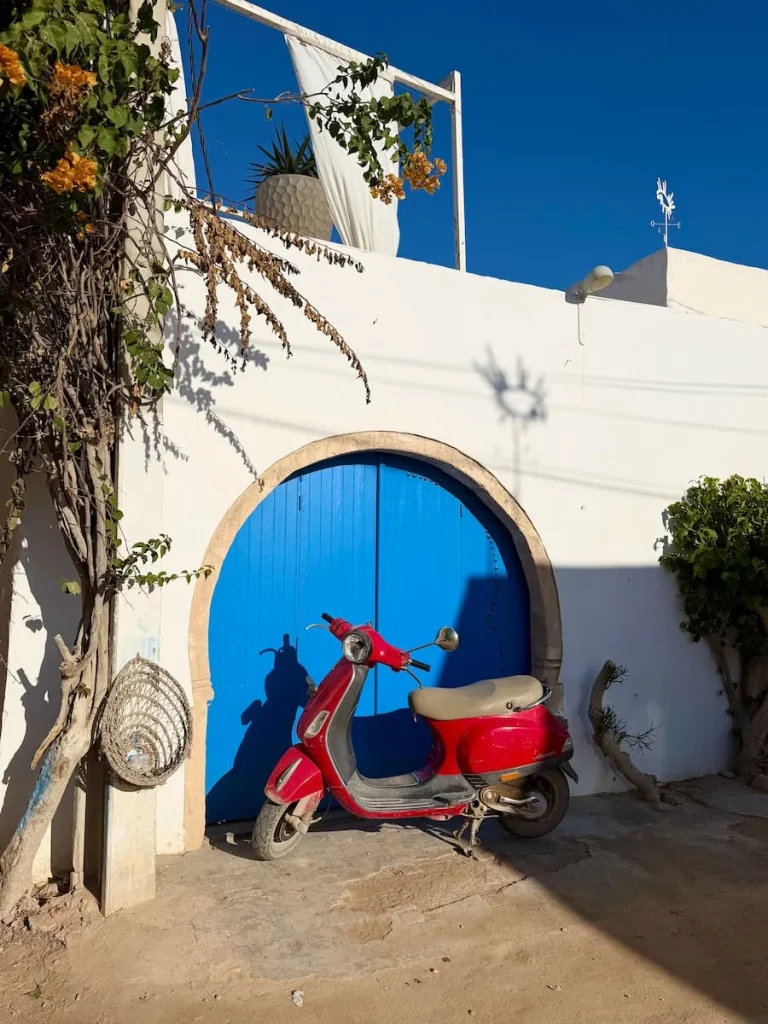
Djerba is surrounded by beautiful turquoise waters, swaying date palms and olive trees. It has a wonderful architecture of white washed building and blue doors and is best known for its beaches and hotels along the coast.
Close to sunset we spent the evening strolling around Djerbahood, or al Rijad with taking in the street art against the blue and white washed houses. Up until 2014, many tourists only visited this part of the island for the El Griba Synagogue but the street art has increased the local economy with more visitors. There were initially around 250 pieces of art by around 100 artists from 30 countries, it was an initiative by Tunisian born, Paris-based artist, Mehdi ben Cheikh. A few of the art works have faded or been painted over but its a really cool part of the area to discover.
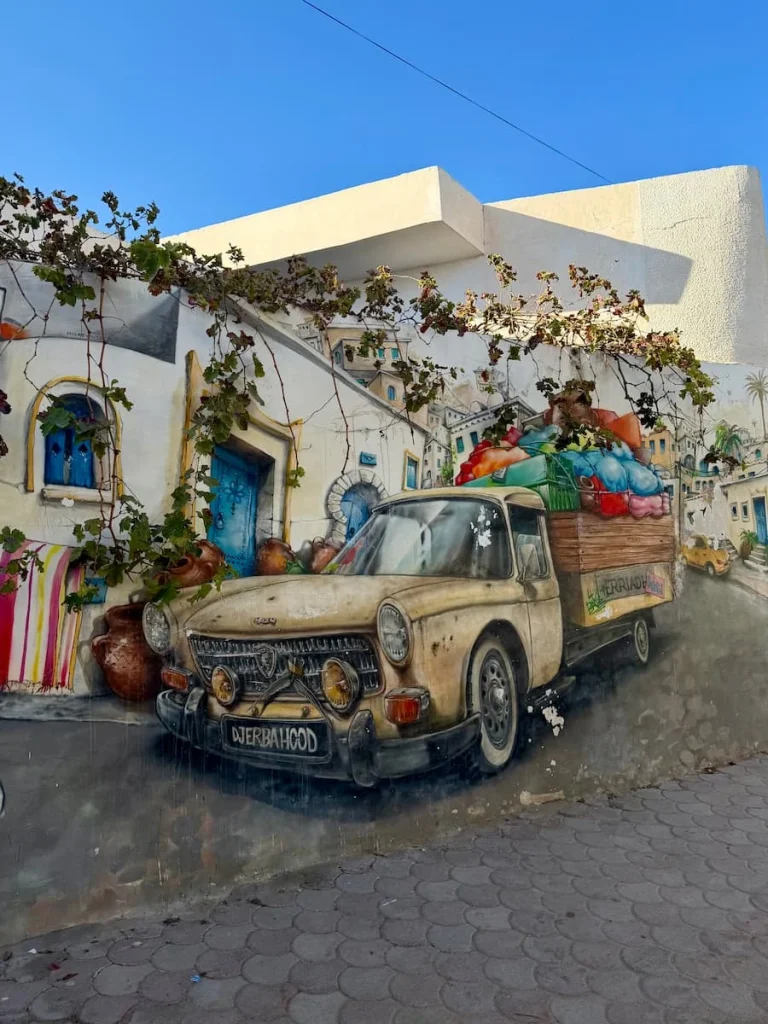
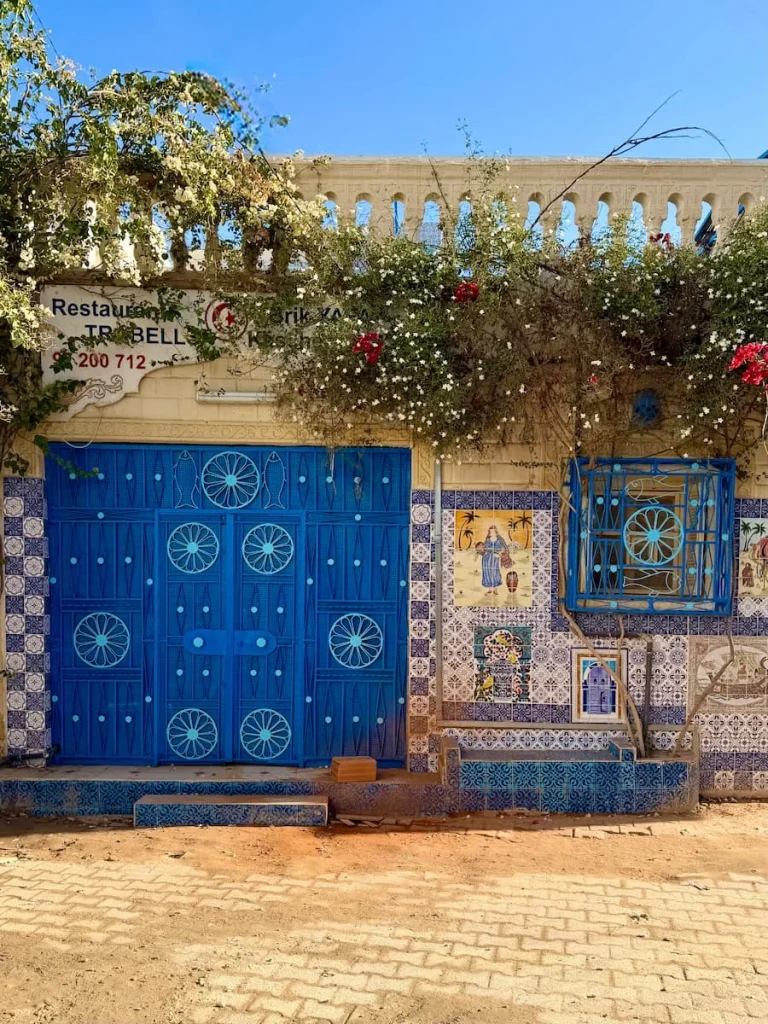
DJERBAHOOD
On our second day in Djerba we visited the El Ghriba synagogue in the former Jewish village of Hara Sghira and is a site of pilgrimage as well as being the most important synagogue in Africa. It was rebuilt in the 1920’s on an ancient site where tradition says a holy stone fell from the sky.
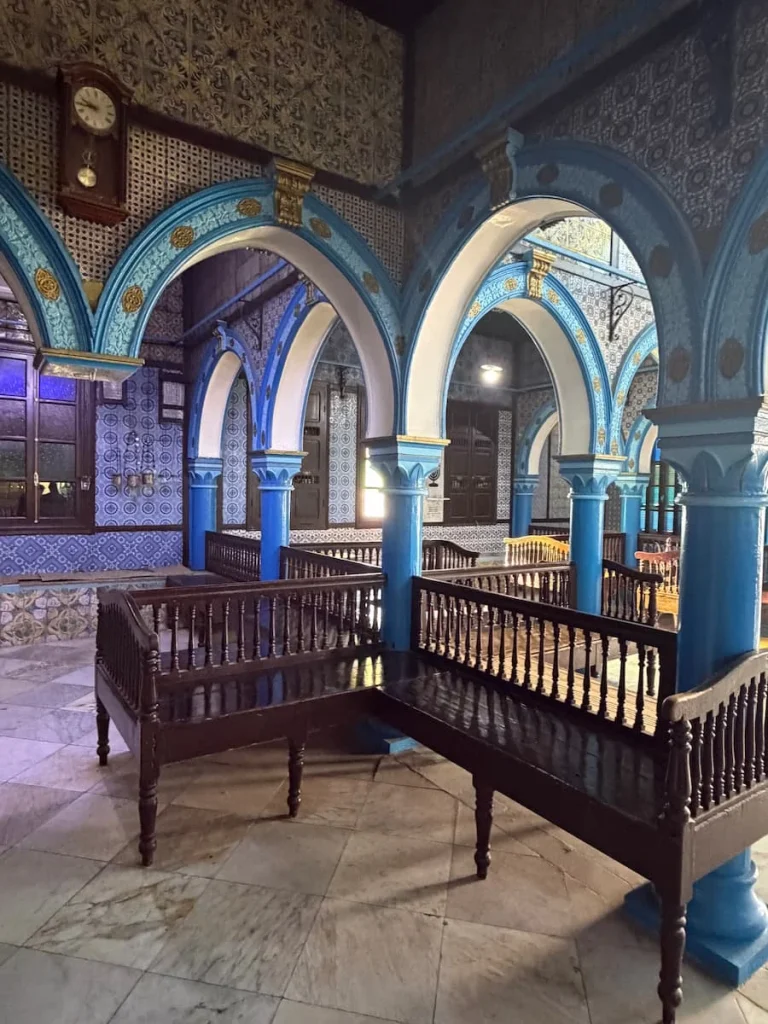
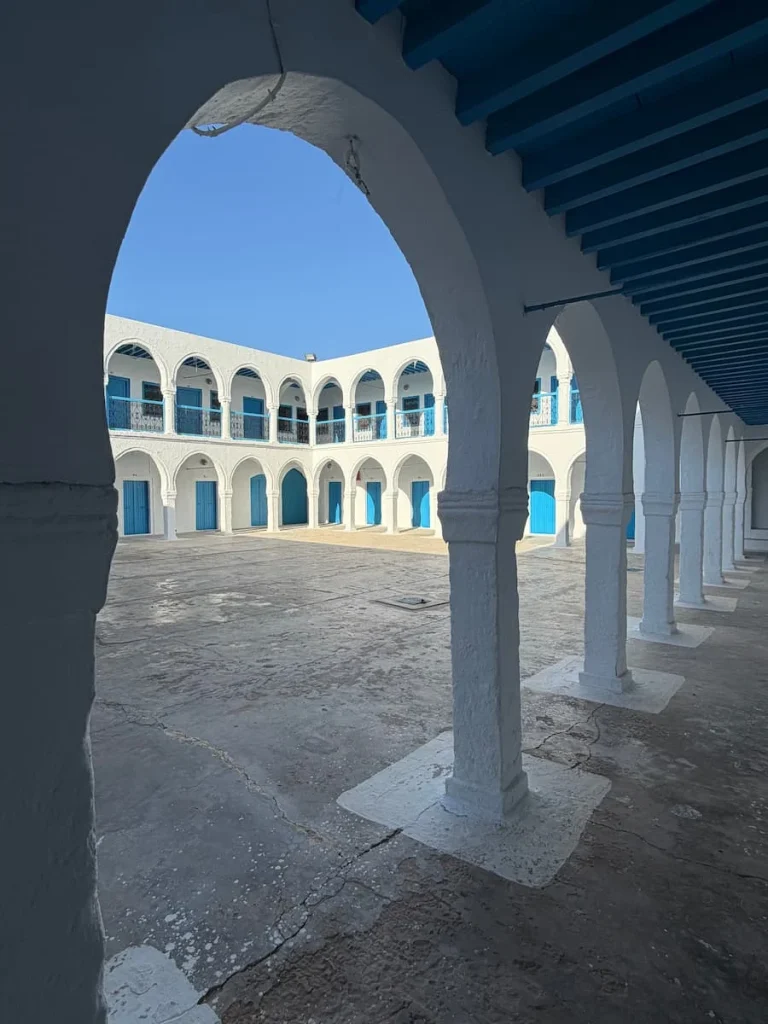
EL GHRBA SYNAGOGUE
Be-lavie Tip: ladies, please ensure you have a scarf to cover your head to go into the synagogue and shoes must be taken off and left outside. Gents are also asked to cover their heads with a kippah or other hat.
The Houmt Souk, meaning ‘marketplace’ is a great place to walk around and discover spices, handicraft, silver shops and more. Here you see locals purchasing their groceries as well as other daily things. They have some great coffee shops if you fancy a Turkish coffee mid-morning.
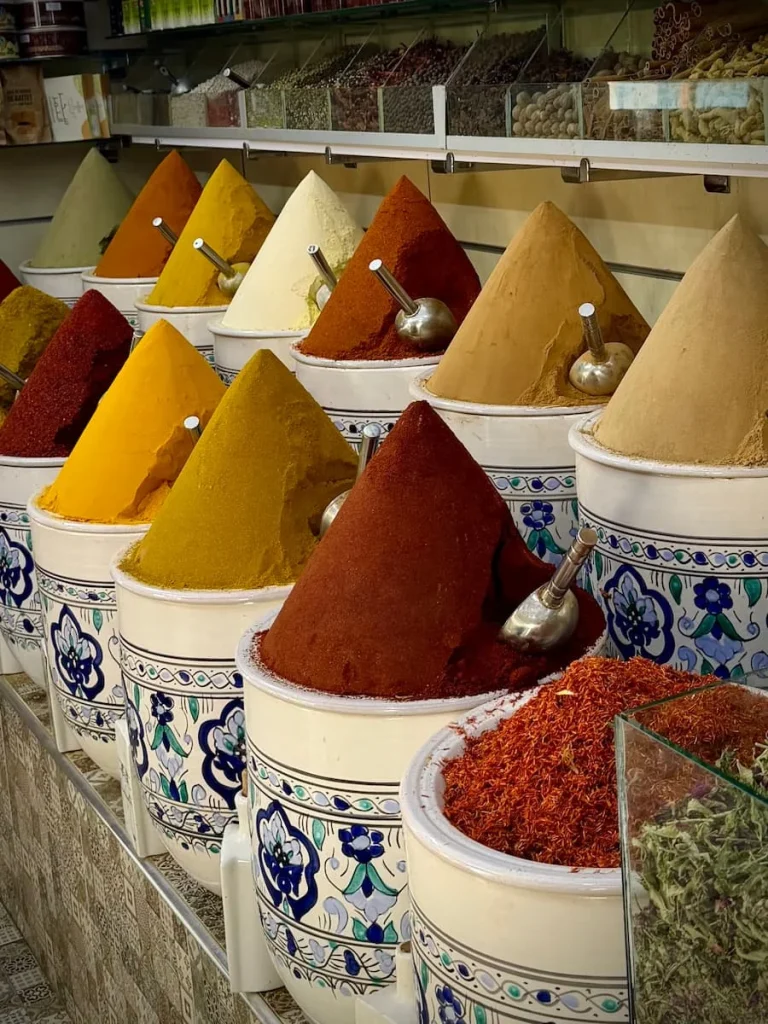
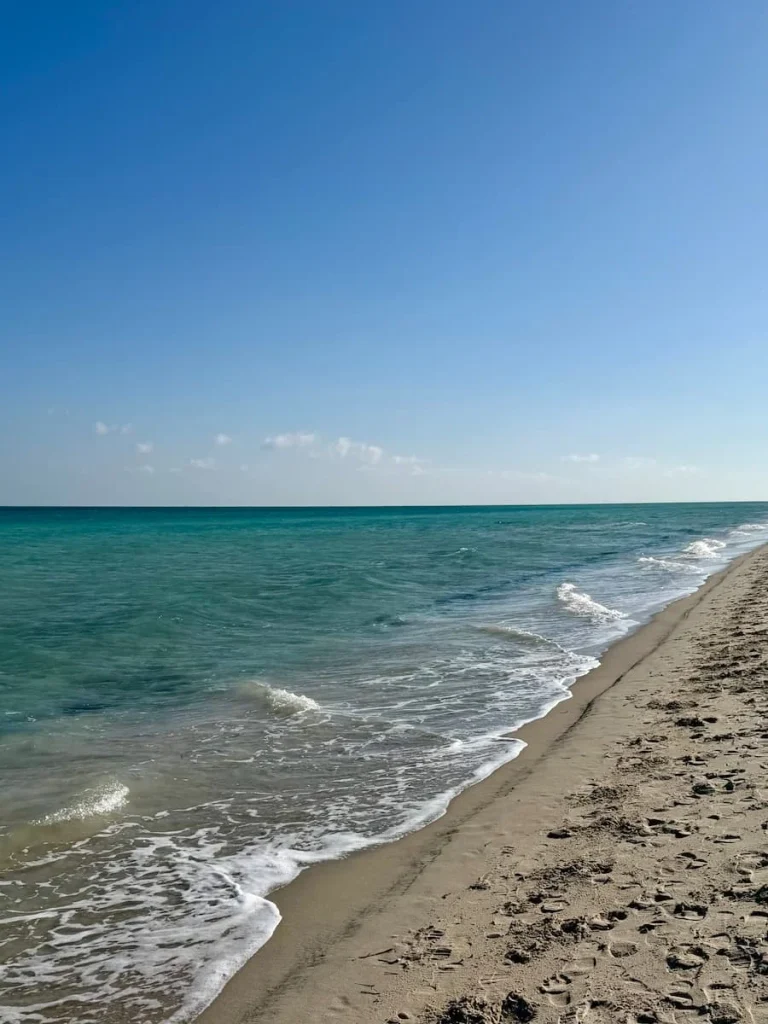
DJERBA HOUMT SOUK SPICES & BEACH
We spent the rest of the time at the long sandy beach close by which are public and great to see if you can catch a glimpse of the pink flamingo or simply just walk along the beach and feel the sea air. The island is a great place to relax. Our 2 day Itinerary to discovering Djerba goes into more depth about what Tunisia’s largest island has to offer.
Where to Eat in Djerba
Djerba has plenty of places to eat but one of our memorable meals was at the restaurant at our hotel Dar Dhiafa. They specialised in traditional Tunisian food with mediterranean influences with the use of pasta and French patisserie. Produce is local and bought from the island including fruit, veg, meats, fish as well as Djerba herbs and spices. Reserving a table is a must if you plan to eat there as it can get very busy.
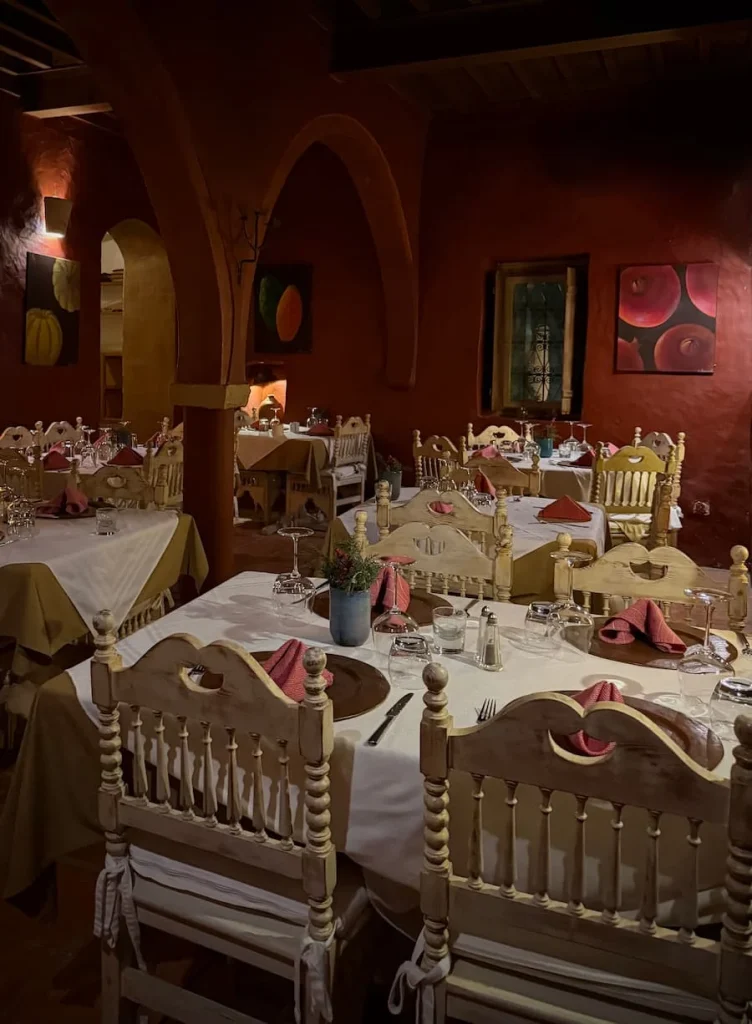
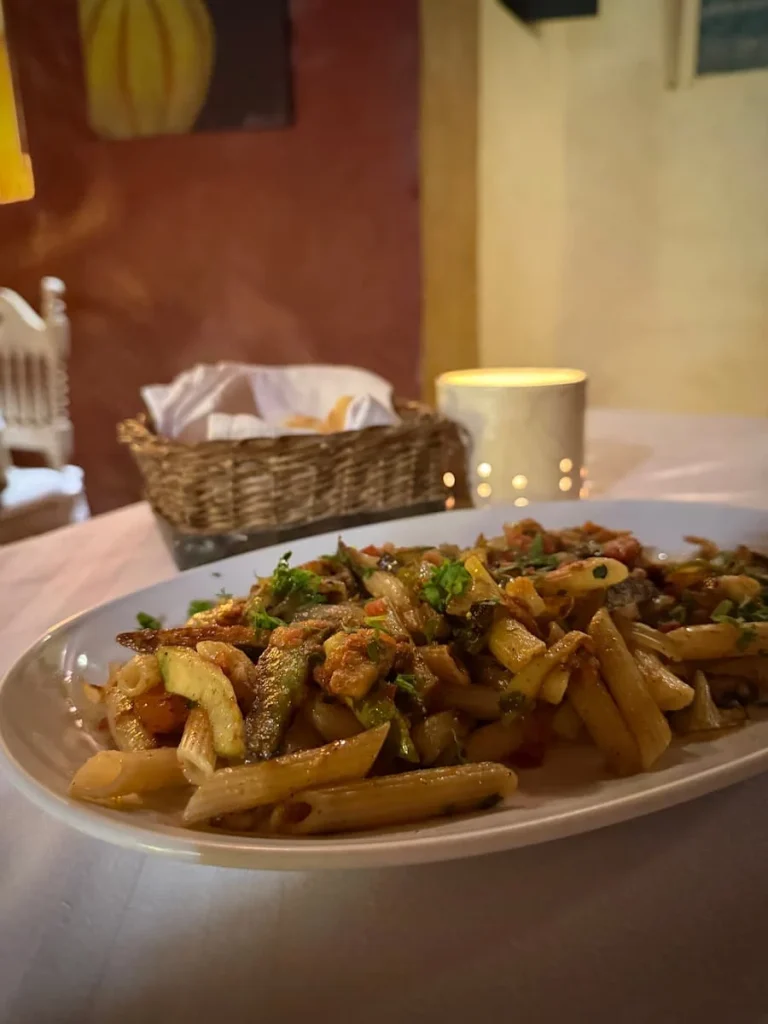
DAR DHIAFA RESTAURANT
Where to stay in Djerba
We stayed in the historic village of Erriadh at Dar Dhiafa Hotel, a traditional Tunisian courtyard house that has been converted into a boutique hotel with 14 ensuite suites. Think shabby chic sage and blue doors, Arabian antiques and Tunsian colourful rugs. They have two swimming pools, a bar and plenty of alcoves to hang out in, plus a fire for chilly nights.
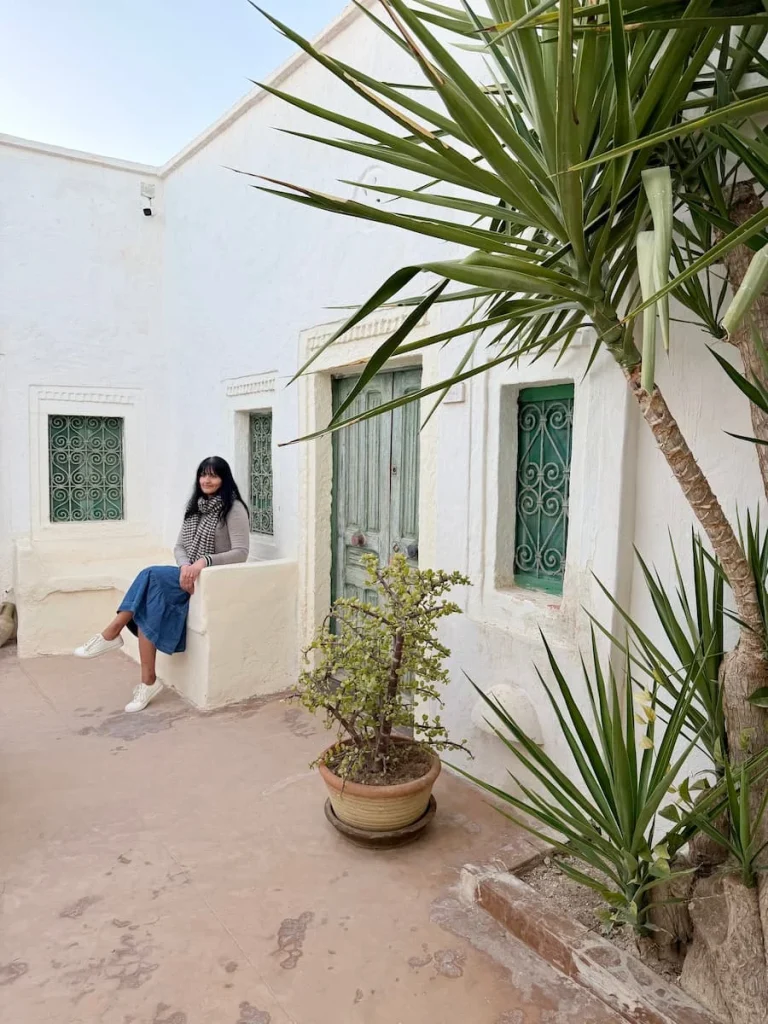
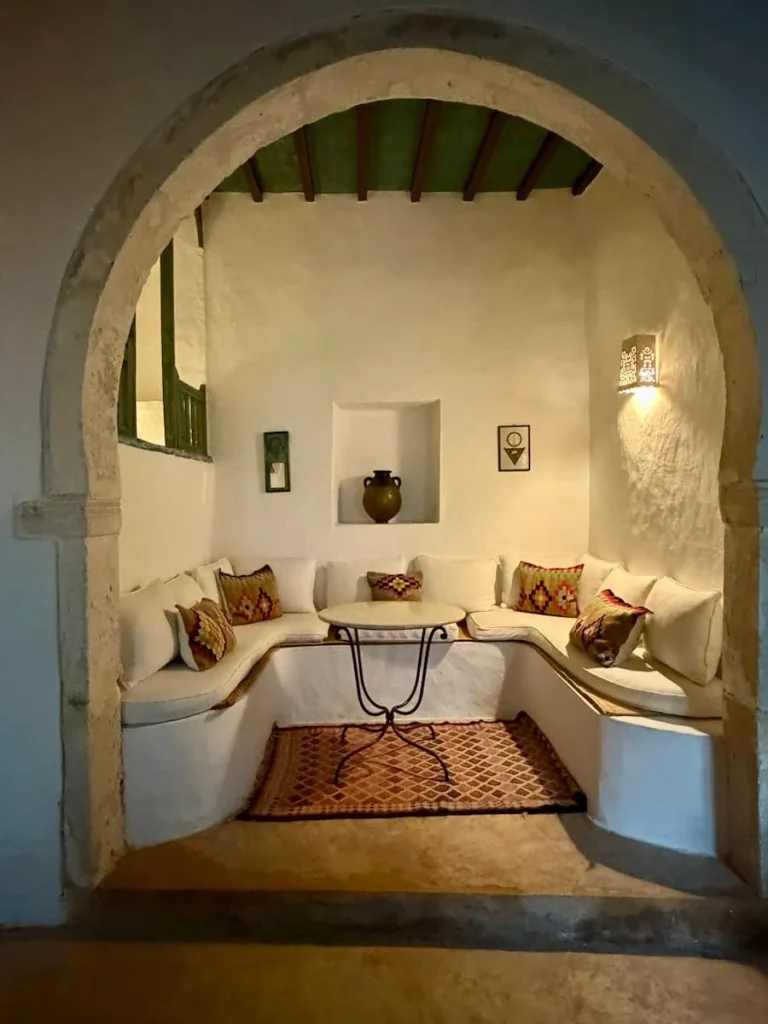
DAR DHIAFA
Transport & Tours
It is possible to book a day tour in Djerba that will include all the main sites the island has to offer or you can easily walk around depending on what you’re interests are. Close to the Souk there is an international arts museum too. The island is pretty chilled and its most definitely a laid back island feel in Djerba.
Days 13 & 14 Hammamet
On the late afternoon of Day 12, we took an internal flight from Djerba to Enfidha Hammamet airport after which we took a 45 minute drive to our hotel just outside of Hammamet where we spent our last two days.
Hammamet
We used our final two days making use of our hotel facilities as the hotel had it’s own beach and was a tranquil place to relax. We spent a half a day wandering through the myriad of alley ways at the Old Town Medina in the old town, visiting the Dar Khadija Museum as well as the Fort and walking the town’s coastal path. We think it’s possibel to base yourself in Hammamet for around 3 days adn maybe take a day trip on the third day, read more about this is our 3 day things to do in Hammamet guide.
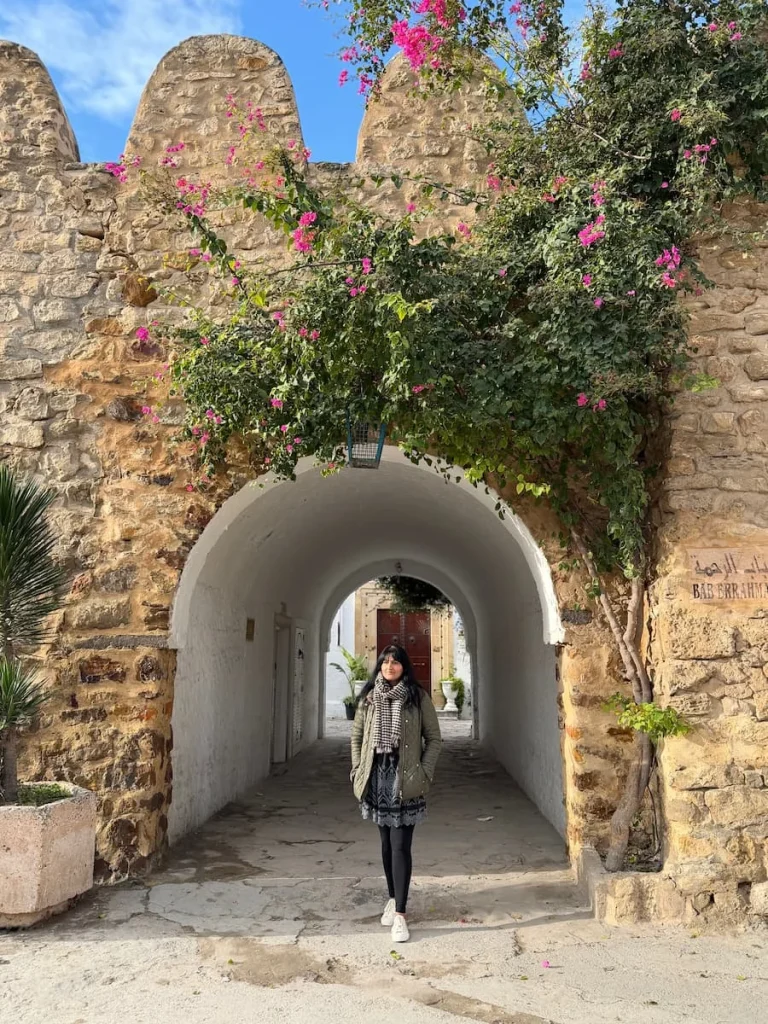
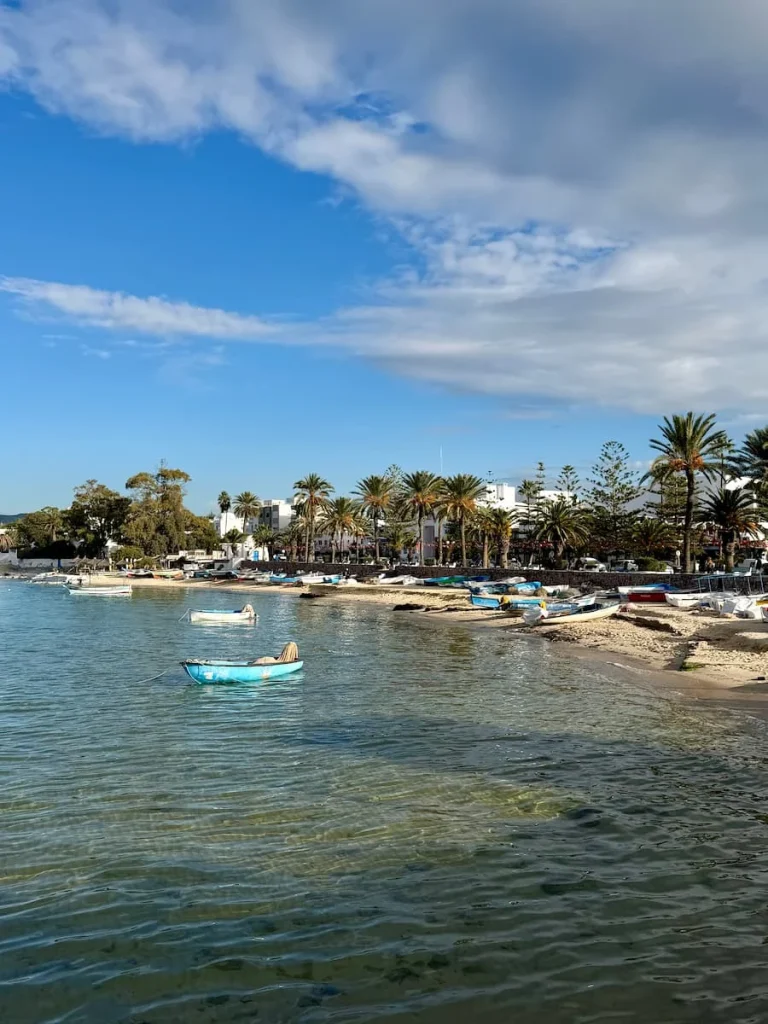
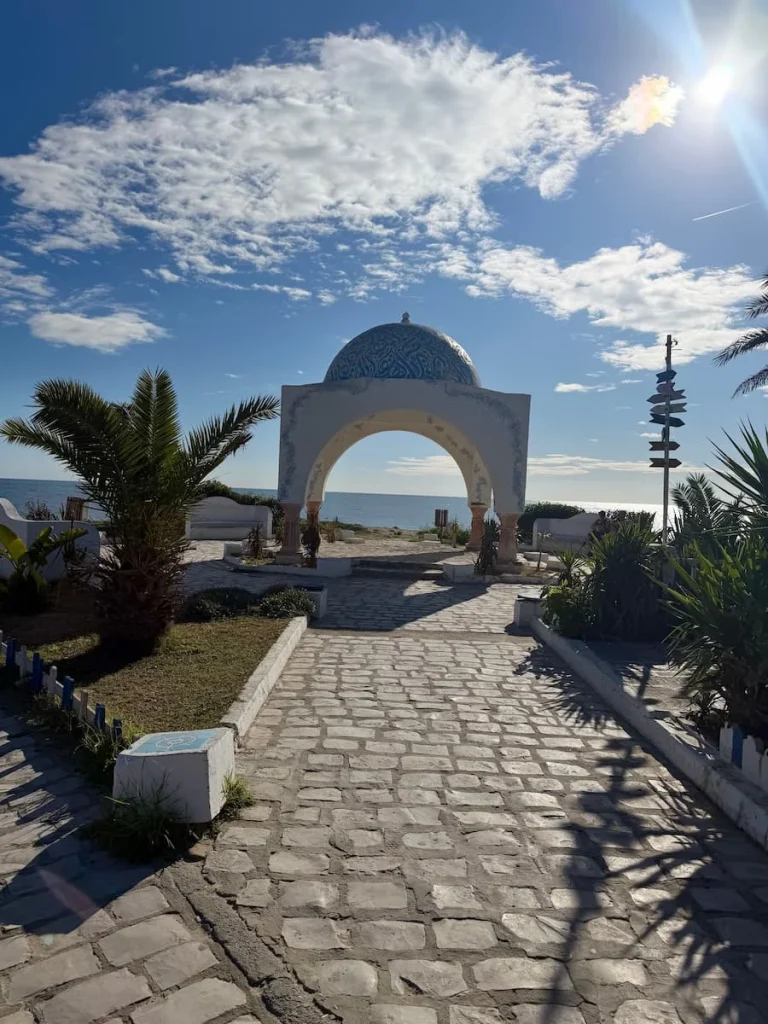
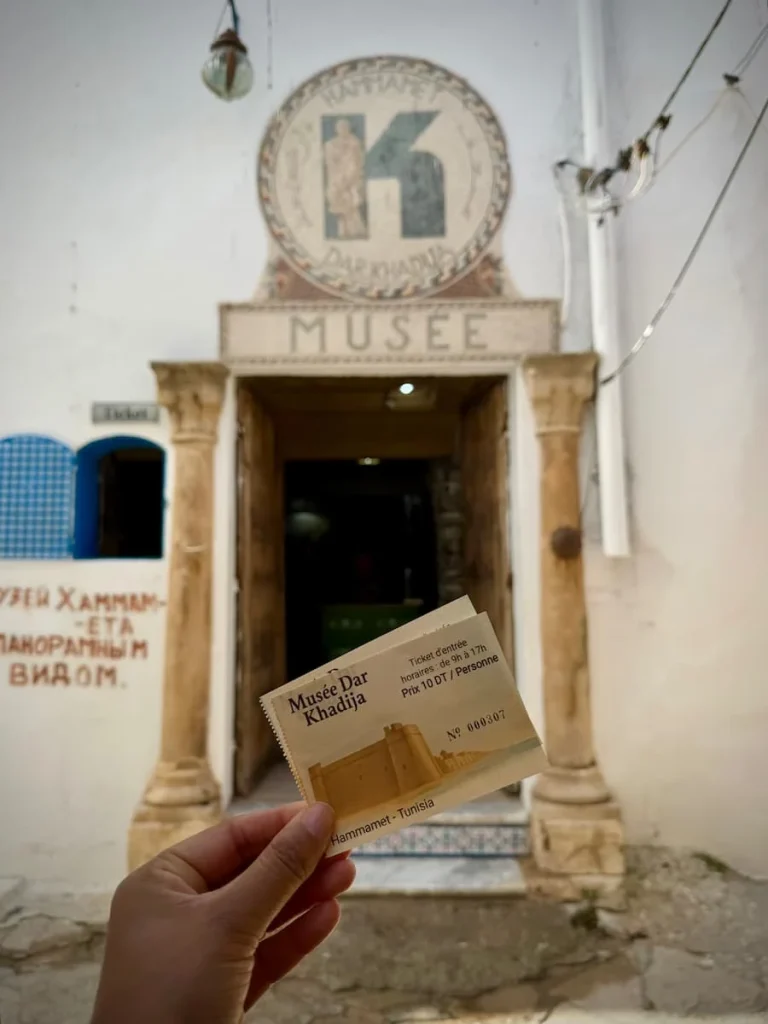
HAMMAMET OLD TOWN
Where to Eat in Hammamet
- During our two nights at La Badira in Hammamet we ate at the Kamilah Mediterranean restaurant which serves modern cuisine and is great for vegan and vegetarian diets. They had some great vegetable gyozos, spinach and ricotta tortellini as well as a delicious apple tarte tatin. The wine selection was also really good with a nice selection of Tunisian Red varieties.
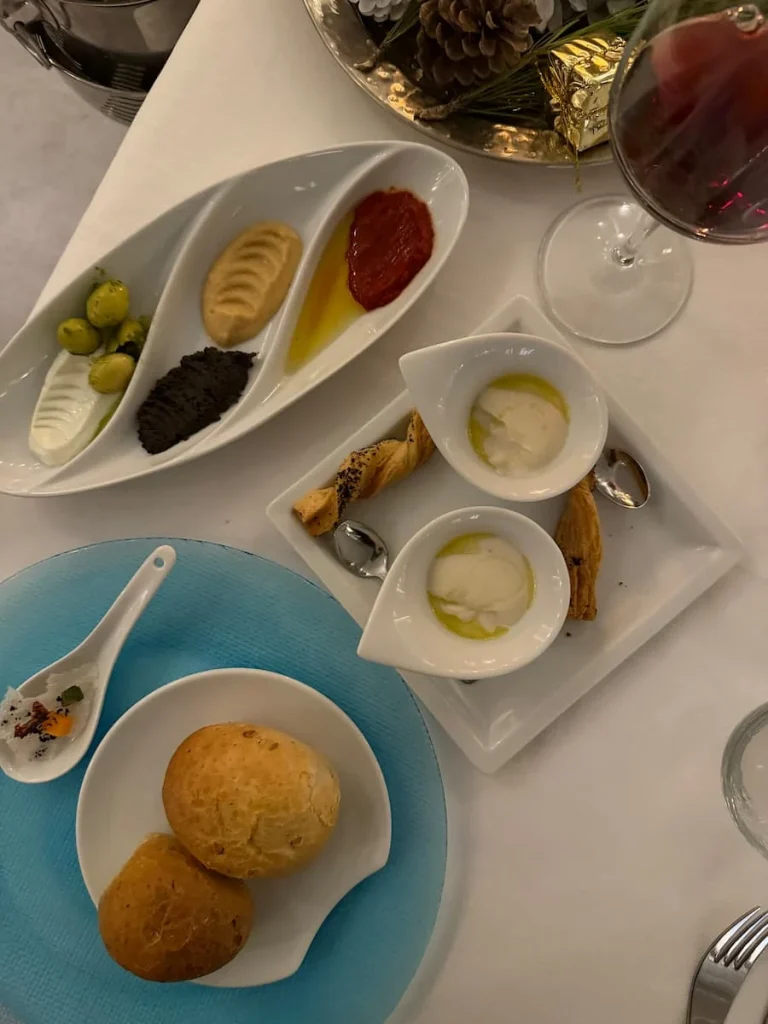
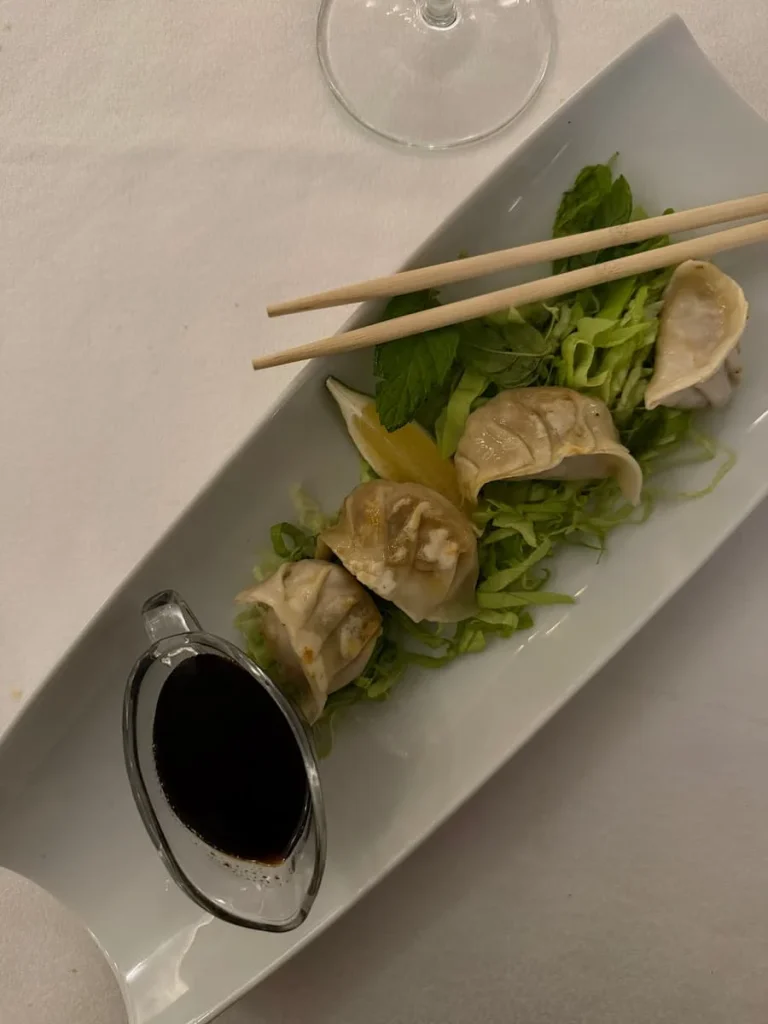
FOOD AT LA BADIRA, HAMMAMET
- We were suggested Chez Achour in Hammamet, that opened its doors in 1961 and generally specializes in fresh seafood but did have rustle up some great vegetarian dishes, including linguini in a spicy tomato and courgette sauce. Again they had some great Tunisian Rose wine. Seating is outside in their pretty courtyard which is shaded and warm.
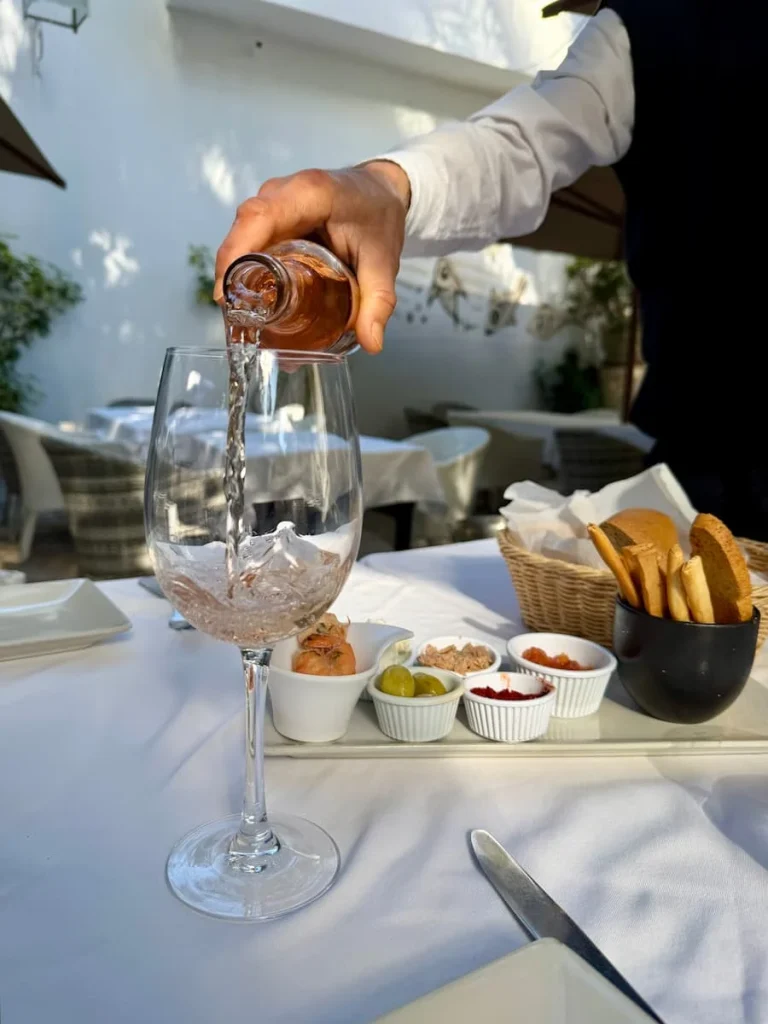
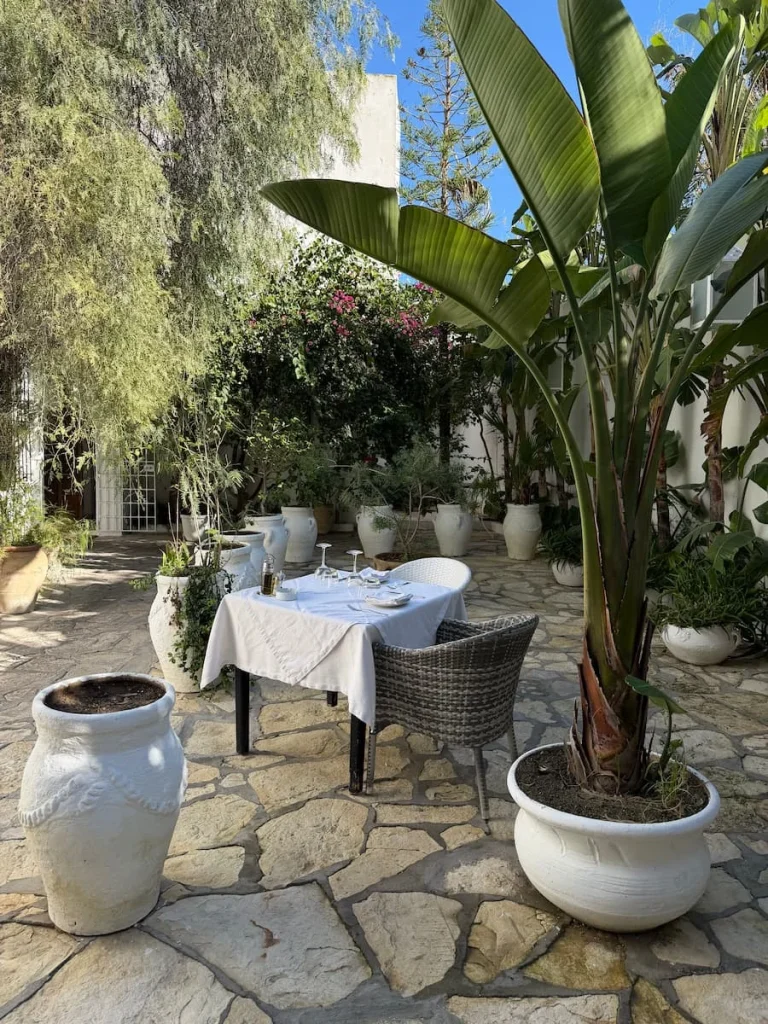
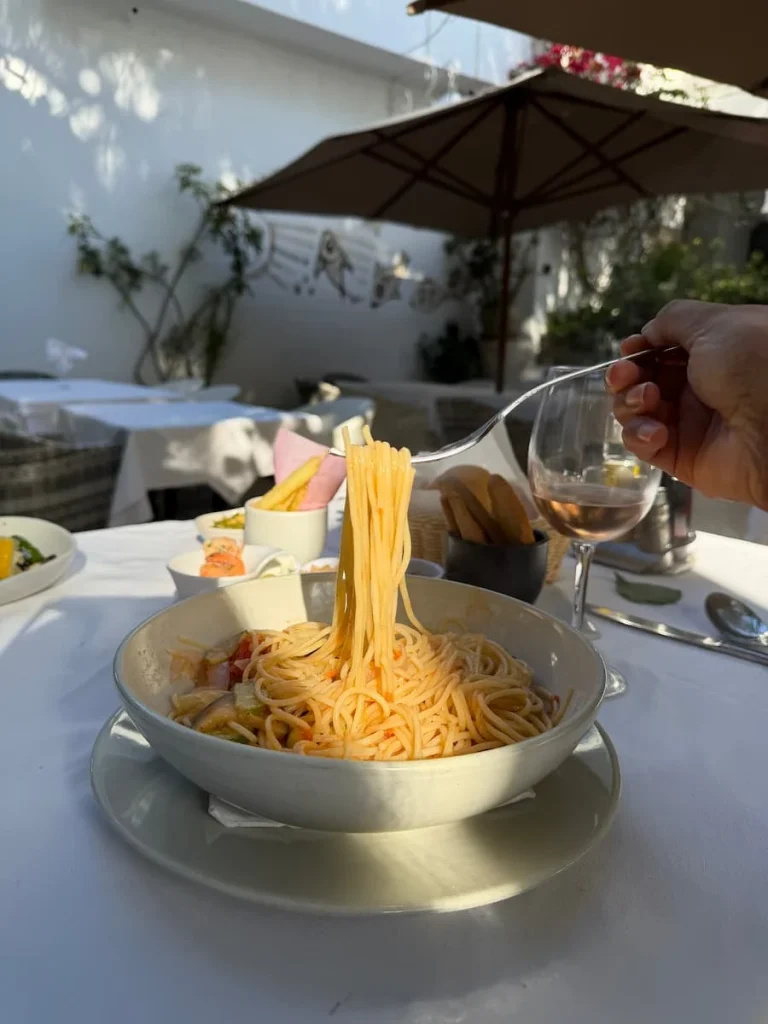
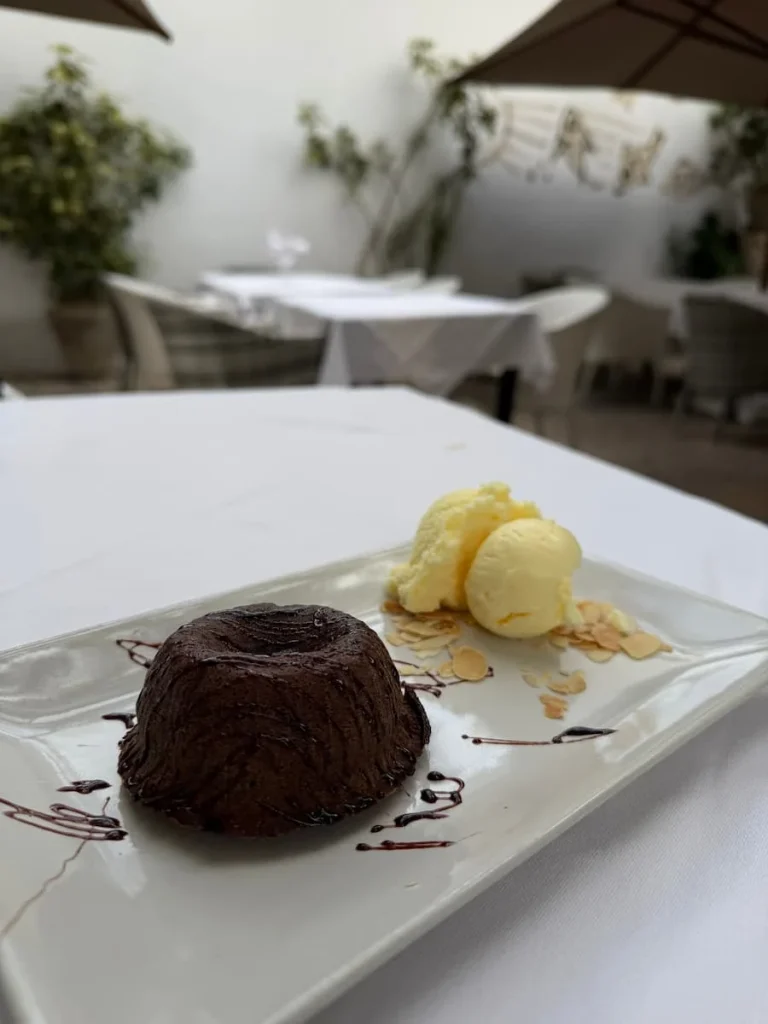
CHEZ ACHOUR HAMMAMET
Where to Stay in Hammamet
We stayed at La Badira, which is an elegant adults only, female owned beach hotel located on a small peninsula with breathtaking views of the sea. It has around 130 very spacious contemporary suites with balconies and sea news. It also has a wonderful Clarins spa, a couple of restaurants and bars as well as a breakfast spread that you could enjoy for hours!
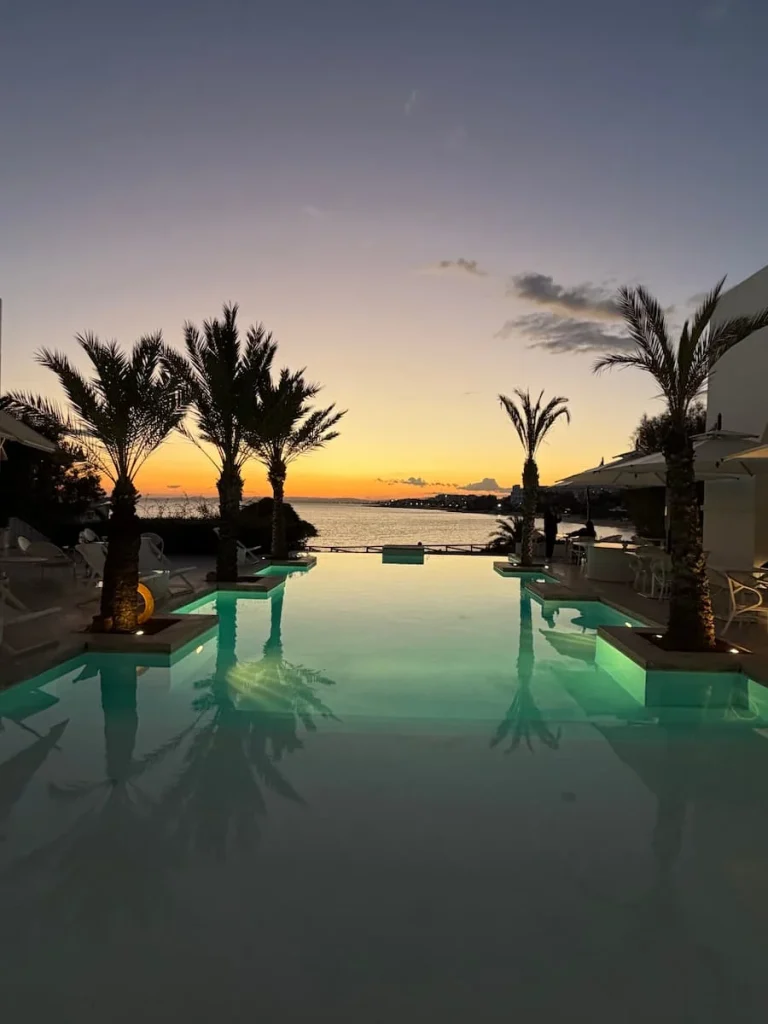
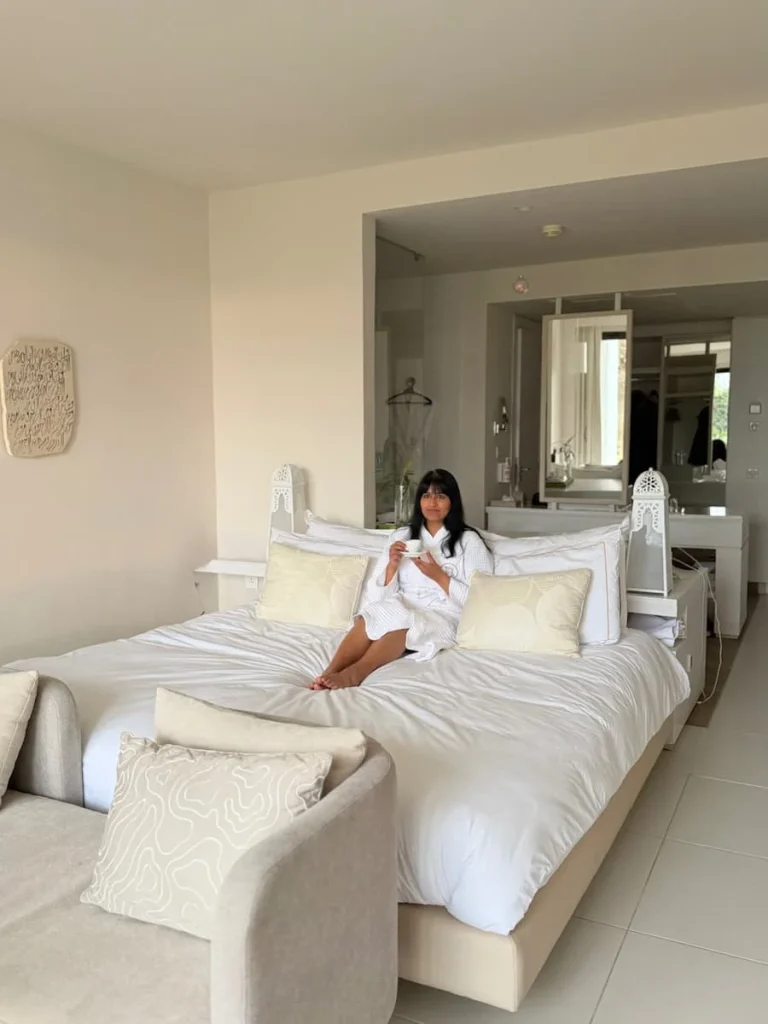
LA BADIRA HAMMAMET
Be-lavie Tip: If you stay at La Badira we recommend you make the most of the hotel and use the amenities as it’s really worth using it for at least a day to just relax on the sunloungers, cabanas, beach area and infinity pools.
Transport & Tours
It’s completely possible to get a day tour to visit Hammamet with a guide but it’s also pretty easy to get a taxi from the hotel one way and explore independently. It cost us around 7 TND (£3).
Tunisian Vegetarian Food: An Express Guide
Tunisian food is full of flavour and is a little spicier than the food of other North African countries. Here are some of our favourite dishes we ate during our visit. If you are not a fan of spicy food, you can ask to omit the chilli/harissa flavours. Tunisian Harissa has a UNESCO status!! So we think you really should give it a try!
You may find, like us, that quite a few restaurants don’t have vegetarian dishes on the menu but once you make your dietary requirements known, they can offer you choices and tailor dishes to your preferences.
Be-lavie Tip: Tunisian’s refer to Tagine as the pot used to cook the food as opposed to the Moroccan foods that are served as a Tagine.
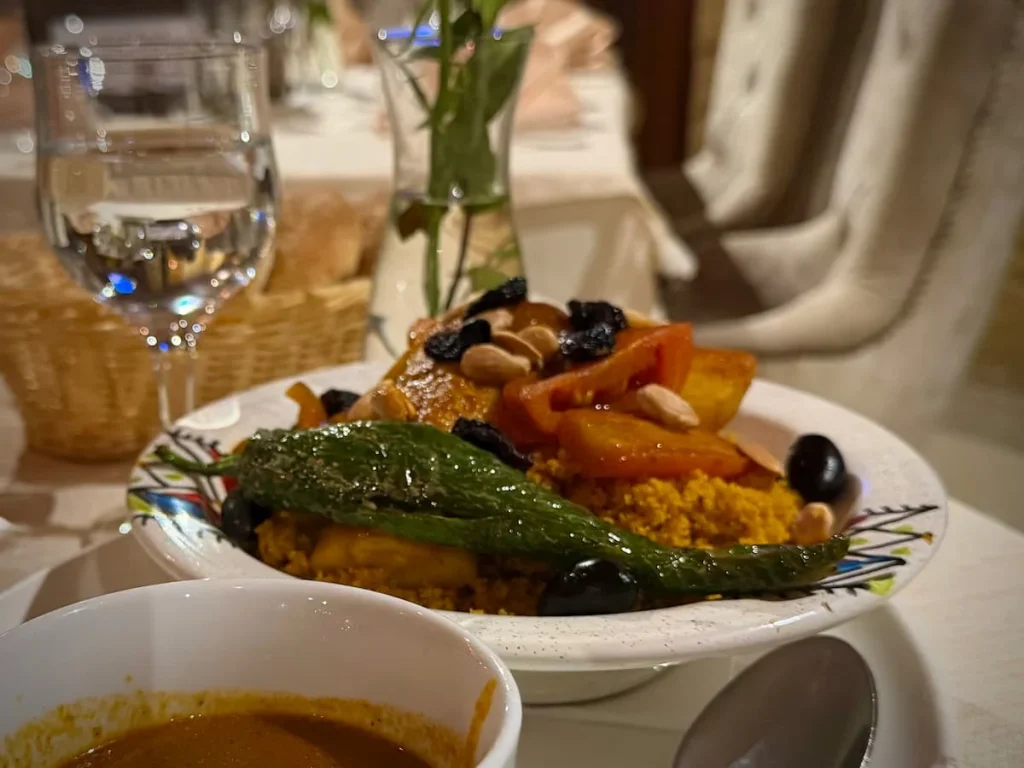
Cous Cous
Tunisian couscous just hits differently and is not the same that you find in other countries. It’s a lot softer and flavoursome. We had it with a stew almost of vegetables in light spices which came with a tomato based harissa sauce to add as required.
Brik
A deep fried savoury starter snack usually in a triangular shape stuffed with tuna, cheese and egg. We asked for the cheese version if it was available, however sometimes it’s pre-made so this isn’t always an option.
Be-lavie Tip: if you don’t eat eggs as part of your vegetarian diet then let the serving staff know as they will usually always include this even in a cheese Brik.
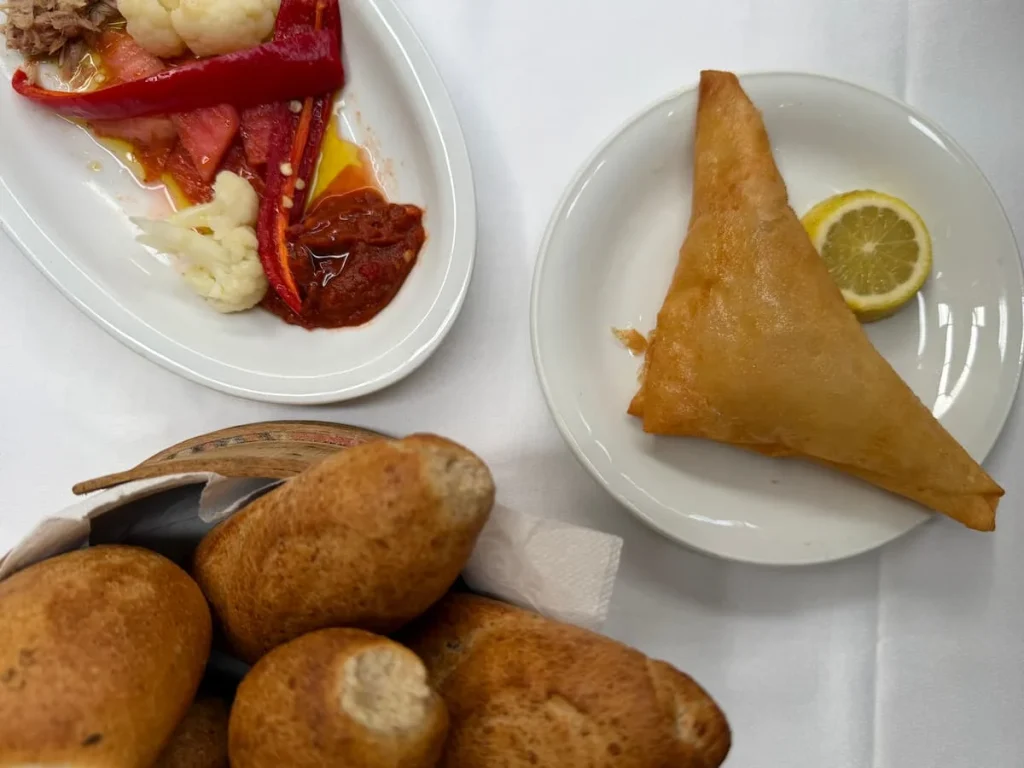
Bread, olives, olive oil & Harissa
Usually when you arrive at a restaurant and are seated you’ll be presented with a plate of fresh bread, olives, olive oil, harissa paste, dates and various dips. These are generally vegetarian.
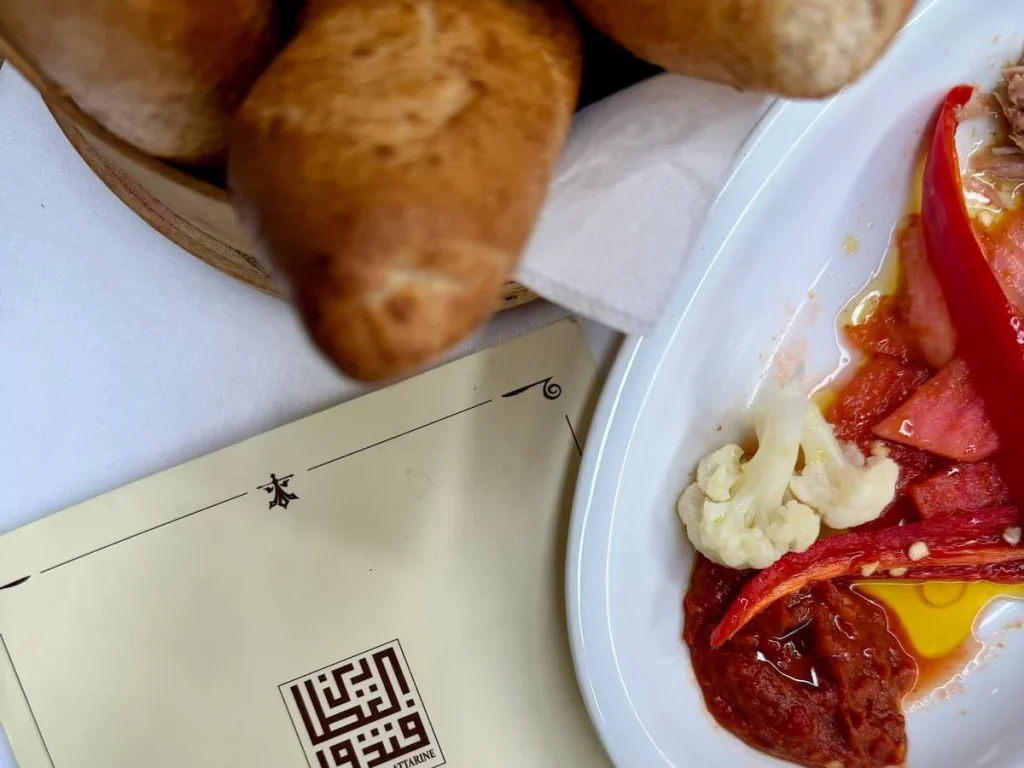
Slata Mechouia (Grilled Salad)
This Tunisan salad is delicious and is a mixture of grilled vegetables such as onions, green and red peppers, garlic, tomatoes and chillies drizzled with olive oil. Occasionally the garnish can include a boiled egg. The salad has a smoky taste from the harissa and grilling.
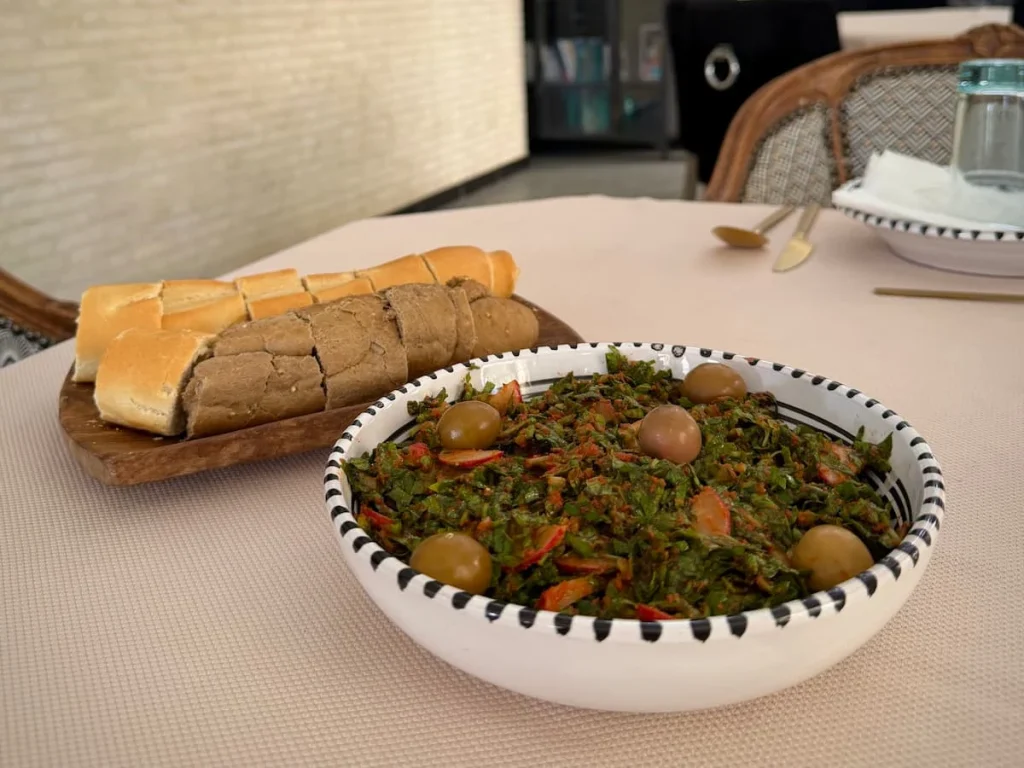
Kafteji
A must try when in Kairouan, Kafteji is often eaten as a sandwich and contains spicy bell peppers, aubergine coated in spices, fresh herbs and scrambled eggs, topped with French fries! It can be pretty spicy so do indicate to the server if you want it less spicy!
Makroudh
We had lost of these, especially in Kairouan and Tozeur as it was date season when we visited in December time. These are also pretty sweet and can sometimes be a mix of just dates or dates and nuts. They’re a little like fig rolls but way sweeter and syrupy on the outside too. Some also contain rose water and orange blossom,
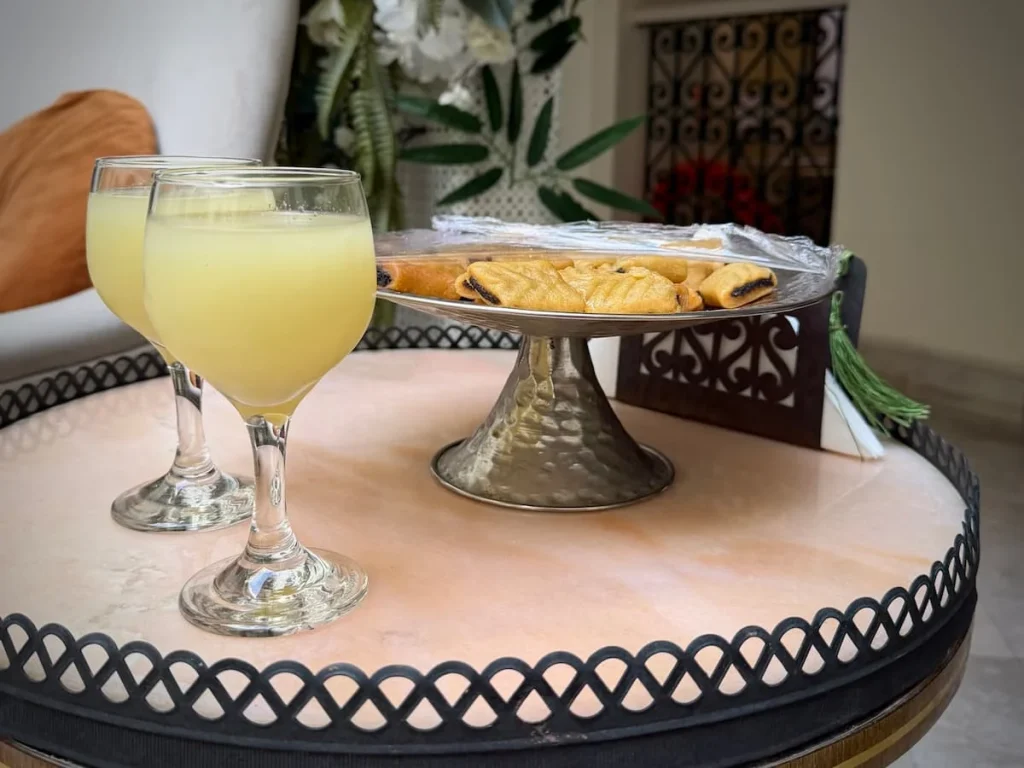
Be-lavie Tip: we’d recommend having them with a sugarless mint tea or a Turkish coffee to cut the sweet taste a little.
Bambalouni
These big ring donuts are deep fried and rolled in sugar and very vert moreish!!!
Sidi Bou Said is their birth place and trust us they make the best ones. Get them from a hole in the wall style of shop in Sidi Bour Said that’s been making them since 1932, fresh as you order. They’re wrapped in newspaper and you’ll spot the store miles off just from the queue!
Ojja
A little like Shakshouka but not the same things. Ojja consists of tomatoes, paprika, harissa, eggs and sometimes Merguez (a type of sausage) but you can easily have it without!). They also add other Tunisian spices to this.
Lablebi
A warming broth or soup with chickpeas, bits of bread, eggs, harissa and tuna which you can have it without. We were in Tunisia in December when it is technically winter season so saw a lot of this being served.
Mint Tea
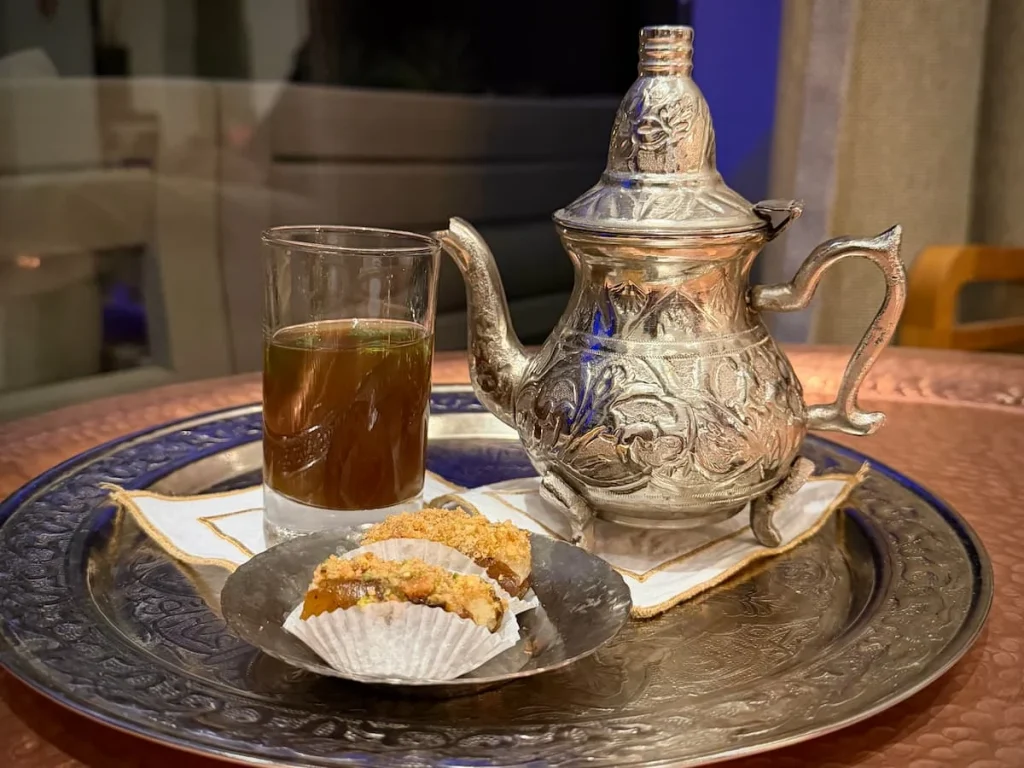
We had this at every opportunity and multiple times a day with almost every meal. Slightly sweet freshly brewed mint tea which is poured in such a skill full way! Its a must when in Tunisia and trust us, you’ll be hooked!
Tunisian Wine
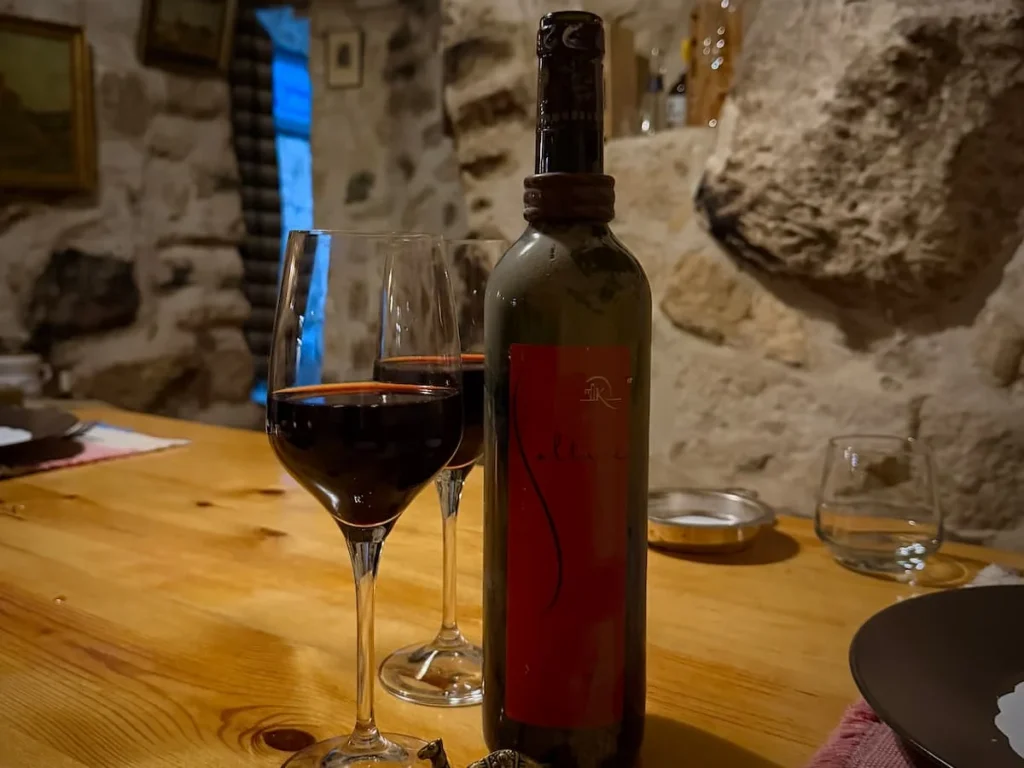
Tunisia would you believe makes it’s own wine and it’s very good indeed. Many places serve it, so it’s definitely worth trying. It’s mainly grown in the Cap Bon Region in the North of the country. We loved the Red and Rose varieties for being high in tannins and for their full bodied rich flavours that complement traditional dishes.
Top Tips For Tunisia (Inclunding Responsible Travel)
- Passports & Visas – British passport holders do not need a visa as long as the stay is less than three months. Non-British visitors should contact the Embassy of Tunisia in London or check with the Tunisian Embassy in the country where you hold a passport.
- Currency Exchange – The Tunisian Dinar (TND) is a closed currency so we’d recommend taking some Euros or US dollars and having them changed at a bank for the best rates. The majority of larger restaurants and hotels will take credit cards. Small guesthouses and smaller restaurants will ask for cash. We took around €350 for two weeks and didn’t spend it all as our accommodation and tours were largely paid for up front.
- Languages – Arabic is widely spoken and most people also speak French so it’s great to know a few words to get by. French is a lot easier to learn and remember than Arabic. (French: Bonjour (Hello), Merci (Thankyou), Bonsoir (Good Evening), S’il Vous Plaît (Please). In tourist destinations such as Tunis, Sidi Biu Said, Hammamet, Sousse,
- Religion – The predominant religion is 98% Muslim with the rest comprising of Christianity and Judaism.
- Clothing & what to wear – Most attire is acceptable at tourist resorts in Tunisia however if heading to more rural towns or places of worship such as courtyards of mosques, ensure respectable clothing is worn. No sleeveless or spaghetti strapped tops, shorts or hot pants. Shoulders should be covered as well as head and in some instances shoes may have to be removed. Modest dress is also advised for Medinas and souks. We suggest carrying a scarf/pashmina with you as this came in so handy for quick impromptu cover-ups.
- Gratuities – it is not mandatory to tip in Tunisia but if you feel the service and quality of the service is excellent then we would recommend 10% of the total final bill. For the services of a driver and/or guide, we’d suggest the equivalent of around £10-£15 per day.
- Cash is King – we would recommend carrying cash as it makes buying snacks, souvenirs and other small items easier. This is especially the case in rural and Southern Tunisia.
- Opt for local – where possible, choose locally owned guest houses, hotels and hire local guides and drivers for cultural sites and desert travel.
- Take your time – Tunisian destinations are far apart and travelling distances is just part of the journey. The people are pretty laid back so there’s never any need to rush.
- Support local – look for local artisans when buying locally made crafts. In Southern Tunisia pottery is a big thing, as well as watercolours in Sidi Bou Said and Tunisian carpets all over the country, particularly in Kairouan.
- Water – tap water can’t be consumed so most of the water comes in bottles or glass bottles. We’d recommend taking a refillable bottle as you’ll need it for brushing teeth as well as drinking.
Travelling to Tunisia FAQs
Is Tunisia Safe?
Is Tunisia Vegetarian-Friendly?
Is alcohol permitted in Tunisia as the country is predominantly Muslim?
What to pack for Tunisia?
It’s best to pack a coat, thin sweaters, t-shirts, leggings, trousers as well as skirts and dresses. Tunisia is a pretty casual country and you really don’t need to dress up. We went for smart casual, a little more on the casual side though! Comfortable trainers are a necessity as you can be walking across different terrains such as gravel, sandy dunes, stones, cobbled stoned uneven streets. Walking boots can also provide support but we found these rather bulky so left them at home.
Be sure to take sun protection for all seasons, as we did get sunburn on our faces in December! Carry a Pashmina/Scarf which can be used to protect your face in a sand storm or use for cultural sites. A water bottle is non-negotiable as we noticed a lot of plastic waste. Quite a few hotels will leave filtered water in glass bottle can be transferred to your own bottles for when you’re out exploring. Drinking water is also advisable especially during hot days to ensure you don’t become dehydrated.
Which movies are filmed in Tunisia
2 Weeks in Tunisia Round-Up
This 14 days in Tunisia itinerary aims to provide a taste of the Northern, central, Southern and island life of the country. It goes far beyond the tourist trail of a country that has yet so much to be discovered by the world. Less crowds, peaceful heritage sites and untouched gems are what makes Tunisia special to the visitor. If you research right, using our itinerary as a guide, you can enjoy the same surprises and special moments we witnessed in the country.
Plan so you can appreciate travelling slowly through the country and meet the people who have many stories to share and leave with a plethora of knowledge about Tunisia that we never hoped would touch and wow us simultaneously.
From ancient Roman empires to the silence of the desert, the sacred cities and calm island, Tunisia leaves a lasting impression of fine heritage, a variety of landscapes, warm hospitality and a unique cuisine. This is a destination that lingers long after visiting.
Related Reading
- Spend a Day in Sidi Bou Said: An Itinerary
- 12 Things to do in Djerba: A 2 Day Itinerary
- 7 Sustainable Boutique Hotels & Guesthouses in Tunisia
- Unesco World Heritage Sites in Tunisia (& Tentative Sites)
- 12 Things to do in Hammamet in Winter: A 3 Day Guide
- 8 Unique things to do in Kairouan: A One Day Guide
Resources To Plan Your Trip To Tunisia
- Flights: Search & Book the best flight options through SKYSCANNER
- Travel Insurance: An absolute must-have! Check rates on SAFETYWING
- Hotels: Choose from a wide range of accommodation with BOOKING.COM
- Trains: Get the best available options for rail passes with OMIO
- Buses: Scope out the best coach travel deals in Europe with OMIO
- Car Hire: Compare, search & secure the best vehicle to suit your needs with DISCOVER CARS
- Activities: Personalise your travel with top destination experiences with GET YOUR GUIDE & VIATOR
- Shopping: A one-stop online shop for all your travel shopping needs, including travel guides AMAZON
- Traveller Reviews: Check unbiased reviews for accommodation, tours and restaurants at TRIPADVISOR
- Travel Resources: Access Be-lavie’s full-list of tried and tested PARTNERS
- eSIM: Keep roaming charges low with an eSIM from AIRALO
À bientôt

Pin & Save
I fyou enjoyed this post remember to Pin & Save to Pinterest and refer back to in the future!