8 UNIQUE THINGS TO DO IN KAIROUAN: A ONE DAY GUIDE
Last Updated on 2nd March 2026 by Bejal
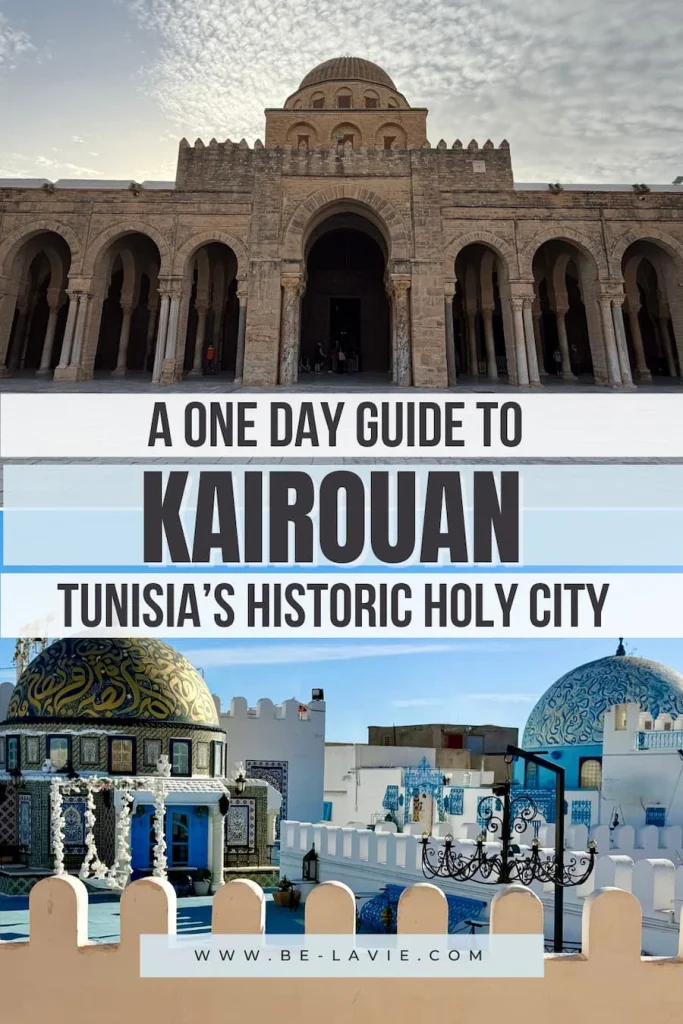
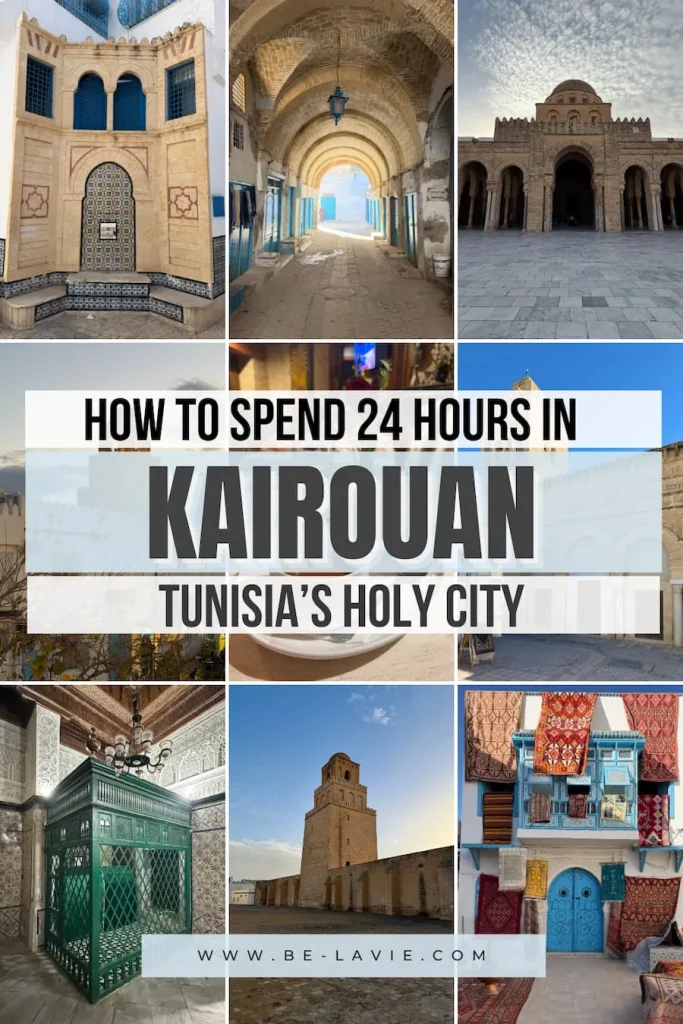
Kairouan, often referred to as Tunisia’s holy city, is one not to be missed when visiting the country for it’s bustling souks, rich culinary traditions, handmade artisan carpets and for being the fourth holiest city in Islam. Founded in the seventh century, and inscribed a UNESCO World Heritage site in 1988, we have compiled a one day itinerary of the best things to do in Kairouan, which includes a deep dive into two of its well-known landmarks, houses within its historic walls, the medina and Okba Mosque; as well as other things to do including where to stay and where to eat like a local. This article contains all of our top tips and recommendations for a relaxed one day visit to Kairouan.
Pin & Save
Short of time? No problem, Pin & Save this article to Pinterest and read at your leisure!
Why Visit Kairouan?
Kairouan is worth visiting to learn about its immense importance in Islamic history and why Muslims see this as an important place of pilgrimage. The cities Medina is a UNESCO World Heritage site, inscribed in 1988, it is contained within the city walls that look rather like an ancient fortress.
As soon as we entered the Medina through the main gates, it had a special, colourful and bustling feel about it, which was different from the other Medinas in Tunisia. From fruit sellers, to jewellery shops, artisan craftsmen, the medina is such a special example of daily life filled with visitors amongst locals going about their business.
Throughout our couple of weeks of travel in Tunisia, we found Kairouan to have the most authentic Tunisian food, and the majority of restaurants were also able to offer vegetarian options, as most menus didn’t have any suggestions, but they could accommodate off-menu.
We experienced Kairouan’s calm and crowd free atmosphere, especially when visiting the Okba (Uqba) Mosque during December time, a real contrast to the bustling streets of the Medina just moments away with the walls.
How to Get to Kairouan?
The closest airport to Kairouan is Monastir Habib Bourguiba International Airport, or alternatively, Enfidah International Airport. If you’re planning on being based at Hammamet, Monastir or Sousse, Kairouan is definitely an easy car ride away.
- Sousse – Kairouan: 56 km (49 mins).
- Hammamet – Kairouan: 92-106: km (1.5 hrs).
- Monastir – Kairouan: 69km (70 mins).
- Tunis-Kairouan: 50-160 km (roughly 2 hours) from Tunis.
We travelled by car with a guide during our 14 day itinerary through Tunisia, but if you’d prefer to use public transport, then it’s possible to get a Louage, shared taxis that look like minibuses, from any of these destinations and more. They are pretty fast, with similar travel times to cars and very convenient. The Louage station is located just outside the Medina in Kairouan.
Although we’d recommend staying one night in the city, an alternative way to visit Kairouan from your base in Tunisia, especially if you’re staying in Sousse, Hammamet, Monastir, Tunis or Sidi Bou Said, is to book a day tour to the holy city with a local guide. Most tours will include hotel pick-up and drop off plus they may even combine visiting some other places en route.
We would suggest the Full day Kairouan & El Jem all inclusive guided tour with lunch as a great option, as it has pick-up locations in Sousse, Hammamet, Carthage, Sidi Bou Said, Tunis and more locations.
How to Get Around Kairouan?
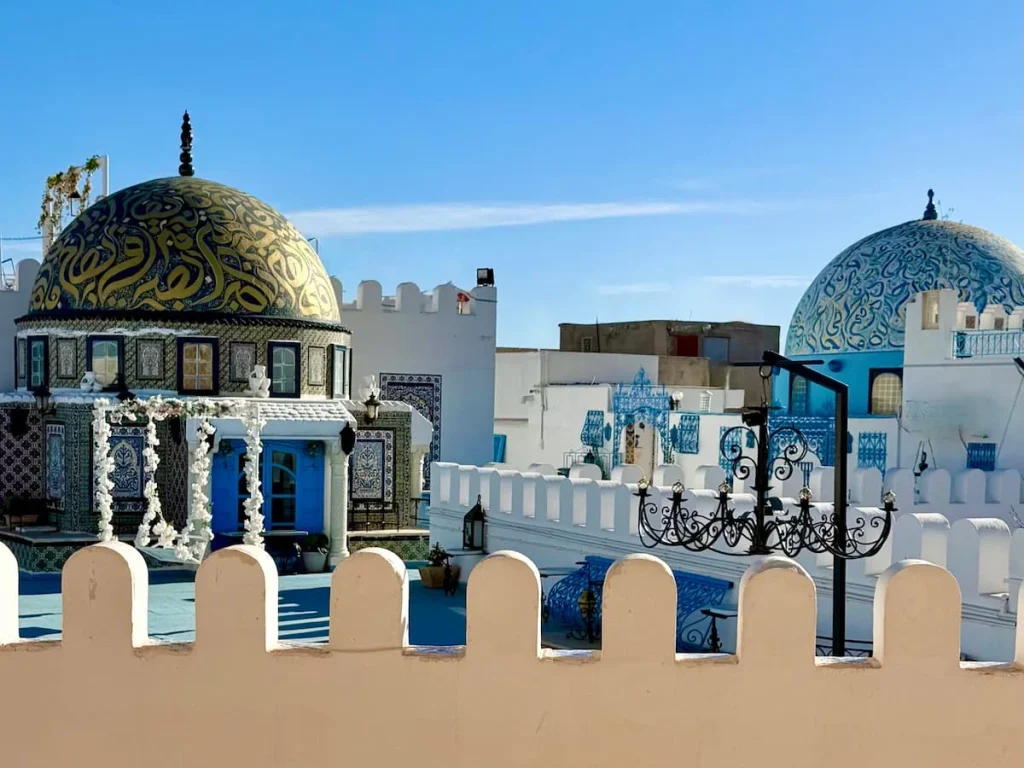
In our opinion, all the places you’d want to visit in Kairouan are easily walkable. We spent all of our time exploring within the walls of the city during our day here, and our hotel, Dar Alouine, was just outside the walls, as was El Brija, a traditional local restaurant we enjoyed.
When is The Best Time to Visit Kairouan?
Kairouan isn’t like a coastal destination where you need to worry about beaches and swimming in the sea. We visited in December and loved the Medina for its more local vibe, and we think a lot of the city could be visited anytime of year. In December, it can occasionally rain, and in the summer, it can be very hot. Spring and Autumn are probably ideal conditions if you prefer shoulder season. It probably does get quite busy around school holidays and also Ramadan and Eid for obvious reasons.
Where to Stay
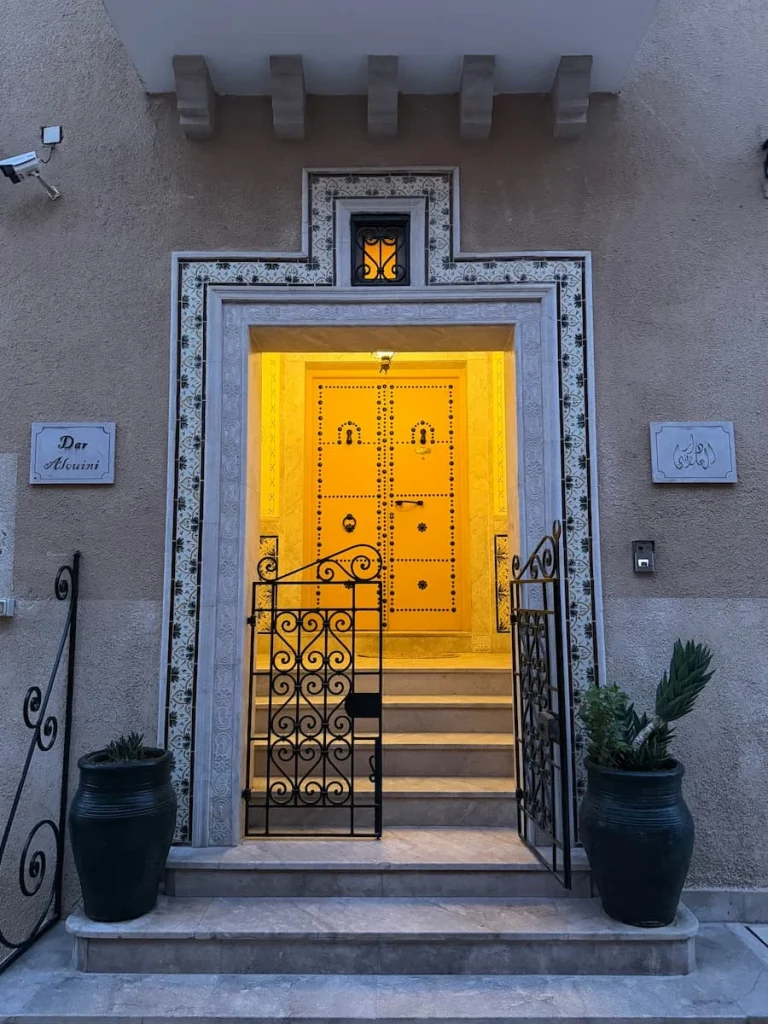
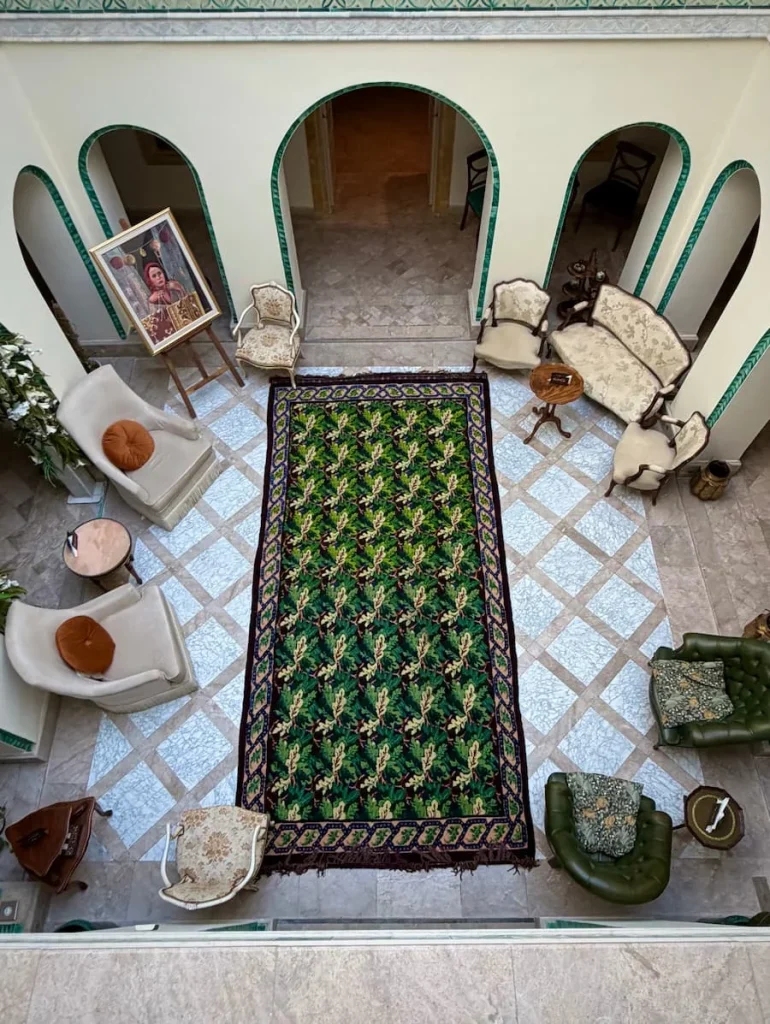
Dar Alouini, this upscale guesthouse is located within the walls of the Kaiorouan’s UNESCO World Heritage listed medina, that is just one of many UNESCO Heritage sites in Tunisia. The guesthouse is located on two floors with renovation reflecting both Arabian and Andalucian architectural styles. It has stunning Tunisian tilework, with each of the nine traditional luxurious suites named after a flower. We stayed in room one on the first floor, featuring all the mod cons but in an understated way with decor that has been inspired by Tunisian Ottoman, and eighteenth-century French design.
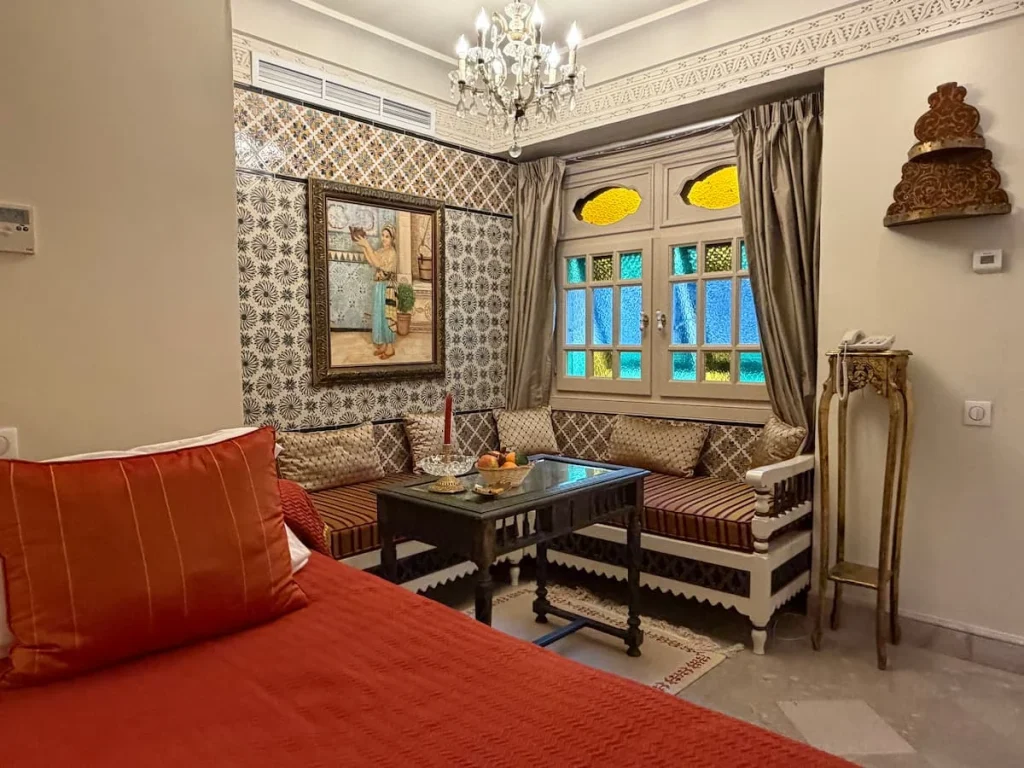
THE SEATING AREA & DAY BED IN SUITE 1 at DAR ALOUINI
All suites at Dar Alouini have seating areas, inlaid furniture, leading out into a central courtyard. We loved the terrace, which has to be the guesthouses knock-out feature. It has lovely views over Kairouan’s medina and is the perfect sunset spot. There is also a swimming pool on the ground floor, as well as a Hammamet and sauna. Unfortunately, we ran out of time to use these facilities, but if you’re staying for longer, then we’d suggest booking in.
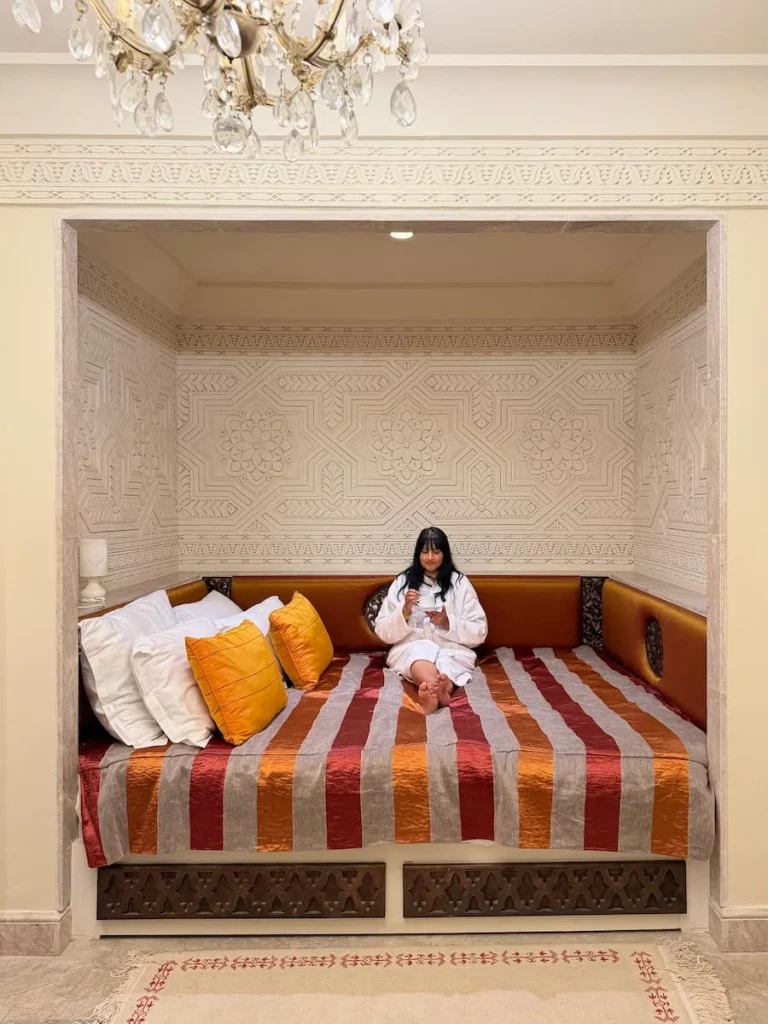
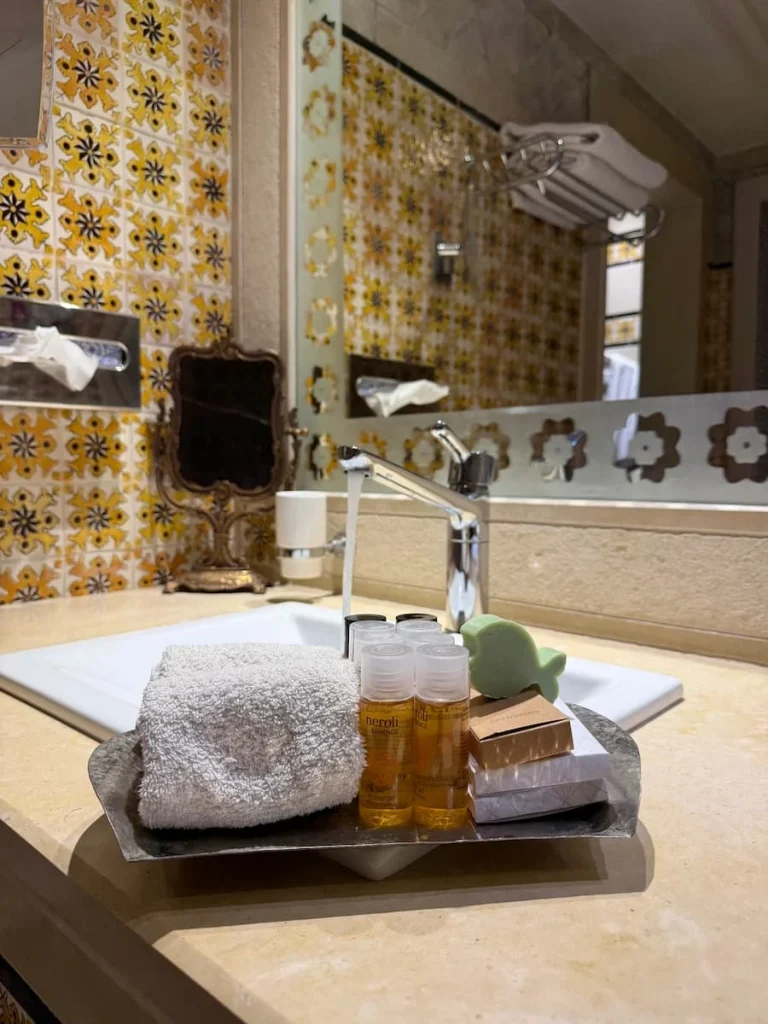
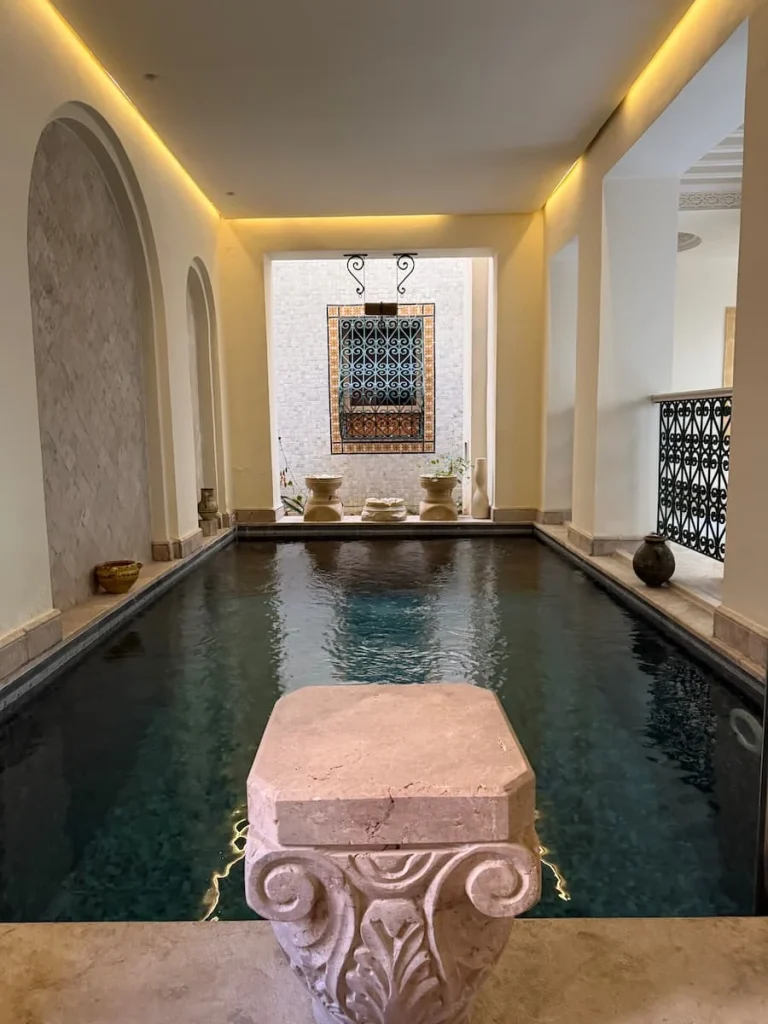
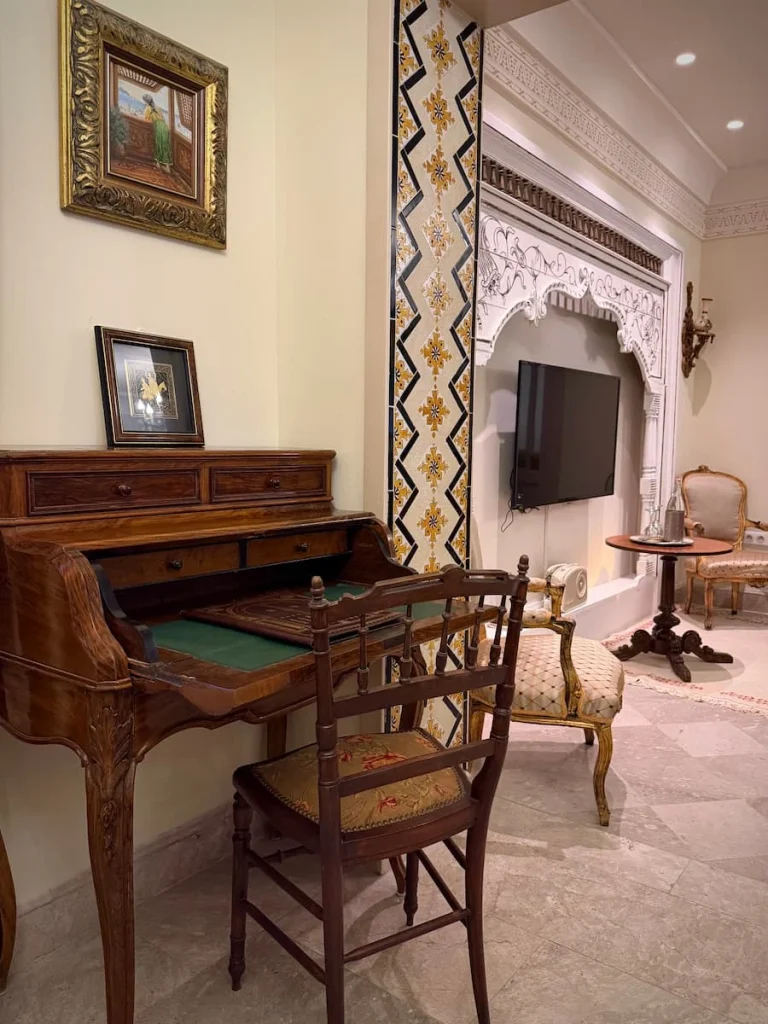
SUITE 1 BED, BATHROOM AMENITIES, COMMUNAL SWIMMING POOL & ANTIQUE DESK
We love the extra mile they go with nice personal touches, such as leaving trays of fruit juices, a platter of fresh fruit and Tunisian sweets Dar Alouini is one of the guesthouses we stayed that has a great local and sustainable approach to their ethos.
Find it Here: Map Location.
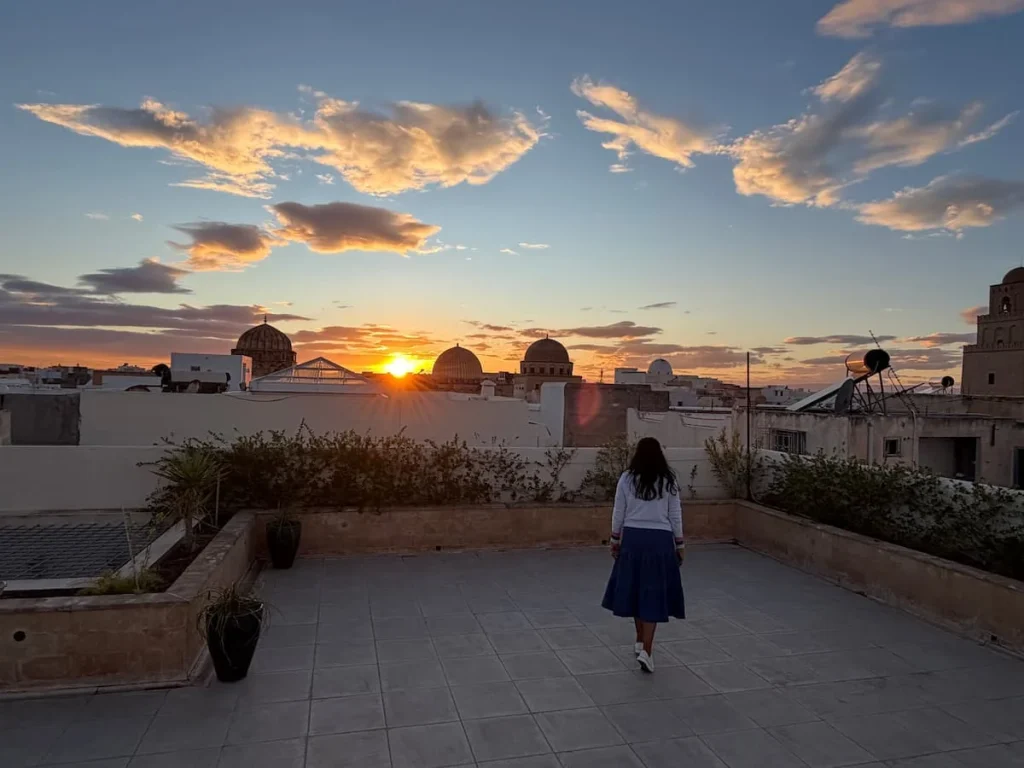
Unique Things to Do in Kairouan in One Day
#1. Visit The Great Mosque of Kairouan Mosque of Uqba (Okba)
The city of Karirouan was founded in 670 CE by Arab general, Uqba ibn Nafi as a fortress for the military camp, during the early expansion of Islamic Maghreb (where the sunsets) and is of great importance to Muslims, noted for being the fourth most holy city in the world, after Mecca, Medina and Jerusalem. We learnt that Kairouan is the oldest centre where Islamic learning spread in the region of North Africa and has been hailed as a masterpiece of Islamic architecture.
It was historically believed that seven pilgrimages to the mosque would equal one pilgrimage to the holy site of Mecca; this has not been officially confirmed and may have been a misconception.
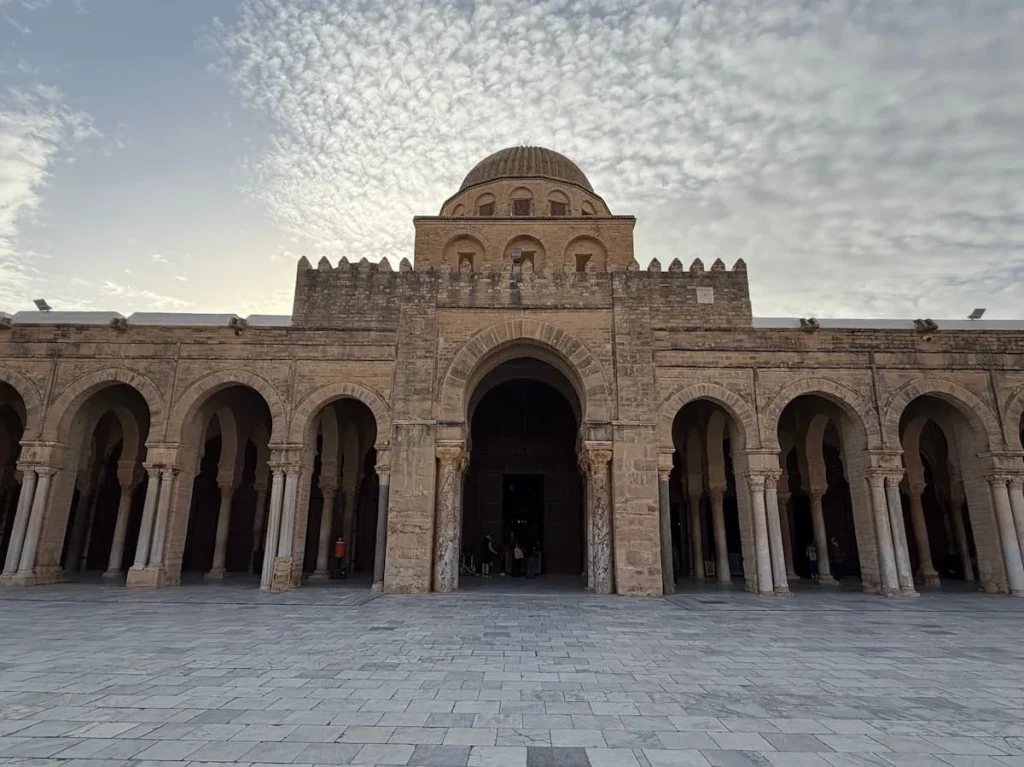
For some historical context, Kairouan became quite the centre for Islamic studies, including specifically in-depth studies of the Quran as well as the sciences, especially for the Maliki school of Sunni Islam. Kairouan became a centre for learning during the Aghlabid Dynasty, which ruled over t Ifriqiya, Tunisia, Eastern Algeria, and Western Libya, from 800-900 CE. Many scholars, poets and theologians came here, establishing the city as a cultural hub and placing it firmly in Tunisian history.
Today, the mosque is open daily for Muslims, but uniquely it is one of the only mosques in Tunisia that allows non-muslims to enter the courtyard. It’s a calm atmosphere inside the courtyard. Note the vastness of the courtyard, the ancient columns and the iconic minaret.
Find it Here: Map Location.
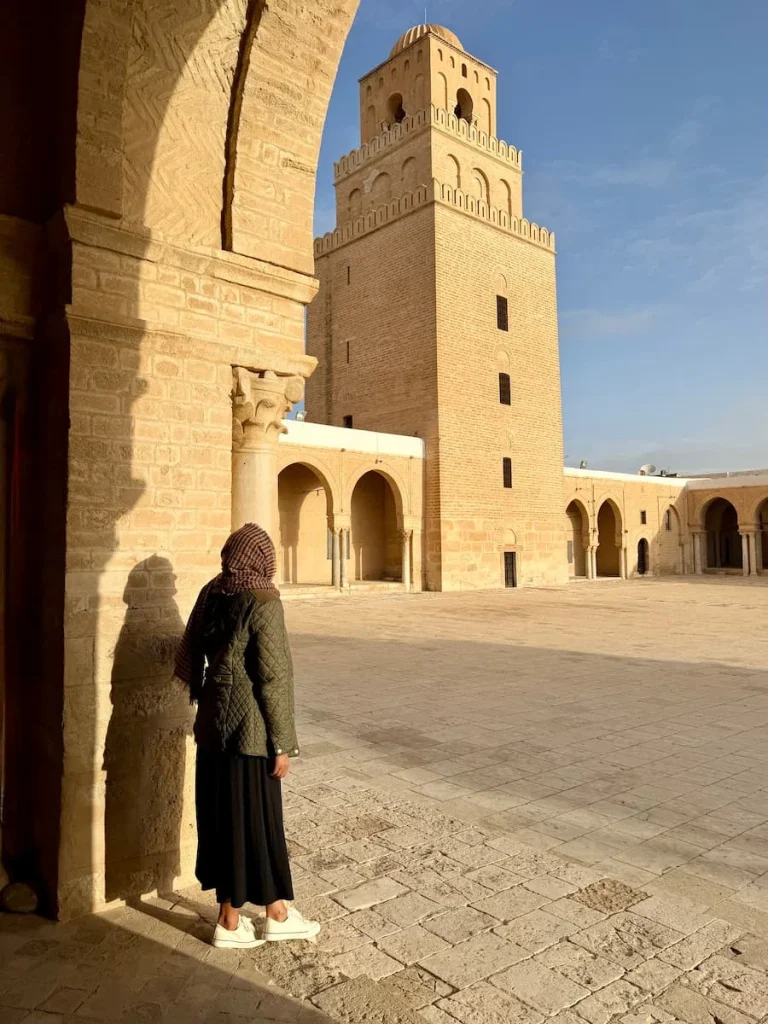
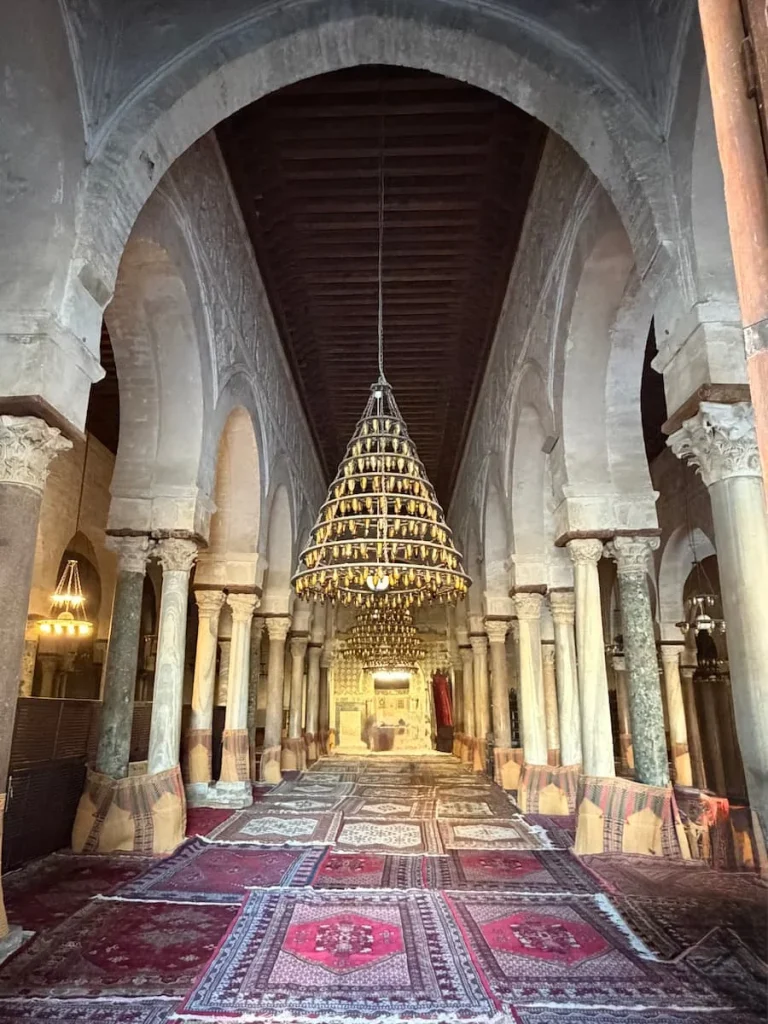
THE MINURET & IPEEK INSIDE THE PRAYER ROOM AT THE MOSQUE OF OKBA
Be-lavie Tip: Non-Muslims can visit the courtyard, but respectful clothing must be worn, no sleeveless tops or legs above the knees showing, and they cannot enter the prayer hall, but can have a quick peek inside from the entrance. Please remember this is a peaceful place of prayer, and the utter most respect should be upheld after the entrance to the courtyard.
#2. Explore The Medina of Kairouan
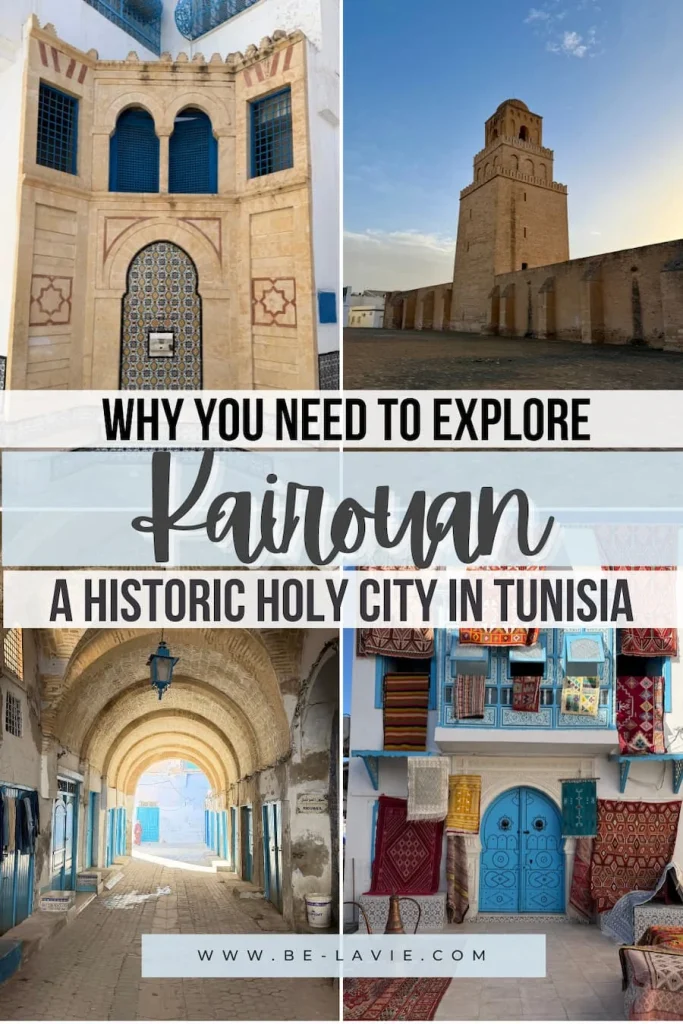
Enter the Medina through one of the many archways and be transformed from regular city vibes to the colourful hustle and bustle of a myriad of alleyways and never ending archways leading to small courtyards with cafes and artisans going about their daily business. Watch the locals purchasing their weekly fruit and vegetables. Tunisians tend to eat very fresh seasonal foods all year round, which is grown in different parts of the country due to its perfect Mediterranean climate. We’d refer to the Medina as a living museum of North African culture and urban design, where you can spot local men sipping mint tea at cafes, mothers taking children to Masjid classes and the sunlight reflecting off the white washed medina buildings.
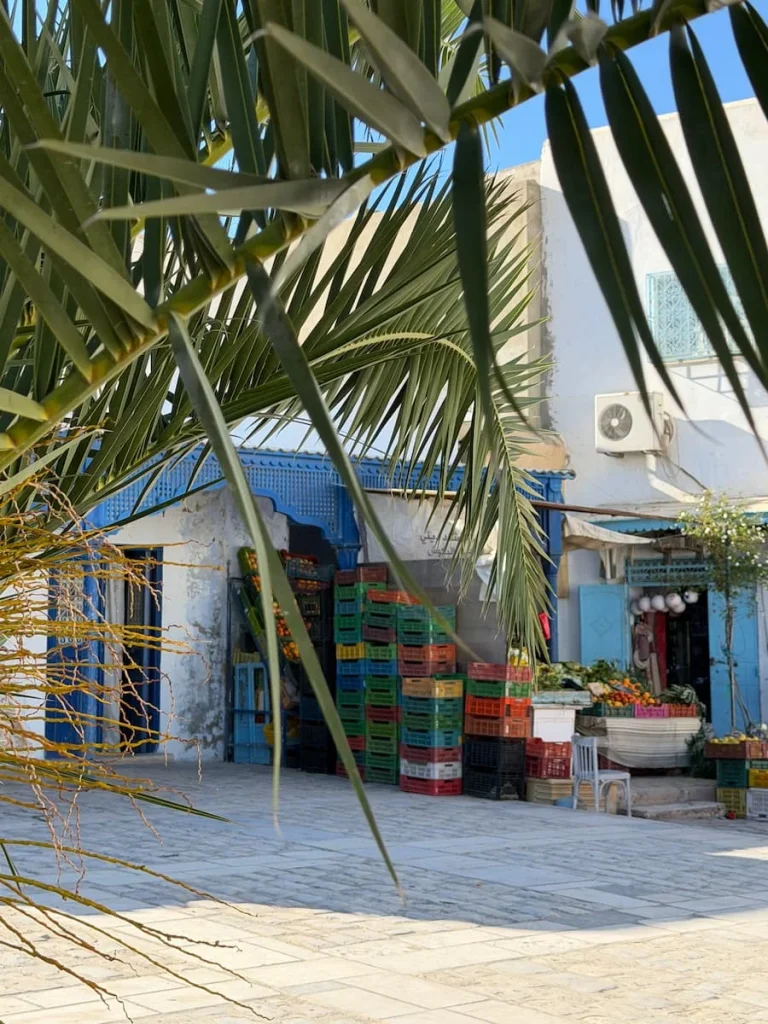
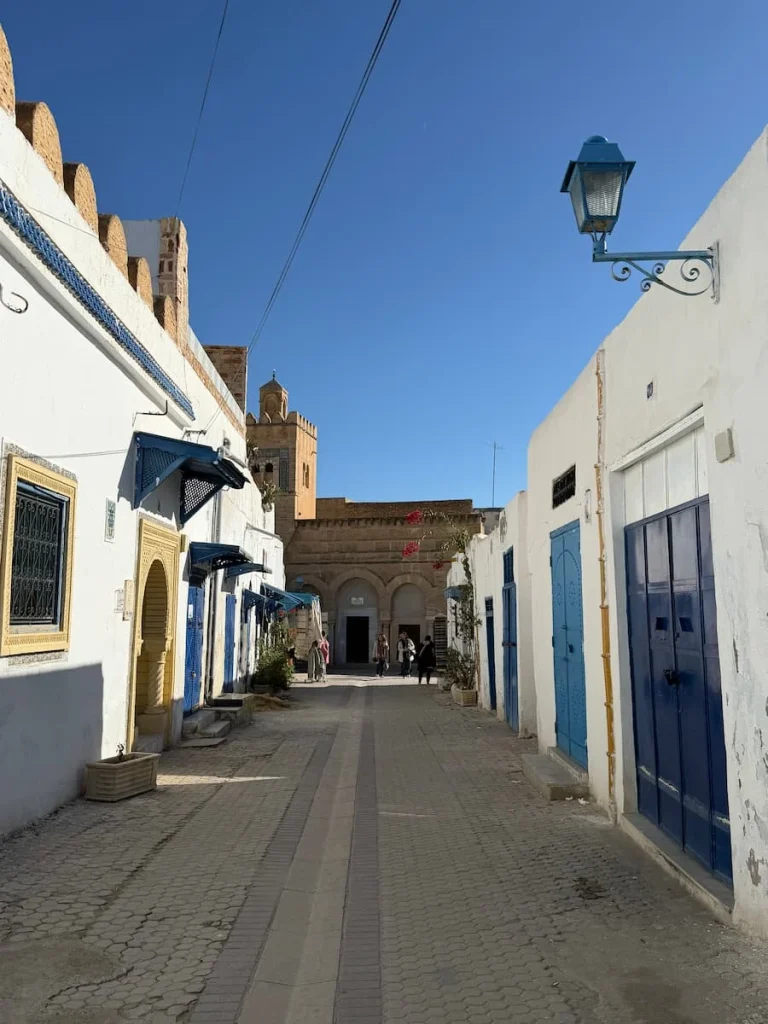
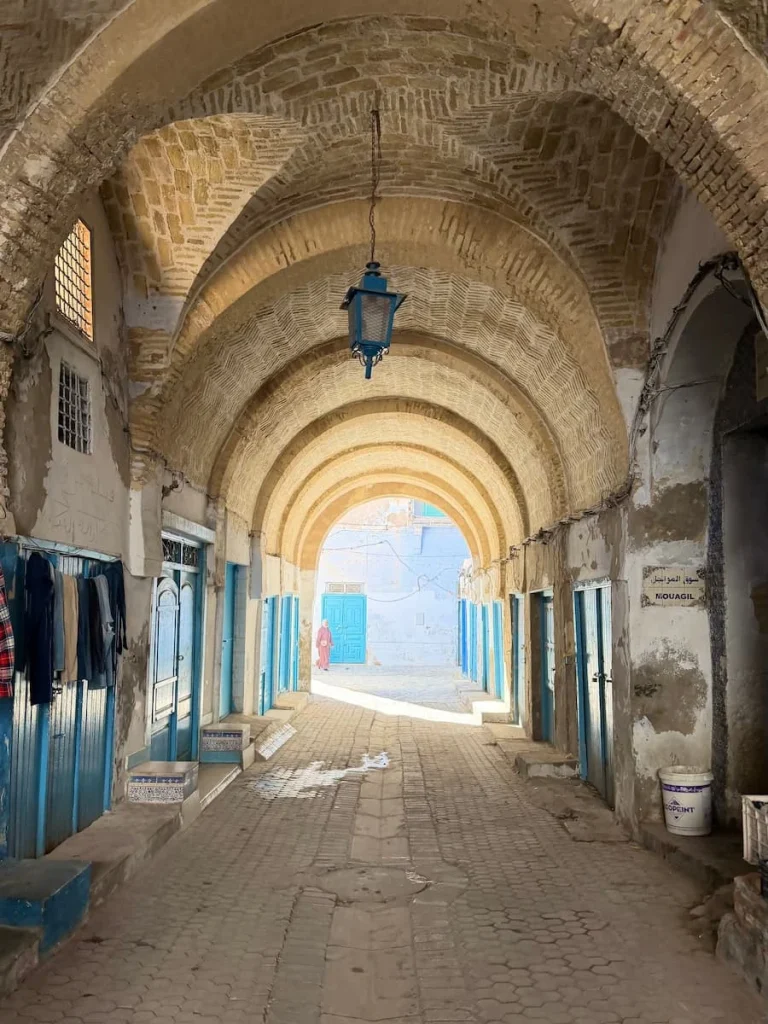
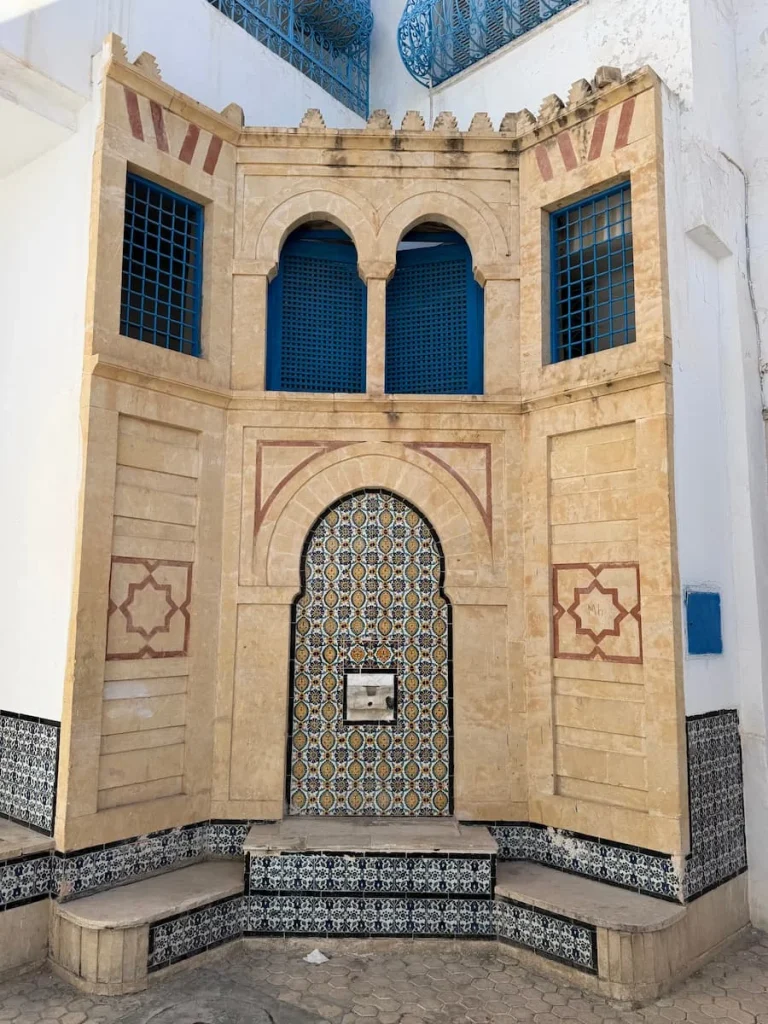
ARCHITECTURE & SCENES IN THE MEDINA
Our guide took us to the Bir Barouta, where there is a decorated camel drawing water from a well, which was thought to have been dug by Okba Ibn in 670 AD and is connected with the well of Zam Zam in Mecca. We found this to be very touristy and not ethical, with the camel handler making the camel walk around the area to draw water.
Find it Here: Map Location.
Be-lavie Tip: We don’t condone unethical wildlife experiences like this and explained this to our guide. We therefore don’t advise that you go to Bir Barouta as if there’s no demand; they won’t carry on with this activity. We think it is possible to explain the workings of the well without the camel.
#3. Head to The Aghlabid Basins
2 Km away from the centre of the Medina are some impressive water reservoirs that supplied water to Kairouan, and are a true testament to Islamic engineering. They cisterns were built by the Aghlabids in the ninth century and water was delivered by aqueduct from hills located around 36 Km West of Kairoauan into a smaller settling basin and then into a large five metre deep main holding basin, measuring 128 metres in diameter. Right in the centre of the main pool, there was a pavilion where nobility would come and take in the air during the summer nights.
Find it Here: Map Location.
Be-lavie Tip: Although we didn’t visit the basins personally, our guide did give us a great. tip…the basins are open all day and are free to enter, but note you can get a great view from the rooftop of the Kairouan Tourist Information Office.
#4, Admire The Inscription on The Mosque of The Three Doors
Located inside the Medina, at a peaceful crossroads is the Mosque of the Three Doors. It is known to have the oldest stone façade and Kufic inscriptions in the history of Islamic art, completed during the Aghlabid era. The exterior is arranged around a central axis and has three doorways.
Find it Here: Map Location.
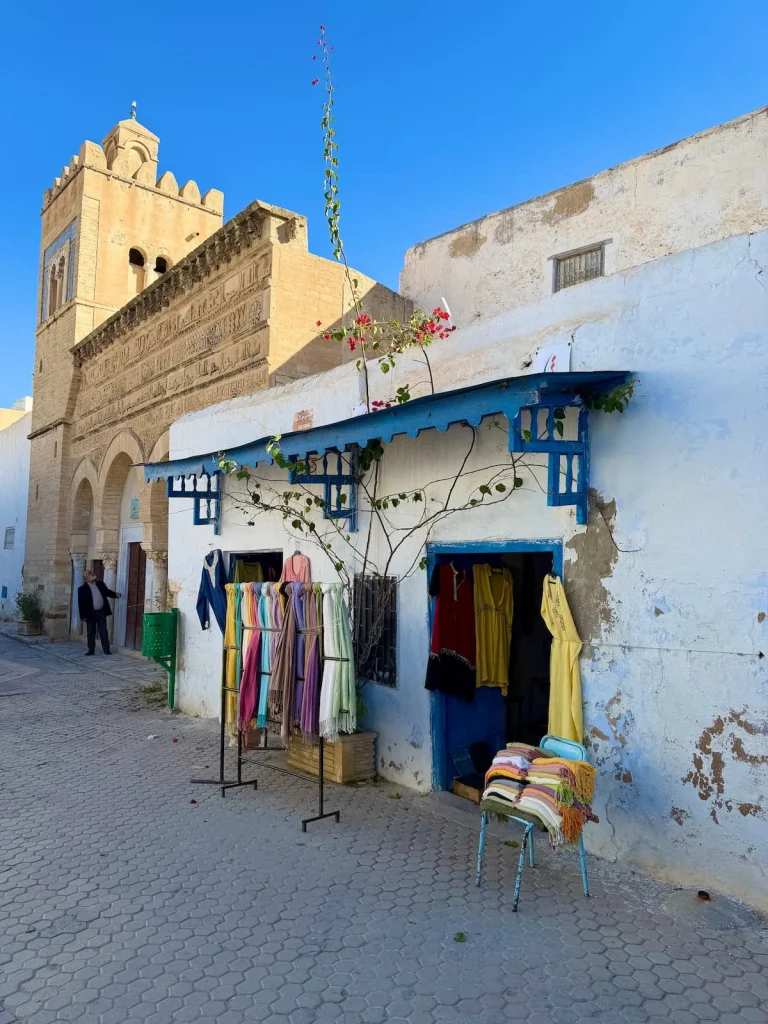
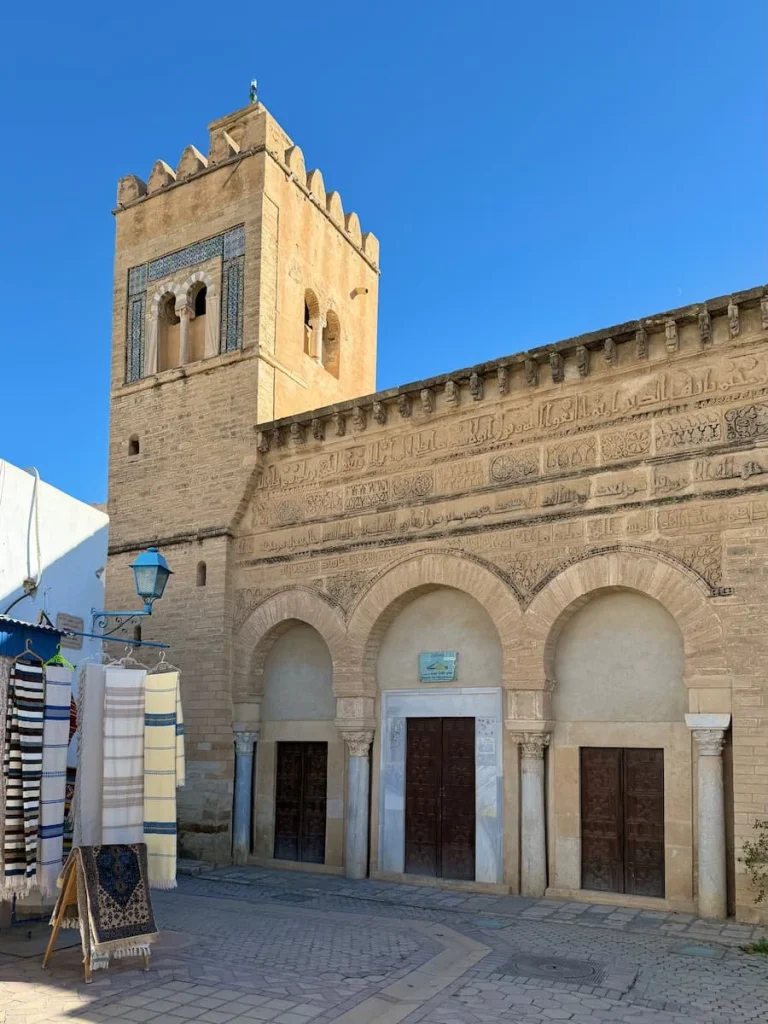
SCARF SHOP & MOSQUE OF THREE DOORS
Be-lavie Tip: As non-muslims, we could not enter, but it’s a nice little stop to admire the exterior and intricate inscriptions in the stonework.
#5. Watch The Local Carpet Makers at Their Workshops
Kairouan is known for its Zarbia, or handwoven rugs and carpets. These are intricately woven by many women who have passed this skill down through the generations. In many of the workshops, you’ll have ladies who will come out into the main store area to give visitors a demonstration on how they do the weaving. The carpets are all different sizes and can be as colourful as you like!
As a side note, we found that it can feel a little like a hard sell at times, but a firm no is all that’s required. For a small rug that you’d put under a coffee table, we were quoted the equivalent of £600 in TND, just in case you’re wondering what to expect cost wise. They are hand-made, but we felt that was pretty steep! Oh, and if you do decide to purchase, they can vacuum pack the rugs to fit into your luggage.
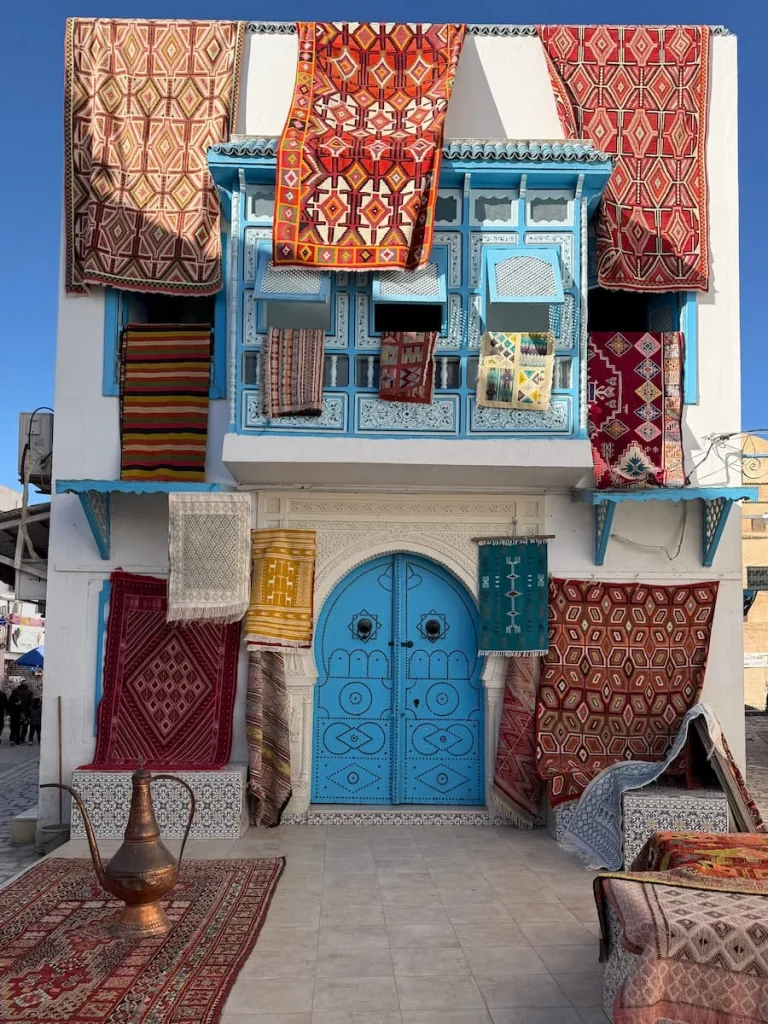
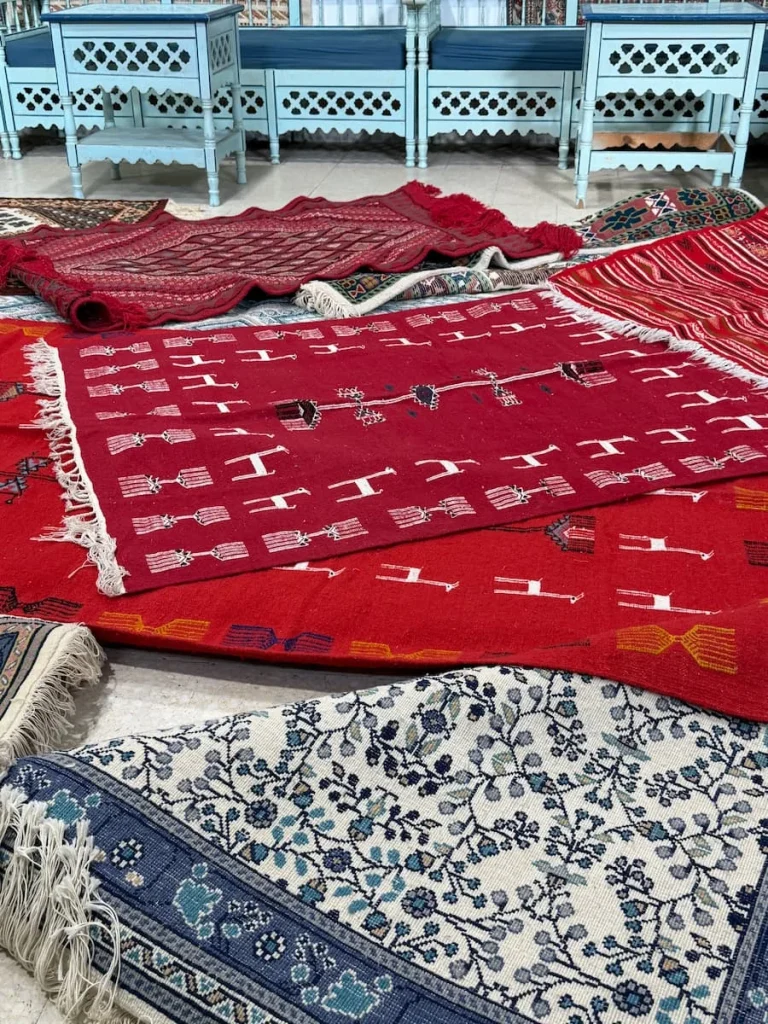
HANDWOVEN CARPET SHOPS IN KAIROUAN
Be-lavie Tip: The law in Tunisia enforces that visitors should only purchase carpets and rugs from approved weaving stores, so this is where travelling with a guide comes in useful. They will know where to go, where quality is high, and prices are moderated by the government. It’s good to shop around even at these shops to ensure you’re getting a fair price. The rugs are all hand woven and are packed and compressed for you when purchasing.
#6. See The Mausoleum of Sidi Sahbi (or Abu Zama’a al-Balawi)
It’s completely free to visit the Mausoleum of Sidi Sahbi, Abu Zama’a al-Balawi, within the walls of the Medina. The small complex is also known as ‘Barber’s Mosque’ and honours the prophet Mohamed’s close companion. Unfortunately, we couldn’t find any information about Sidi Sahbi as there was a plaque in Arabic which didn’t really explain much, but the Mausoleum is linked to the holy city’s reference through Islamic history.
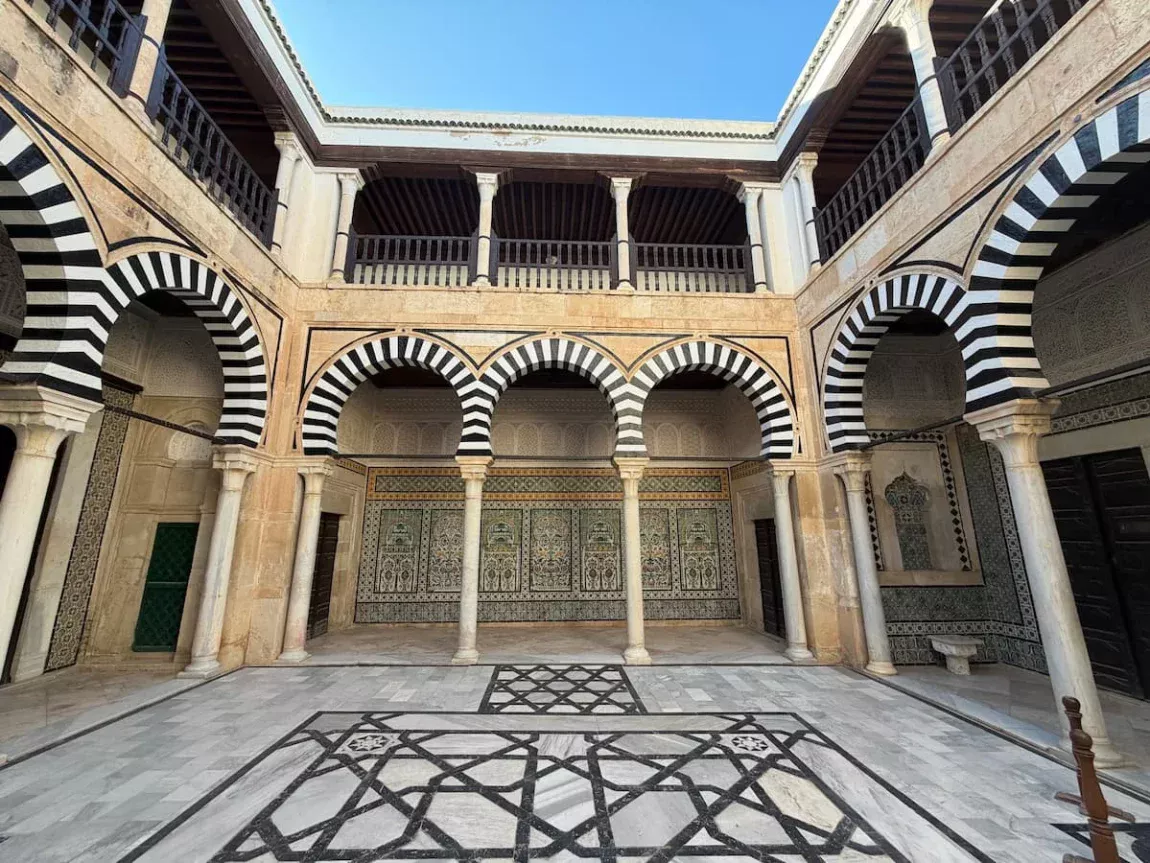
We took a few minutes walking around inside the mausoleum, which features really beautiful green and blue Andalusian-style art, namely polychrome tiles, carved stucco and a green dome covered in tiles. The Mausoleum, just like the Mosque of Ukba serves as a s major pilgrimage site in Kairouan.
Find it Here: Map Location.
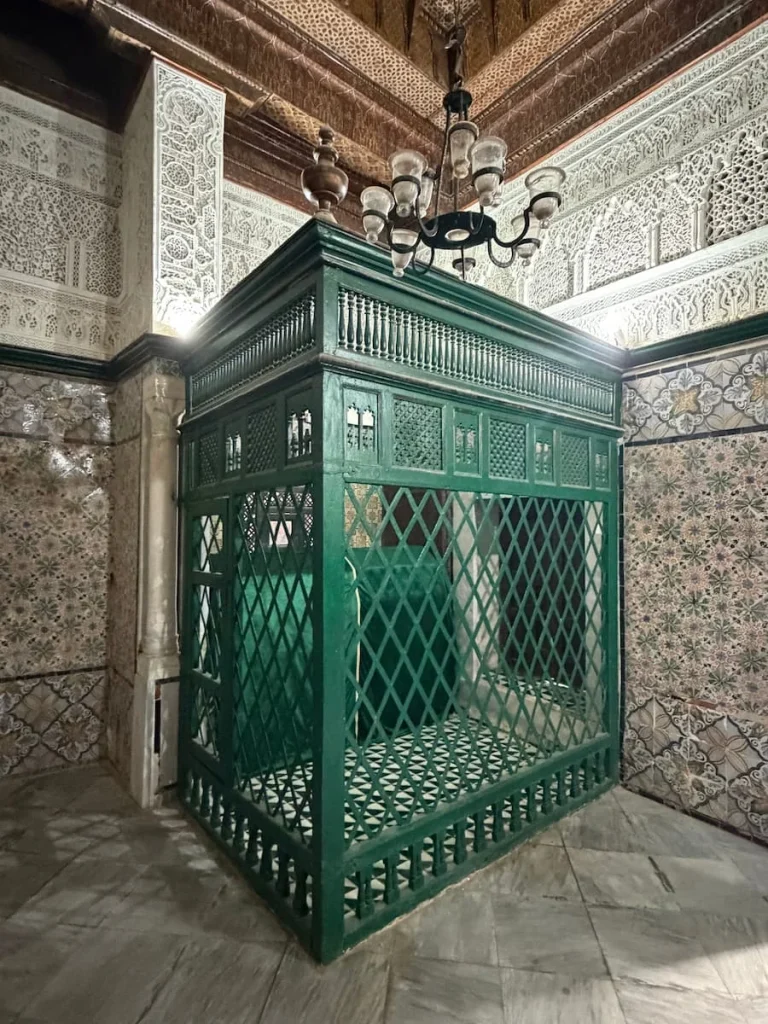
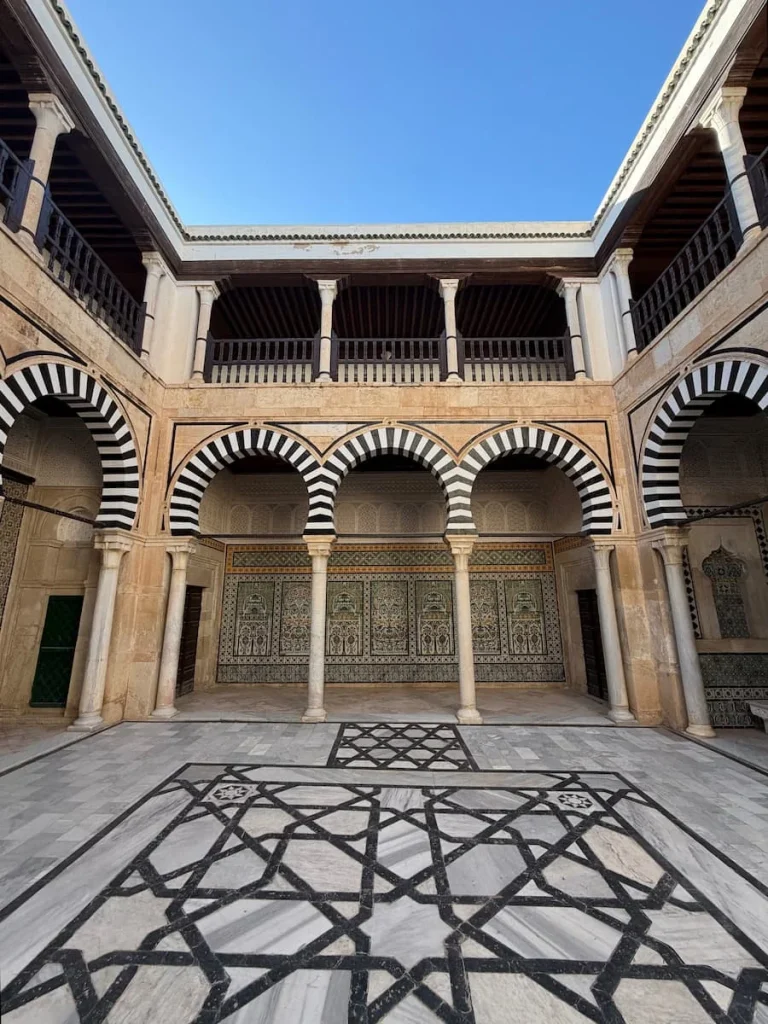
MAUSOLEUM OF SIDI SAHBI IN THE MEDINA
#7 Eat at El Brija Restaurant
Kairouan has many places to eat, including Dar Abderrahmane Zarrouk; Refined Tunisian dishes in a beautiful traditional house, Restaurant Sabra; local specialities and generous portions but we think hands down the best restaurant in town is El Brija, who specialise in traditional Tunisian dishes served with couscous.
El Brija is housed in a fort-style building, with the restaurant being on the open and closed rooftop areas. It has great views and serves delicious Tunisian food. They also accommodate vegetarians and can make a variety of Mediterranean dishes too. We enjoyed their special couscous dishes, which were a little spicy but very good and lots of mint tea, of course!
Find it Here: Map Location.
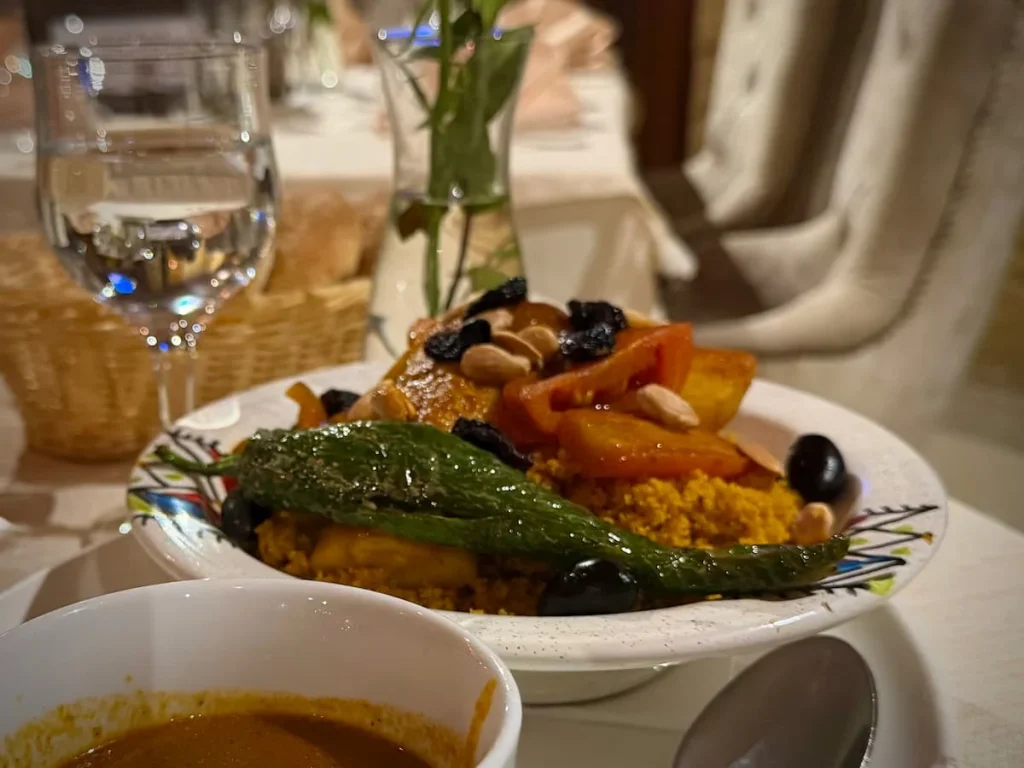
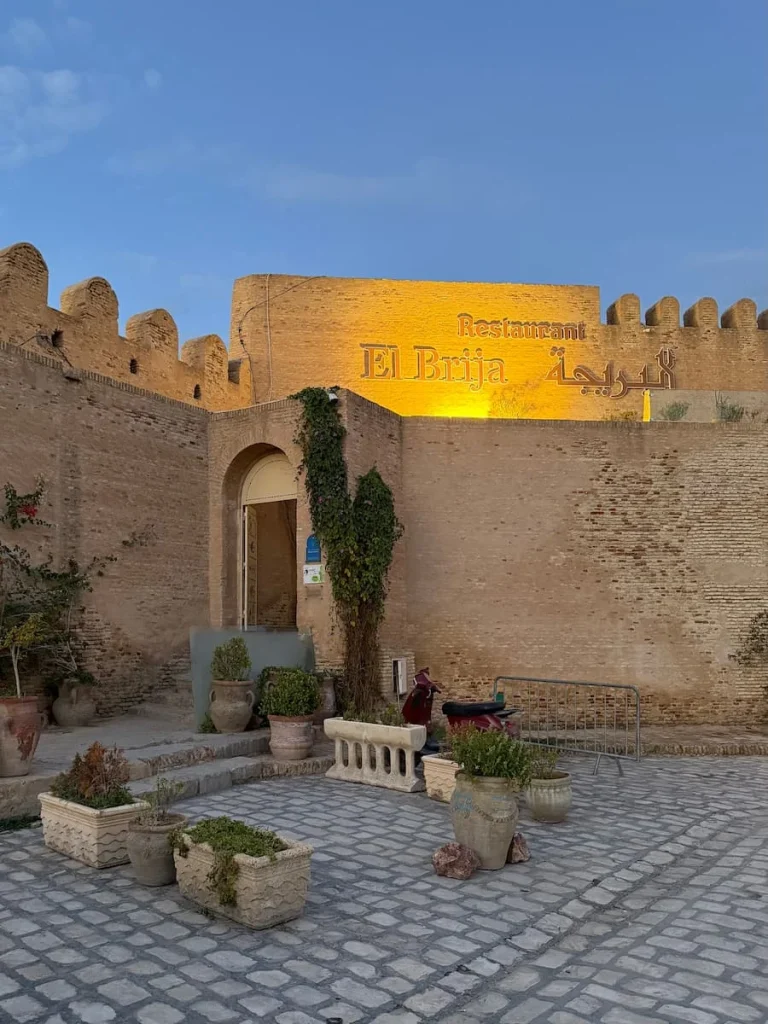
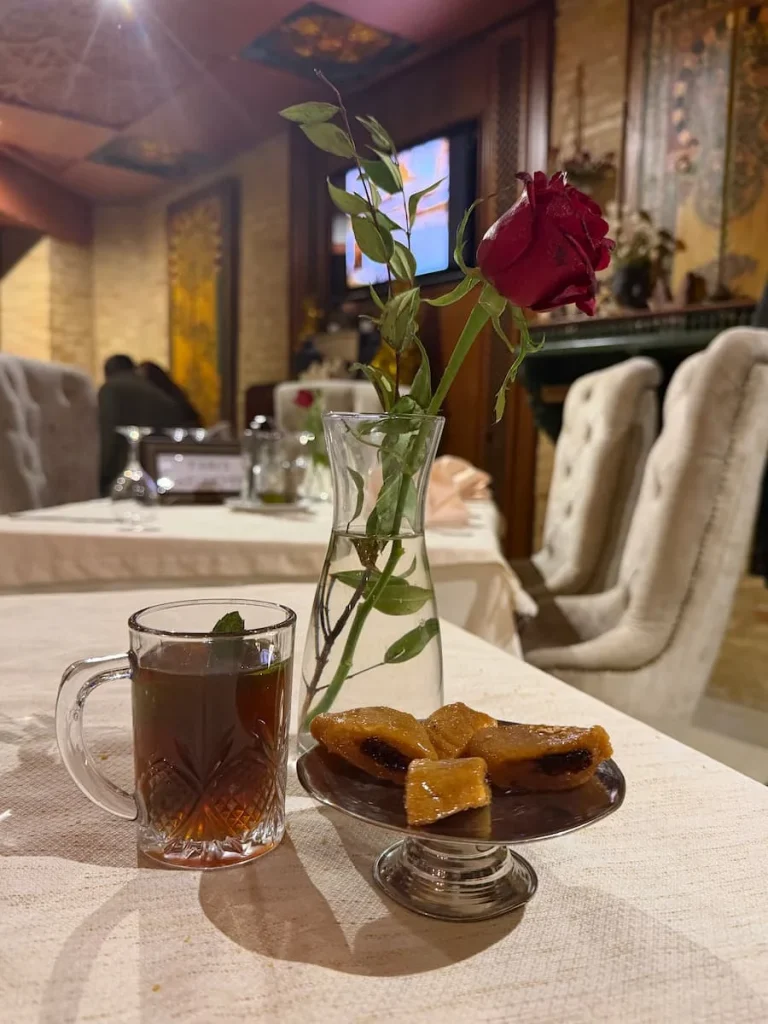
COUSCOUS & LOCATION OF EL BRIJA RESTAURANT
#8. Try the Local Semolina Pastry filled with Dates, Makroudh
We had lots of these, especially in Kairouan and Tozeur as it was date season when we visited in December. These are also sweet and can sometimes be a mix of just dates or dates and nuts. They’re a little like fig rolls, but sweeter with syrup on the outside too. Some also contain rose water and orange blossom.
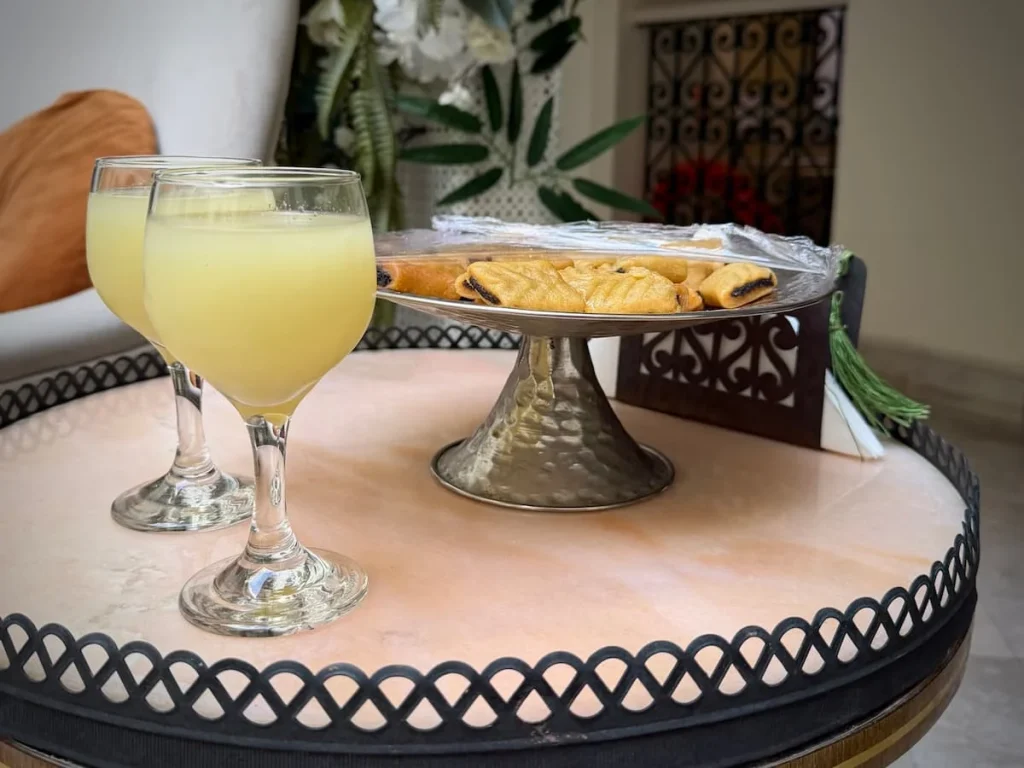
Be-lavie Tip: We’d recommend having them with a sugarless mint tea or a Turkish coffee to cut the sweet taste a little.
Kairouan FAQs
Can Non-Muslim’s visit many places in Kairouan as it’s a holy city?
Is one day enough in Kairouan?
Is Kairouan safe for tourists?
What should I wear?
Things to Do in Kairouan Round-Up
We found Kairouan to be more than just a destination; it’s a journey into Tunisia’s spiritual soul and historical heart. From its awe-inspiring Ukba Mosque to its ancient waterworks heritage, built during the time of the Aghlabid Dynasty. Then there’s its traditional flavourful cuisine and welcoming atmosphere. The city offers an unforgettable cultural experience. If you’re looking to go beyond Tunisia’s coast and more popular UNESCO World Heritage Sites, then we’d recommend you draw inspiration from this one day guide to Kairouan.
Tunisia Related Articles
- Unesco World Heritage Sites in Tunisia (& Tentative Sites).
- Things to do in Hammamet in Winter: A three Day Guide.
Plan Your Trip To Tunisia
- Flights: Search & Book the best flight options through SKYSCANNER
- Travel Insurance: An absolute must-have! Check rates on SAFETYWING
- Hotels: Choose from a wide range of accommodation with BOOKING.COM
- Trains: Get the best available options for rail passes with OMIO
- Buses: Scope out the best coach travel deals in Europe with OMIO
- Car Hire: Compare, search & secure the best vehicle to suit your needs with DISCOVER CARS
- Activities: Personalise your travel with top destination experiences with GET YOUR GUIDE & VIATOR
- Shopping: A one-stop online shop for all your travel shopping needs, including travel guides AMAZON
- Traveller Reviews: Check unbiased reviews for accommodation, tours and restaurants at TRIPADVISOR
- Travel Resources: Access Be-lavie’s full-list of tried and tested PARTNERS
- eSIM: Keep roaming charges low with an eSIM from AIRALO
À bientôt

Pin & Save
Enjoyed this article? Pin & Save to Pinterest and refer back to in the future!