WHAT YOU NEED TO KNOW BEFORE DRIVING IN NAMIBIA
Last Updated on 27th February 2026 by Bejal
Driving in Namibia can sound like an overwhelming task with its vast open roads, magnificently remote landscapes and abundant wildlife but its these challenges that make Namibia an incredible destination to drive in. If you’re embarking on an itinerary involving driving in Namibia for the first time, there’s a lot of things to consider to ensure you have the best experience but also that it’s safe – of course preparation is key! Rest assured, this is going to be one of the most incredible road-trips of your life and with the help of these essential tips for driving in Namibia, you’ll be cruising the gravel roads and winding passes like a pro in no-time.
Pin & Save
Why Opt For An Itinerary That Involves Driving In Namibia?
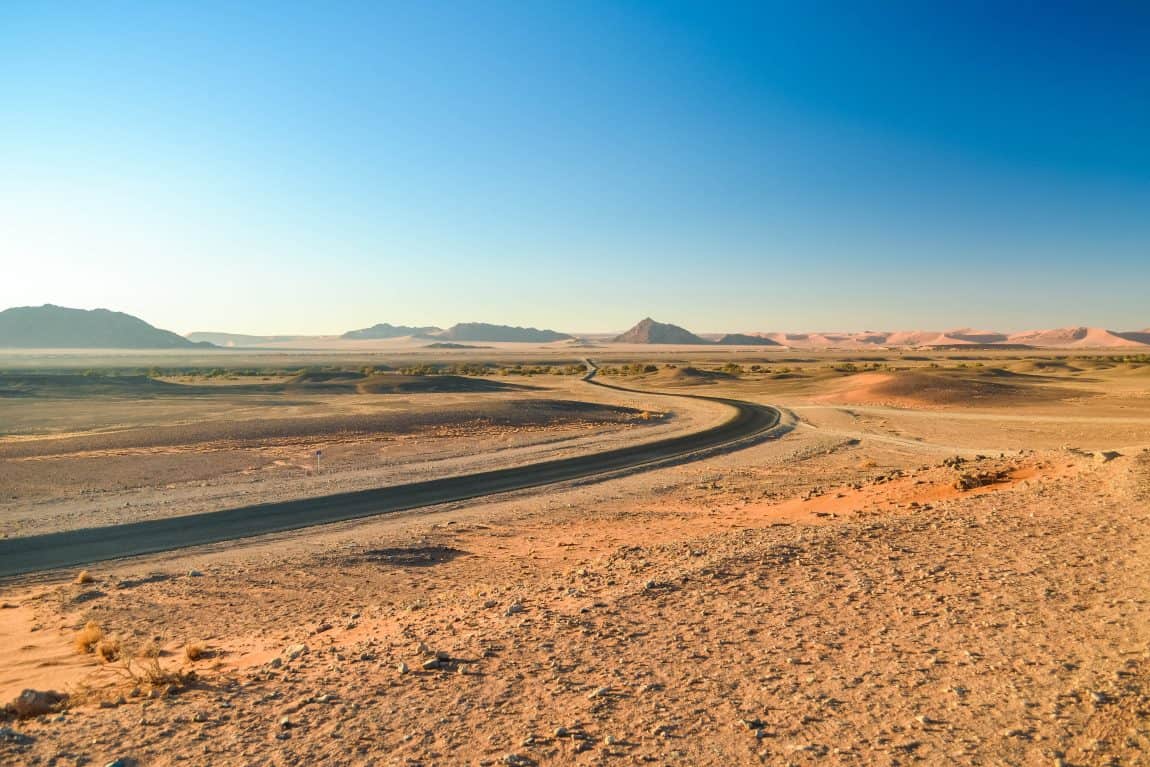
Namibia is most certainly a once in a lifetime destination and there is no better way to see and experience the country with adventure and off the beaten track discoveries. Driving the wide, deserted open roads with a backdrop of tiered mountain ranges, changes in scenery from desert to moon-like scapes is a better experiences by car. Feel the excitement as you see a giraffe crossing the road right before you or baboons scurrying across or even the graceful beauty of Namibia’s National animal, the Oryx as it walks across your path whilst you reach for your camera to capture the photo opportunity. This is why you need your own set of wheels. Travel at your own pace, craft the itinerary of your dreams and surprisingly you’ll discover that driving in Namibia is not quite as difficult as you imagined. For starters they drive on the same side as the UK and it’s just a matter of getting to grips with a few formalities, being prepared and a little careful planning.
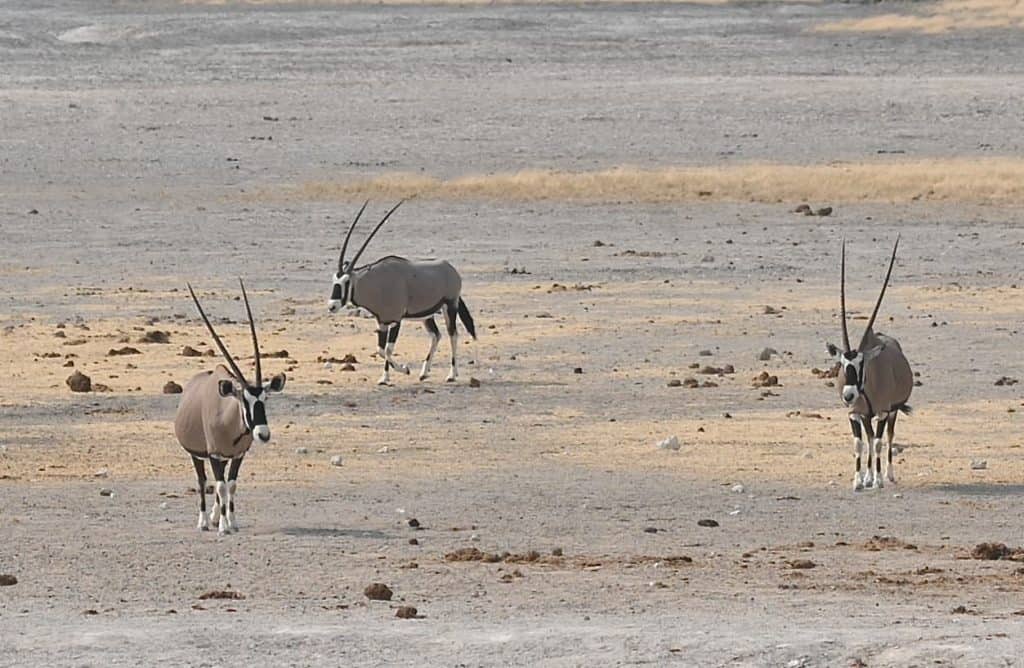
The majority of the roads in Namibia are barren and gravel but the upside is that that there is virtually no traffic, don’t be surprised if you go a few hours on the road and only see as few as four or five vehicles, but this is what makes driving in Namibia pretty stress-free and the bumpy gravel ride will soon come as second nature or even part of the ‘Namibia Experience’.
Related Post: How to Plan the Best Self-Drive Namibia Itinerary
What You Need To Know Before Driving In Namibia
#No. 1. Hire A 4×4 In Namibia
Do you really need a four by four (4×4) when driving in Namibia? We had this dilemma but would say no but your experience will be a lot more smoother and comfortable in one
The major highways or motorway=style roads are tarmac with the majority of roads being gravel., They become pretty rockier when driving in the more remoter parts of the. country.
Although roads are pretty well-maintained in a two wheeled drive (2WD), things are going to be rather uncomfortable so if there is one place you allocate budget, a 4×4 is where to use it in our opinion particularly for comfort as you will be driving for a long time!
The four wheel drive does give you much better traction on the more rockier parts of the journey such as the Spreetshoogte Pass or the sandier areas found in and around Sossusvlei. A 2WD would come in between US$20-40 per day to hire.
The 4×4 option does cost more but the comfort of driving, being higher up, having bigger tyres and the safety aspects. will definitely make the investment worthwhile . You will feel a lot more steady at the speed limits too. A 4WD would typically cost around US $70 per day.
We chose to hire a Toyota Hilux 2.4 4WS, which could actually seat five people and used the back seats for our luggage as the end portion, where the spare tyres are stored can get somewhat sandy! You’ll thank us for this advice when you’re visiting the areas of Sossusvlei, Deadvlei, Etosha National Park as well as The Skeleton Coast.
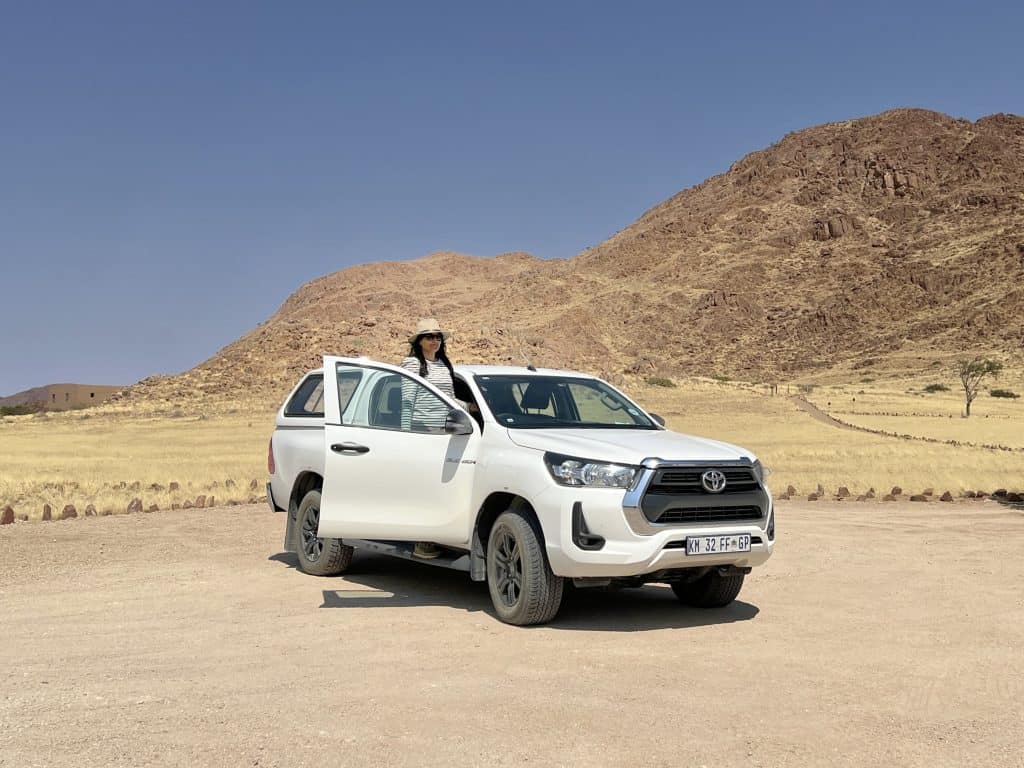
Be-lavie Tip: Allocate a reasonable portion of your budget to hiring a 4×4 in Namibia. Go with a reputable company such as Europcar because at the end of the day safety and comfort on your travels are key.
#No. 2. Plan To Hire & Drop off Your Car In Windhoek
It does sound pretty straightforward and obvious but travellers we met en route who were travelling into or out of South Africa, faced border charges in the region of N$300 cash, when coming into Namibia therefore it will increase your budget a little more.
Be-lavie Tip: Plan to pick-up and drop off your car in Windhoek at the international airport. All the major car hire companies are based outside ethe main terminal building.
#No.3. Purchase Comprehensive Travel Insurance & Car Insurance Policies For Driving in Namibia
Without sounding overly preachy, you really shouldn’t travel without specific travel insurance however if it’s not something you usually opt for, this is the time you have to look into it. You really do need to have a robust travel insurance policy for Namibia, Self driving in Namibia is of course safe but due to the terrain and landscape there are so many potential accidents or minor problems with the car that could happen.
If you travel often an annual policy is great but you should seriously consider Travel insurance. Be-lavie loves SafetyWing and their nomad travel insurance. SafetyWing also have an emphasis on pre-existing medical conditions.
When it comes to car insurance, ensure your insurance is as comprehensive and inclusive as you can possibly get, even if it means paying that little bit more – it will be worth it should you encounter any issues. Driving on gravel lined, rocky roads, sand tracks, could at any time cause loose rock to fly up and damage your windscreen or even damage the body work causing the paintwork to come away. Not to mention all the hours on the road and the burden this would put on the tyres.
If like us, you book your car via Europcar, car hire comes complete with a basic level of insurance which includes theft, third party damage and liability although the excess of pretty large, we’re talking anything from $500 to even a few thousand!
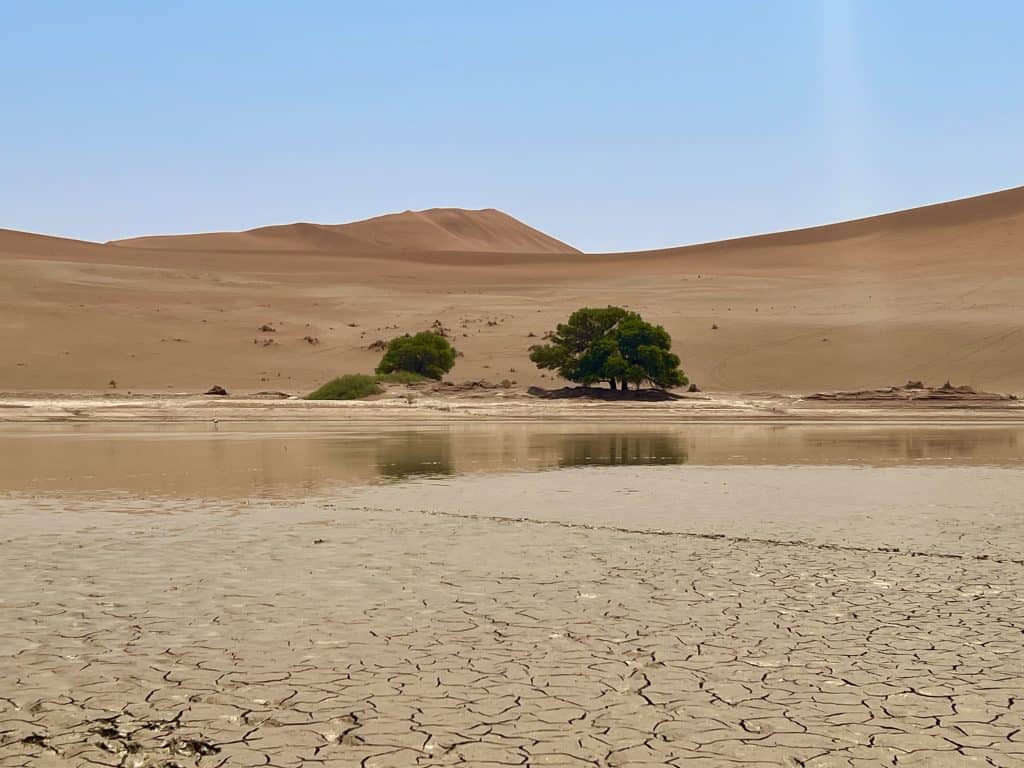
Be-lavie Pro-Tip: Be aware that many car hire companies and insurance will not cover you for off-road driving.
We consider and recommend the following for driving in Namibia:
- Opt for a refundable excess policy from insurance4carhire, normally if you damage the car you would be charged car insurance excess for damages to the vehicle, but with a Insureance4carhire insurance cover this excess can be insured against and claimed back.
- If you regularly hire cars, then Insurance4carhire have an annual refundable excess guarantee policy which works out to be more cost effective than a one-trip option.
Ensure that whichever policy you choose, covers 4×4 vehicles and remember the hassle of claiming back the excess cover will far outweigh getting set-up with the policy in the first place.
Look into reducing your excess via Insurance4carhire
Be-lavie Tip: You NEED comprehensive Travel & Car Insurance.
#No.4. Download Google Maps Prior To Your Journey
Luckily, Namibia doesn’t have many roads and it’s super easy to navigate the long stretches of roads with the occasional turnoffs.
Ensure that you download your Google maps for each leg of your journey either prior to travel or even whilst you’re in a good WIFI or connection zone in the country. Even if you did purchase a local Sim card, reception is pretty scanty so take advantage of your lodges and hotels WIFI before you leave.
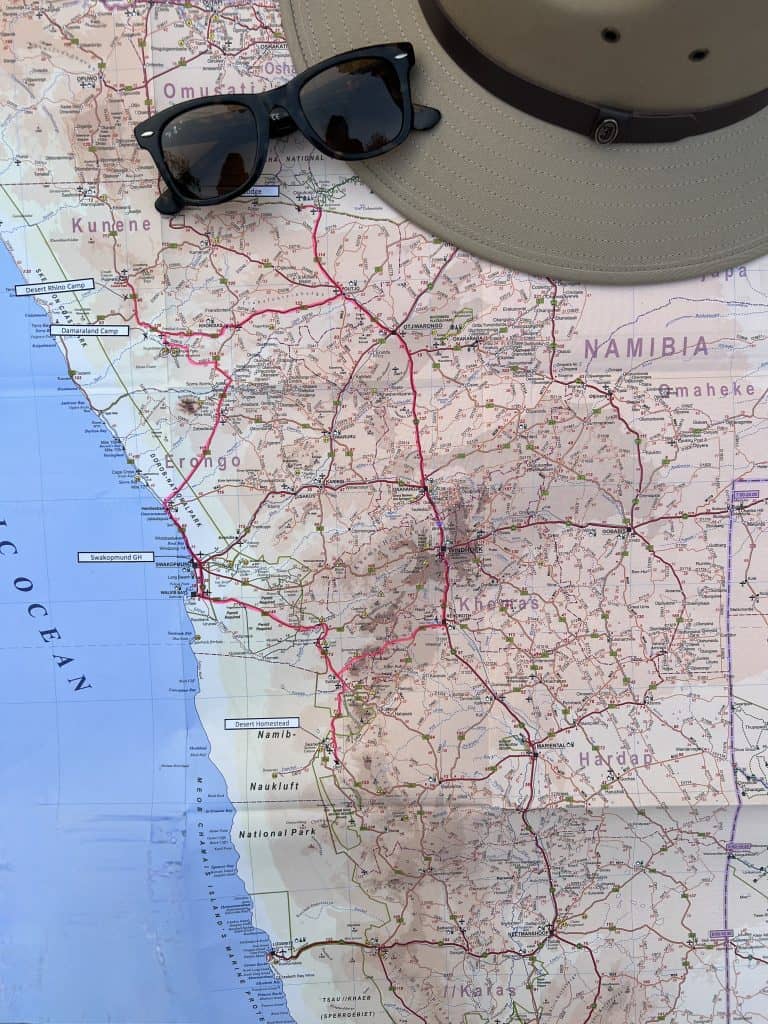
Be-lavie Tip: Work out each leg of your trip by downloading Google Maps in advance. Alternatively you may be provided with a comprehensive map if your trip was planned by a Tour company.
#No.5. Plan Your Drive Times
Driving in Namibia is not so easy to predict. Google Maps will set out a great route and time schedule for you, you’ll soon learn that this estimation of time is rather ambition. The quality of the roads and tracks change continuously as well as unexpected stops, waiting for wildlife to pass or even having to drive a little slower when cars pass by you. Beware of passes such as the Spreetshogge Pass where you need to completely slow down.
As a rule, add an extra half of the total time Google Maps suggests (For five hours add 2.5 hours) to ensure that you have plenty of time for flat tyres, a diesel or comfort break, photo stops to ensure that you’re not left driving in the dark, which is a big no! Leave as early in the day as possible, mornings are a particularly good idea.
Additionally, many lodges will partake in Sundowner game drives at around 16:30. It’s best to check into your accommodation around 14:00 to ensure you are settled so the lodges can schedule you into evening activities.
Be-lavie Tip: Distances are long. Namibia’s population is only 2.2. million! We went a whole seven hour journey from Windhoek to Sossusvlei and only saw a couple of cars! It seems deserted. Add extra time. If Google maps says five hours add an extra half total time, so make that seven and a half hours.
#No.6. Stick To The Speed Limit
It is very tempting to speed on the roads in Namibia, after all they’re deserted and the road may seem like it’s yours, especially when you have not passed anyone for hours.
BUT you must stick to the speed limit and abide by the driving rules in Namibia. For one reason, if you do crash the car, it could actually be not just hours but days before any medical help gets to you due to the remote locations..
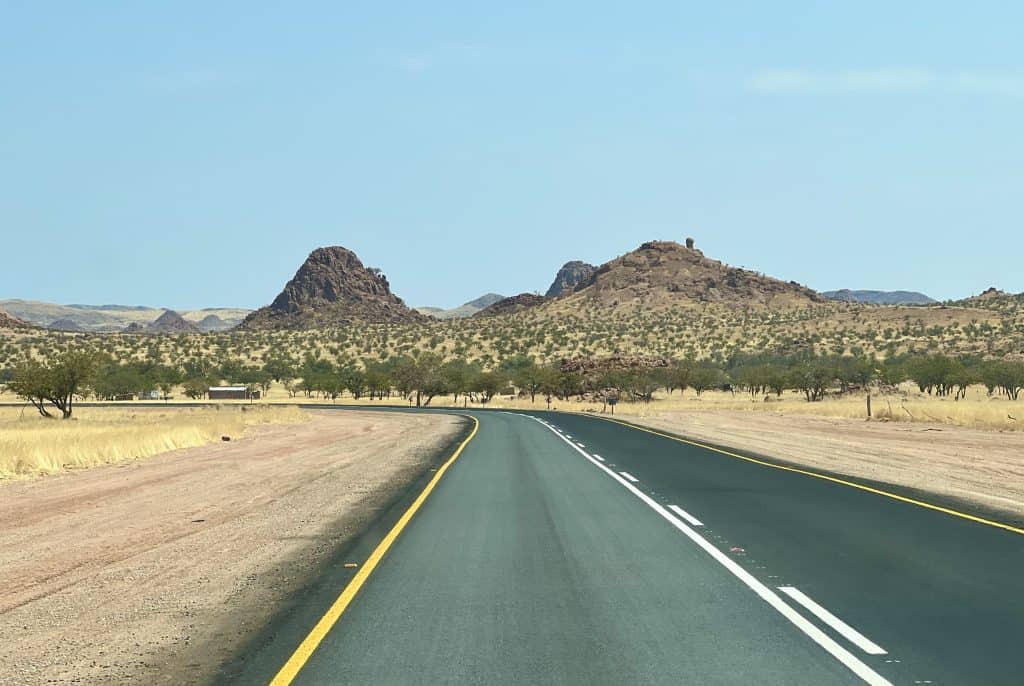
Take notes of the following speed limits and stick to them, just as you would in your country of residence:
- On any road surface other than tar, never exceed 80km/h
- Tarmac Roads/Highways – 120km/h
- Gravel Roads/loose rocks – 80km/h
- Urban Roads/Residential – 50-60 km/h
Make sure to always follow the road signs and speed limits that are displayed roadside whilst driving in Namibia incase of sudden changes or road works.
Tarmac roads are in excellent condition (usually those with a prefix of B), and C and D roads are sandy, slight gravel roads. It has been noted that the changeover to the more sandy road has led to accidents as well as tyre punctures thus it’s so important to abide by speed laws.
Occasionally you’ll see the speed limit pretty high on some of the gravel roads, this is ok for the locals but it’s not recommended to attempt. We often had people drive by us and pap their horns but safety first.
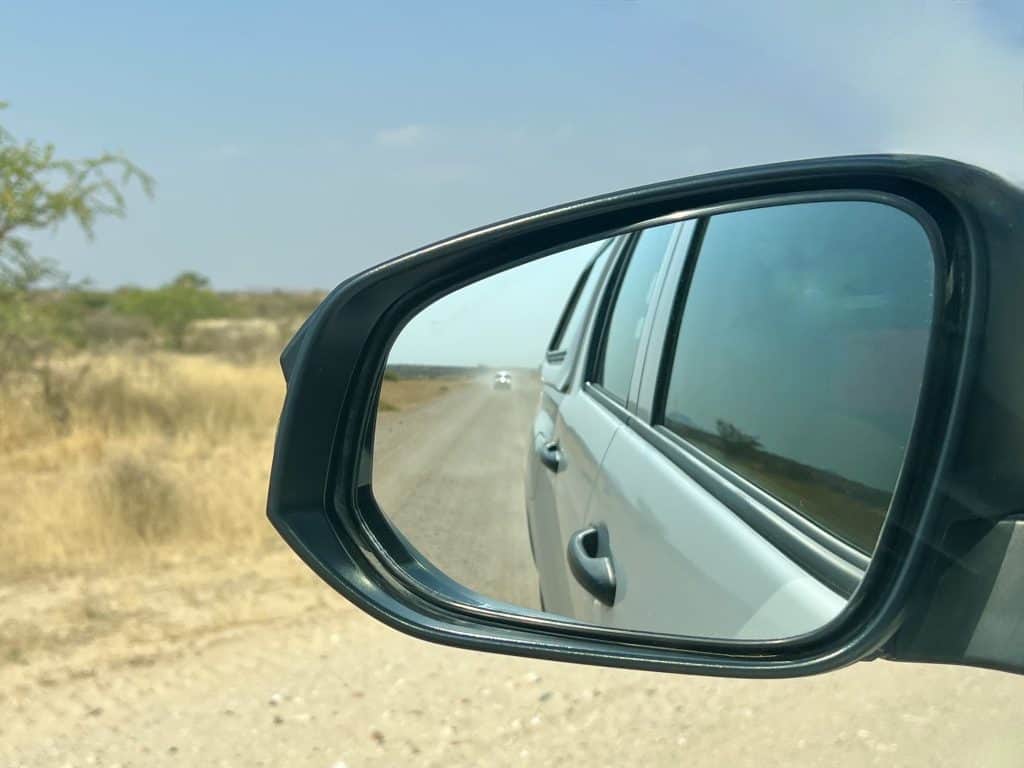
It’s also a good idea to slow down a little when you pass a car or truck. You’ll notice that you’ll probably have to as the track will produce a cloud of sand and rocky debris as a car passes. The road before you will be blinded for a few seconds.
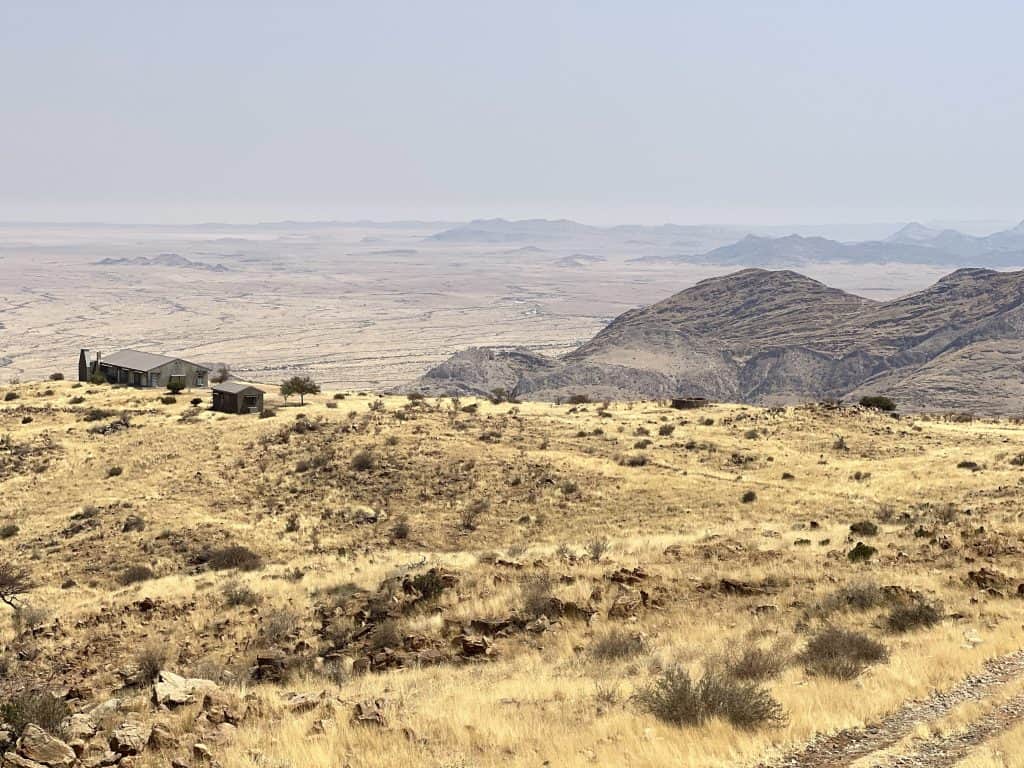
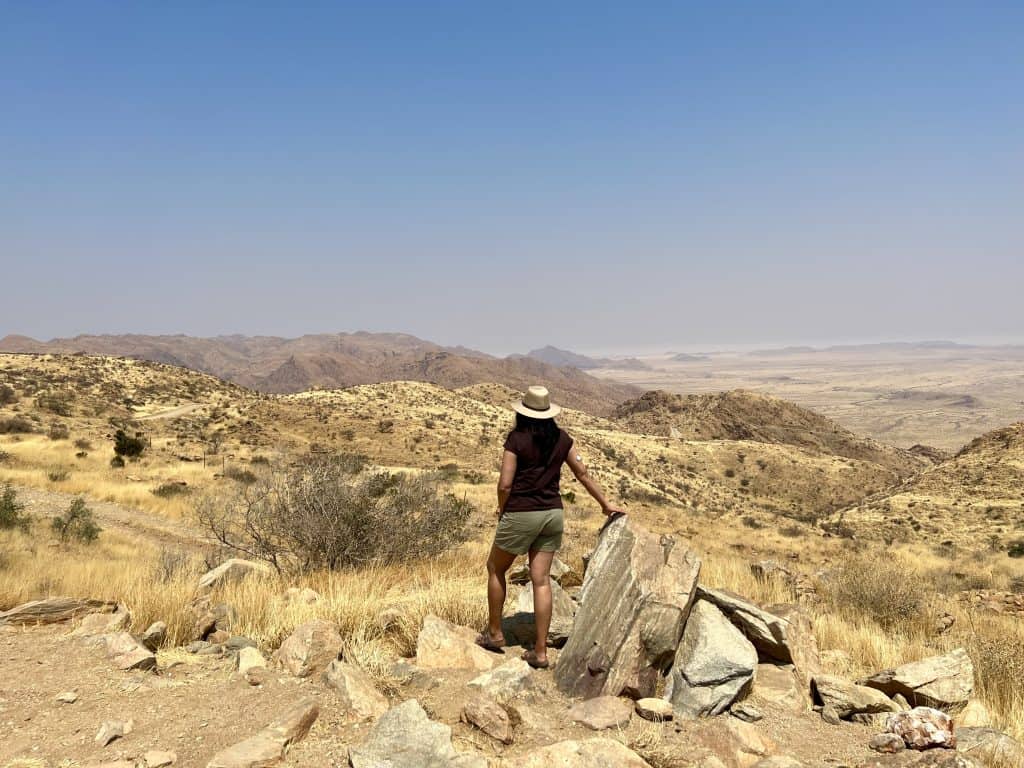
Be-lavie Tip: There are many police stops along roads and you may be stopped at any time by law enforcement officers – penalties are pretty steep for speeding and reckless driving and is policed very heavily by the transport police check points as well as on the roads. It’s simple, don’t speed!
Be-lavie Pro Tip: If you have booked through an agent then you’ll have an emergency telephone to call. a whole host of numbers to get help out to you if you do run into trouble but still be prepared to wait. This is provided of course if you’re travelling with a travel agent.
.
#No. 7. Always Check Your Tyres
Due to the nature of Namibia;s roads, it’s obvious why the sand and rocky surfaces can cause punctures, and other pressure issues. For this reason it’s good practice to check your tyres on a regular basis. A good time is when you head to a fuel station, Sometimes you can give the pump attendant a tip to check over your tyres or alternatively check them yourself on the forecourt.
If you’ve hired a 4×4, you will be supplied with two tyres and a jack. But it pays to watch a few YouTube videos to get an idea of how to do this. Just search for keywords like tyre change in Namibia and you’ll see just how easy it actually is to do. Alternatively if you have booked through a travel agent, the drop off personnel will go through a demo of changing tyres as well as showing you a few safety videos before handing the vehicle over to you.
It’s best to request two tyres, Europcar will automatically set you up with two but if you only have one and have used your spare then there are many tyre change centres on the routes as well as fuel stations which will be able to sort you out. In fact, they can even change your tyres for a small fee and give you a spare one too if required.
Tyre pressure for Toyota 4×4 hi-lux double cab or similar: 1.8 bar.
Be-lavie Tip: Familiarise yourself with checking your tyres on a regular basis as well as how to change them in an emergency.
#No. 8. Do NOT Stop For Other Drivers
We were a little split with this one but luckily didn’t see anyone run into trouble during our road trip so the issue never arose. However, Europcar and our travel agency did say not to stop on the roads for anyone, unless it’s someone official such as the police. It was more for safety and possible theft of belongings via scams that may include locals although this would be more likely to happen in and around Windhoek.
It is human nature if you see someone stuck in sand or have a flat tyre and are struggling to change it, to stop and help. It’s a tricky one but from years of travelling, if something looks odd, go with your first instinct and stick to it.
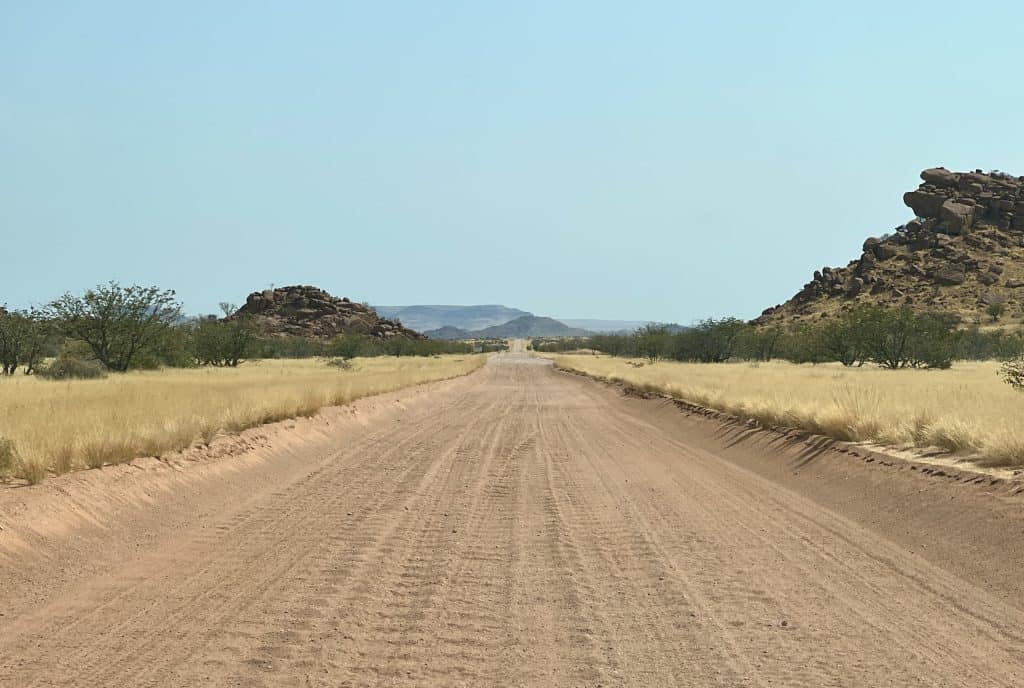
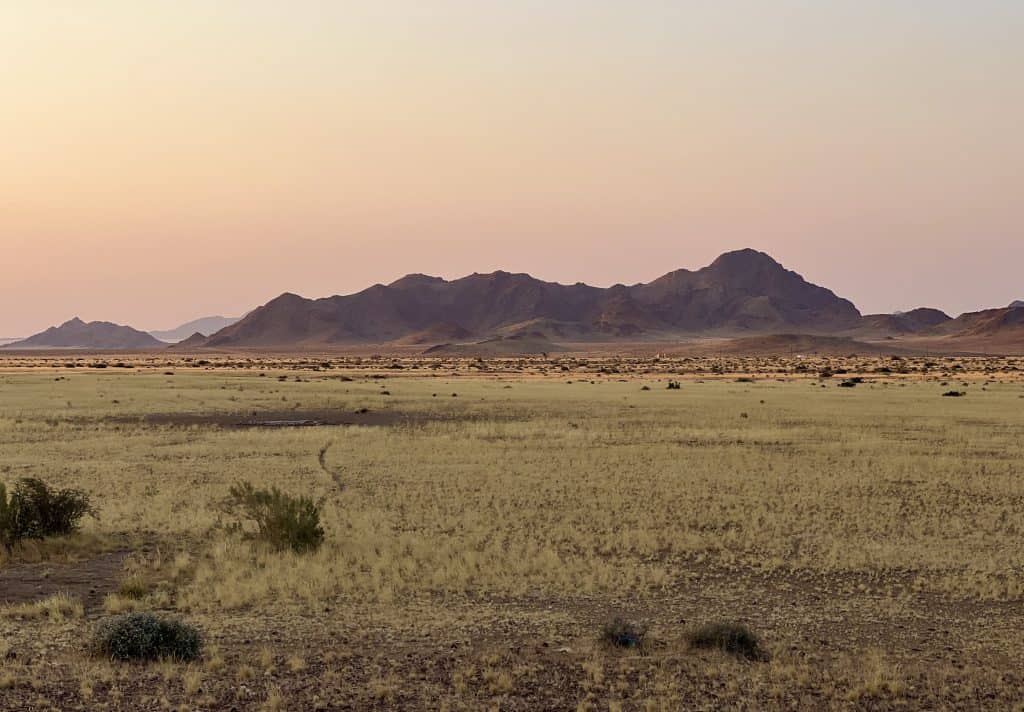
Be-lavie Tip: Use your instinct, if in doubt trust that instinct and keep driving.
#No.9. Always Keep Headlights On
The sandy roads and dust clouds coming off the roads makes visibility really difficult therefore keeping headlights turned on all the time will help on coming traffic see you approaching on the road and vice versa. This also goes for the cars behind you, who maybe blinded by the dust from your car.
By Namibian law, headlights must be kept on and failure to observe the regulation is punishable with a fine.
Be-lavie Tip: Get into a habit of turning your headlights on as soon as you get into the car.
#No.10 Lookout For Wildlife Crossing The Roads
You may think that wildlife is concentrated inside of the National Parks in Namibia. This again, you will be surprised to know that we bumped into a medley of animals on our drives. Oryx, leopards, cheetahs, baboons, springbok as well as giraffes, ostriches were all roaming the planes quite freely and crossed the road whilst we slowed down and waited for them to pass.
It’s good to note that the roads are not just for cars but you do have to share them with some of this beautiful wildlife and anything can possibly run into the road so concentration and keeping your eyes on the road at all times is priority.
The thought of running over one of these beautiful animals is just unbearable. Always keep an eye put for Warthogs as they tend to forage on road sides.
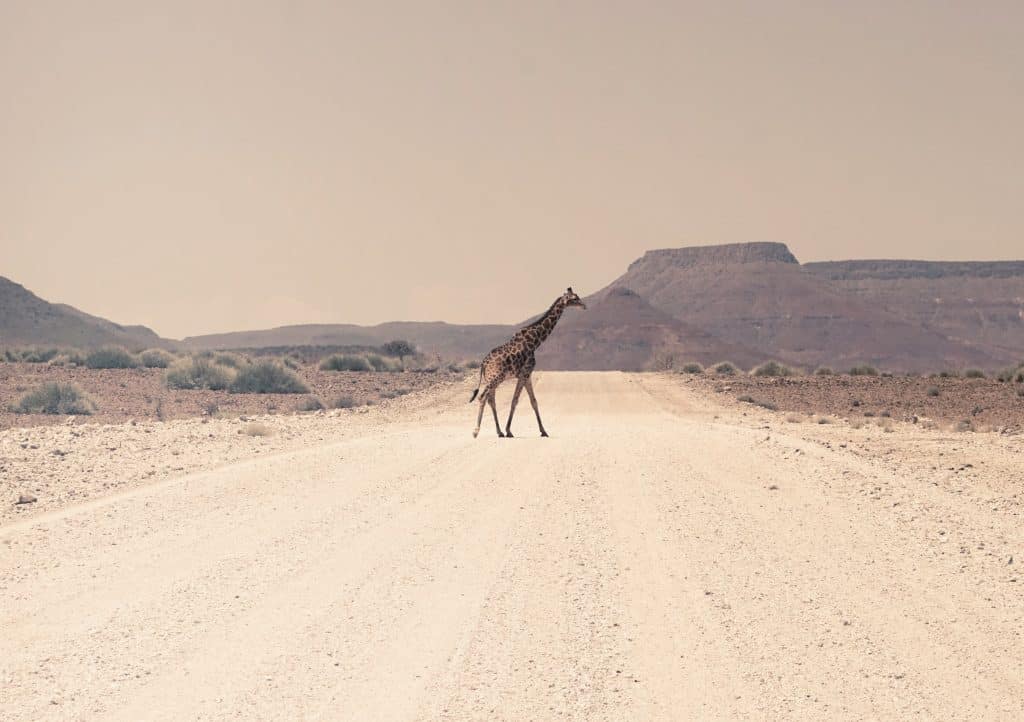
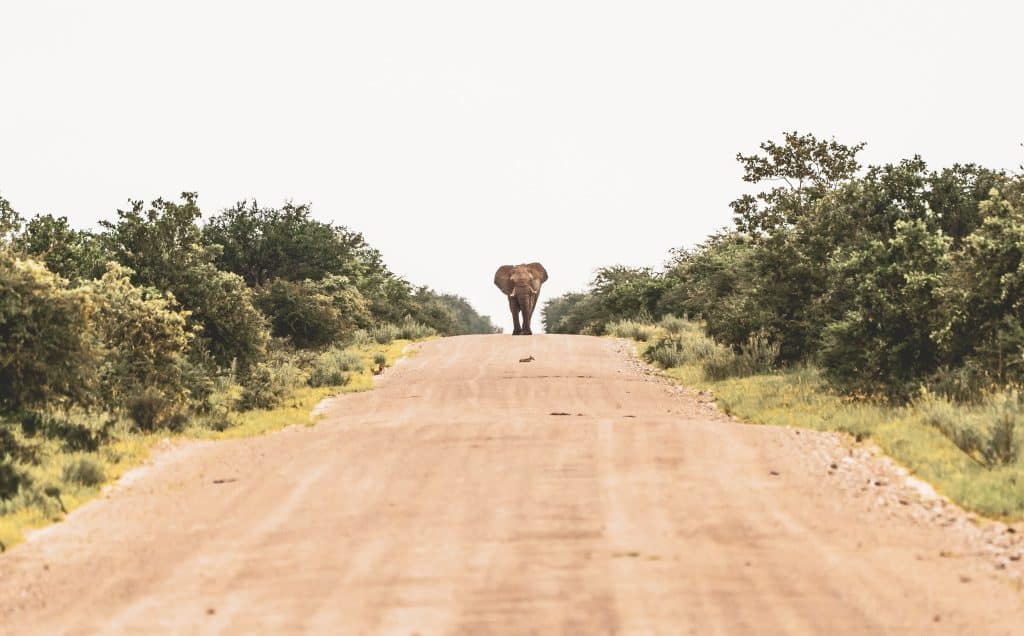
Image Credit Giraffe left: Jonatan Pie (Unsplash) & Elephant right: eelco-bohtlingk (Unsplash)
Be-lavie Tip: Always be aware of animals on the sides of the roads which may potentially be prone to running across. Slow down if you see them on the road sides, just incase they decide to move. Use the time as a photo opportunity to capture them from the car. Also note animal signs as you drive through certain areas – you’re likely to see elephant crossing or springbok signs quite often.
#No.11. Don’t Drive Between Destinations at Night
Driving in a town such as Windhoek or Swakopmund is completely fine at night as there is an abundance of street lighting and you just need to apply the regular safety rules such as not having valuables on display, locking the car etc, however driving in the wilderness is a little different. In the remote areas, covering much of the routes outside of the cities, there are potholes, uneven road terrain and virtually no street lights so visibility is poor due to the dark.
Animals tend to hunt in the dark also so are pretty active during the night as the temperatures are also substantially cooler and not being able to see them so well in the dark could pose as a very dangerous driving hazard. Kudu and oryx in particular have a tendency to just leap into the road, there are even warning signs to suggest this, and Namibia just wouldn’t be Namibia without the animals. So all efforts to conserve their presence is key!
Animals often sleep on the tar or gravel and are responsible for many accidents. Your insurance won’t cover for this so it’s best not to take the risk.
Be-lavie Tip: Don’t drive in the remote areas in the dark, whether that’s in the evening or early morning time. Plan your journeys effectively to avoid driving at dusk.
#No.12. Stock Up A Cool Box
If you encounter a problem whilst driving in Namibia and are stuck waiting for help or simply that destinations take a little longer than expected to arrive at, snacks and drinks will come in very useful! After all, a road-trip calls for essential snacks.
Many tour agencies, if you book with them, will automatically provide you with a cool box for your time in Namibia. Simply hand these in at each of your lodge and the staff with keep them cool for the next leg of the journey.
There are many supermarkets in the capital, Windhoek so you can start with water, other drinks, snacks or fruit from here and then as stocks delete you can top them up en route from supermarkets in the larger towns and cities or shops and bakeries you come by.
Be-lavie Tip: Even if you don’t have a cool box, you can either rent one or just carry your snacks in the car with you and leave your water with your accommodation to be chilled and collect when you’re ready to leave. Many lodges will have huge chiller or even a chiller room.
#No.13. Know The Location Of Fuel Stations
There are quite a lot of petrol stations around Namibia but when you really need one you most probably won’t see one!! This did happen to us and we only just made it at one point but the anxiety it caused really isn’t worth it!
Many of the small towns that you’ll drive through on the main roads will most definitely have a petrol station or maybe even two. However in remote villages and towns there won’t be petrol stations. This is why thinking ahead is key and it’s a good idea just to fill up every time you do see a station. You are travelling such a vast distance and you really don’t want to be caught short. Also if you’re driving up to Etosha National Park then fill up if possible at the fuel stations before you get inside the park as prices are a lot cheaper.
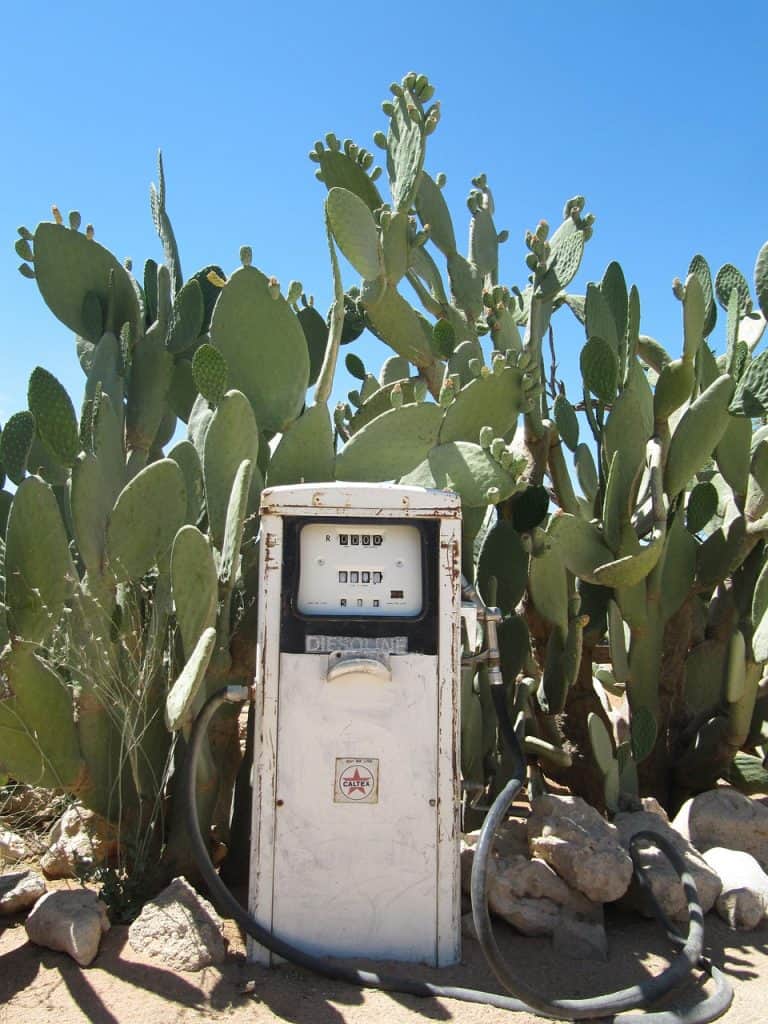
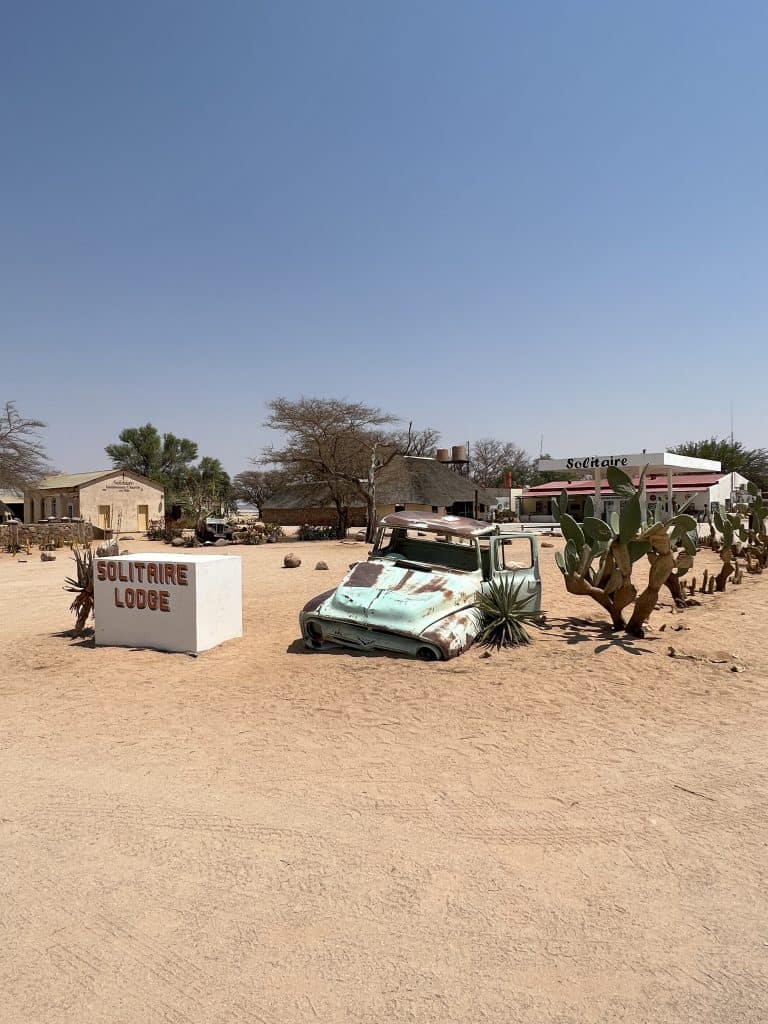
Be-lavie Tip: Fill up each time you go past a fuel station, try to do this as a habit, especially if you’re at a point where you’ve only got around half a tank remaining. It’s good practice just incase the next point has run out of fuel – yep it’s rare but it happens.
Be-Lavie Tip: If you’re driving the National Parks, ensure you know the location of where you need to purchase permits.
#No.14. Cleanliness Of Your Car
You won’t be surprised to learn that driving in Namibia through the sand, rocks, grit and other debris that your vehicle is most likely going to get dust. Depending upon who you hire your car with in Namibia, they may require you to clean it before returning or they will charge you for sending it for a clean.
If you hire your car from Europcar, you won’t need to clean it, unless it’s totally been immersed in sand and sludge! However you can easily have your car washed and also cleaned inside at a fuel station and it will literally cost you a few Namibian Dollars.
Be-lave Tip: Always check when picking up the hire car if they require it delivered cleaned.
Be-lavie Pro-tip: If it’s just two people in your party, DO NOT put your luggage in the rear of the vehicle where the spare tyres are stored. This area will collect sand and get very messy. You do not want to be getting your luggage drowned out in sand. Put your bags on the back passenger seats instead,
#No.15. Have The Correct Drivers Licence
It sounds basic but it can easily happen! In order to hire a car in Namibia, the minimum age is 23 and you require a full clean driving licence for at least a year. This can change however with some hire companies. On the whole many hire companies will insist the driver should be a minimum of 25 years of age. It may be necessary for a driver aged between 21-35 to pay an extra insurance fee.
You will be required to have an international driving licence if you don’t already have an English one!
You will need your passport and a valid driving licence in order to be given clearance to pick-up a hire car in Namibia. A credit card will also be required in order to hold your excess incase it is required for any damages to the car during your trip and on returning.
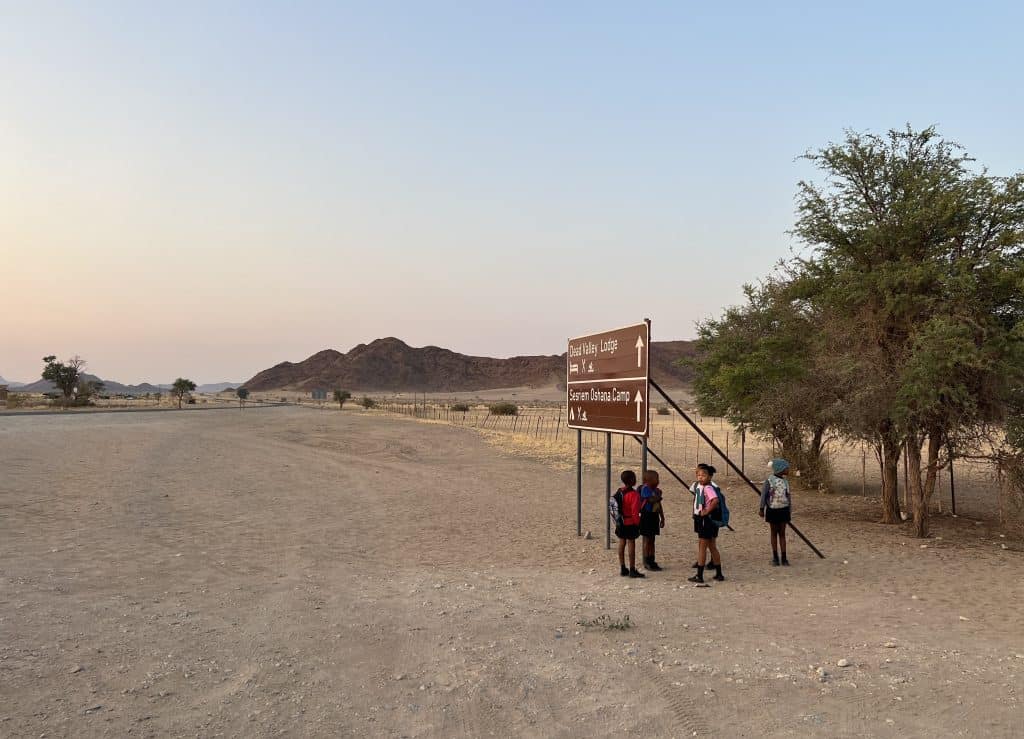
Be-lavie Tip: To be safe, ensure the driver is 25 years of age or above. Also remember to take your Driver’s licence with you incase you are stopped by the transport police at roadside checks. You will have some car documents from your hire company to show the life of the car and servicing, these should be kept in the glove compartment at all times.
#No.16. Keep To The Left When Driving
When hiring a car, be aware that in Namibia they drive on the left-hand side of the road. Completely normal for those of us from the UK.
If you are used to driving on the right-hand side, you may want to opt to hire an automatic car so you don’t have to think about changing gears and braking whilst turning!
You’ve got the picture by now, Namibia is remote and very very sandy. In fact the sand goes everywhere and you’ll probably find it in your clothes and suitcase when you return home!
A lot of the roads literally are just sandy surfaces with gravel sprinkled over them and then patted down so a sudden movement or increase in speed could tip you into deep sand, cause your vehicle to topple over and you really don’t want to be stuck out in a remote spot waiting for road side assistance for hours!
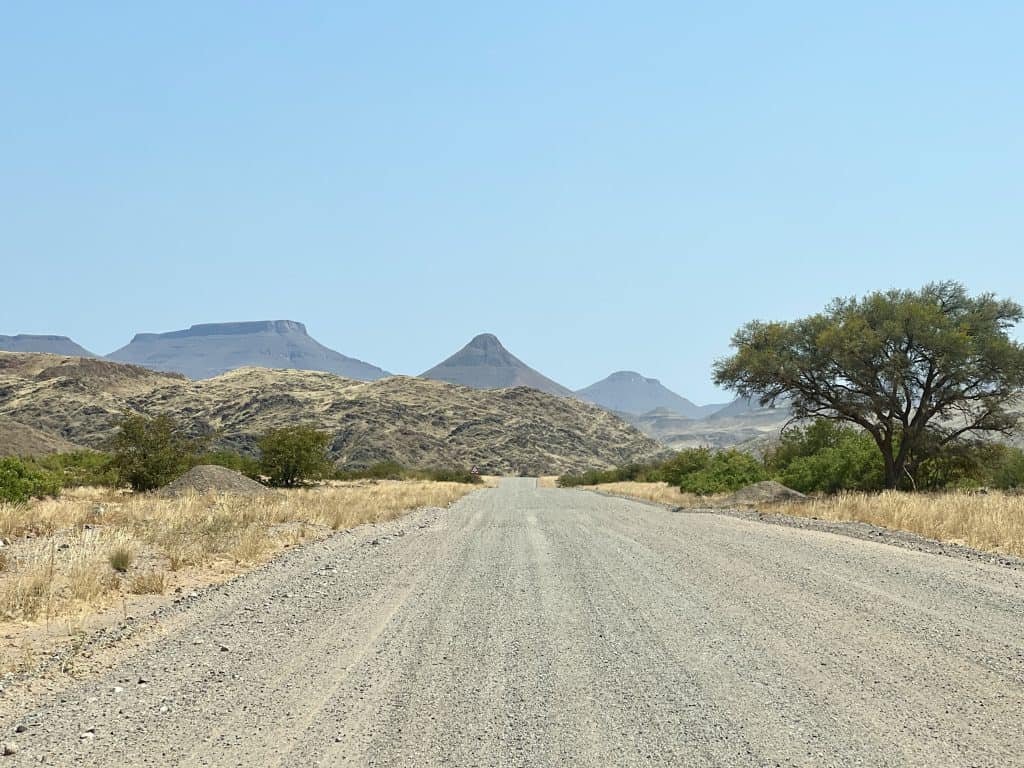
Be-lavie Tip: drive more towards the centre, a little to the left, of the road on gravel, sand tracks and just veer a little to the side to allow oncoming traffic to pass. You will very rarely pass traffic due to the desolate surroundings. You coudl hire a automayiv evehicle if it’s easier.
No.17: Check Which Credit Cards Are Accepted at Your Hire Care Company
Check with your car hire company which credit cards they accept and that your limit on the card is enough to cover the excess charges. It’s a good idea to let your bank know you’ll be using your cards abroad.
#No. 18. Check Tyre Pressure Regularly
For driving long distances on gravel roads, your tyre pressure should be between 1.8-2.0 kpa however that is less than the 2.4 kpa recommended for high-speed paved roads.
On sandy roads or rocky terrain and low-speed off road driving in Namibia, the tyre pressure should be around 1.4 kpa.
It’s also good practice to check on your spare tyres and ask for two spares from your hire company just incase you get a flat tyre somewhere desolate and then you’ll still have another spare.
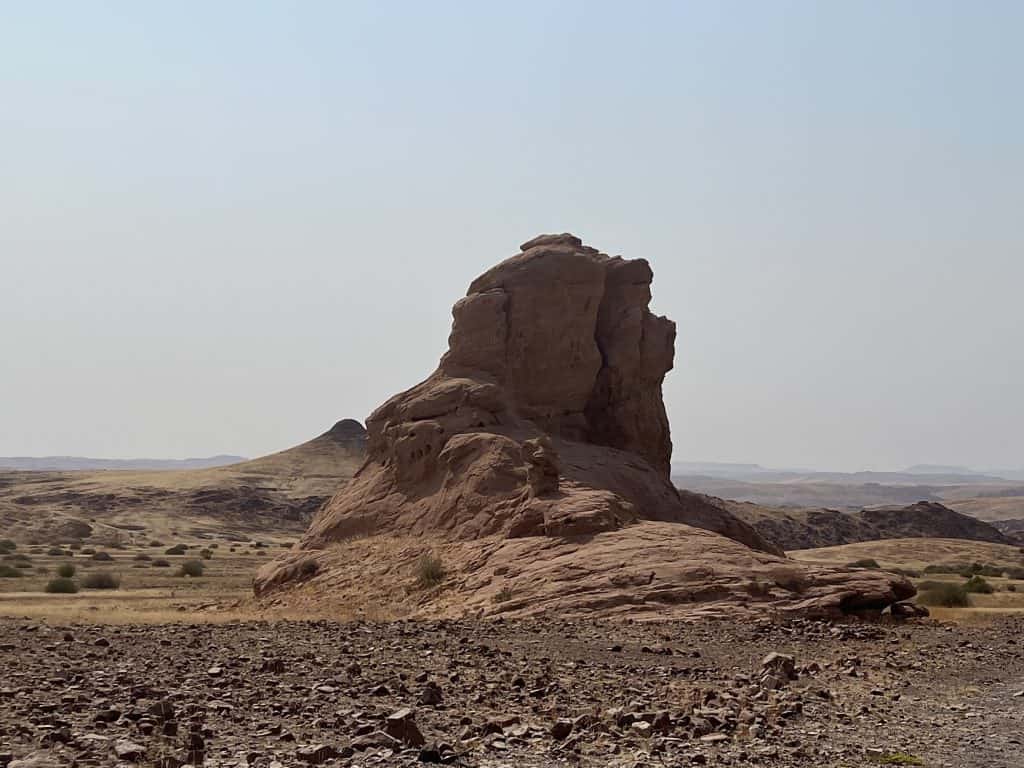
Be-lavie Tip: You can check tyre pressure at fuel stations whilst driving in Namibia and if you are driving the sandy beach and dunes at Walvis Bay, make sure you are aware of the rules for lowering your tyre pressure. The office where you purchase your permit should be able to advise on this.
#No.19. Carry A First Aid Kit In The Car
Spending so much time out in the remote desert, it’s a good idea to keep a first aid kit in the car containing basic medical equipment such as antiseptic cream, safety pins, plasters, bandages, scissors etc. You never know when you may acquire a cut or graze. Some antiseptic spray and antihistamines as well as pain killers may come in handy too.
Be-lavie Tip: Always carry a well-equipped first aid kit with you to temporarily tend to minor medical emergencies.
General Safety Precautions When Driving In Namibia
- Valuables: Never leave valuables like your camera, money, passports or phones in your car when it’s unattended. Always carry these with you and double check you have locked your car before leaving it.
- Hitchhikers: You will see hitchhikers whilst driving in Namibia and they make look desperate for a ride but do not pick them up. There has been incidents in the past of car-jackings and theft which have resulted from tourists trying to help out locals in need.
- Locking Doors: As soon as you get in the car make a habit of locking the doors immediately and keep the windows wound up, especially in cities and urban neighbourhoods and traffic queues. All rental cars will have air conditioning so there is no need to drive with the windows down.
- Parking: At lodges and accommodation parking at their designated points is absolutely safe however if you are driving to restaurant or any other point of interest you will see a parking attendant. Make sure you park in the car park area designated and make the attendant know of your vehicle, who will be most appreciative of a tip when you leave.
- Car Lights: Remember you must keep your lights on at all times when driving.
- Other Drivers: Drivers in Namibia are the most polite and courteous driver we’ve encountered around the globe, don’t forget to reciprocate that courtesy especially when they pass by flashing your hazard lights as a thankyou.
- Driving License: All driver must carry their driving licence, registration and insurance documents at all time incase of traffic checkpoints.
- Car Safety: Seat belts are law in Namibia so always ensure you’re belted up before driving. Everyone in the car must wear their seat belt at all times in the car. The fines are currently NAD 2,000 per occurrence of non-compliance
- Google Maps: Remember to download Google maps before your journeys as phone reception is not the greatest in the desert or remote areas. Forget about 5G or even 4G – 3G won’t be an option!
- Gravel Roads: When you’re driving on gravel track roads, slow down when approaching another car to avoid stones flying up onto the windscreen or underside of your vehicle.
- 4×4 Workings: Ensure you know how to engage the 4×4 function on your car.
- Research: Research your trip thoroughly and find out which areas you should avoid on the road as well as in cities. Townships can be a little risky.
- Tyre Punctures: For Punctures always use the safety triangle provided and place it 45m behind your vehicle and find a flat place to change the tyre, with rocks behind/in front of teh three remaining wheels.
- Two Drivers: Try to ensure where possible, there are two insured drivers.
- Cash for Fuel: Ensure you have enough cash to pay for fuel as most filling stations will not accept card.
- 3 and 4 way stop: If there is a no 3 or 4 underneath the stop sign this indicates a 3 or 4 way stop. The rule here is firts come, first go
- Police Road Blocks: the advice here is always stop. If fined for any offence remember to insist on a receipt.
- National Parks: No plastic bags are allowed in National Parks – if found guilty, you will incur a fine of NAD 500 or 6 months in prison.
- Breaking on dirt road: Never break hard, especially going into a corner, allow the road to lead you around the corner.
- Salt Roads: North of Swakopmund, roads tend to dissolve in mist and get slippery, they may appear as tar but they definitely are not.
- Sand Roads: Stop car, engage 4×4, drive. Disengage after crossing.
- Road Signs: Observe road traffic signs, particularly those that indicate gentle or sharp curve ahead. In the case of a warning sign, indicating a gentle curve ahead, reduce speed by at least one third of teh cruising speed before commencing the turn. In the case of a warning sign indicating a sharp curve, reduce speed to at least half the cruising speed before commencing the turn.
- Rivers: Ephemeral rivers spring up quickly – wait until the flow subsides, or if flow is very slow, walk the route first. Tropical downpours – pull well off the road, keep lights on the wait.
- Cattle Grid: Slow down drastically as the road will narrow from both sides, only allowing a single vehicle to pass through at a time.
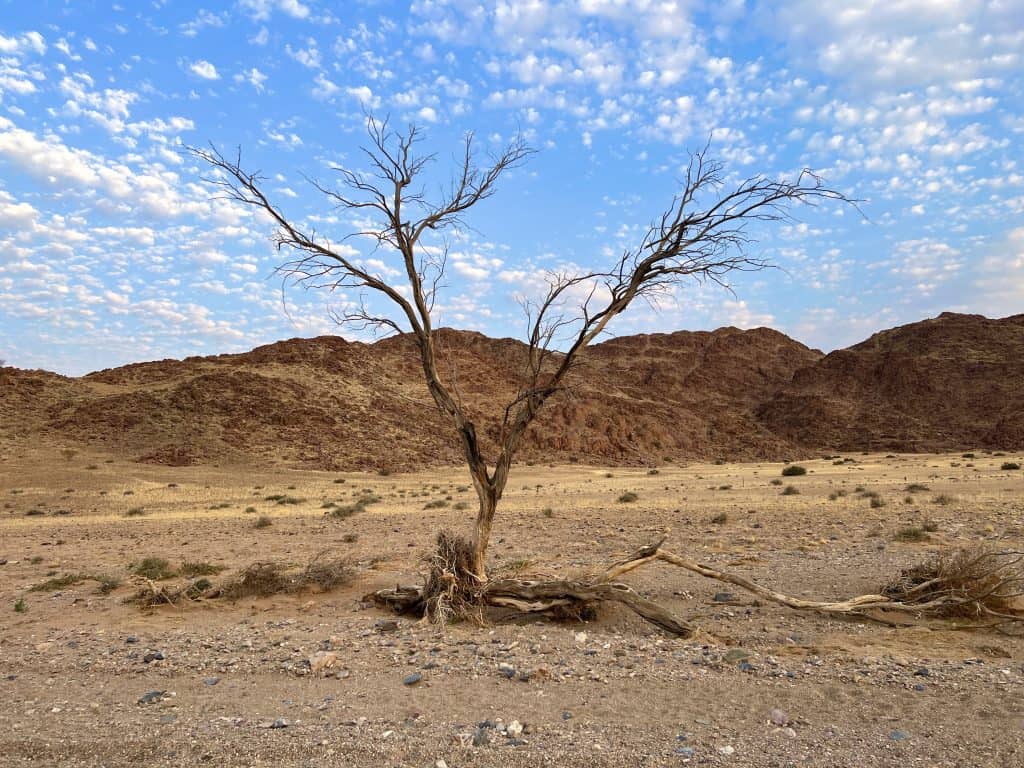
Driving In Namibia Round-up
Hopefully this post and the safety and precautionary points covered will help you get a head start with your driving your Namibia itinerary and make you aware of certain aspects you had not considered previously. Although driving in Namibia may seem daunting at first with all the dos and dont’s, rest assured that it doesn’t actually seem difficult once you’re there with your vehicle. It will be very relaxing due to the task of traffic and a very unique experience that you’ll grateful you opted for. Relax, take your time and have a wonderful time driving in Namibia, it is your once in a lifetime trip after all.
Related Articles
- What you need to know before driving in Namibia
- The best luxury eco-friendly lodges in Namibia
- How to spend 24 hours in Windhoek
- Ultimate travel guide to Sossusvlei
- A complete guide to packing fro Namibia
- The most popular things to do in Swakopmund
- The best of Damaraland: landscapes and nature
- A guide to Etosha National Park
- Photos of Namibia that will make you want to visit now
Travel Planning Checklist Must-Haves
Hotels & Lodges
Namibia Trip Guides & Aids
Must-Do Tours
Travel Insurance
Travel Planning Resources
All these companies are used be Be-lavie personally to plan and book travels.
- Flights: Search & Book the best flight options through SKYSCANNER
- Travel Insurance: An absolute must-have! Check rates on SAFETYWING
- Hotels: Choose from a wide range of accommodation with BOOKING.COM
- Trains: Get the best available options for rail passes with OMIO
- Buses: Scope out the best coach travel deals in Europe with OMIO
- Car Hire: Compare, search & secure the best vehicle to suit your needs with DISCOVER CARS
- Activities: Personalise your travel with top destination experiences with GET YOUR GUIDE & VIATOR
- Shopping: A one-stop online shop for all your travel shopping needs, including travel guides AMAZON
- Traveller Reviews: Check unbiased reviews for accommodation, tours and restaurants at TRIPADVISOR
- Travel Resources: Access Be-lavie’s full-list of tried and tested PARTNERS
- eSIM: Keep roaming charges low with an eSIM from AIRALO
À bientôt

Pin & Save

Dotti
We’re going to Namibia later this year, so this is very helpful. Thank you!
Bejal
DottiHi Dotti. Thanks so much for your comment. Wow you are going to love it. I hope the post helps. It’s literally everything I wish I knew before I went but it really was an adventure and a half. Have a great time.
Brittany
This post is so helpful. I wouldn’t have known any of this information, especially not stopping to help other drivers, before going. I found that so interesting. I can’t imagine just stopping to watch a giraffe or elephant cross the road in front of you. That sounds amazing!
Bejal
BrittanyThanks Brittany. Namibia is just one of my most unique travel destinations. The guide is pretty much what I wished I knew before driving. It’s an unreal experience and the safari was out of this world.
Chris and Sara
Incredibly helpful post, thank you! Will definitely be referencing your guide while planning our trip to Namibia!
Bejal
Chris and SaraThanks so much for your comment. I hope it really helps and I wish I had all this driving info before I went. Have a wonderful time when you go.
Alanna
These are such great tips with truly valuable insight. I’m dying to visit Africa to see some wildlife so this is so helpful for trip planning!
Bejal
AlannaHey Alanna, thankyou for your comments. I really hope you get to visit Africa and do some game drives to see the incredible animals out there.